Yes amphipods and usually Hyperids, quite often Hyperia sp. but would have to have closer view sorry
22.10.2025 05:42
👍 5
🔁 0
💬 1
📌 0
Yes amphipods and usually Hyperids, quite often Hyperia sp. but would have to have closer view sorry

[New Paper] in Zootaxa names new genus Lobatoradarea in the amphipod family Calliopiidae, with 10 new species found across a wide range of marine habitats from shallow subtidal waters to a deep-sea hydrothermal vent!
Link to the paper: mapress.com/zt/article/v...
Mysids?
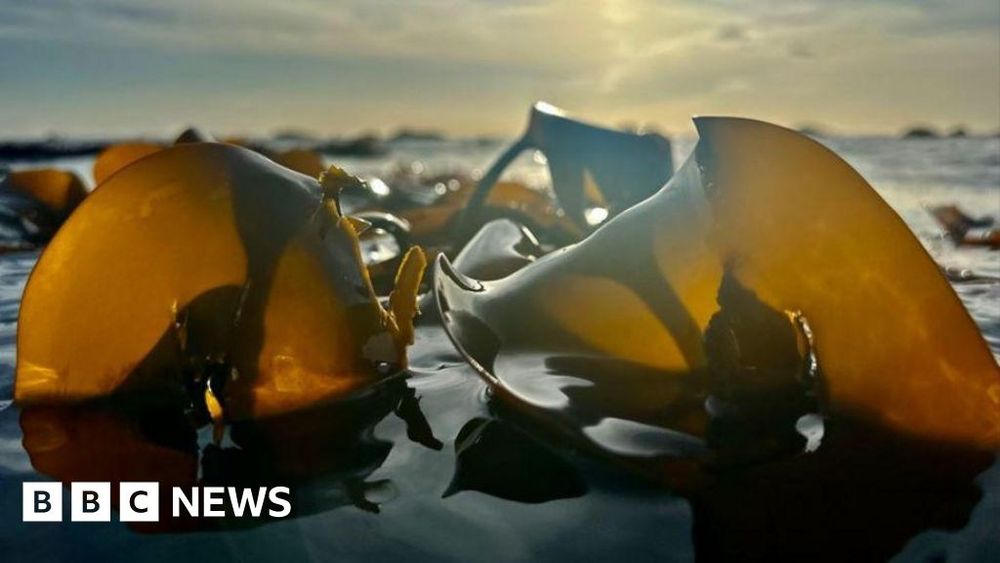
Undersea rewilding initiative to restore a kelp forest in West Sussex is celebrating amazing results for marine biodiversity.
Rewilding is needed just as much at sea as on land.
www.bbc.com/news/article...

In the words of @drandrewthaler.bsky.social :
How do you talk about giant isopods?
“Imagine a roly poly as big as a cat…”
www.southernfriedscience.com/now-more-tha...
Pjs you are comfortable to turn up in for a early hours fire alarm/emergency
I always struggle with #IWD as while we have made significant progress an I’m very thankful for that, there is so much more to do especially in countries where women don’t have any rights and freedom - especially women in Afghanistan. 🇦🇫

“I draw because I find it’s a way to see the detail at a clear and small level... If I draw the animal, I understand it more. Sometimes you can see the functional characteristics and how appendages can move, explaining how the organism reacts to the environment.”
@amphipodrachael.bsky.social #NIWA
How does art help scientists discover new species?
Rachael Peart, #amphipod specialist at NIWA, has been drawing these tiny yet complex creatures for 30 years. For her, illustration is more than art - it’s a way to truly understand them.
@amphipodrachael.bsky.social #NIWA
Sea spiders spinning their webs ??!?🤪🤪🤪 I guess not - broken down sponge?
According to Dr Shane Ahyong (Australian Museum) who used to live here they are “temocephalans (Platyheminthes) and live on the external surfaces – feed on passing particles, especially when the crayfish is eating and making a mess.”

A paper that has taken too long to publish is finally out today - the Crapellids of Aotearoa NZ is here
doi.org/10.11646/zoo...
Yep it looks like a talitrid - it could easily be Gazia but as is the case with most amphipods, a photo cannot get the detail enough, even a great photo like this as you have to look at mouthparts etc. nice specimen
True - be a bit scary if you could
I guess hexapoda are ok … they are placed nicely in the Crustacea. Crustacea with wings
Just about to publish a monograph of NZ crapellids

Though there is the giant ostracod in Antarctica which are just plain mental looking

Firstly, a species of this group are mollusc mimics. Mimicking Mitrella carinata which apparently doesn’t taste nice, there is a form of protection in being avoided by predators.
Also there is close morphological similarities with the Antarctic Epimeria - cool evolution happening.
Ah I always like beautiful pictures of amphipods!! However I haven’t come across this little guy before as they don’t occur in the more southerly of the hemispheres where I occur. Pleustids however are taxonomically messy which is a whole other story. See next comment for some more thoughts
Great piece on some of the rubbish currently going on
This is a short-sighted (blind) move.

Government decided they don't want any of the that fancy social science stuff using money that could go into rockets and engineering
Politicians pretending to pick winners again - something that has never worked
www.beehive.govt.nz/release/mars...
I’ve been thinking about scientists and social media a LOT lately. I’m editing an e-book but it’s all changing so fast — now this paper lends weight to the ‘get off X’ argument and finally lays to rest a debate…
Going to be an interesting weekend on the east coast Aus. Stay safe everyone.
Kicking off my feed over here with a positive news story ✅
“This demonstrates what can be achieved through proactive engagement, collaboration with knowledgeable skippers, supportive crews and industry led measures.”
#bycatch #etp #protectedspecies
www.seafood.co.nz/news-and-eve...

A stack of shells and weed in the form of a tube that has been aggregated and glued together by a worm.
Cool worm things: The tube of Diopatra cuprea. Made from algae and shells of the dwarf surf clam (Mulinia lateralis).
This species of polychaete is also known as plumed worm or the decorator worm. #NoVERMber
📸GeorgiaLifeTraces.com

🌊 plankton manifesto - call to action to protect plankton academic.oup.com/plankt/advan...
www.abc.net.au/news/2024-11...