Spatiotemporal Patterns of Active Epigenetic Turnover
Chromatin-mediated coupling between cycles of DNA methylation and demethylation can lead to the emergence of phase-locked domains --- regions of locally synchronized turnover activity whose coarsening...
There is a strange phenomenon in epigenetics where cells use energy to cycle chemical DNA modifications.Nobody knows what such oscillations are good for. We show that chromatin-mediated interactions lead to complex genomic patterns in DNA methylation oscillations.@prxlife.bsky.social
bit.ly/4tBS1LJ
11.02.2026 08:30
👍 4
🔁 1
💬 1
📌 0

CellRank protocol now in @NatureProtocols! 🎉
@PhilippWeiler's detailed guide shows how to:
- Integrate velocity, pseudotime & time points
- Infer cell fate probabilities
- Analyze lineage priming at scale
Great complement to our CellRank 2 paper!
📖 www.nature.com/articles/s41...
05.02.2026 19:37
👍 23
🔁 9
💬 0
📌 1

Check out our workshop on mechanisms by which 1D and 3D processes are integrated in the genome: pks.mpg.de/neg26. I am organizing this with Buddhapriya Chakrabarti, Srinjan Basu and Angelo Rosa. #epigenetics #genomics #physics #chromatin #genomeorganization
05.12.2025 14:57
👍 4
🔁 1
💬 0
📌 0
📌
10.07.2025 13:55
👍 0
🔁 0
💬 0
📌 0
📌
10.07.2025 13:55
👍 0
🔁 0
💬 0
📌 0
Research and international collaboration made possible by funding from @einsteinberlin.bsky.social. Thanks to all other funders, particularly #Leducq Foundation, #BMBF, @dfg.de, @volkswagenstiftung.de, #Biowise Foundation.
09.07.2025 13:30
👍 1
🔁 0
💬 0
📌 0
Great collaboration with @pboehmsturm.bsky.social, @docbeardface.bsky.social, many more sadly all not on here, and with Oxford @ox.ac.uk, @rdm.ox.ac.uk. @neurocure.bsky.social, @berlinualliance.bsky.social
09.07.2025 13:30
👍 0
🔁 0
💬 1
📌 0
bsky.app/profile/pm-l...
09.07.2025 13:30
👍 0
🔁 0
💬 1
📌 0
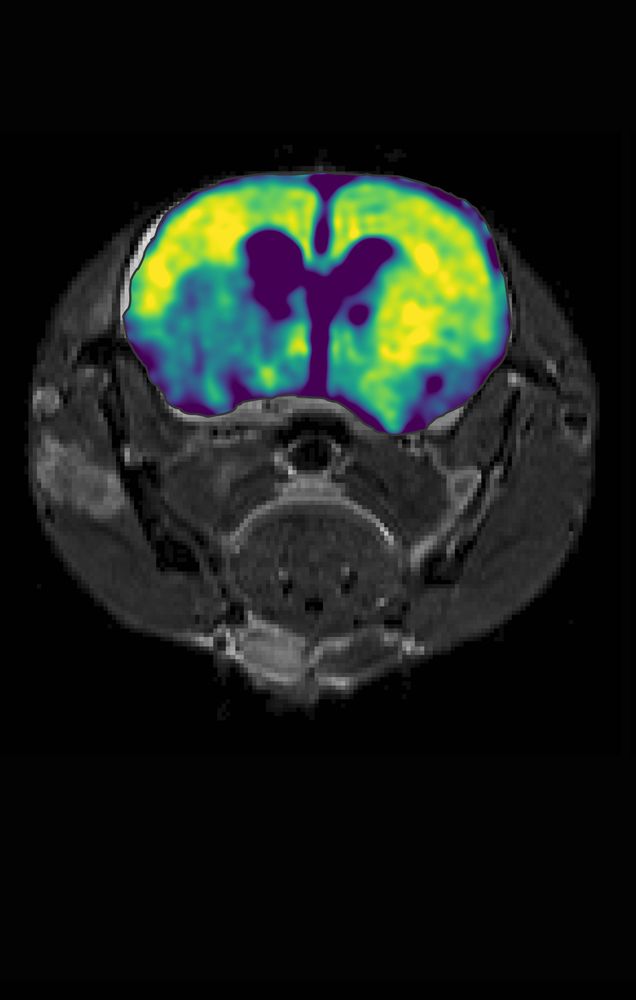
2DG CESL MRI in rat brain after stroke.
🔬🧪🧠⚡ I am extremely happy to announce that our paper on imaging #brain glucose #metabolism using metabolic #MRI in a 🐀 rat model of ischemic stroke is now published in #JCBFM (journals.sagepub.com/doi/10.1177/...). #OpenAccess #OpenData Check the🧵 🤓 #NeuroSky ⏬⏬
09.07.2025 13:30
👍 3
🔁 0
💬 1
📌 0
Fantastic keynote and great opening for #HIconference2025. Looking forward to two more great conference days. @helmholtzimaging.bsky.social
26.06.2025 04:32
👍 2
🔁 0
💬 0
📌 0
📌
23.06.2025 19:06
👍 0
🔁 0
💬 0
📌 0
📌
09.06.2025 19:18
👍 0
🔁 0
💬 0
📌 0
📌
19.04.2025 15:19
👍 0
🔁 0
💬 0
📌 0
📌
19.04.2025 13:00
👍 1
🔁 0
💬 0
📌 0
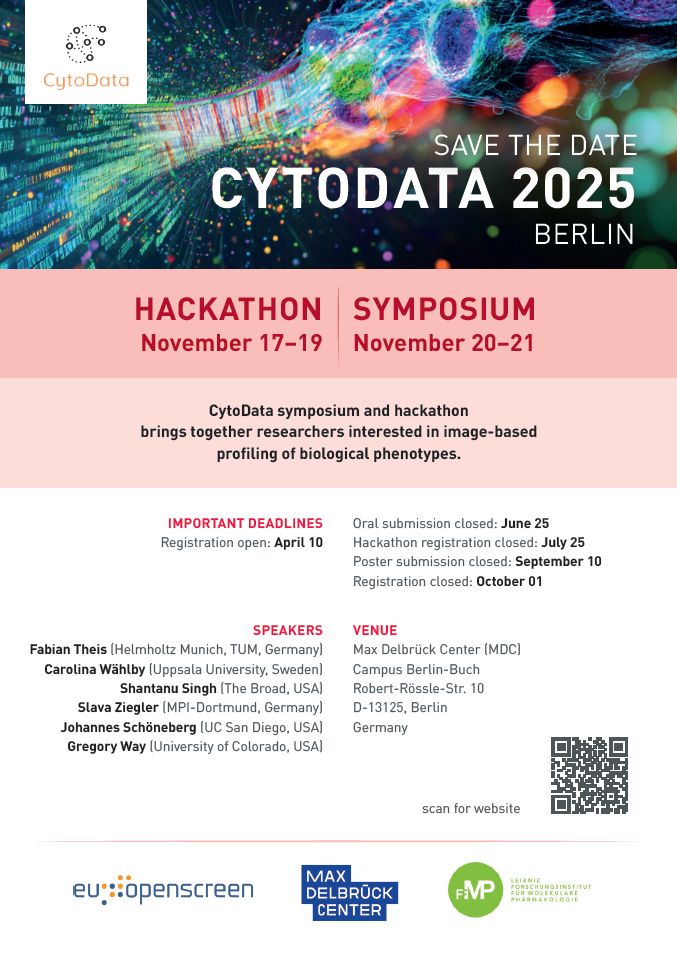
CytoData 2025 Event Poster
"This symposium explores the power of microscopy imaging as a data-rich resource for quantifying cellular phenotypes, with a strong focus on high-content imaging techniques such as Cell Painting and their applications in drug discovery and basic cell biology"
cytodata25.eu-openscreen.eu
17.04.2025 16:13
👍 7
🔁 4
💬 0
📌 0

A transcriptional clock of the human pluripotency transition
Developmental timing differs strikingly between mammals. All embryonic and some placental lineages emerge from the pluripotent epiblast in a temporally defined sequence, lasting about two weeks in the...
New preprint: How do cells measure time? In human development, pluripotent epiblast cells pause for about two weeks before differentiating into more specialised cell types. We show that this timing is controlled by a transcriptional clock that works like an hourglass. www.biorxiv.org/content/10.1...
19.03.2025 11:29
👍 10
🔁 3
💬 1
📌 0
📌
04.04.2025 09:33
👍 0
🔁 0
💬 0
📌 0
📌
14.03.2025 13:20
👍 1
🔁 0
💬 0
📌 0
*Please repost* @sjgreenwood.bsky.social and I just launched a new personalized feed (*please pin*) that we hope will become a "must use" for #academicsky. The feed shows posts about papers filtered by *your* follower network. It's become my default Bluesky experience bsky.app/profile/pape...
10.03.2025 18:14
👍 522
🔁 296
💬 23
📌 83
Works like a charm. Very impressive. 🤩
14.03.2025 06:57
👍 1
🔁 0
💬 0
📌 0
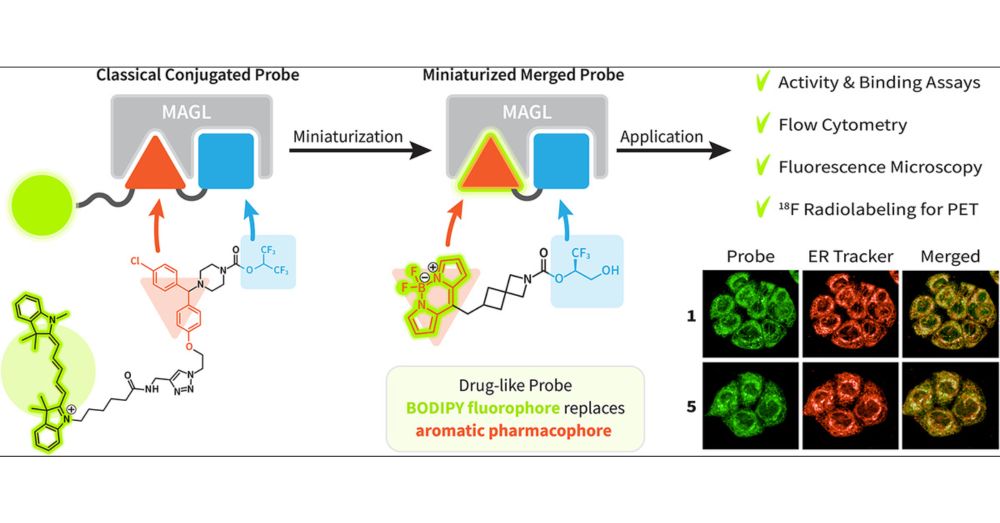
Highly Specific Miniaturized Fluorescent Monoacylglycerol Lipase Probes Enable Translational Research
Monoacylglycerol lipase (MAGL) is the pivotal catabolic enzyme responsible for signal termination in the endocannabinoid system. Inhibition of MAGL offers unique advantages over the direct activation of cannabinoid receptors in treating cancer, metabolic disorders, and inflammatory diseases. Although specific fluorescent molecular imaging probes are commonly used for the real-time analysis of the localization and distribution of drug targets in cells, they are almost invariably composed of a linker connecting the pharmacophore with a large fluorophore. In this study, we have developed miniaturized fluorescent probes targeting MAGL by incorporating a highly fluorescent boron-dipyrromethene (BODIPY) moiety into the inhibitor structure that interacts with the MAGL active site. These miniaturized fluorescent probes exhibit favorable drug-like properties such as high solubility and permeability, picomolar potency for MAGL across various species, and high cell selectivity and specificity. A range of translational investigations were conducted, including cell-free fluorescence polarization assays, fluorescence-activated cell sorting analysis, and confocal fluorescence microscopy of live cancer cells, live primary neurons, and human-induced pluripotent stem cell-derived brain organoids. Furthermore, the application of red-shifted analogs or 18F positron emission labeling illustrated the significant versatility and adaptability of the fluorescent ligands in various experimental contexts.
I am very pleased to have contributed to this work. Hopefully, it finds wide recognition. @fmp-berlin.de
pubs.acs.org/doi/full/10....
11.03.2025 12:57
👍 2
🔁 0
💬 0
📌 0
📌
10.03.2025 20:50
👍 1
🔁 0
💬 0
📌 0
Still time to apply for this PostDoc opportunity 👇👇👇
10.03.2025 20:37
👍 1
🔁 0
💬 0
📌 0
📌
08.03.2025 19:35
👍 0
🔁 0
💬 0
📌 0
📌
08.03.2025 19:26
👍 0
🔁 0
💬 0
📌 0
📌
13.02.2025 23:17
👍 1
🔁 0
💬 0
📌 0
📌
12.02.2025 09:32
👍 0
🔁 0
💬 0
📌 0
📌
12.02.2025 09:28
👍 3
🔁 0
💬 0
📌 0
#MedSky Please spread the word or maybe you know someone…: @preibischs.bsky.social @herrsaalfeld.bsky.social @rulands.bsky.social @bifold.berlin @neurocure.bsky.social
07.02.2025 08:48
👍 0
🔁 0
💬 0
📌 0