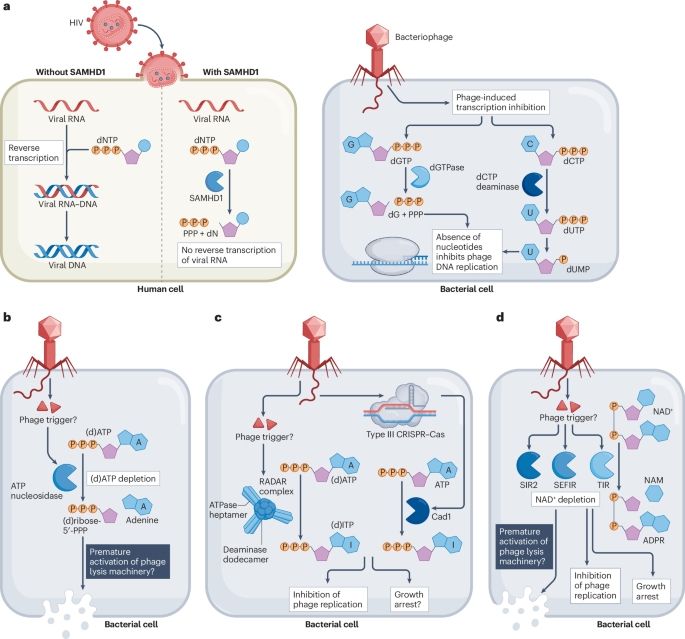
After >10 years of our lab studying bacterial cGAS-like enzymes, @hobbslabutah.bsky.social finally reconstitutes viral sensing in vitro and discovers how these ancient receptors sense phage protease enzymes to detect virion assembly and activate antiviral immunity
www.biorxiv.org/content/10.6...
06.03.2026 09:00
👍 33
🔁 15
💬 1
📌 0
Very excited to see this work out today!
Discovering viral immune antagonists directly from predicted protein structures. 🤩 www.science.org/doi/10.1126/...
Huge thanks to the amazing collaborators! 🤗
06.03.2026 10:38
👍 17
🔁 7
💬 2
📌 0
Out today: We discovered new viral proteins that target immune signaling molecules, solely based on their AlphaFold-predicted shapes
www.science.org/doi/10.1126/...
Congrats Nitzan Tal and coauthors! Thank you Kranzusch lab for the fun collaboration!
Linking below previous thread on our findings
05.03.2026 19:28
👍 92
🔁 43
💬 0
📌 5

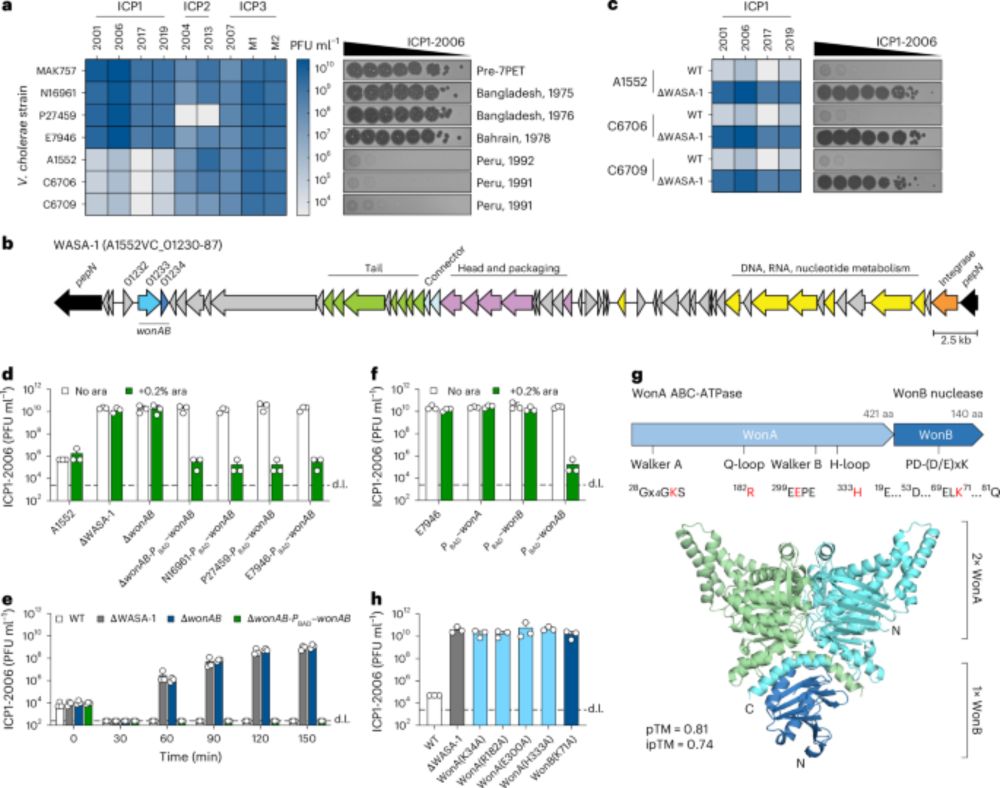
Stunning new structural analysis and mechanism for Tmn anti-phage defense by @fnobrega.bsky.social
www.biorxiv.org/content/10.6...
03.03.2026 21:08
👍 47
🔁 17
💬 2
📌 0
The giant viruses surprised us at almost every turn of this project, but ultimately led us down a very rewarding path. Happy to share this work is now available online 🧪
17.02.2026 17:07
👍 48
🔁 23
💬 0
📌 0
How is Condensin II activated during mitosis? 🧬
@damlatetiker.bsky.social Samejima et al. uncover how Condensin II autoinhibition is relieved by the mitotic activator M18BP1, and reveal that M18BP1 also forms a composite DNA anchor with the NCAPG2–NCAPH2 subcomplex to stabilize DNA loops in vitro.
04.02.2026 15:34
👍 17
🔁 7
💬 1
📌 0
A DNA damage-activated kinase controls bacterial immune pathway expression https://www.biorxiv.org/content/10.64898/2026.02.02.703251v1
04.02.2026 04:16
👍 11
🔁 7
💬 0
📌 0

Vibrant color portrait of Jane S. Richardson, the visionary biophysicist and artist who revolutionized structural biology with her invention of ribbon diagrams. She gazes warmly at the camera with a bright, knowing smile that radiates quiet brilliance and decades of curiosity. Her silver-blonde hair woven with gentle waves. Large, elegant dangling earrings catch the light, and she wears a richly patterned brown blouse embroidered with intricate turquoise paisley motifs and delicate beadwork that echoes the molecular elegance she has spent her life depicting. Behind her floats a luminous, dreamlike backdrop of glowing molecular structures--interlocking hexagonal and ribbon-like forms in electric blues, teals, and greens--blending science and art in a single, living canvas.

Hand-drawn and hand-colored (by Jane Richardson) scientific artwork known as a Richardson ribbon diagram (or “ribbon model”), one of the iconic visual inventions of Jane Richardson that transformed the way we see and understand protein structures. A graceful, three-dimensional tangle of protein backbone ribbons twists and spirals through space, rendered in soft pencil lines and luminous watercolor hues. Smooth golden-brown coils represent α-helices that curl like elegant ribbons, while broad teal-green arrows trace the flat, pleated strands of β-sheets slicing through the molecule with directional purpose. Thin, looping golden threads connect the secondary structures, creating a delicate, almost dance-like choreography of biology’s hidden architecture. The entire form is framed by a simple olive-green mat and dark border, giving the drawing the quiet dignity of both fine art and precise scientific illustration—a timeless bridge between molecular reality and human imagination.
Jane Richardson was born #OTD in 1941
+ Developed the Richardson (ribbon) diagram to represent proteins' 3D structure (becoming a standard representation for protein structures)
+ MacArthur Fellow, 1985
+ Elected, Nat'l Academy of Sciences, 1991
+ President, Biophysical Society, 2012
#WomenInSTEM
26.01.2026 00:06
👍 266
🔁 93
💬 3
📌 7
Biochemical Journal | Portland Press
Exploring the molecular mechanisms that underpin key biological processes, the Biochemical Journal is a leading bioscience journal publishing high-impact scientific research papers and reviews in the ...
Pleased to announce that I've joined the editorial board of the Biochemical Journal portlandpress.com/biochemj as an associate editor. I'd love to receive manuscripts focussed on CRISPR, anti-viral defence, archaean biochemistry and nucleic acid processing enzymes.
@biochemsoc.bsky.social
14.01.2026 12:07
👍 17
🔁 5
💬 1
📌 0
Congratulations to Doi Basu @dwaipayanbasu.bsky.social for publishing his first first-author paper from the lab!
The cryoEM structure of a tubulin-like protein from bacteriophage Goslar forms "microtubules" with nine protofilaments!
authors.elsevier.com/a/1mM253SNvc...
30.12.2025 05:35
👍 13
🔁 6
💬 2
📌 0
Congrats Doi and Kevin!
30.12.2025 05:37
👍 2
🔁 0
💬 0
📌 0
Preprint: Systematic discovery of TIR-based immune signaling systems in bacteria
Conservation of TIR-derived signals accross the tree of life! We found bacterial TIR immune systems that signal via canonical cADPR (like in humans) and 2'cADPR (a plant immune signal).
Documented 11 Thoeris types
04.12.2025 13:56
👍 34
🔁 13
💬 1
📌 0


🧬🛡️How are new immune mechanisms created?
We show how Lamassu antiphage system, originated from a DNA-repair complex and evolved into a compact and modular immune machine, wt Dinshaw Patel lab in @pnas.org.
👏 @matthieu-haudiquet.bsky.social, Arpita Chakravarti & all authors!
doi.org/10.1073/pnas...
27.11.2025 09:35
👍 104
🔁 47
💬 1
📌 2

🚨Preprint alert - this is a big one! We transfer the revolutionary power of TnSeq to bacteriophages.
Our HIDEN-SEQ links the "dark matter" genes of your favorite phage to any selectable phenotype, guiding the path from fun observations to molecular mechanisms.
A thread 1/8
20.11.2025 20:39
👍 210
🔁 90
💬 11
📌 5

Bacteria can sense when a virus starts shredding their genome — by detecting methylated mononucleotides.
Here’s the story of how we discovered the Metis defense system 👇
www.biorxiv.org/content/10.1...
06.11.2025 04:59
👍 132
🔁 49
💬 4
📌 12
Very cool findings!!!
07.11.2025 09:32
👍 2
🔁 0
💬 1
📌 0

You’ve heard of ubiquitination, meet deazaguanylation: Doug Wassarman in our lab discovered phage defense pathways have co-opted Q nucleobase biosynthetic enzymes to catalyze a new form of protein conjugation chemistry @science.org
www.science.org/doi/10.1126/...
25.09.2025 19:16
👍 88
🔁 38
💬 2
📌 0
Another important contribution from Sorek and Blokesch labs.
This engineering strategy with synthetic inhibitors could yield more powerful phages than natural inhibitors, since the latter sometimes trigger other defense systems..
04.09.2025 07:01
👍 4
🔁 2
💬 0
📌 0

A widespread family of viral sponge proteins reveals specific inhibition of nucleotide signals in anti- #phage defense
www.cell.com/molecular-ce... #bacteriophage #MicroSky
22.08.2025 09:21
👍 14
🔁 6
💬 1
📌 0
🦠🧍♀️From bacterial to human immunity.
We report in @science.org the discovery of a human homolog of SIR2 antiphage proteins that participates in the TLR pathway of animal innate immunity.
Co-led wt @enzopoirier.bsky.social by D. Bonhomme and @hugovaysset.bsky.social
www.science.org/doi/10.1126/...
24.07.2025 18:22
👍 262
🔁 122
💬 9
📌 11
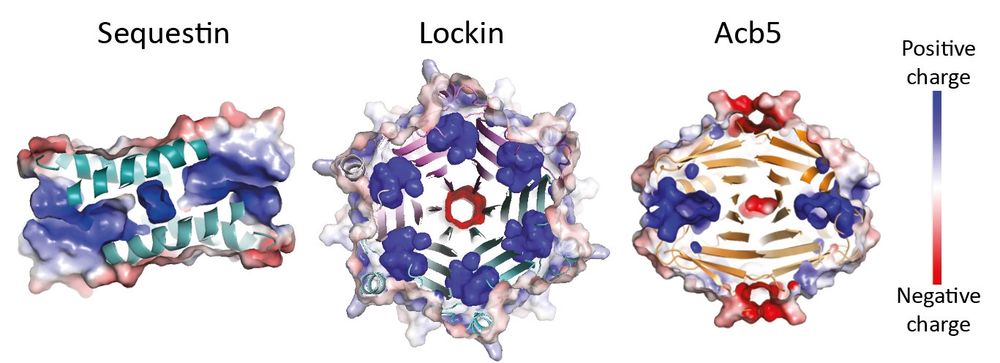
Preprint: “Structural modeling reveals viral proteins that manipulate host immune signaling”
Using AI-guided structural modeling, we find new families of viral proteins that sequester or cleave host immune signaling molecules
Congrats Nitzan Tal!
www.biorxiv.org/content/10.1...
14.07.2025 07:36
👍 78
🔁 34
💬 1
📌 0
Excellent study, led by @hannahledvina.bsky.social from the Whiteley lab @aaronwhiteley.bsky.social
03.07.2025 14:19
👍 2
🔁 0
💬 0
📌 0
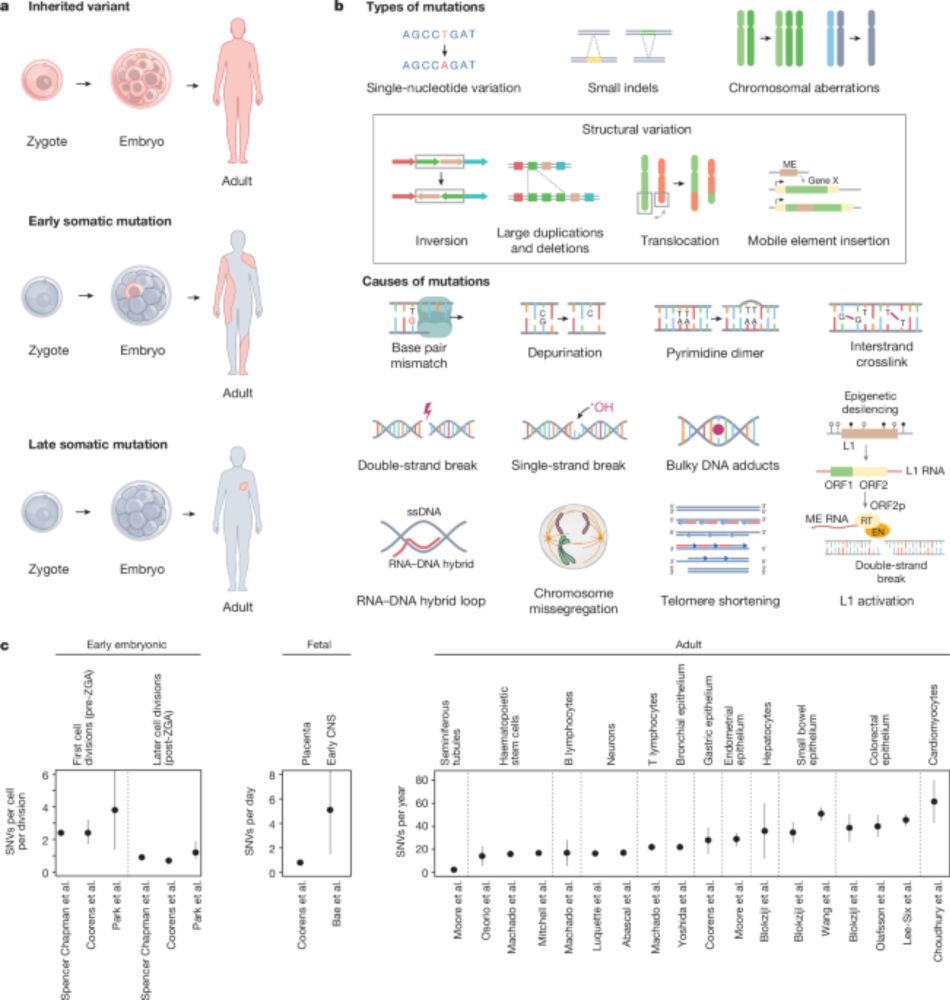
The Somatic Mosaicism across Human Tissues Network - Nature
The Somatic Mosaicism across Human Tissues Network aims to create a reference catalogue of somatic mosaicism across different tissues and cells within individuals.
We are all somatic mutation mosaics.
"There are trillions of cells in a human body and so the total number of somatic mutations acquired in a single individual may well exceed quadrillions, millions of times the size of the human genome."
@nature.com
nature.com/articles/s41...
02.07.2025 16:21
👍 111
🔁 33
💬 1
📌 1
Congratulations David, richly deserved!!!
05.06.2025 16:01
👍 1
🔁 0
💬 0
📌 0
Excited to share that my work in the @aaronwhiteley.bsky.social lab describing chaperone-mediated phage sensing by a bacterial NLR-related protein is out in @plosbiology.org!
04.06.2025 13:45
👍 54
🔁 20
💬 1
📌 2