
Given that smith island is n the backyard of the @washingtonpost.com a bit weird they didn’t get the real story of what’s transpiring.
05.07.2023 19:21
👍 3
🔁 0
💬 0
📌 0
Given that smith island is n the backyard of the @washingtonpost.com a bit weird they didn’t get the real story of what’s transpiring.
Me waking up this morning:
Ugh, I have so much work, I'm definitely going into my office.
Me stepping out the house into gorgeous weather:
Yup, I'm definitely going to the beach.
🤣😜🙃😎
Sadly, blue bird died a while ago. What we are witnessing now is it’s death song.
With another influx of users, I think I should do some weekly promo.
If you're looking for high-quality posts about scientific topics, check out the What's Science 🧪 feed (details below), and tell all your friends.
And please remember that leaving a like on the feed helps keep us discoverable!
Can we not post gifs on here yet?
Praise be to Bobbit, our worm and savior! 🙏🏾
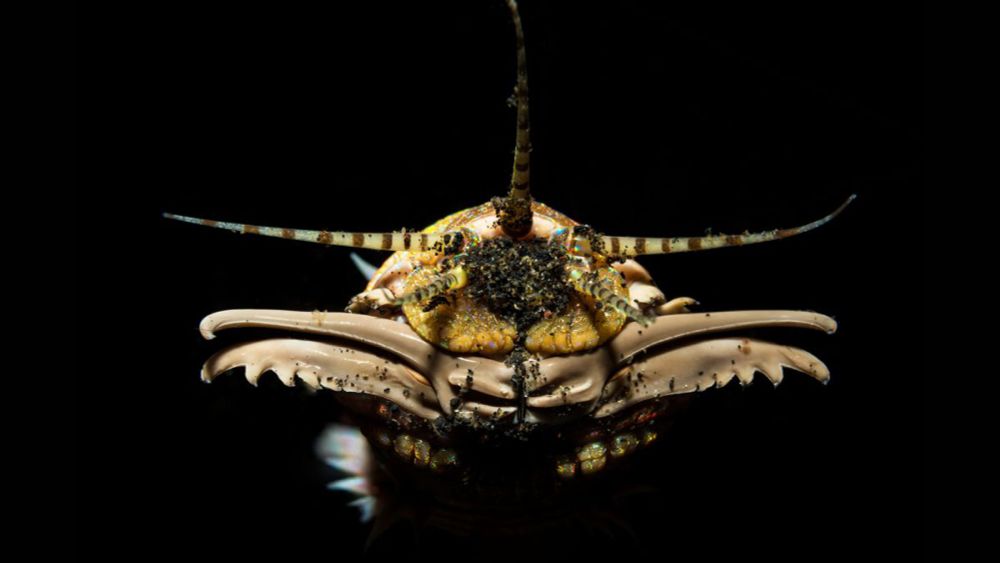
For polychaete day, meet some ancient predatory marine worms that lived 20 million years ago. They hunted on the sea floor, ambushing prey from tunnels fortified with layers of mucus 🧪 https://www.livescience.com/extinct-giant-sea-worm-fossils.html
Indeed! I’m inundated with wormy SPIchops. Looking forward to sharing my HOFs!
We share something in common. I’ll never forget my glee the first time I saw one under a microscope. Love at first sigh!
That’d b my guess!


On occasion we capture interesting sediment profile images (SPI). I’ll be sharing those semi-regularly as well.
SPIchop 🧪
Two inverts share a Polaroid moment (1st image). A diopatra worm in its burrow (2nd image). The surface tube of the worm is being investigated by a gastropod (3rd image).
Bingo!
If you wrote a fantasy novel where all a country's big decisions were left to the wizened, ancient, black-robed "council of nine" your editor would tell you to put more thought into it.

More wormy facts 🧪:
Polychaetes have survived five mass extinctions. the earliest known polychaetes were discovered n the Burgess Shale, dating ~505 million yrs ago (Cambrian period). In the yrs 2 come, Earth witnessed 5 mass extinction, one of which killed ~96% of all marine species.
Ladies and gentlemen, taking a brief respite from my honeymoon to alert everyone we have @jimacosta.bsky.social approval!!
This now the mission. @jimacosta.bsky.social on to you…
👀
Welcome! Skeet to your hearts content. Screw the blue bird!
Let’s preserve this beautiful thing that’s being curated
Always


It’s my wedding weekend. And me and my roll dog are R-E-A-D-Y
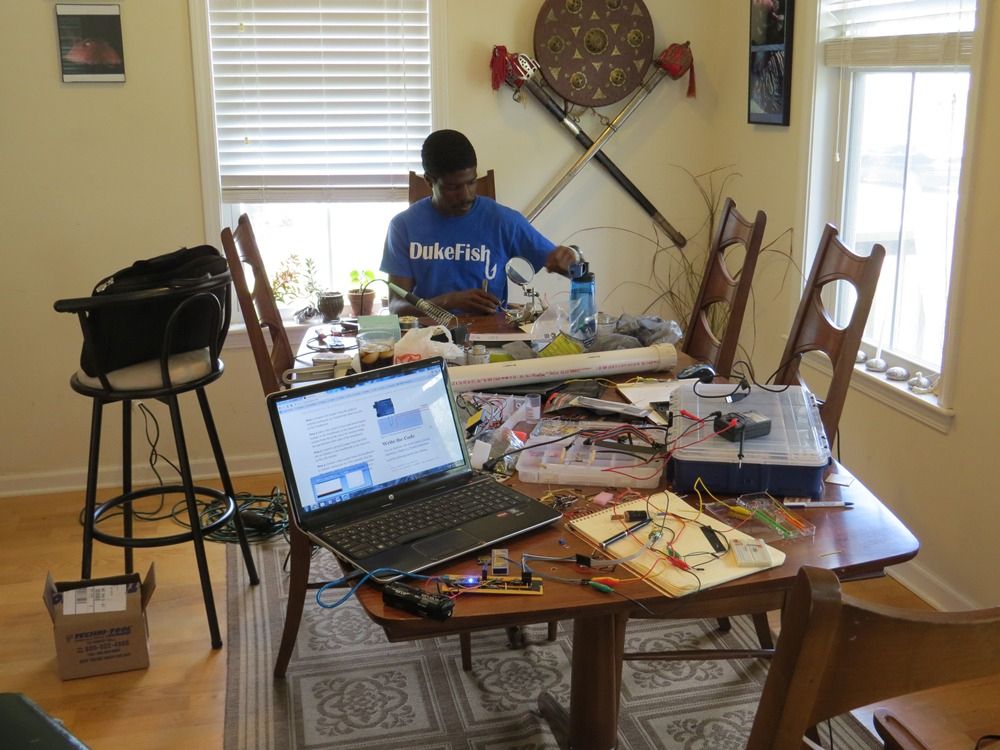
Kersey working at a soldering station surrounded by Andrew's absolute nonsense piles of electronics.
I'm realizing that it's almost 10 years to the day that we launched the OpenCTD, and, in a lot of ways, this little oceanographic instrument project has grown bigger than anything @drwormymcwormface.bsky.social and I ever imagined.
My workspace still looks exactly like this, though.
Oh! I just noticed there was a wormy photo! Big sucker! So first thing, that bulbous thing is not it’s head, it’s the inverted pharynx. Often used in predation. Also what u have labeled as the underside is the dorsal side. And yes it’s def a polychaete but I’m not sure on the species.
The world needed to see this
When I was a kid and ppl wld ask what animal u wanted to be I wld always say cheetah, but second place was always an anteater. 🤷🏾♂️
We were blue bird Friendsies and have already connected in this future-verse!
Benthos UNITE!!! 🙌🏾
Imagine living out your days with half your body in a pot of boiling water. That’s essentially the lifestyle of the Pompeii worm 🧪
🙃


More wormy facts 🧪:
One of the world's most heat-resistant animals is a deep-sea polychaete called the Pompeii worm (Alvinella pompejana). These tubeworms live at hydrothermal vents deep on the ocean floor, where their tails rest in hot water at temperatures of over 140 oF.
I always thought the Thresher shark was the fastest. Learn something new errr day!

Ahh academic science. 🧪
#lovehate
One of my favorite things on Bluesky is discovering some of my faves from the blue bird.
Skeet skeet skeet!