
Stuffed skin of a duck from a museum collection.
New species of steamer duck, the Chiloe steamer duck (Tachyeres ketru), distinguished on the basis of bill color and vocalizations: audiornis.org/journal/arti... 🪶🧪 (📷López-Lanús & Costa)
03.03.2026 00:35
👍 36
🔁 11
💬 2
📌 0

Fossilized foot bone of an extinct parrot.
New Pleistocene kākāpō Strigops insulaborealis and swamphen Porphyrio claytongreenei: www.tandfonline.com/doi/full/10.... 🪶🧪 (📷Worthy et al.)
27.01.2026 14:13
👍 26
🔁 3
💬 0
📌 1


What might be my favourite fossil has been just published by Kiat et al. 2025. Years ago I saw a pic of this Anchiornis specimen in nat geo article and I audibly gasped.preserving not only the feathers but also the original patterns as well. I made this drawing on the spot. Maybe its time to do v2.0
21.11.2025 19:27
👍 1166
🔁 379
💬 15
📌 6

Assoc. Prof. Trevor Worthy is our guest speaker for Thursday's Scientific Seminar. Presenting “Facing up to Genyornis – The hunt for the skull of Australia’s last Mihirung bird”, Trevor will cover the adventure to find its skull.
Thursday 11th September
RSSA Rooms, off Morgan Thomas Lane
6:00 pm
08.09.2025 11:44
👍 4
🔁 2
💬 0
📌 0

Close-up of a bird with a large, broad dark bill, brownish-tan plumage, and a grayish crown.
Boat-billed Heron at Caño Negro Wildlife Refuge #CostaRica
I love their large eyes that help them hunt at night.
#herons #birds #nature
14.08.2025 13:49
👍 567
🔁 90
💬 10
📌 17
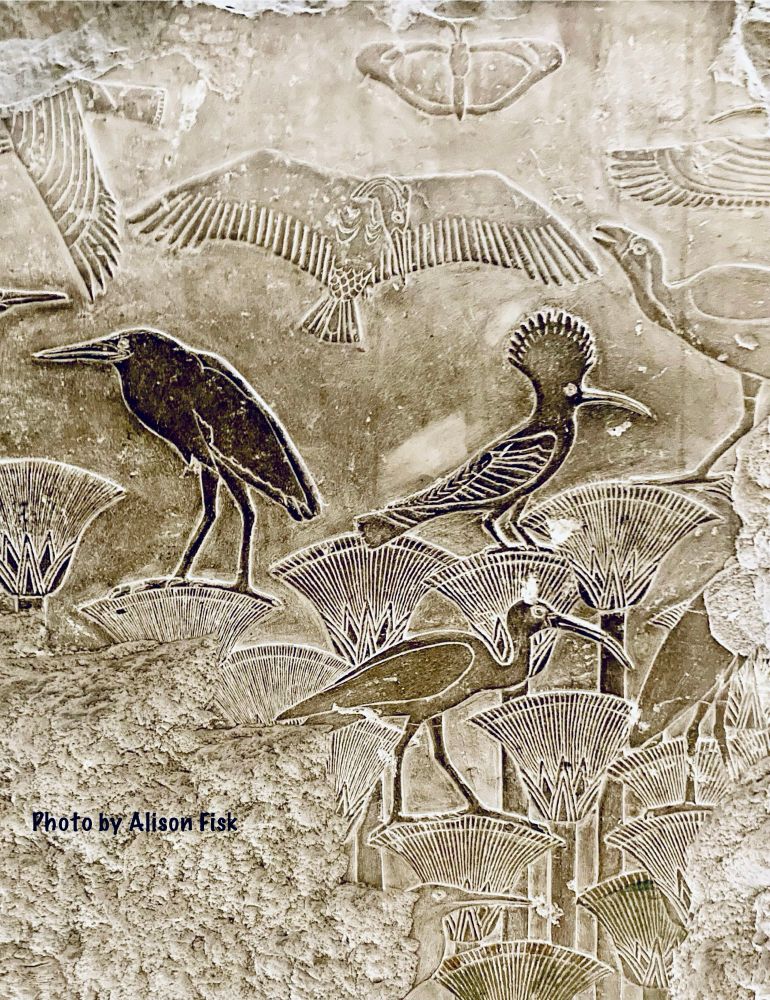
My photo shows a limestone wall panel carved in bas relief from the Fifth Dynasty Funerary Temple of king Userkaf at Saqqara, 2465-2458 BC. It shows birds and a butterfly in a papyrus thicket in the marshes of the river Nile. A pied kingfisher and butterfly hover above the papyrus thicket, whilst a hoopoe, an ibis with long curved beak, a night heron, and a gallinule,are depicted amongst the papyrus umbrels. Height 102 cm. Egyptian Museum, Cairo.
Lovely naturalistic scene of birds and a butterfly in a papyrus thicket, carved by an ancient Egyptian artisan some 4,500 years ago!
Faint traces of paint survive on this limestone wall relief from the funerary temple of king Userkaf. Egyptian Museum, Cairo 📷 by me
#ReliefWednesday
#Archaeology
13.08.2025 08:20
👍 521
🔁 121
💬 15
📌 9
(I should add, I only mentioned New Zealand Paleocene penguins--the only described Paleocene penguin from elsewhere is Crossvallia unienwillia from the Antarctic Peninsula)
13.08.2025 10:22
👍 0
🔁 0
💬 0
📌 0
Maybe not a paradise for all, way back then. I reckon it would've smelled pretty bad...
13.08.2025 10:12
👍 1
🔁 0
💬 1
📌 0

Multiple fossilized skeletons of extinct birds closely related to penguins.
New Paleocene proto-penguins Archaeodyptes waitahaorum, Daniadyptes primaevus, Waimanutaha kenlovei, and Waiparadyptes gracilitarsus: academic.oup.com/zoolinnean/a... 🪶🧪 (📷Mayr et al.)
12.08.2025 13:02
👍 38
🔁 10
💬 0
📌 0
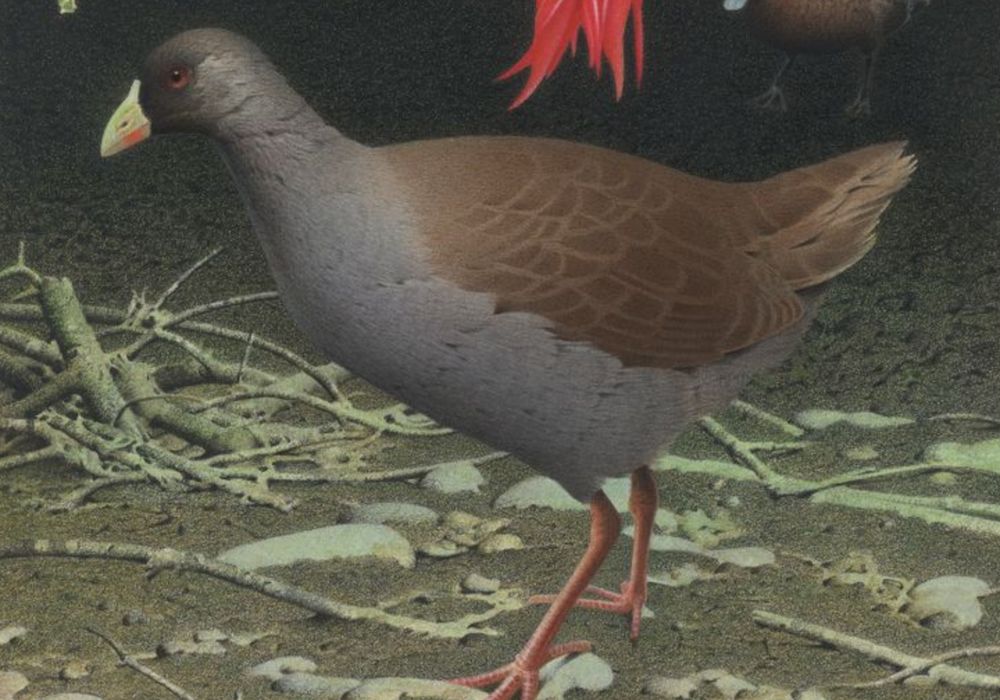
New Zealand birds never fail to amaze. The extinct Hodgen's rail, thought to be a diminutive relative of the Australian waterhen, turns out instead to be a giant crake!
link.springer.com/article/10.1...
📷: Paul Martinson, Te Papa CC BY-NC-ND 4.0
04.08.2025 03:53
👍 6
🔁 1
💬 0
📌 0

Comparison of the wing and leg bones of several species of rail, including the recently extinct Hodgens' waterhen (A, D, G, J), the closely related Australian crake (B, E, H, K), and the black-tailed nativehen (C, F, I, L).
Genetic analysis reveals that the recently extinct Hodgens' waterhen ("Tribonyx" hodgenorum; A, D, G, J in figure) was a giant, flightless crake in the genus Porzana: link.springer.com/article/10.1... 🪶🧪 (📷Sangster et al.)
01.08.2025 13:29
👍 30
🔁 7
💬 0
📌 0
Unfortunately, as is too common of a story, we just missed out on meeting this guy. The most recent bones of this species are from a midden from the 1700s.
01.08.2025 13:43
👍 3
🔁 0
💬 0
📌 0
The implication is that this rail is not a flightless insular dwarf allied with the chook-sized nativehens (Tribonyx spp.), but rather a bantam-sized island giant that evolved from much smaller ancestors (Porzana fluminea)!
We thought 'New Zealand giant crake' was fitting.
01.08.2025 13:43
👍 3
🔁 0
💬 1
📌 0
This highlights the usefulness of considering molecular data and morphology together, to better understand evolutionary trends.
01.08.2025 13:43
👍 2
🔁 0
💬 1
📌 0

Figure 2 from the paper, comparing pelves of Hodgens' waterhen, Tribonyx ventralis and Porzana fluminea.

Figure 3 from the paper, comparing the humerus, femur, tibiotarsus and tarsometatarsus of Hodgens' waterhen, Tribonyx ventralis and Porzana fluminea.
A close relationship to the crakes of Porzana was unexpected, and had been previously unconsidered or dismissed on the basis of morphology.
Looking at the bones in the context of this new information, despite the difference in size, there are several features that support this relationship.
01.08.2025 13:43
👍 1
🔁 0
💬 1
📌 0
The 3 modern species of Porzana are around starling-sized, or smaller. This rail—Porzana hodgenorum—was considerably larger, but still only about the size of a bantam.
01.08.2025 13:43
👍 1
🔁 0
💬 1
📌 0

The Australian Spotted Crake, Porzana fluminea. Image by
patrickkavanagh, Flickr, CC BY 2.0
https://www.flickr.com/photos/patrick_k59/52909644058/

The Black-tailed nativehen, Tribonyx ventralis. Ron Knight, Flickr, CC BY 2.0
https://www.flickr.com/photos/sussexbirder/8079591021/in/photostream/
Until now, the consensus was that it was a flightless nativehen of Tribonyx (otherwise only known from Australia), Tribonyx hodgenorum.
New genetic evidence shows that it was a member of Porzana—the 7th genus—and the closest relative of the Australian spotted crake (Porzana fluminea).
01.08.2025 13:43
👍 1
🔁 0
💬 1
📌 0

Taxonomic synonymy for this species. Author provided.

Hodgens' Waterhen. "Gallinula hodgenorum". From the series: Extinct Birds of New Zealand., 2005, Masterton, by Paul Martinson. Purchased 2006. © Te Papa. CC BY-NC-ND 4.0. Te Papa (2006-0010-1/47)
Since its description 70 years ago, this rail has been placed in 6 different genera, as perhaps a nice illustration of the relative morphological homogeneity across the family Rallidae (which is only further confused by the independent evolution of flightlessness in many species!).
01.08.2025 13:43
👍 1
🔁 0
💬 1
📌 0
Birds are dinosaurs who shrugged off a couple apocalypses. Some eat bone marrow. Some drink nectar. They outswim fish in the sea. They smile politely at gravity’s demands.
I am grateful to see them. I am grateful to feed them. I am grateful to know them.
30.07.2025 16:02
👍 1379
🔁 365
💬 27
📌 21

Artwork by Gabriel Ugueto


I am proud and grateful to present a dream project today in @nature.com www.nature.com/articles/s41...
Meet #Mirasaura grauvogeli, a #wonderreptilewith skin appendages that rival feathers and hairs, challenging our view of reptile #evolution🪶🦎
23.07.2025 15:13
👍 248
🔁 95
💬 14
📌 18

Screenshot 1 of 2 of a Facebook post about Genyornis newtoni, which has an AI generated image produced from work illustrated by Jacob Blokland (not attributed).

Screenshot 2 of 2 of a Facebook post about Genyornis newtoni, which has an AI generated image produced from work illustrated by Jacob Blokland (not attributed). Skull image they have used here is unaltered from what I drew.
Came across this the other day... first time I've seen my work being used in the production of an AI image. The skull they've used is the same one I had drawn.
Had to laugh at "All rights and credits reserved to the respective". Sad that this type of thing is commonplace.
20.07.2025 02:01
👍 0
🔁 0
💬 0
📌 0
It was fun diving into the world of ancient sound-scapes with GM and hearing analyses. I think the dromornithids will continue to suprise me at every turn
06.07.2025 08:20
👍 4
🔁 1
💬 0
📌 0

Diagram showing the evolutionary relationships among cranes, rails, and other closely related birds, scaled against geologic time.
Phylogenetic position of the recently extinct Nesotrochis "cave rails" of the Caribbean: www.avespress.com/uploads/down... New analysis suggests they were the closest known relatives of the (also recently extinct) New Zealand adzebills! 🪶🧪 (📷 @stervander.com et al.)
04.07.2025 13:26
👍 18
🔁 5
💬 0
📌 0

Comparison of diverse mandibular mechanics during biting in Devonian lungfishes
Fossil lungfish from the Late Devonian Gogo Formation, Australia, feature some of the most remarkable and specialized mandible morphologies in their 4…
Very proud of this one, my first foray into #biomechanics using #FEA!
“Comparison of diverse mandibular mechanics during biting in Devonian lungfishes”, published today in @cp-iscience.bsky.social, based on Joshua Bland’s honours work:
www.sciencedirect.com/science/arti...
05.07.2025 08:02
👍 11
🔁 2
💬 0
📌 0

An artistic rendition of the extinct Antillean Cave Rail, Nesotrochis debooyi Wetmore, 1918. ©Piotr Gryz, with permission.
Welcome a new family of #birds, the Caribbean cave rails, Nesotrochidae! They were—surprisingly—the sisters of NZ adzebills, all sadly extinct. New #OpenAccess paper out in Avian #Systematics w Gerald Mayr, Chen Guangji & Feng Shaohong: www.avespress.com/uploads/down...
🧵
#ornithology #taxonomy 🧪🪶
03.07.2025 19:50
👍 66
🔁 18
💬 2
📌 2


