
A great resource to help you pick responsible journals to publish in.
02.02.2026 16:31
👍 1
🔁 2
💬 0
📌 1
A great resource to help you pick responsible journals to publish in.

If you need good news: highly endangered North Atlantic Right Whales are having lots of babies suddenly. 21 mother-calf pairs have been recorded so far, double last season! Endangered by fishing lines and ship strikes, less than 400 remain. But this is hopeful news
www.wired.com/story/a-nort...

New review!
Theory & a practical guide to structural variants in popgen🧬
Many thanks to my co-authors: @rebekahoomen.bsky.social
@annatigano.bsky.social @marenwellenreuther.bsky.social @janawold.bsky.social @dlfield.bsky.social @clairemerot.bsky.social
onlinelibrary.wiley.com/doi/10.1111/...

The Black Death was history's worst documented demographic disaster. New research shows it was also a bizarre anomaly, the unlikely result of volcanic eruptions, multiple consecutive poor harvests in Italy, a war between Genoa, Venice and the Mongols, AND a Black Sea plague outbreak. @science.org

How are Pacific NW mountain birds responding to climate change?
I got up at 4:00 am for a month to find out.
but first the backstory, or "how I spent seven years telling everyone this project wasn't possible"
new paper here:
esajournals.onlinelibrary.wiley.com/doi/full/10....

Using automated acoustic monitoring, citizen science, and centuries of ornithological research and understanding to quantify ecological integrity at scale.
The BirdsPlus Index, a novel method for assessing site-level conservation values.
www.biorxiv.org/content/10.1...

Canada Post features fungi and lichen in new stamp series - Canada Post has unveiled its new stamp collection Wednesday featuring fungi and lichens found in the country.
'Ancient stickleback genomes reveal the early stages of parallel adaptation' - now published online in Evolution @journal-evo.bsky.social
SLiM 5: Eco-evolutionary simulations across multiple chromosomes and full genomes https://www.biorxiv.org/content/10.1101/2025.08.07.669155v1
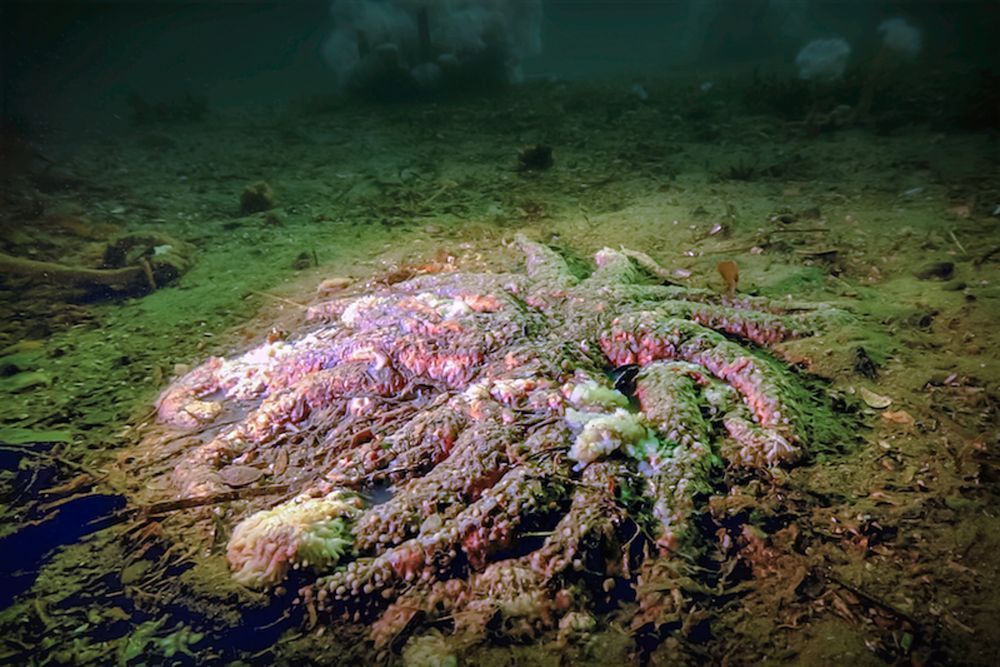
After a four-year investigation, a breakthrough study reveals the cause of sea star wasting disease (SSWD). A strain of the bacterium Vibrio pectenicida is the culprit behind the marine epidemic that has killed billions of sea stars since 2013. Read the study: 🔗https://tinyurl.com/4rcb3xpf
Started interviewing folks, but there’s still time to apply!
Please share and get in touch if you think this would be a good fit for you or someone you know!
Hey #Evol2025, come and be our new colleague at Monash!
We have a preprint reviewing how genomics has been used to inform evolutionary significant units globally, find inconsistencies, and give recommendations. Genomics is a powerful tool and hopefully can be used more effectively for conservation of ESUs! #consgen #popgen www.biorxiv.org/content/10.1...
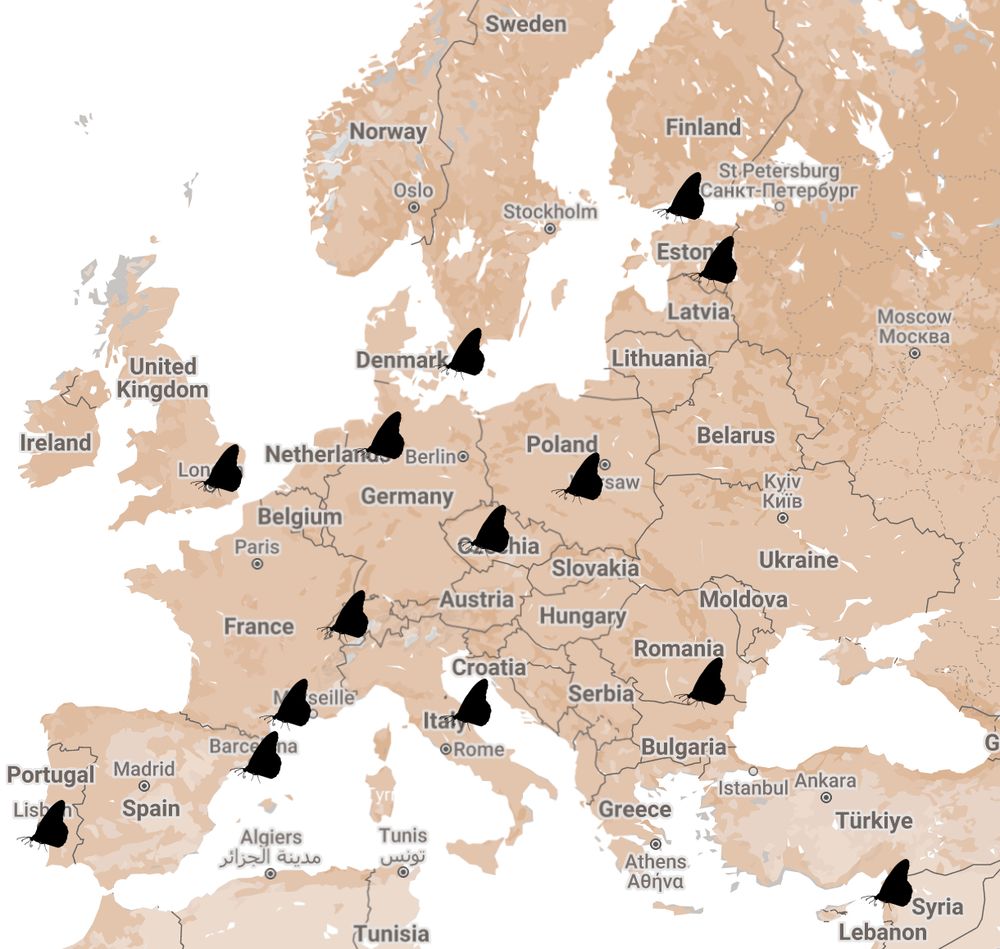
The aim of this proposal is to place population genomic insights into a comparative framework to gain fundamental insights into the determinants of evolutionary outcomes. The project will work within LepEU, the European Lepidopteran Population Genomics Consortium (https://lepeu.github.io/). LepEU provides access to field samples from European populations of diverse species. Chromosome-scale reference genomes are provided by Project Psyche (https://www.projectpsyche.org/). Networking during the postdoc will be facilitated by participation in the 10kLepGenomes COST Action (https://10klepgenomes.eu/). Existing datasets await analysis, while additional samples need DNA extraction and submission for sequencing. Functional validation capability (CRISPR/Cas9 gene manipulations) is also available to test emergent hypotheses of allele-to-phenotype impacts. Personal research interests of the postdoc will be important to determine the exact project, as the project has a generous sequencing budget.
The successful applicant should have a PhD (obtained within 6 years of the application deadline) in a suitable subject area, such as evolutionary biology or population genomics. A strong interest in population genomics, local adaptation, comparative analyses, and experience working with genomic-scale data is essential. The candidate must have a documented publication record demonstrating relevant skills. Experience working with bioinformatic pipelines (e.g., Snakemake), or working with butterflies is welcome but not essential. The net salary is 28,000 SEK/month (~2,430 Euro, not subject to Swedish income tax) and comes directly from the Carl-Trygger Foundation stipend, which is paid out directly to the postdoc. Only PhD candidates acquired outside of the host department can apply. Currently, the lab of Prof. Wheat consists of 3 postdoctoral researchers, while the Dept. of Zoology provides a vibrant and excellent research environment of active, dynamic researchers. Applications should include: i) a succinct description of research interests and experience, detailing your contribution to any relevant publications (max 1 page), ii) why you are the ideal candidate for this position in the lab (max 1 page); iii) a CV including a list of publications, and iv) the name and contact information of two personal references. Applications will be reviewed on a rolling basis with a deadline of 23 August 2025. The project is planned to start on 1 October, but flexibility in the starting date can be provided for a suitable candidate. Please contact Prof. Wheat for additional information.
🚨Postdoc opportunity🚨: LepEU postdoc: comparative population genomics of European scale adaptation in butterflies
2 year, full-time PD in my group, Stockholm Univ.
Applications assed on rolling basis, deadline: 23 August 2025. Planned start 1 Oct.
Details:
christopherwheatlab.wordpress.com
@eliotmiller.bsky.social here is the artist!
Jane Goodall doesn’t have a google scholar page. Can someone fix that? @janegoodallcan.bsky.social @janegoodall.org

🚨New paper alert!🚨
We show that hummingbird beaks have changed in shape & size since around WWII, driven by the rise of commercialized feeders! 🧵
📄 Paper: dx.doi.org/10.1111/gcb....
#ornithology #evolution #GlobalChangeBiology
I'm hiring! Postdoc available in my lab in Ecological Genomics. northeastern.wd1.myworkdayjobs.com/careers/job/... I will start reviewing applications mid-July. 🧪🧑🔬🖥️🧬🦑. Please share widely, thanks!
Can I be added please?

Excited to share our new paper on genetic differentiation in Atlantic silversides! We investigated how genome structure influences adaptation under varying levels of gene flow using a species-specific reference genome and multiple recombination maps. Read on for insights! doi.org/10.1093/molb... 1/7

I help coordinate the #GenARCC project, a fantastic team of scientists using genomics to help predict impacts of climate change on species and ecosystems. Check out the video below to learn more! 📽️🧬
www.youtube.com/watch?v=pKGz...
#Consgen postdoc position for 2-3 years on Vancouver Island to work on saving a fluffy endemic marmot. and its in Canada!
engage.iucn.org/group/iucn-s...
Me too!
I heard of American tourists pretending to be Canadian before all this. Just saying.

New publication: "Admixture Increases Genetic Diversity and Adaptive Potential in Australasian Killer Whales" with Andrew D. Foote from @biovitenskap.bsky.social and @unioslo-cees.bsky.social
Isabella M. Reeves @flindersuniversity.bsky.social
onlinelibrary.wiley.com/doi/full/10....

The 2nd publication from @bellareeves.bsky.social PhD thesis finds a genetic rescue effect from admixture between distinct killer whale lineages. Likely the cause of high genetic diversity in regions with low killer whale density. Open access in Mol Ecol: onlinelibrary.wiley.com/doi/epdf/10....
Could you add me please?
Hi! Great idea! Can you add me too?
Gabriele's paper is out in PNAS! He found a large number of genes with repeated sweeps in multiple plant species. Most interestingly: they tend to be peripheral in co-expression networks (low pleiotropy), consistent with mig-sel theory!! @gabnocgenomics.bsky.social www.pnas.org/doi/10.1073/...