Fig. 1. Animal cap assay and sandwich method as in vitro induction systems.
In amphibians, a blastocoel cavity clearly forms inside the animal hemisphere during the blastula and early gastrula stages. The cap-like portion lining the roof of the blastocoel cavity is the animal cap. This region consists of a sheet of pluripotent cells, organized into one or several layers. In the animal cap assay, the animal cap was treated with a physiological saline solution containing inducing factors and then cultured. Depending on the type, concentration, and duration of exposure to the inducing factors, animal caps can differentiate into various cell types. In contrast, the sandwich method, involves culturing the inducer source in between two animal caps. In this technique, the sources of induction can include the dorsal lip of the blastopore (organizer), adult tissues, pelletized soluble factors, or animal caps pretreated with soluble factors. In this figure, activin is used as an example of an inducing factor.
![Fig. 12. Summary of the in vitro induction system using activin as an inducing factor.
This in vitro induction system utilizes activin and retinoic acid as inducing factors to treat animal caps, employing techniques such as animal cap assay, dissociation/reaggregation protocol, and the sandwich method. By applying these methods, various levels of self-organization can be replicated and controlled in vitro, ranging from lower-order cell differentiation to higher-order tissue differentiation, organogenesis, and even the formation of fundamental body plans. Abbreviations: Dorsal [D], ventral [V], and retinoic acid [RA].](https://cdn.bsky.app/img/feed_thumbnail/plain/did:plc:cnykzbo2impysrf6a6scy6oh/bafkreiarcsezsnfoj4xmlow6thcxsfy6wsfxfujek53lgt6wsw2k2wshqe@jpeg)
Fig. 12. Summary of the in vitro induction system using activin as an inducing factor.
This in vitro induction system utilizes activin and retinoic acid as inducing factors to treat animal caps, employing techniques such as animal cap assay, dissociation/reaggregation protocol, and the sandwich method. By applying these methods, various levels of self-organization can be replicated and controlled in vitro, ranging from lower-order cell differentiation to higher-order tissue differentiation, organogenesis, and even the formation of fundamental body plans. Abbreviations: Dorsal [D], ventral [V], and retinoic acid [RA].
![Fig. 11. Formation of embryoids by artificial activin concentration gradients.
To create embryoids, animal caps were prepared through treatment with low (0.5–1 ng/ml), intermediate (5–10 ng/ml), or high (50–100 ng/ml) concentrations of activin. These three types of activin-treated animal caps were then sequentially arranged and cultured with untreated animal caps. After 3 days of culture, embryoids with distinct head and trunk-tail structures were formed (A). Histological sections revealed differentiation into head tissues, such as the cement gland [cg] and eyes, and trunk-tail tissues including the ear vesicle [ev], brain [br], notochord [not], muscle [mus], and gut (B). When newt embryos are used in similar combination cultures, neural plate structures forming the brain [white arrow] and axial structures forming the trunk-tail regions [black arrow] are sometimes observed (C).](https://cdn.bsky.app/img/feed_thumbnail/plain/did:plc:cnykzbo2impysrf6a6scy6oh/bafkreig36tdo3ewakfxhn66uzs2kfqlkjjoebdcfh5rzy3ubxkfnn7t5iu@jpeg)
Fig. 11. Formation of embryoids by artificial activin concentration gradients.
To create embryoids, animal caps were prepared through treatment with low (0.5–1 ng/ml), intermediate (5–10 ng/ml), or high (50–100 ng/ml) concentrations of activin. These three types of activin-treated animal caps were then sequentially arranged and cultured with untreated animal caps. After 3 days of culture, embryoids with distinct head and trunk-tail structures were formed (A). Histological sections revealed differentiation into head tissues, such as the cement gland [cg] and eyes, and trunk-tail tissues including the ear vesicle [ev], brain [br], notochord [not], muscle [mus], and gut (B). When newt embryos are used in similar combination cultures, neural plate structures forming the brain [white arrow] and axial structures forming the trunk-tail regions [black arrow] are sometimes observed (C).
![Fig. 7. In vitro heart formation and in vivo transplantation experiment.
When treated with a high concentration of activin, the animal caps of Xenopus embryos did not differentiate into heart tissue. However, if the animal cap dissociates into individual cells before activin treatment and then reaggregates, it forms a beating heart [arrow] with 100 % efficiency (A). This heart expresses differentiation marker genes, such as Nkx2.5, GATA-4, Tbx5, MHCα, TnIc (cardiac troponin I), and ANF, none of which are expressed in an animal cap treated with activin alone, without dissociation/reaggregation (B). Electron microscopy reveals the presence of intercalated discs [id] specific to the cardiac muscle, along with visible mitochondria [m] and Z-bands [z] (C). When the reaggregated heart tissue is orthotopically transplanted into the cardiac primordium of a neurula-stage embryo, it integrates without rejection and continues to beat (D), although it does not persist through host metamorphosis. In contrast, when the reaggregated tissue is ectopically transplanted into the ventral region of the neurula, it begins to beat synchronously with the host heart and gradually reddens as it initiates blood circulation (E).](https://cdn.bsky.app/img/feed_thumbnail/plain/did:plc:cnykzbo2impysrf6a6scy6oh/bafkreig77lwzs67jdcjwi2gjsany3shyoa5vj2dpetburc3pegwxeb45a4@jpeg)
Fig. 7. In vitro heart formation and in vivo transplantation experiment.
When treated with a high concentration of activin, the animal caps of Xenopus embryos did not differentiate into heart tissue. However, if the animal cap dissociates into individual cells before activin treatment and then reaggregates, it forms a beating heart [arrow] with 100 % efficiency (A). This heart expresses differentiation marker genes, such as Nkx2.5, GATA-4, Tbx5, MHCα, TnIc (cardiac troponin I), and ANF, none of which are expressed in an animal cap treated with activin alone, without dissociation/reaggregation (B). Electron microscopy reveals the presence of intercalated discs [id] specific to the cardiac muscle, along with visible mitochondria [m] and Z-bands [z] (C). When the reaggregated heart tissue is orthotopically transplanted into the cardiac primordium of a neurula-stage embryo, it integrates without rejection and continues to beat (D), although it does not persist through host metamorphosis. In contrast, when the reaggregated tissue is ectopically transplanted into the ventral region of the neurula, it begins to beat synchronously with the host heart and gradually reddens as it initiates blood circulation (E).
A fascinating review on the role of Activin in organ induction. Isn't it wild that in Xenopus embryos, a piece of the animal cap can be induced with Activin at different concentrations and buffers to form the ❤️, kidney, the pancreas, head, tail, and even a whole embryoid 🤯:
doi.org/10.1016/j.cd...
31.01.2026 18:39
👍 28
🔁 11
💬 0
📌 2
Congratulations @mayorlab.bsky.social on this awesome-deserverd recognition by the @socdevbio.bsky.social !
Dr. Roberto Mayor career is a powerful example of the excellence, leadership, and creativity that #Latinx scientists bring to #DevelopmentalBiology!
20.02.2026 06:26
👍 4
🔁 3
💬 0
📌 0
It’s a real honour to receive the Viktor Hamburger Outstanding Educator Prize from the SDB. Teaching is one of the most rewarding parts of my life. Thanks to the SDB and the hundreds of students and faculty at the Quintay course who have made it such a joy.
08.02.2026 16:26
👍 28
🔁 6
💬 1
📌 0

Early Career Opportunity
Mentorship & career development, access to world-class facilities, and a collaborative, supportive environment. We are particularly interested in researchers in Synthetic Dev. Biol. Mechanobiology and AI . #AcademicJobs #EarlyCareerResearcher #UCL #DevelopmentalBiology
10.09.2025 17:50
👍 17
🔁 8
💬 1
📌 0
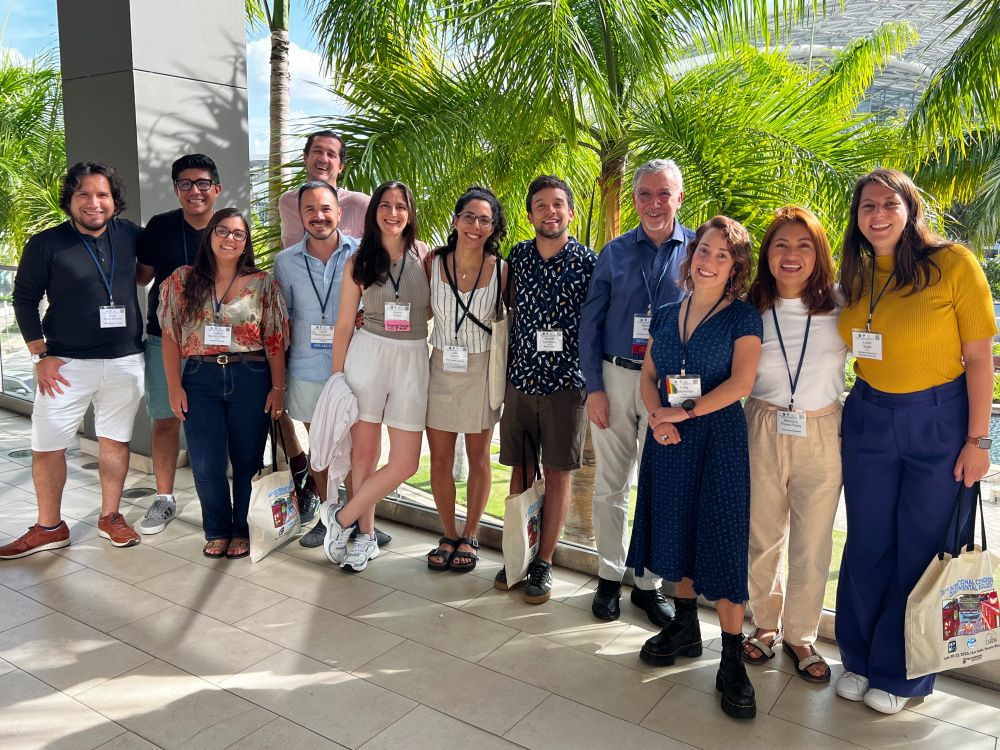
@devbioquintay.bsky.social Alumni at the 2025 @isdb.bsky.social / @socdevbio.bsky.social / LASDB meeting with @mayorlab.bsky.social 🇵🇷
#2025SDB #2025ICDB #2025LASDB
21.06.2025 21:22
👍 19
🔁 7
💬 0
📌 0
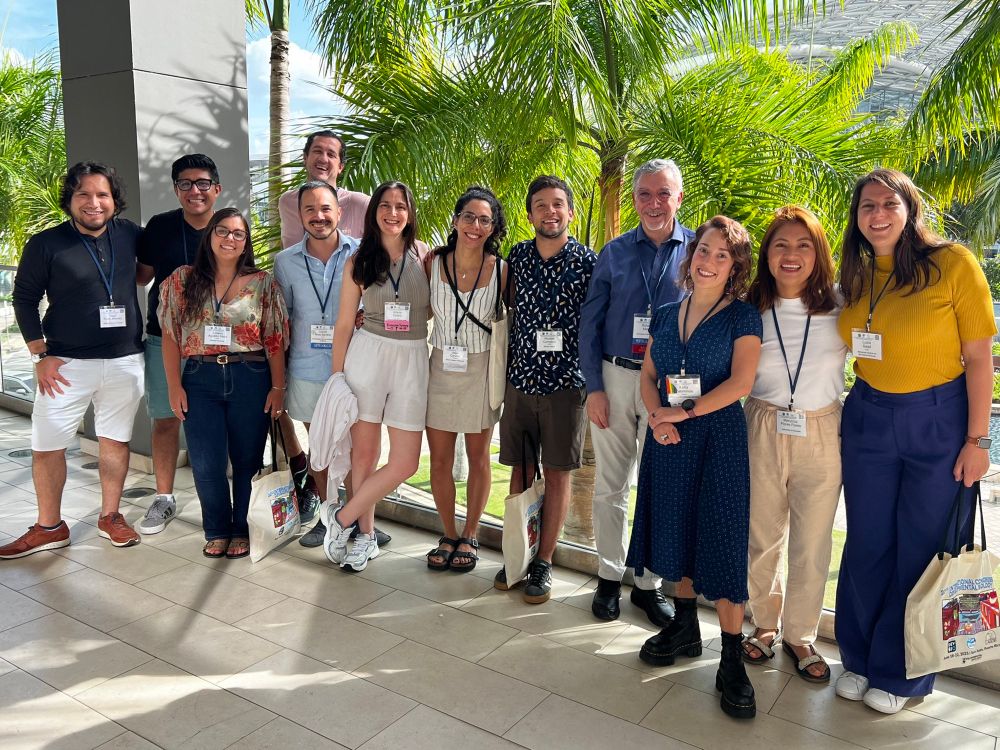
Quintay alumni meet-up at the #ICDB2025 meeting in Puerto Rico 🇵🇷
Always great to meet with the Latin American community working in developmental biology around the world 😃
@devbioquintay.bsky.social
@mayorlab.bsky.social
21.06.2025 21:29
👍 16
🔁 5
💬 0
📌 1
🫶 @isdb.bsky.social @devbioquintay.bsky.social @mayorlab.bsky.social
21.06.2025 21:52
👍 8
🔁 4
💬 0
📌 0
congratulations @matyasbl.bsky.social
12.04.2025 14:20
👍 11
🔁 3
💬 0
📌 0

Embryonic induction of fate is a core concept in developmental biology. But, cells can also modify the physical state of surrounding tissues a process we call 'actuation'.
I reviewed with
@mayorlab.bsky.social 3 excellent papers that show how actuation and feedback can drive changes in the embryo.
11.04.2025 10:57
👍 48
🔁 16
💬 1
📌 1
Thank you, Marcos Simões-Costa (Harvard Stem Cell) and Joao Botelho (P Univ Catolica), for leading the chick module at the @EMBO #DevBiol course in Quintay, Chile! From grafting beads to Light Sheet microscopy with @zeiss_micro, it was an inspiring journey of discovery!
14.01.2025 22:05
👍 20
🔁 7
💬 0
📌 1
Thanks to Nipam Patel and Matthew Parent from the Marine Biological Laboratory MBL, Woods Hole, US, for their great support to Latin American Science
09.01.2025 12:51
👍 2
🔁 0
💬 0
📌 0


The EMBO Dev Biol course in Quintay, Chile, dives into zebrafish embryos under the expert guidance of
Corinne Houart (@KingsCollegeLon) & Leo Valdivia (@CIBumayor). Students are hands-on with exciting experiments, exploring the wonders of development! #DevBiol #Zebrafish
08.01.2025 15:53
👍 19
🔁 3
💬 0
📌 1


The EMBO #DevBio course in Quintay, Chile is in full swing! Students are diving into Drosophila biology with the amazing Nipam Patel, Director of MBL- Woods Hole, leading the way. Inspiring science in Latin America! #ScienceEducation
06.01.2025 13:45
👍 12
🔁 3
💬 0
📌 0
registration is still open!!
04.01.2025 11:14
👍 1
🔁 0
💬 0
📌 0


We kicked off the EMBO #DevBio course in Quintay, Chile, with two outstanding virtual lectures by Anne Grapin-Botton and Nicoletta Petridou @nicolettapetridou.bsky.social, with excellent participation from Latin American students. Huge thanks to EMBO for their support!
04.01.2025 01:24
👍 15
🔁 3
💬 0
📌 0
We're gearing up to kick off the EMBO #DevBio course in Quintay, Chile, for Latin American students in just a few days! 🎉 Huge thanks to @uandresbello, @DiarioMayor, @umayoroficial, @CIBumayor, @MBLScience, and @EMBO for making this possible! 🌎🧬 #ScienceEducation
02.01.2025 21:24
👍 23
🔁 5
💬 0
📌 0
In 1999, we began organising Practical Courses on Developmental Biology with M Allende, first in Santiago and later in stunning Quintay, Chile. Over 25+ years, we’ve trained hundreds of students in DevBio, with over 90% becoming PIs in the field!
Join us in celebrating 25 years of teaching DevBio
23.12.2024 14:20
👍 17
🔁 5
💬 0
📌 0

Join us in celebrating 25 years of the Practical Course on Developmental Biology! This special event will feature alumni of the course, now PIs from around the world, as speakers. Come to beautiful Quintay to enjoy a unique blend of science, sea, and food – all for free!
20.12.2024 19:52
👍 10
🔁 5
💬 0
📌 1

Excellent study on #Xenopus #gastruloids shorturl.at/PTaB2 @mayorlab.bsky.social exploring mechano-chemical interactions during #gastrulation. Another example of the versatility of multicellular embryonic self organizing systems to explore fundamental principles of #PatternFormation. #NotInTheGenes
17.12.2024 07:55
👍 19
🔁 11
💬 1
📌 2

We've wondered for a while why #gastruloids are so sensitive to initial cell numbers. Here www.biorxiv.org/content/10.1... led by U, Fiuza, we explore this & observe effects of a number of variables on final structure and think what this tells us @ embryogenesis
#IInNumbersWeTrust #NotInTheGenes
17.12.2024 18:52
👍 47
🔁 19
💬 1
📌 0
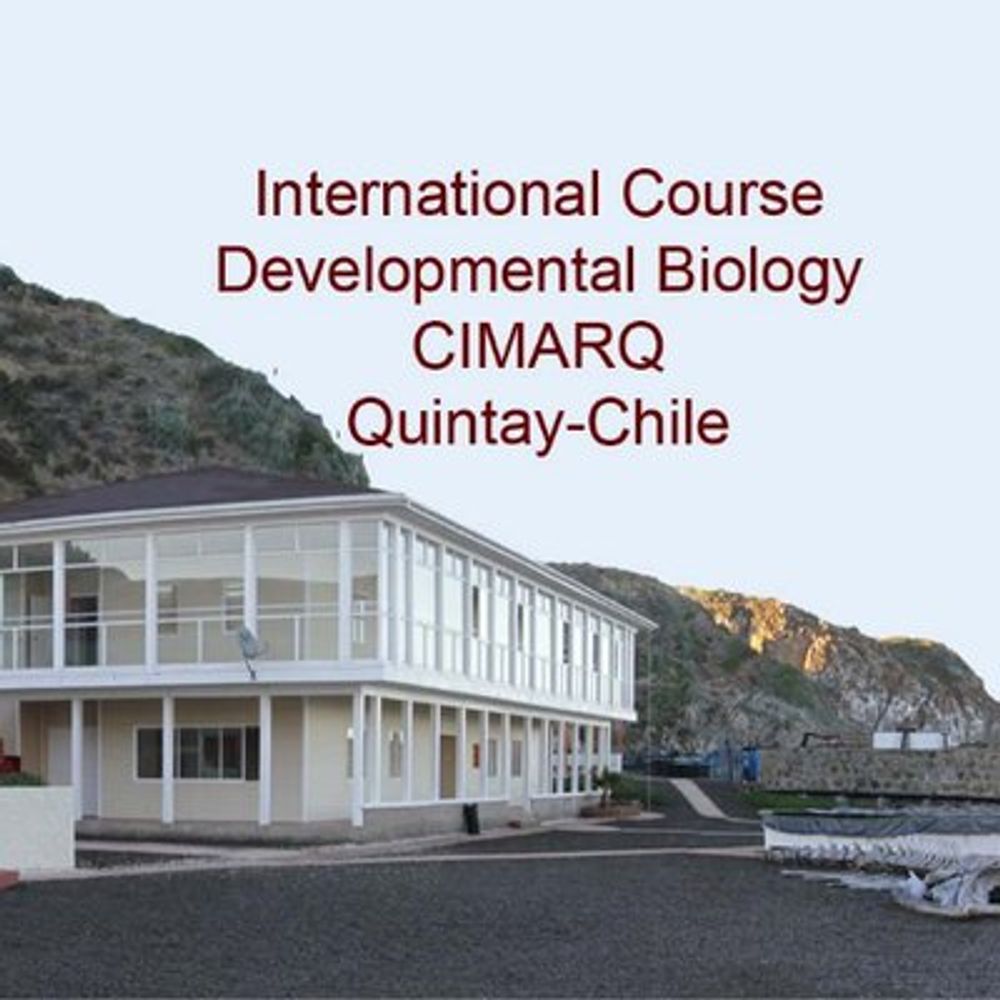
We have moved the social media related to the Quintay Developmental Biology course, please follow us there
11.12.2024 16:58
👍 4
🔁 2
💬 0
📌 0
I attended this course 15 years ago, now the first PhD student in my lab will be there :) Wishing this group a great time in Quintay!
13.12.2024 15:19
👍 4
🔁 1
💬 0
📌 0
We are excited to start the new version of the EMBO Practical course on developmental biology in beautiful Quintay
Credit video: Aljandro Sanchez-Alvarado @planaria1.bsky.social
11.12.2024 16:51
👍 33
🔁 16
💬 0
📌 3

We have moved to this new location as we prepare to launch a new edition of the Practical Course on Developmental Biology, Quintya-2025. This course began more than 25 years ago, and we are excited to bring together an excellent lineup of faculty and students for this latest edition
We have moved to this new location as we prepare to launch a new edition of the Practical Course on Developmental Biology, Quintya-2025. This course began more than 25 years ago, and we are excited to bring together an excellent lineup of faculty and students for this latest edition
11.12.2024 16:47
👍 26
🔁 15
💬 0
📌 0