
Babies are small.
Macroeconomies are big.
Put 'em together and you get an absolutely fascinating paper from Claudia Goldin.
TLDR: Economic growth that outpaces social growth can dramatically lower fertility rates.
30.12.2024 15:30
👍 156
🔁 33
💬 8
📌 2

It's the U.S. Bureau of Labor Statistics's standard definition of involuntary PT = PT worker wants FT but FT not available.
Distinguishes PT due to a lack of demand as "involuntary" (lacking any FT offer) from PT due to worker preferring PT tho employers offer FT & PT.
www.bls.gov/opub/mlr/201...
27.01.2024 05:06
👍 1
🔁 1
💬 1
📌 0

The text reads: Where Can Gen Z Buy a Home? Easiest for Gen Z to Buy: Fort Wayne, Indiana; Corpus Christi, Texas; Detroit; Laredo, Texas; Memphis; Lincoln, Nebraska; Durham, North Carolina; Fort Worth; Aurora, Colorado; Scottsdale, Arizona. Hardest for Gen Z to Buy: Newark; Richmond, Virginia; Chula Vista, California; Sacramento; Los Angeles; Riverside, California; San Jose, California; Lexington, Kentucky; San Diego; Fremont, California. Source: Point2.
These are the U.S. cities where Gen Z-ers — specifically older members who are early in their careers — have the best and worst chances of buying a home based on earnings and employment data, a recent study found. nyti.ms/4b4XtNX
25.01.2024 17:07
👍 26
🔁 5
💬 6
📌 8

Mail 3 Days a Week? Idea Meets Resistance in Britain.
Letter volumes have halved since 2011. Without significant changes, the beleaguered Royal Mail services will become “out of date,” according to a report.
Letter volumes in Britain have halved since 2011, with more people sending emails and texts over handwritten notes.
But a proposal to reduce the Royal Mail's delivery to just three days a week from six is meeting resistance from lawmakers and businesses.
25.01.2024 17:16
👍 21
🔁 9
💬 1
📌 2

Some things I've learned in 2023:
1. Black kids tend to get placed into foster care at higher rates than white kids with the same potential for future maltreatment in the home
(more: t.co/qMpsEcuKTr)
29.12.2023 21:03
👍 15
🔁 7
💬 1
📌 0
New JEL by Marianne Page @UCDavisEcon on families’ monetary resources and children’s life chances. Overall, policies providing financial resources to economically vulnerable families have the potential to improve children’s outcomes.
www.aeaweb.org/articles?id=...
21.12.2023 18:12
👍 3
🔁 3
💬 0
📌 0

The Hamilton Project: 2023 in figures - The Hamilton Project
These figures provide snapshots of The Hamilton Project's 2023 work on topics including tax, contraception, and climate.
My inaugural bluesky post! Are people really here?
The Hamilton Project did great work this last year.
📊 This year, Hamilton Project research covered climate, the labor force, contraception, tax policy, and more. Get a snapshot with our year in figures: www.hamiltonproject.org/publication/...
18.12.2023 20:46
👍 20
🔁 8
💬 0
📌 1

twitter.com/JoshGoodman_...
19.12.2023 14:35
👍 15
🔁 7
💬 0
📌 0

Age trends in alcohol-specific (blue) and drug poisoning (red) deaths in England and Wales 2001-2022.
Lots of stories going on here, most of them pretty bleak.
R code for this plot is here: github.com/VictimOfMath...
19.12.2023 13:00
👍 7
🔁 4
💬 2
📌 0
Knowing what this is within 2 seconds ages me. But can't stop thinking it still looks pretty cool even today 😎
17.12.2023 20:30
👍 0
🔁 0
💬 0
📌 0

Supply chains for clean energy technologies and for critical minerals are highly geographically concentrated. 🔌💡 www.iea.org/reports/worl...
17.12.2023 17:57
👍 8
🔁 4
💬 1
📌 0

Hi #EconSky!
Working with causal inference, perhaps using RDDs?
This paper reveals significant multiple testing issues in empirical analyses from top-five econ journals.
They highlight pitfalls and possible solution.
Cool #econometrics stuff to read - check it out!
arxiv.org/abs/2205.04345
08.10.2023 11:00
👍 30
🔁 8
💬 1
📌 0
Job posting on JOE is in decline.
10.12.2023 01:11
👍 0
🔁 0
💬 0
📌 0
A recorded webinar on the #EconJobMarket is available on the webpage of the AEA Cttee on the Job Mkt:
www.aeaweb.org/joe/communic...
It covers the timeline of the mkt, up-to-date data on the # of jobs listed this cycle, and outcomes for recent cohorts.
#EconTwitter @aeacswep.bsky.social
07.11.2023 13:49
👍 11
🔁 12
💬 0
📌 1

Sounds like an interesting alternative to Staggered DID methods!
05.12.2023 17:15
👍 0
🔁 0
💬 0
📌 0

We analyze motherhood gaps in applications sent every 10 minutes of the day...
Mothers systematically reallocate their search activities from times when children are home to school time! (4/6)
05.12.2023 08:44
👍 3
🔁 1
💬 1
📌 0

Overall, our results show that when you include the full population (not just white men), and account for measurement error in the parent's status, the story is that intergenerational transmission was very strong in the past in the U.S., but decreasing over time:
04.12.2023 14:00
👍 7
🔁 4
💬 1
📌 0

In October, 2.21 employees quit their job for each worker fired by their employer, that's down a smidge from 2.26 in Sept per today's #JOLTS.
Labor leverage continues slide since Fed started raising rates, approaching pre-pandemic level.
05.12.2023 15:13
👍 19
🔁 11
💬 1
📌 3
New JPE forthcoming paints a new picture of income inequality in the US.
29.11.2023 18:20
👍 0
🔁 0
💬 0
📌 0
📣💥Reminder 💥📣
**Adopt a Paper round 4** -
deadline to apply is December 15th (Google form), while the paper draft is due January 15th.
28.11.2023 13:02
👍 5
🔁 3
💬 0
📌 0

Interesting paper by Scott and Kristopher on recent home price growth and resilience at a high price point.
bit.ly/3GlDbBw
28.11.2023 23:44
👍 2
🔁 0
💬 0
📌 0

Does performance-based public funding pay off for university research? We apply Arkhangelsky et al.'s (AER, 2021) synthetic DiD to UK's REF. We find significant and causal effects in UK univs' Economics and Business research output since REF in 2009. Available as WP: ideas.repec.org/p/pbs/ecofin...
19.11.2023 09:02
👍 3
🔁 2
💬 0
📌 0

Excellent news today - our paper on bootstrap inference with asymptotically biased estimators, joint with Silvia Goncalves, Morten Nielsen & Edoardo Zanelli, has been accepted by the 𝑱𝒐𝒖𝒓𝒏𝒂𝒍 𝒐𝒇 𝒕𝒉𝒆 𝑨𝒎𝒆𝒓𝒊𝒄𝒂𝒏 𝑺𝒕𝒂𝒕𝒊𝒔𝒕𝒊𝒄𝒂𝒍 𝑨𝒔𝒔𝒐𝒄𝒊𝒂𝒕𝒊𝒐𝒏! ⭐⭐⭐
For the paper, see: arxiv.org/abs/2208.02028
11.11.2023 18:18
👍 18
🔁 4
💬 1
📌 0

You, Too, Can Deep-Fry Your Turkey
The secret to (safely) frying your Thanksgiving bird.
Deep-frying a Thanksgiving turkey is not just a stunt — it’s the best way to cook it, says a New York Times Food reporter. With the right equipment, some caution and a lot of peanut oil, it will yield the juiciest, crispiest bird. Watch how to do it here.
22.11.2023 19:43
👍 40
🔁 7
💬 16
📌 27
Universal lunch reducing groceries prices charged at stores remains my favorite example of (positive) indirect effects. It’s so cool
23.11.2023 00:00
👍 60
🔁 26
💬 0
📌 1
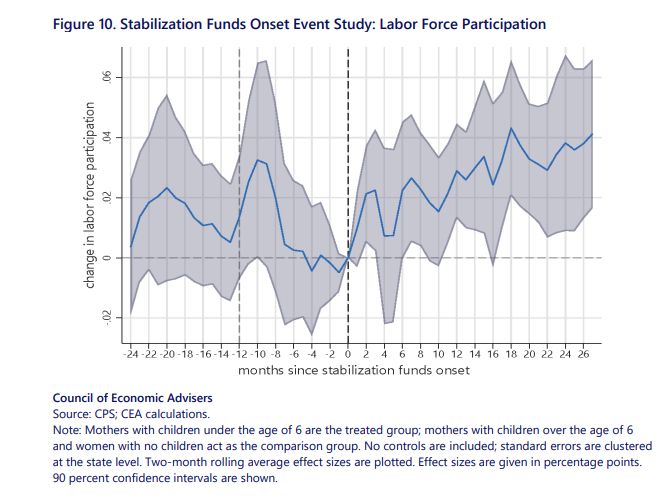
White House CEA kicking out amazing research today.
The March 2021 (2 months after Biden became POTUS) American Rescue Plan authorized $24 billion in childcare stabilization grants.
Once $ arrived in counties, mothers of young children gained employment.
www.whitehouse.gov/cea/written-...
07.11.2023 20:48
👍 130
🔁 59
💬 1
📌 13
