One of my favorite @kff.org charts:
The 5% of the population who are sickest/most costly account for nearly half of the nation's overall health care spending:
www.healthsystemtracker.org/chart-collec...
03.03.2026 15:00
👍 0
🔁 1
💬 0
📌 0
![Image featuring a quote by Drew Altman, KFF President and CEO that says: “…What should you watch for [in health policy in 2026] that will really matter for people, policy and politics? First and foremost is the role that health care affordability will play in the midterms.” The white text is overlaid on a blue background with the KFF logo at the bottom right and the 'Beyond the Data' logo on the bottom left.](https://cdn.bsky.app/img/feed_thumbnail/plain/did:plc:zpwka3ky6phhcwmwor4tu5xj/bafkreibxqswmrsyubwlujkumsh4722vesovlzkrgiyl53jy6f6u6hdaa4q)
Image featuring a quote by Drew Altman, KFF President and CEO that says: “…What should you watch for [in health policy in 2026] that will really matter for people, policy and politics? First and foremost is the role that health care affordability will play in the midterms.” The white text is overlaid on a blue background with the KFF logo at the bottom right and the 'Beyond the Data' logo on the bottom left.
In a new column, President and CEO @drewaltman.bsky.social forecasts 8 things to look for in health policy in 2026. https://on.kff.org/4pyk8Jm
08.12.2025 20:16
👍 6
🔁 4
💬 0
📌 0

Proposals from Senators Scott and Cassidy to convert ACA premium tax credits into health accounts present trade-offs that benefit healthy people at the expense of sick people. Senator Scott's proposal, in particular, would destabilize the insurance market in some states.
www.kff.org/affordable-c...
21.11.2025 22:43
👍 54
🔁 26
💬 10
📌 5

KFF graphic featuring a quote from Tricia Neuman, KFF Senior Vice President; Executive Director for Program on Medicare Policy. It says, “The issue of health care affordability crosses generations. Recently, the press has focused attention on health care affordability challenges for people with employer and marketplace coverage. The rise in Medicare Part B premiums shows how increases in health care costs affect people with Medicare, too.”
⚡ Last week, CMS announced that Medicare Part B premiums will increase by 10% next year. KFF’s @tricia-neuman.bsky.social explains why Medicare beneficiaries are not insulated from health care affordability challenges. #QuickTake https://on.kff.org/4oKsSeK
17.11.2025 22:00
👍 11
🔁 7
💬 1
📌 0
This @kff.org report includes more details on the findings about who MAHA parents are, and how they and other parents view vaccines and other children's health issues www.kff.org/public-opini...
15.10.2025 12:45
👍 3
🔁 1
💬 0
📌 0
A small clarification to some of the talking points out there using KFF data. Premiums won’t increase by 114% for 24 million people if ACA enhanced premium tax credits are allowed to expire. Premiums would more than double ONLY for the 22 million enrollees with tax credits.
11.10.2025 15:26
👍 8
🔁 1
💬 1
📌 1

How to Cite Us | KFF
KFF is a nonpartisan health policy organization. We never advocate or make recommendations. We are not affiliated with Kaiser Permanente and we are not a foundation. That is why we changed our name to...
Friendly reminder about @kff.org : We changed our name KFF in 2023, to dispel confusion about who we are. Our legal operating name is KFF, and we should be cited that way. More here: www.kff.org/more-about-us/
Thanks for relying on our health policy analysis, polling and journalism.
04.10.2025 15:13
👍 8
🔁 1
💬 1
📌 0

Stacked bar chart showing percent who say it is very important, somewhat important, not too important, or not at all important for children in their community to be vaccinated against specific diseases. The chart shows 9 in 10 Parents Say It Is Important for Children To Be Vaccinated Against MMR and Polio, Fewer Say the Same About the Flu and COVID-19.
Our new survey, in partnership with @washingtonpost.com, explores parents’ experiences with and views about vaccines for their children.
Overall, we find most parents view routine childhood vaccines (MMR, polio) as safe and important but are less confident in seasonal shots.
15.09.2025 13:57
👍 5
🔁 3
💬 1
📌 0

NEW KFF/Washington Post survey finds most parents follow vaccine guidance and express confidence in vaccines. But partisan divisions appear to be widening, and younger parents express more doubts than older parents, raising questions about the future of childhood vaccine uptake in the US.
15.09.2025 20:12
👍 3
🔁 3
💬 1
📌 0

Most Parents Nationally and in Florida Want Schools to Require Vaccines
As Florida moves to end its mandates, early release findings from a new KFF-Washington Post survey show that parents overwhelmingly support current laws that require children to be vaccinated against ...
Our poll of parents on vaccines with the Washington Post suggests there may be more blowback than imitation after Florida’s move to eliminate childhood vax requirements. Even 7 in 10 MAGA parents support the requirements (and 82% of FLA parents).
04.09.2025 12:48
👍 8
🔁 4
💬 0
📌 0
![KFF graphic featuring a quote from Liz Hamel, KFF Vice President and Director of Public Opinion and Survey Research. It says, “[Secretary Kennedy] has promised to restore public trust in the CDC, but our polling data suggests real challenges given how skeptical the public — and Republicans in particular — are about the agency.”](https://cdn.bsky.app/img/feed_thumbnail/plain/did:plc:zpwka3ky6phhcwmwor4tu5xj/bafkreictyvq2avtqvkbc74bf5j2svs5wdgys6ad67czz6bnew2b3ocbkiu)
KFF graphic featuring a quote from Liz Hamel, KFF Vice President and Director of Public Opinion and Survey Research. It says, “[Secretary Kennedy] has promised to restore public trust in the CDC, but our polling data suggests real challenges given how skeptical the public — and Republicans in particular — are about the agency.”
⚡ KFF’s @lizhamel.bsky.social writes about the challenge in ensuring the CDC can be trusted by people across partisanship and other dividing lines, drawing on insights from KFF’s polling on these issues. #QuickTake https://on.kff.org/46lWYOY
03.09.2025 19:02
👍 5
🔁 2
💬 0
📌 0

Graphic from KFF that reads: "As the debate over mRNA technology continues, public uncertainty about its safety is likely to persist and may even deepen the partisan divide... as well as hinder any efforts to develop new vaccines in response to future pandemics, not to mention convince the public to take them." By Ashley Kirzinger of KFF
⚡KFF’s Ashley Kirzinger examines how halting mRNA research could deepen the public’s existing distrust and uncertainty about vaccine safety – with potential consequences for convincing the public to take new vaccines in the future. on.kff.org/3Ud1YyJ #QuickTake
06.08.2025 19:43
👍 10
🔁 3
💬 1
📌 1

Our homepage rn -- if you wanna know more about the health implications of this thing: kffhealthnews.org
03.07.2025 21:03
👍 3
🔁 5
💬 1
📌 0
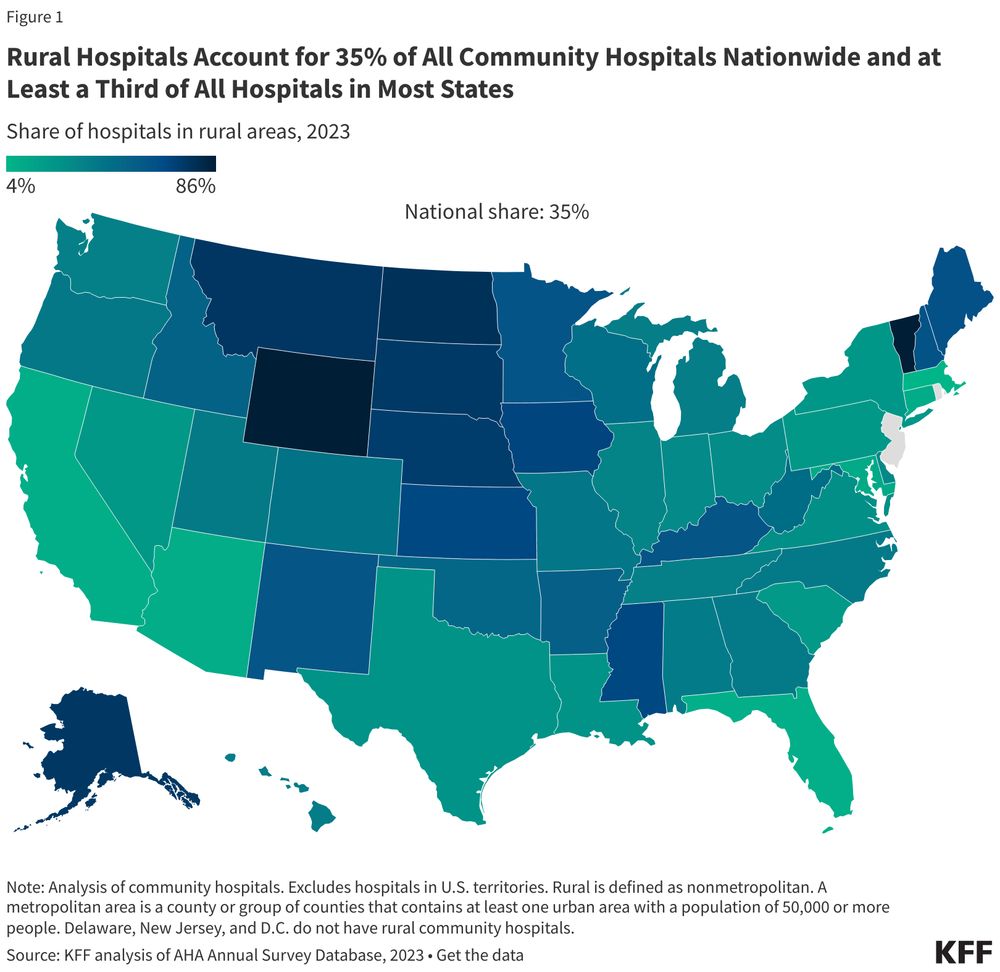
One of the biggest flashpoints for the "One Big Beautiful Bill Act" has been its impact on roughly 1800 rural hospitals, which is why Senate Republicans are proposing a new $15 billion rural health fund. However, there are still questions and concerns about the bill 👇 (1/7)
27.06.2025 18:50
👍 12
🔁 10
💬 1
📌 0
It’s remarkable how much of the debate about Medicaid cuts is now about hospitals and a rural hospital fund to placate critics and appear to soften the blow, not the millions of people who will lose coverage or find it unaffordable. Some will lose SNAP benefits at the same time.
26.06.2025 18:56
👍 1
🔁 3
💬 0
📌 0
Confused about this provision? Read @kff.org 's explainer on the cost-sharing reduction payments, silver loading, and the provision that apparently violates Byrd rules: www.kff.org/policy-watch...
26.06.2025 12:19
👍 6
🔁 3
💬 0
📌 0

KFF graphic featuring a quote from Emma Wager, KFF Senior Policy Analyst for the Program on the ACA. It says, “A CMS rule, once finalized, is generally intended to exist permanently or until it is repealed.... This temporary implementation may preserve the potential for the reconciliation bill to generate official savings through changes to ACA marketplaces in later years (2027–2034) if enacted.”
⚡ KFF’s @emmawage.bsky.social examines the CMS final rule aimed at reducing federal spending in the ACA Marketplaces and how it interacts with the House-passed version of the reconciliation bill. #QuickTake on.kff.org/4409KBM
24.06.2025 20:01
👍 3
🔁 2
💬 0
📌 0

Work requirements and Medicaid: What’s in the House Reconciliation bill
CBO Estimates: Implementing work requirements would account for the largest share of federal Medicaid savings — and cause the largest increase in the number of people without health insurance.
Verification requirements: States would be required to verify at application and renewal that ACA expansion enrollees meet 80 hours of work activities per month or qualify for an exemption. States could also require more frequent verification.
Implementation timeline: HHS must release guidance by end of 2025, giving states limited time to develop or change implementation plans, protocols, and systems before the Dec. 2026 implementation deadline.
State implementation choices: State choices to impose stricter requirements than the minimum federal requirements — like more frequent verification or longer look-back periods — and state capacity to automate processes will affect how many people could lose coverage.
Comparison to other waivers and proposals: The bill’s work requirement policies are more stringent than past Congressional proposals or state waivers, with no exemptions for older age and more barriers to getting and keeping coverage.
The work requirements proposed in the “One Big Beautiful Bill Act” are more stringent than previous policies considered by Congress and implemented at the state level.
As the Senate debates the bill, our analysis explains the proposals in the House-passed version.
20.06.2025 20:59
👍 176
🔁 113
💬 12
📌 9
One of the great parts of my job is digging into the data after our initial release. This time I found that we could look at the attitudes of people with Medicaid who are currently working.
My key takeaway is that they value work and also really rely on their Medicaid coverage.
20.06.2025 16:21
👍 36
🔁 15
💬 0
📌 0

KFF Health Tracking Poll: ACA Enhanced Subsidies | KFF
KFF's Health Tracking Poll looks at public awareness and support for ACA Marketplace subsidies and finds that most adults are unaware the subsidies are set to expire soon. Three in four say Congress s...
There's been some talk about health provisions that are IN the GOP budget bill, but less about what is NOT included: extension of enhanced premium tax credits for ACA Marketplace plans. Our new poll finds most people across the political spectrum support extending them.
www.kff.org/affordable-c...
18.06.2025 15:54
👍 9
🔁 5
💬 1
📌 1
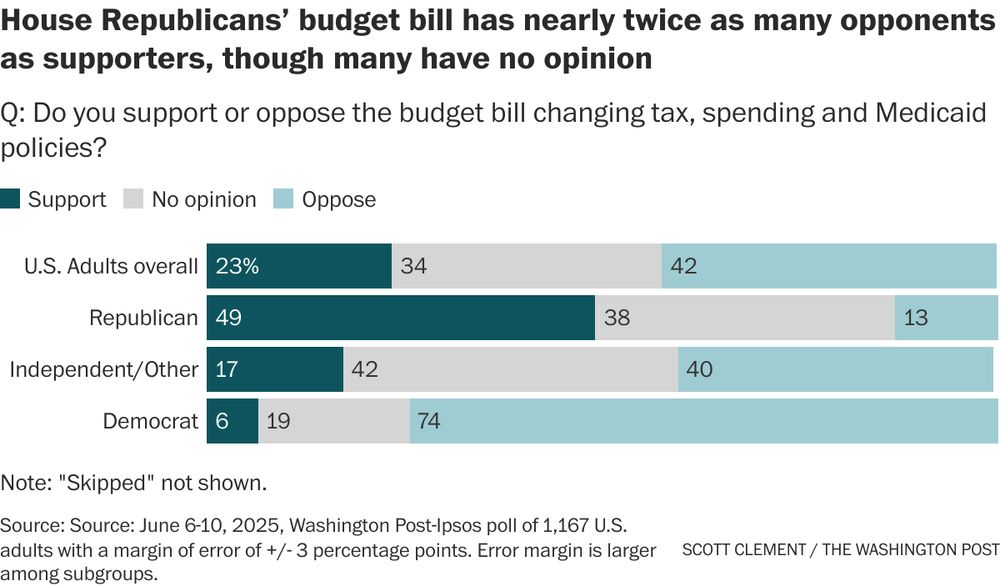
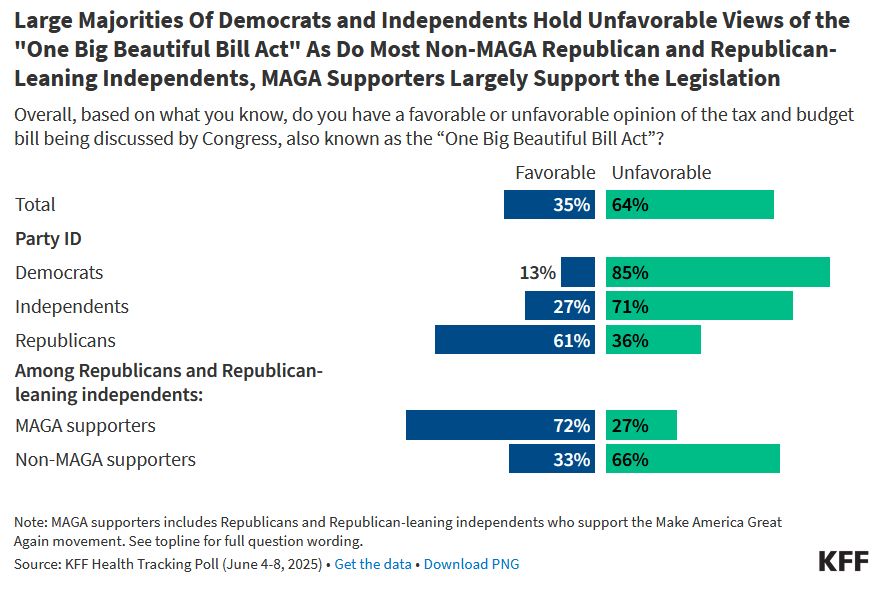
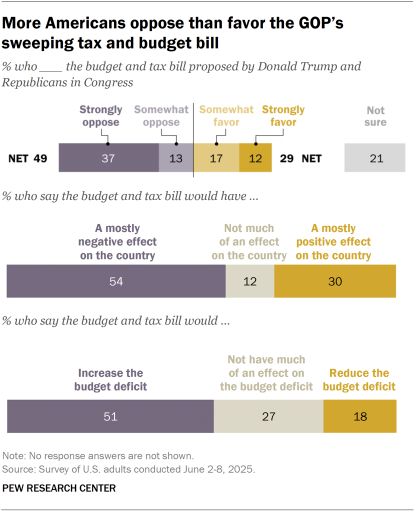
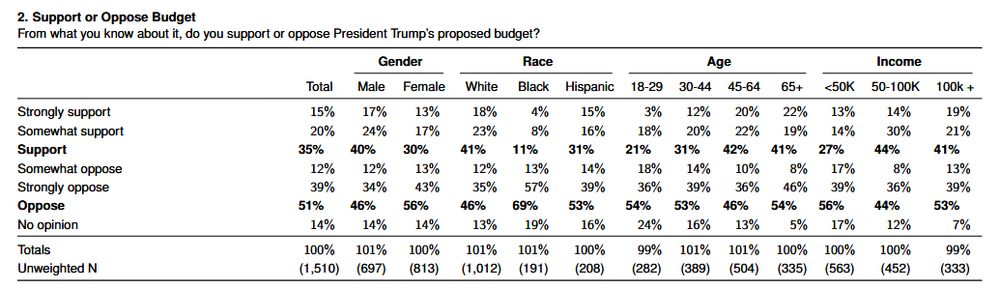
One of the interesting throughlines here is the degree to which (maybe by virtue of how much else is going on), how malleable views of the bill are -- it starts off without much of a base of strong support, but some lesser-known provisions are even more unpopular when people hear about them.
17.06.2025 19:23
👍 29
🔁 9
💬 2
📌 1