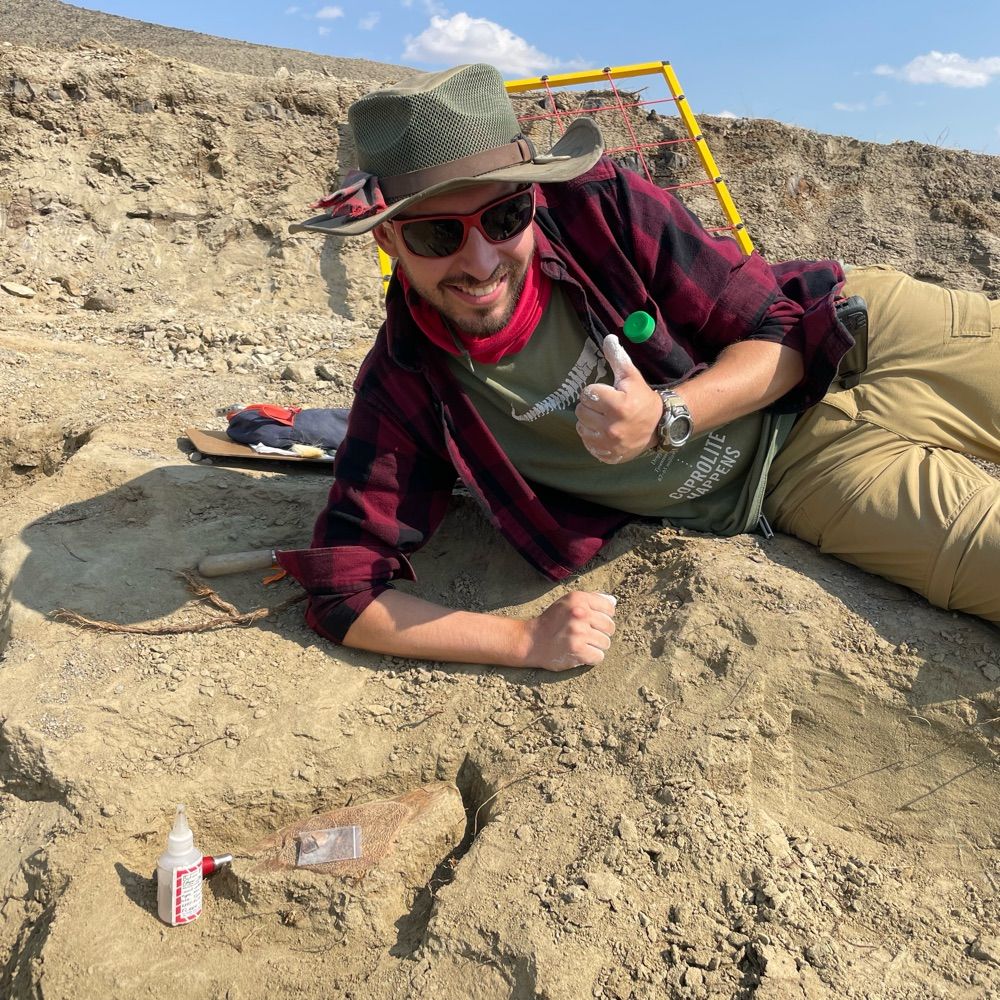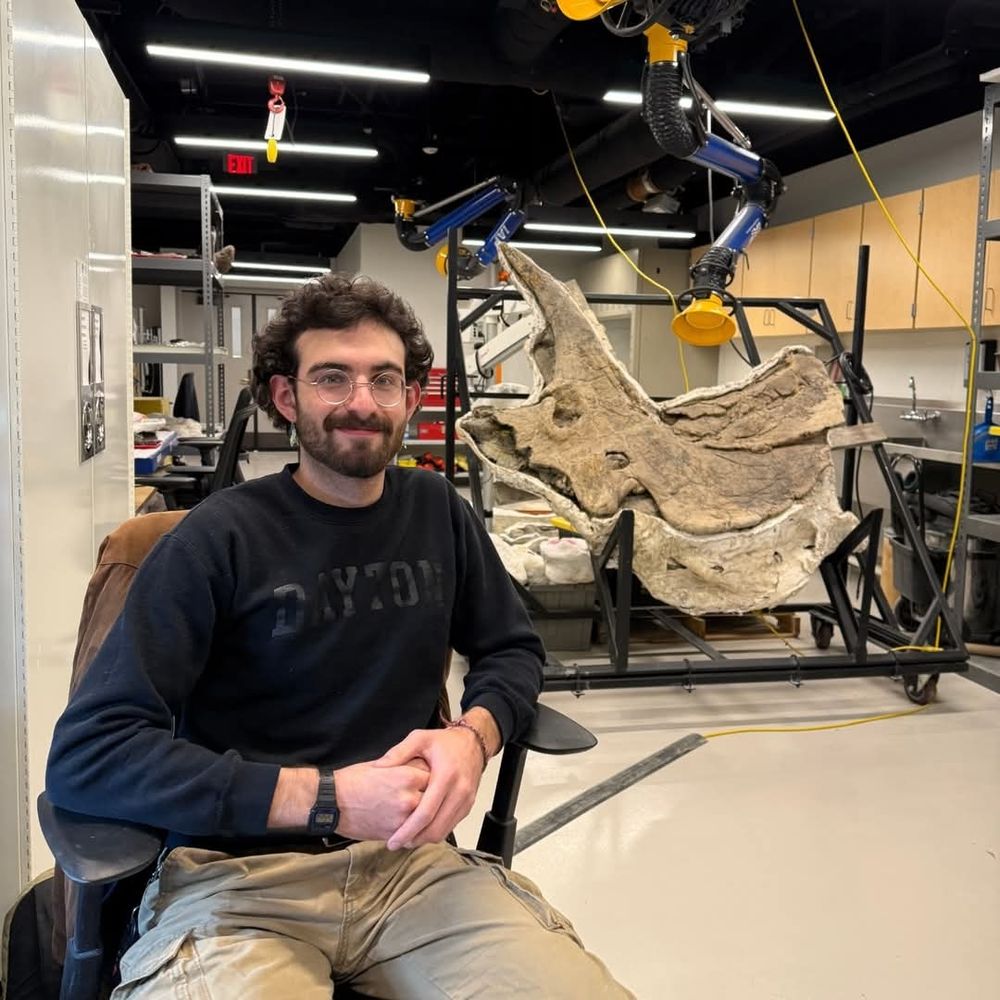
From the field to the lab! Peter Rhynard, one of our 2024 field interns, volunteered over the winter break in the Paleo Prep Lab at the Cincinnati Museum Center, where he worked on fossils he helped excavate in the field!
07.02.2025 22:01
👍 4
🔁 1
💬 1
📌 0
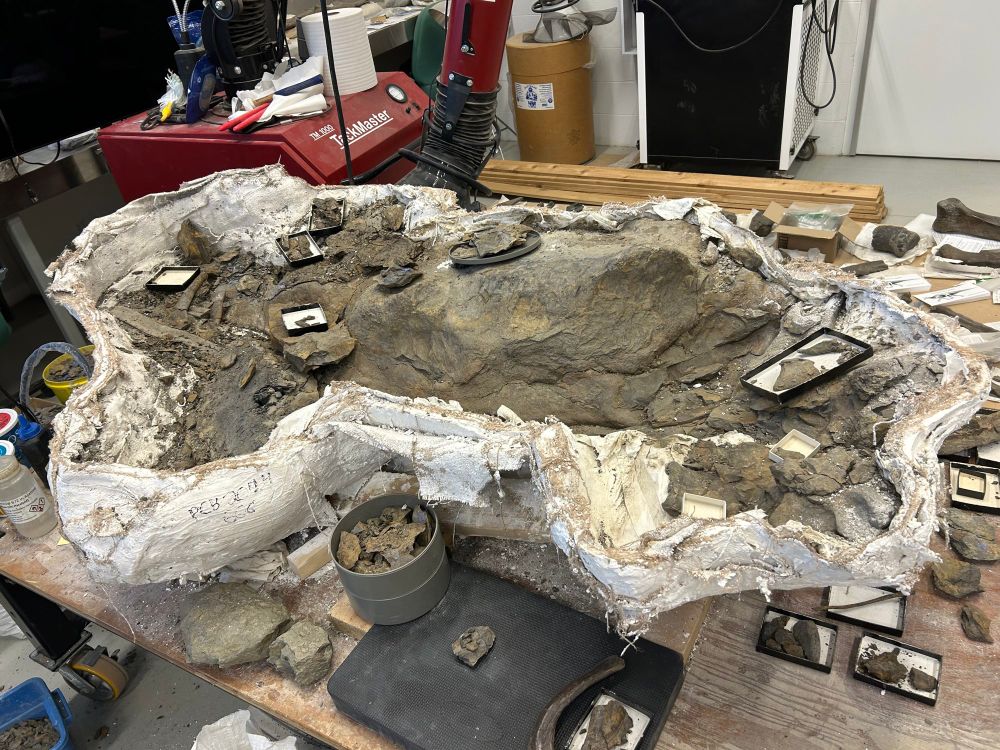
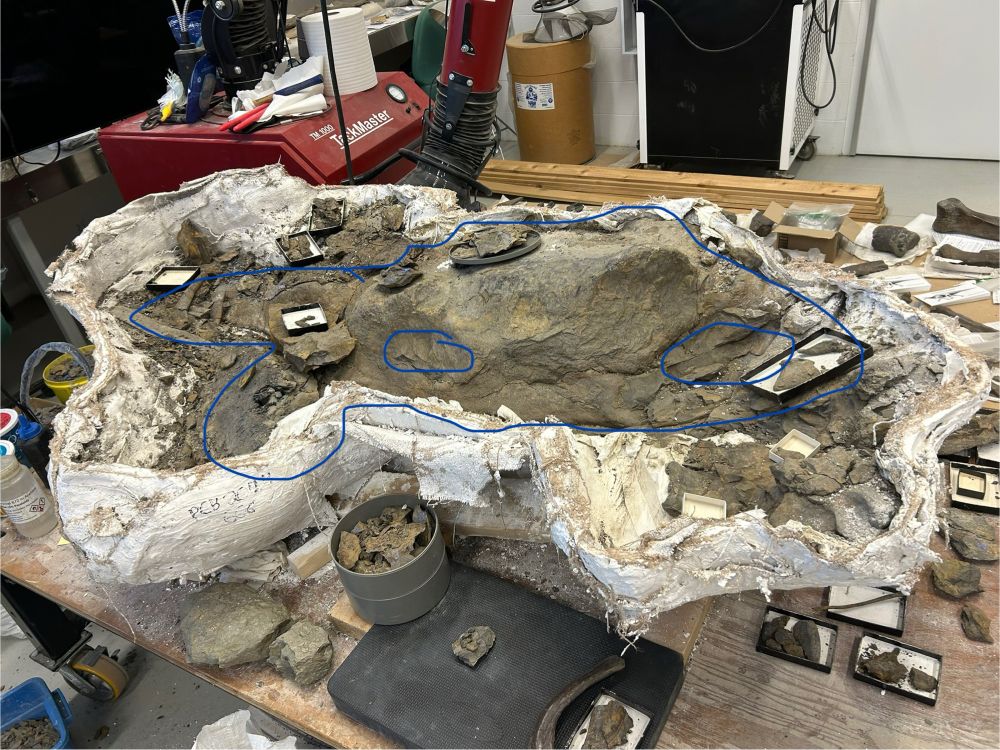
The current state of the #pachyrhinosaurus skull that I helped collect in September. Preparation is going amazingly so far and I’ve found numerous fossils surrounding it including an ulna, quadrate, ischium and teeth. Not to mention vertebrae and ribs. #fossilfriday
24.01.2025 21:25
👍 7
🔁 3
💬 0
📌 0
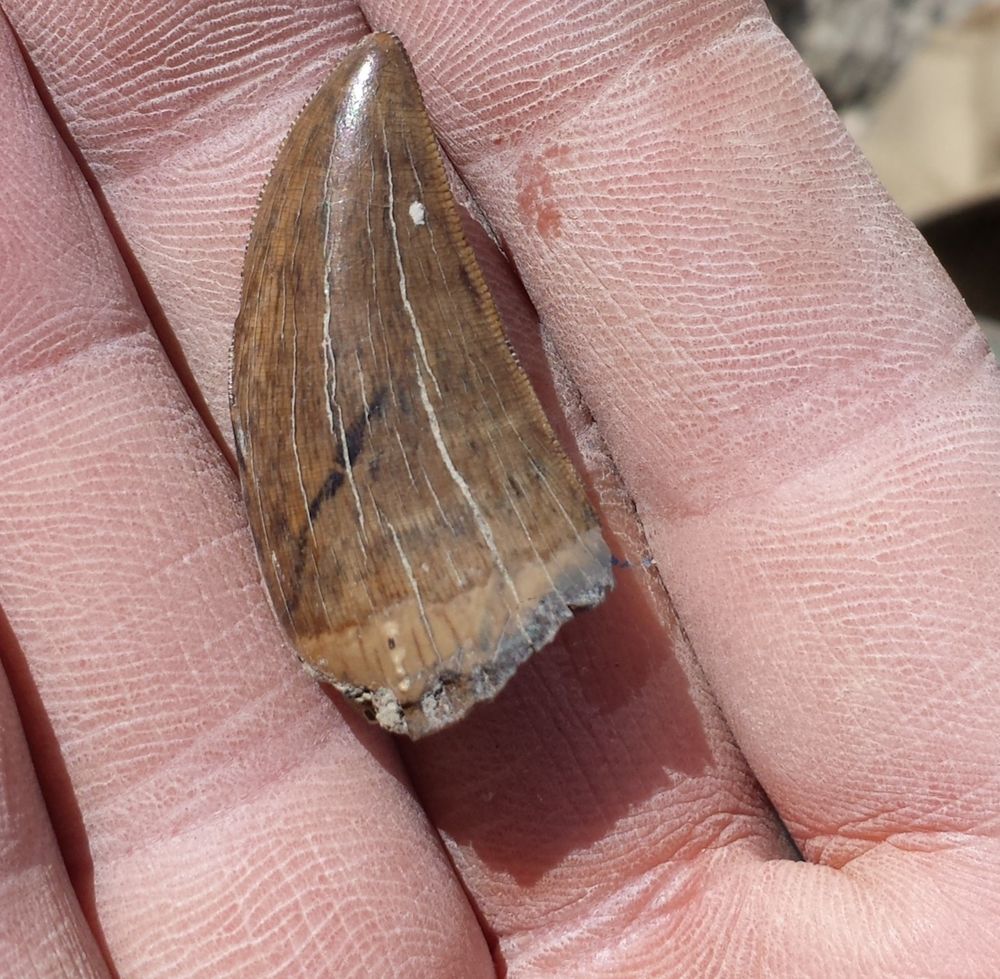
Side view of the brown tooth showing nice serrations on the rear edge
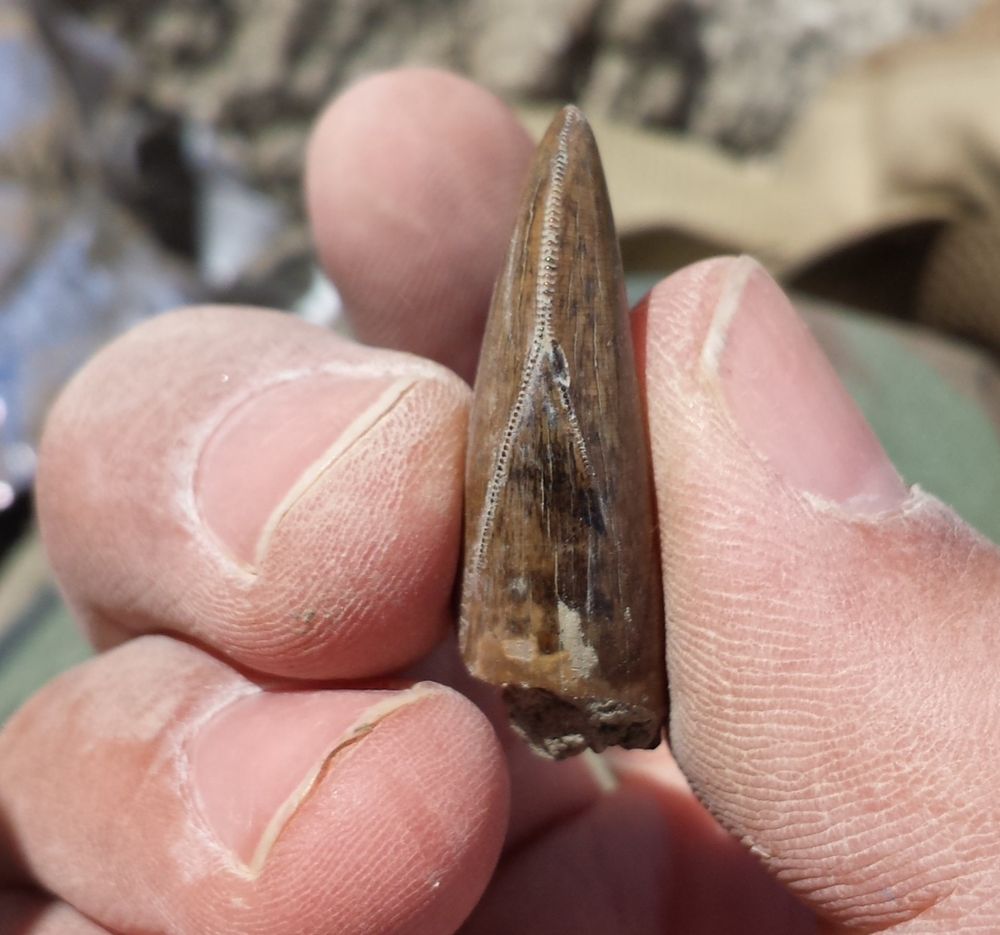
Front view of the brown tooth showing the split in the serrations halfway down the tooth
Happy #ToothyTuesday from this pathological Daspletosaurus tooth from the 75 million year old sediments of the Judith River Formation.
This specimen has split carinae (the serrated edge) on the front side in an upside down "Y" pattern. Relatively uncommon, and a treat to find in the field. 🦖 🧪
04.02.2025 17:47
👍 48
🔁 7
💬 1
📌 0
Continuing this fossil weirdness thread!
Thyreosaurus, Plourdosteus, Congruus, Megalotragus...
04.02.2025 20:50
👍 107
🔁 15
💬 3
📌 0

A new book explores the evolutionary romance between plants and animals
Riley Black’s new book, When the Earth was Green, uses the latest research to envision the ancient worlds of our favorite prehistoric animals.
“Paleontology is often framed as stories of colonization and conquest — life colonized land, dinosaurs dominated the Mesozoic Era. Black rejects this framework, instead twining tales of communities into an ‘evolutionary romance.’”
04.02.2025 16:09
👍 269
🔁 64
💬 5
📌 5
Headline: "Did Giant Ice-Age Beast Carve These Vast Caves in South America?"
Me: "Yes."
Wrote about these megafauna-made mega-tunnels of in my book 'The Evolution Underground' (2017, Pegasus Books), pleased to see them still getting the attention they richly deserve.
🧪🦥🪨⚒️ #ichnology
30.01.2025 15:01
👍 72
🔁 14
💬 3
📌 2
¡Gracias por compartir estas fotos!
22.01.2025 19:53
👍 1
🔁 0
💬 1
📌 0


First pictures from Walking With Dinosaurs (2025)!!!
22.01.2025 19:41
👍 30
🔁 13
💬 3
📌 3

When the Earth Was Green
Winner, A Friend of Darwin Award, 2024 A gorgeously composed look at the longstanding relationship between prehistoric plants and life on EarthFossils plants...
I've got a new book coming out next month - all about how prehistoric plants changed the world - and I'd love for it to bloom wildly when it comes out.
Pre-orders make a massive difference, so please consider ordering a physical, ebook, or audio copy, and asking for it from your favorite library 🌱
02.01.2025 21:29
👍 813
🔁 349
💬 44
📌 46

Just in time for the year's end: an updated geochronology chart from the ICS:
stratigraphy.org/ICSchart/Chr...
31.12.2024 14:21
👍 211
🔁 75
💬 4
📌 16
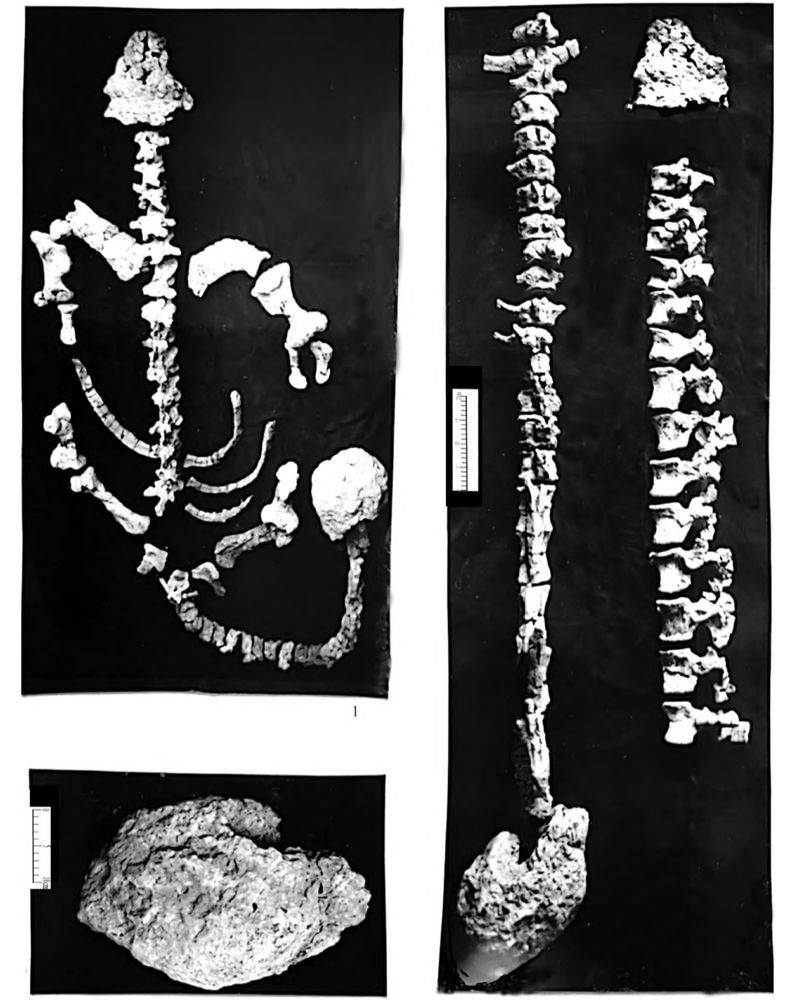
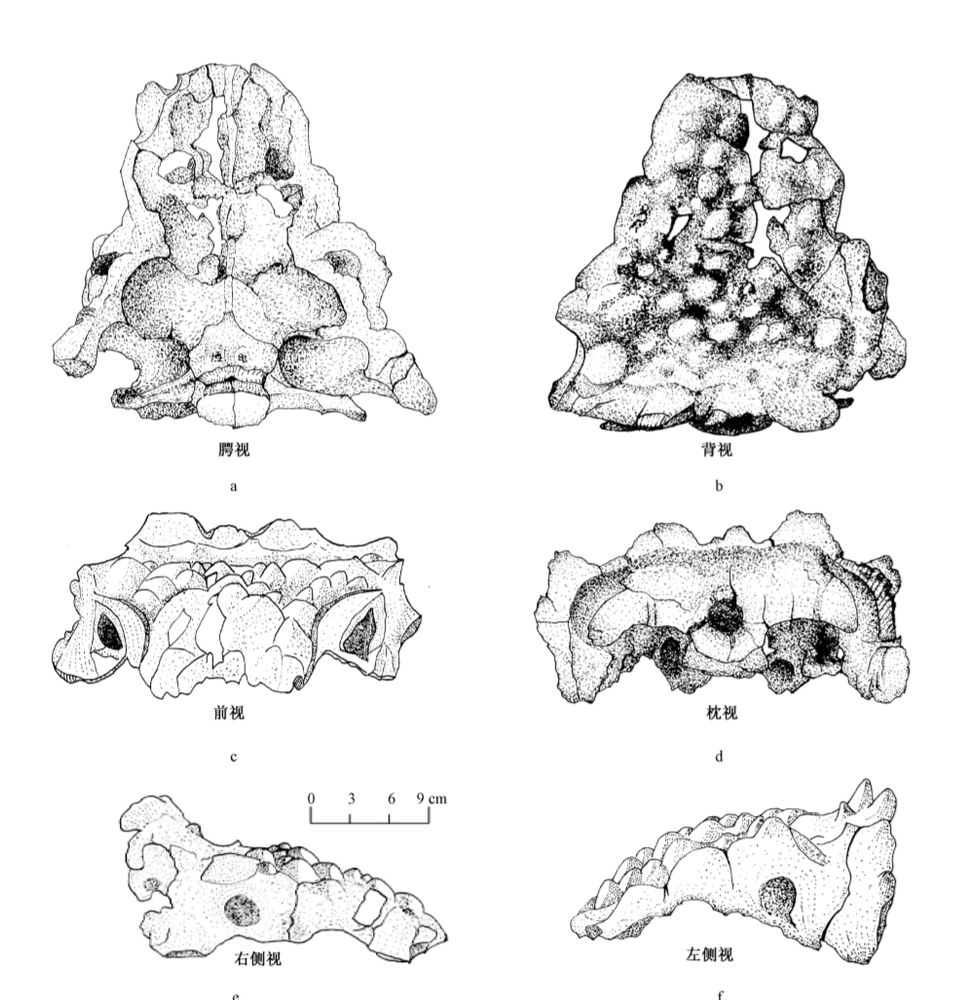
The last new dinosaur of 2024? Pang et al. 2024 A New Species of Ankylosaurian Dinosaur——Tianzhenosaurus chengi sp. nov., from the Late Cretaceous of Tianzhen County, Shanxi Province, China cnki.net/KCMS/detail/...
30.12.2024 17:44
👍 13
🔁 4
💬 0
📌 1
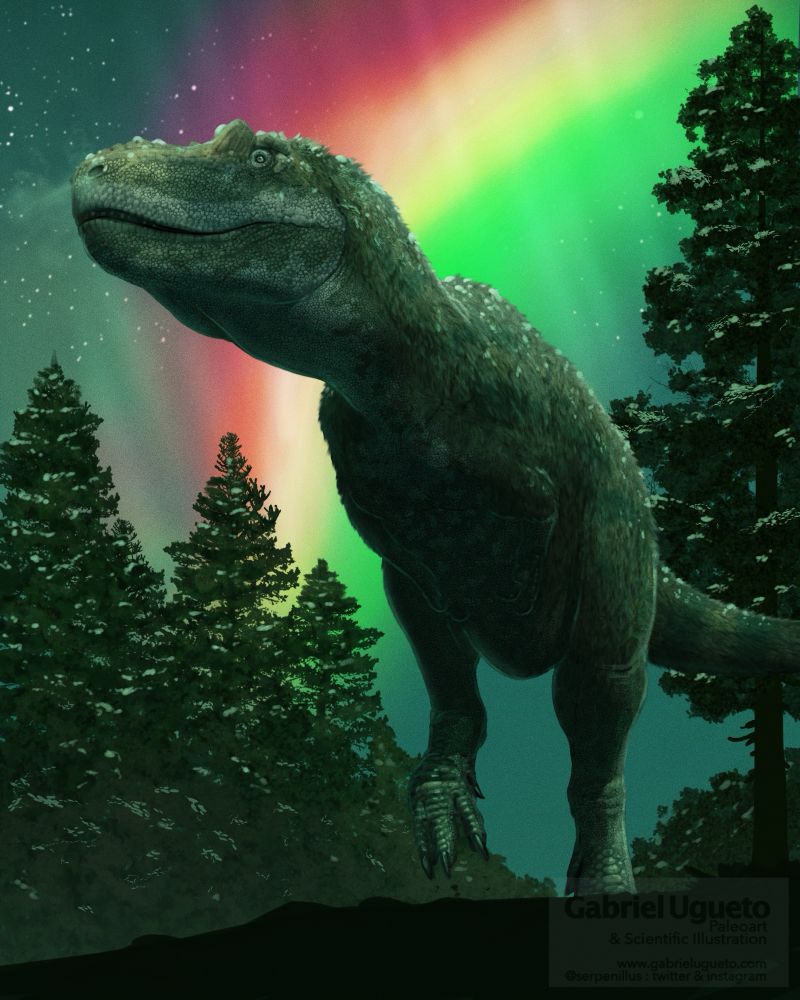
Nanuqsaurus viewed from below while walking under the northern lights and it is snowing lightly
I am really fond of this piece showing Nanuqsaurus walking under the northern lights in a cold winter day during the Late Cretaceous! Even if I did this illustration a while back I think it is the best one to wish everyone:
Merry Christmas and Happy Holidays!
#paleoart #sciart #dinosaurs
25.12.2024 13:34
👍 480
🔁 98
💬 4
📌 3
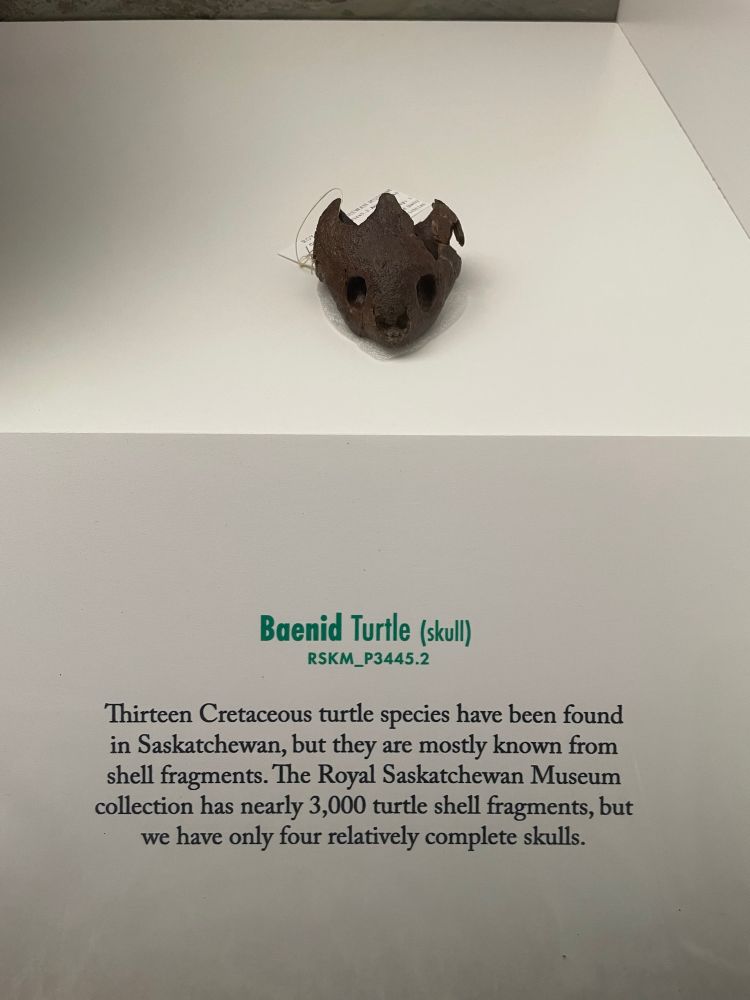
Turtle skull on display
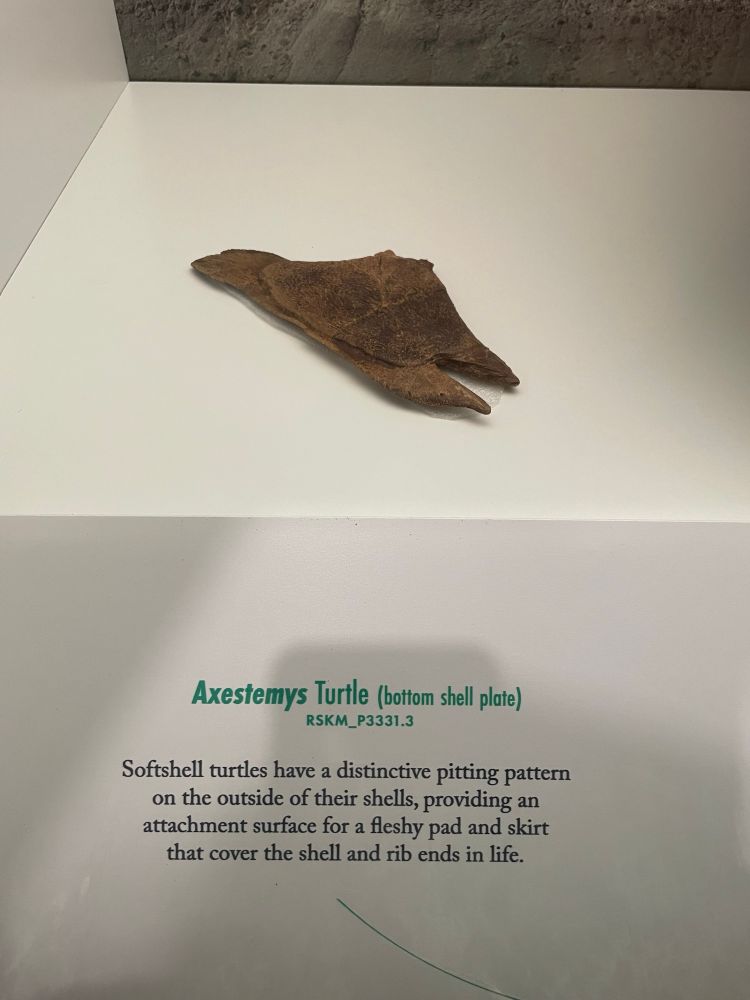
Turtle shell piece on display
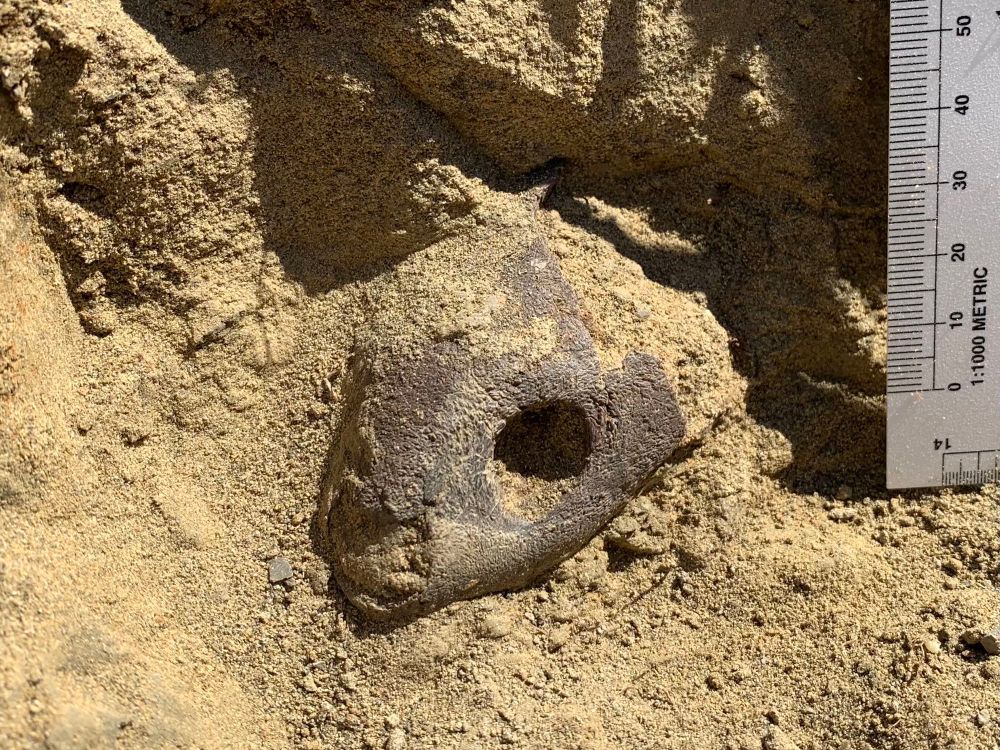
Turtle skull being excavated
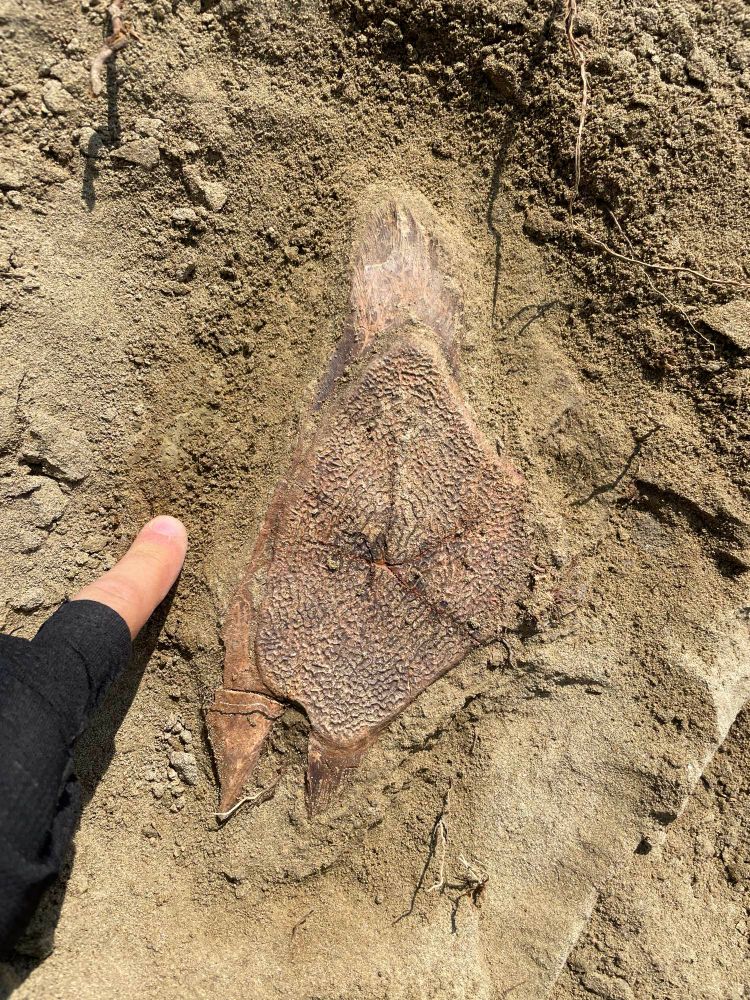
Turtle shell piece being excavated
Christmas came early this year! The Royal Saskatchewan Museum put two turtle fossils I found and excavated on display! A nearly complete skull of an unidentified Baenid, and a right xiphiplastron of a large Axestemys.
#TurtleTuesday
#Paleontology
25.12.2024 03:57
👍 15
🔁 1
💬 0
📌 0

Illustration by me (Anthony J.Martin) from my book 'The Evolution Underground' (2017, Pegasus Books); shows a blue sky with cumulus clouds and a gray prop-plane with the registration number NR16020 on its tail, and in the foreground is the cross-section of a beach revealing crustacean burrows, which are labeled left to right as in the figure caption below:
FIGURE 39. Decapod burrows from shallow marine to land (left to right): Carolina ghost shrimp (CM = Callichirus major), sand fiddler crab (UP = Uca pugilator), Atlantic ghost crab (OQ = Ocypode quadrata), and coconut crab (BL = Birgus latro); scale = 1 meter (3.3 feet). (Note: The coconut crab lives on Pacific islands, whereas the other species are in the southeastern U.S.)
In celebration of #Crustmas & the amazing burrowing powers of crustaceans, here's a figure I made for my book 'The Evolution Underground' (2017, Pegasus Books), featuring burrows made by a variety of crustaceans. Figure key in the alt-text.
(P.S. The plane's registration number is an Easter egg.) 🧪🦀
18.12.2024 15:05
👍 33
🔁 8
💬 2
📌 0
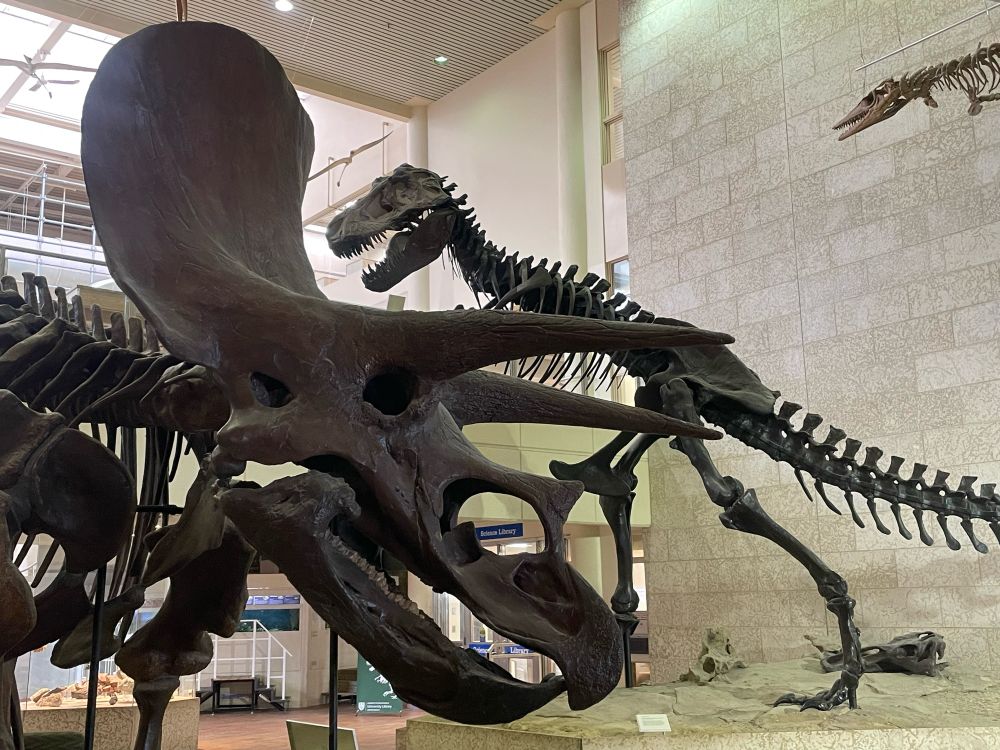
A paleontological smorgasbord for #FossilFriday @usask.bsky.social
Triceratops, Tyrannosaurus, Edmontosaurus, Mosasaurus, and Rhamphorhynchus.
13.12.2024 21:10
👍 11
🔁 4
💬 0
📌 0
The category-modifier system: a hierarchical classification scheme for vertebrate tooth marks | Paleobiology | Cambridge Core
The category-modifier system: a hierarchical classification scheme for vertebrate tooth marks
Wyenberg-Henzler TCA, Fowler DW, Currie PJ, Sullivan C. The category-modifier system: a hierarchical classification scheme for vertebrate tooth marks. Paleobiology. Published online 2024:1-19. doi:10.1017/pab.2024.43
www.cambridge.org/core/journal...
10.12.2024 22:05
👍 13
🔁 2
💬 0
📌 0
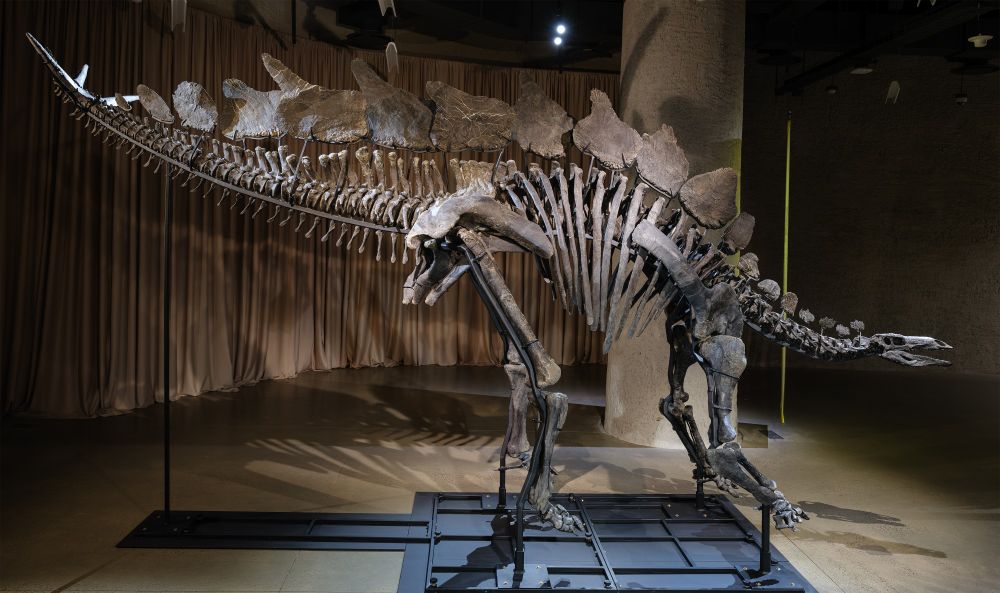
A photograph of Apex in profile. The dinosaur’s fossilzed skeleton is dark grayish in color. It has a small head, a long spiked tail, and large plates covering its back.
Apex is now on view! Thought to be the largest & one of the most complete Stegosaurus specimens ever found, Apex will be studied by Museum scientists. All resulting 3D digital models, including new CT scans taken at the Museum, will be made available for researchers.
08.12.2024 15:10
👍 90
🔁 11
💬 2
📌 1

A long and low skull of a fossil mammal, an herbivore called Telmatherium, on a museum collection bench
Brontotheres are often described as being rhino-like, because of forms with big horns like Megacerops, but not all brontotheres were so conspicuously ornamented. This skull belongs to Telmatherium, a relatively small brontothere that lived in western North America about 44 million years ago. 🧪
08.12.2024 17:14
👍 101
🔁 16
💬 3
📌 0

The skeleton of the prehistoric crocodile Brachychampsa in a museum, with osteoderms in place on its back.
Brachychampsa was a shell-busting croc. While the teeth at the front of this 75-66 million-year-old croc’s jaw are pointed, those towards the back are bulbous and suited to cracking shelled prey like freshwater clams and small turtles. This skeleton’s based on Brachychampsa from southern Utah. 🧪
07.12.2024 14:12
👍 148
🔁 16
💬 2
📌 2

A coal-colored rock shaped like an inflated three-toed track. It has some leafy impressions across its surface and a dusting of dirt

This three-toed swollen track has an extention off the heel

Three swollen three-toed tracks in a display together
These slightly bloated-looking footprints come from a variety of mid-Cretaceous dinosaurs (hadrosaurs, ceratopsians, and theropods). They’re found in coal mines in Carbon Co, Utah. #FossilFriday
06.12.2024 16:25
👍 35
🔁 8
💬 2
📌 1
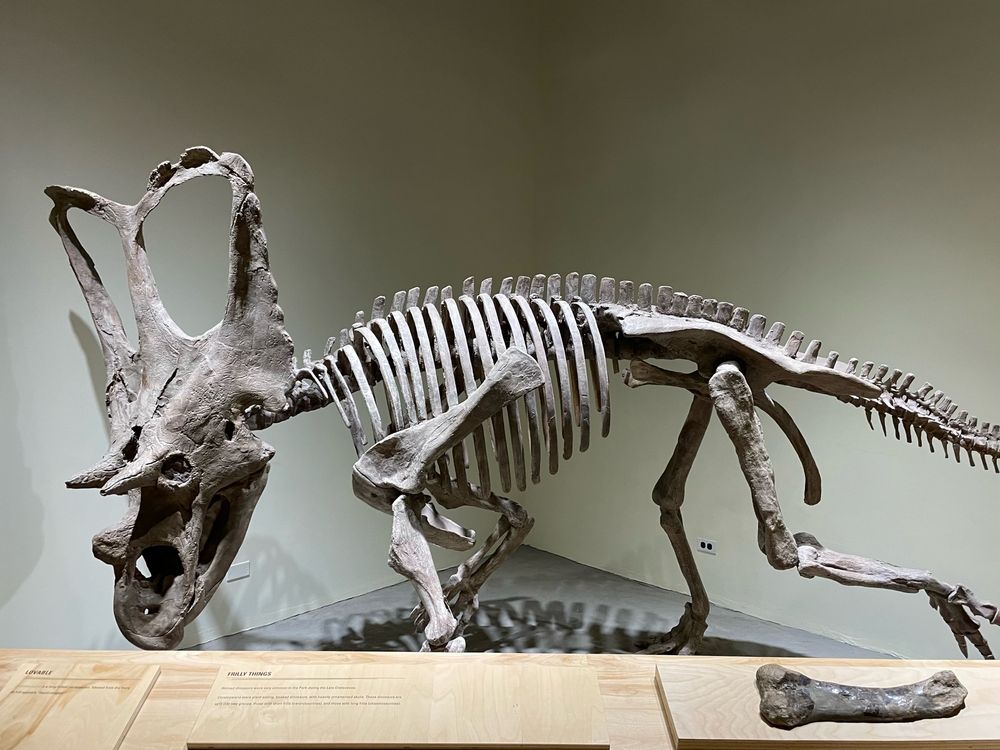
First #FossilFriday on the new app! Please enjoy this Chasmosaurus belli from Dinosaur Provincial Park in southern Alberta.
29.11.2024 15:12
👍 19
🔁 2
💬 0
📌 1
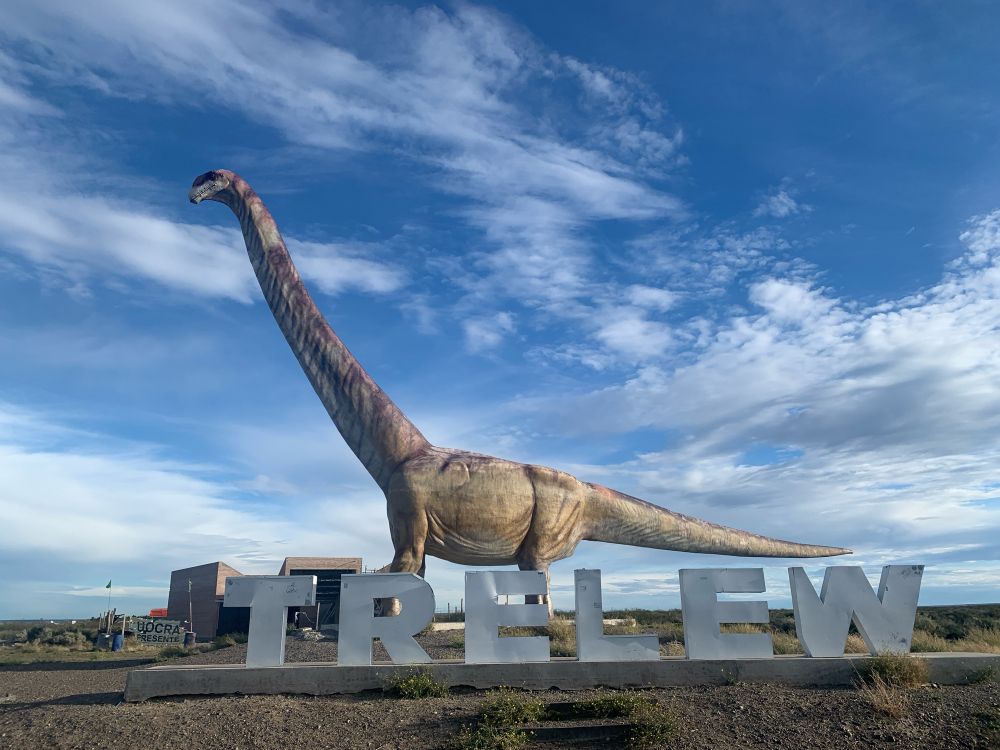
Life sized Patagotitan sauropod statue standing behind a metal sign spelling “Trelew”
¡Hoy es el día de la paleontología en Argentina! I visited Trelew in Patagonia back in April to study turtle fossils. However, I couldn’t resist checking out the #Patagotitan just outside the town. Patagotitan is considered one of, if not the largest non-avian #dinosaur that we know of!
25.11.2024 16:43
👍 6
🔁 1
💬 0
📌 0
Feliz de estar aquí :)
24.11.2024 07:30
👍 1
🔁 0
💬 0
📌 0