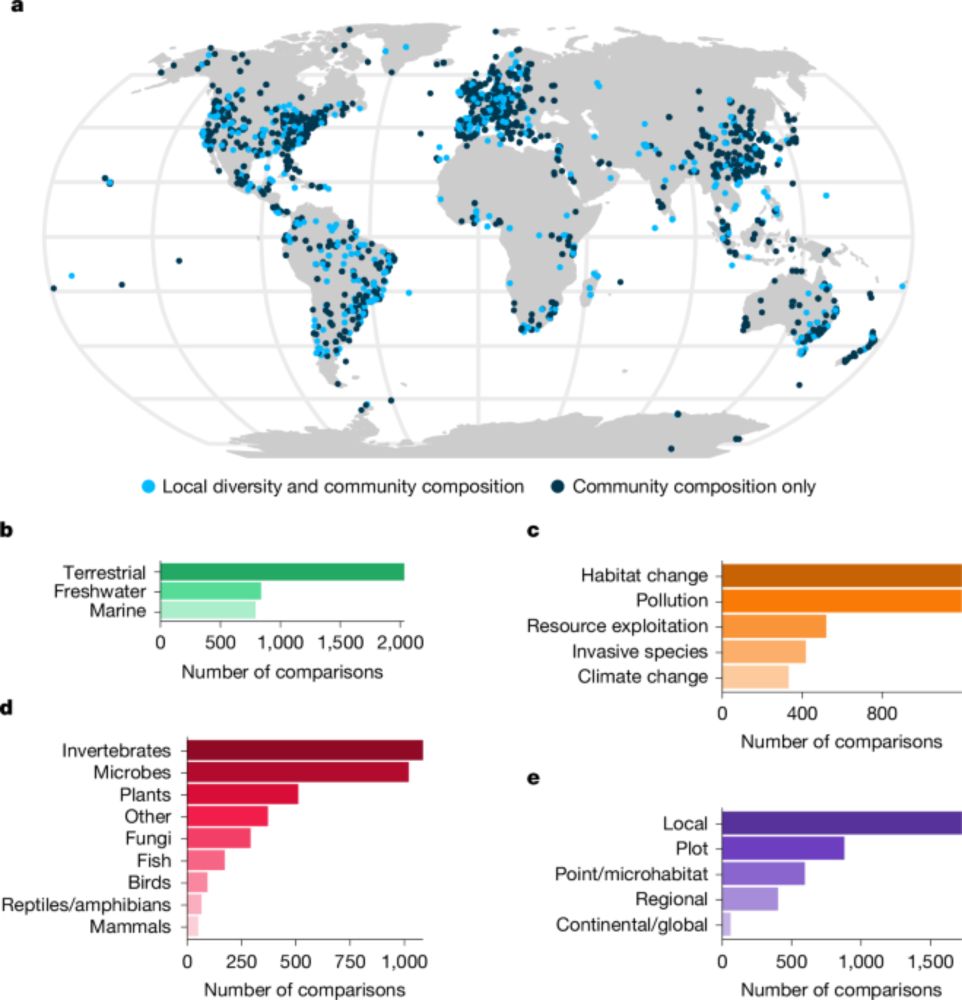
Our new paper in @plosbiology.org reveals that life history evolution is at the core of an eco-evolutionary feedback that promotes diversity.
Do you want to know how? read more in: plos.io/4p7YT0a
13.11.2025 14:47
👍 25
🔁 10
💬 0
📌 0

Join us for our Annual #BESAG2025! We have a great price for #ECRs! send us your nomination by the 4th of August and you can have a free conference ticket and present your exciting research! #freshwater #marine #aquatic Link to register to the conference: www.eventbrite.co.uk/e/besag2025-...
16.04.2025 13:22
👍 9
🔁 7
💬 0
📌 1

Exploring The Science of Rewilding - British Ecological Society
A 2-day event on the science of rewilding, bringing together practitioners and academics working in rewilding to foster knowledge exchange in the North East of England.
We invite anyone involved in rewilding in or near the North East of England who is enthusiastic about listening and sharing knowledge to participate.
⏰Apply by April 21 at 5:00 PM (BST). Spaces are limited!
09.04.2025 10:02
👍 8
🔁 4
💬 0
📌 0
Dear 🌐colleagues, don't hesitate to join the 3rd wave of Global Ecology! -> DM @global-ecology.bsky.social to be added
go.bsky.app/MkLHiKU
31.03.2025 08:11
👍 5
🔁 5
💬 0
📌 0
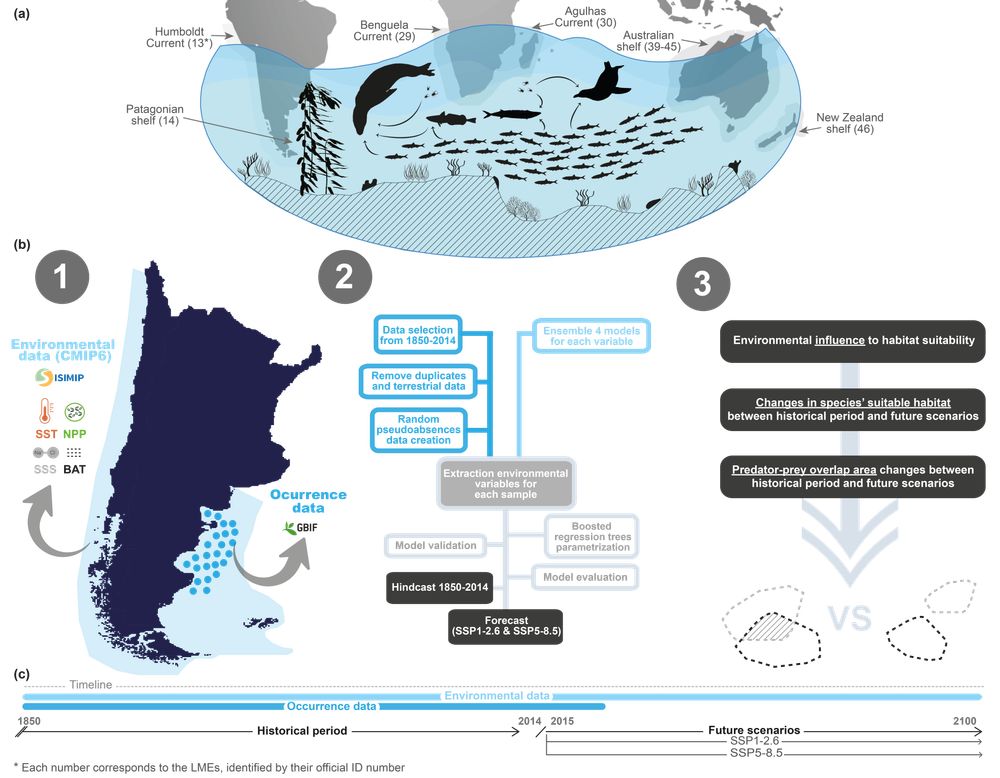
Potential Spatial Mismatches Between Marine Predators and Their Prey in the Southern Hemisphere in Response to #ClimateChange
📄 onlinelibrary.wiley.com/doi/full/10....
@maria-bas.bsky.social @imares-group.bsky.social @martacoll.bsky.social
26.03.2025 19:51
👍 16
🔁 7
💬 0
📌 0
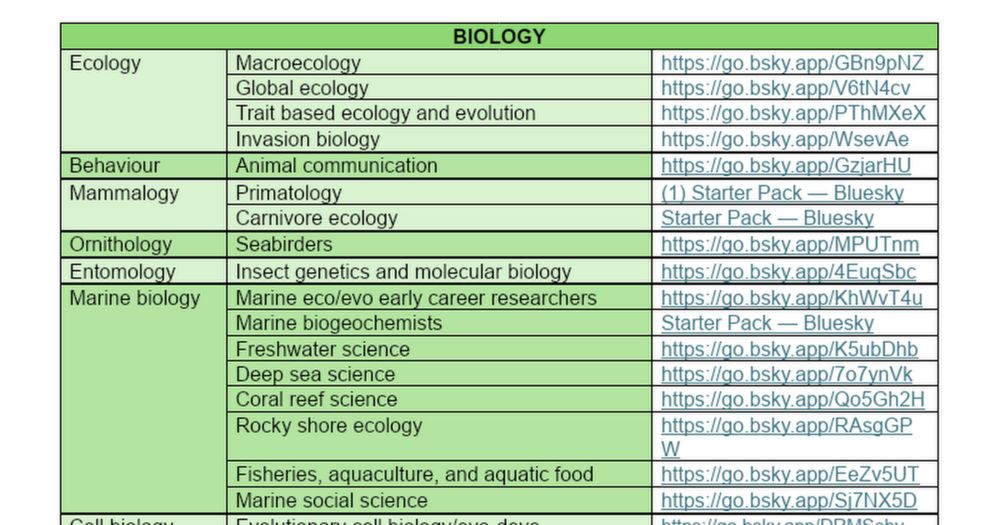
Starter packs
BIOLOGY Ecology Macroecology https://go.bsky.app/GBn9pNZ Global ecology https://go.bsky.app/V6tN4cv Trait based ecology and evolution https://go.bsky.app/PThMXeX Invasion biology https://go.b...
hey everyone! i made a list of some useful starter packs (primarily biology/earth sciences with a few bonus things thrown in) to share with friends who have joined bsky in the last week and thought it may be useful for some people here too! 🌍🧪 #SciSky #BioSky docs.google.com/document/d/1...
11.11.2024 17:41
👍 743
🔁 393
💬 78
📌 40
Hi, I would happily join the third 🌊 :) Thanks a lot for all this!
07.03.2025 08:56
👍 0
🔁 0
💬 1
📌 0
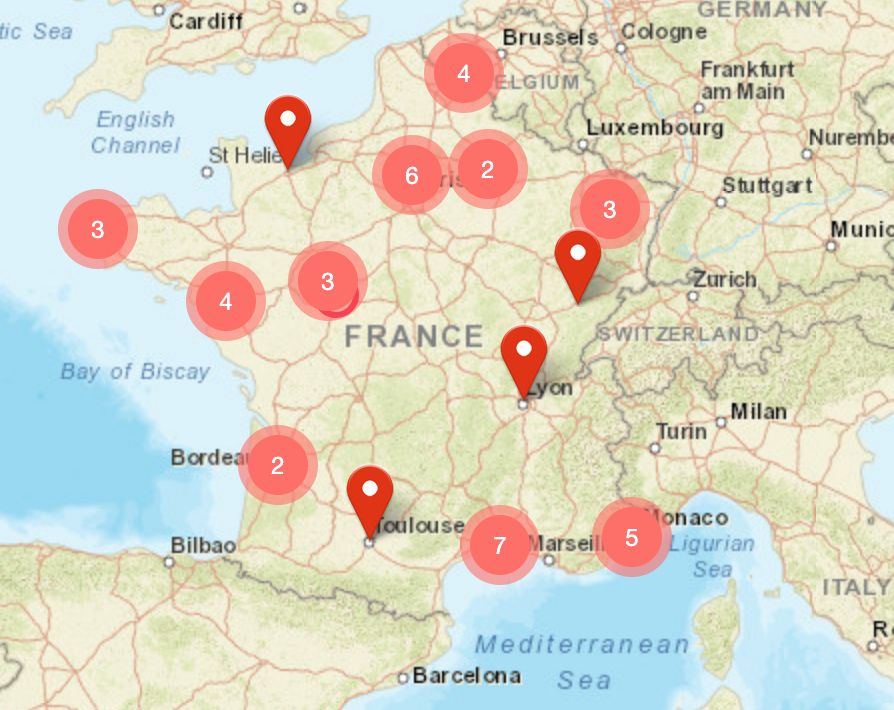
Photo de la carte de France avec les points de rassemblement
#StandUpForScience France.
Demain vendredi 7 mars :
Liste des évènements dans toutes les villes (par ordre alphabétique) 👇
06.03.2025 23:12
👍 253
🔁 148
💬 4
📌 11
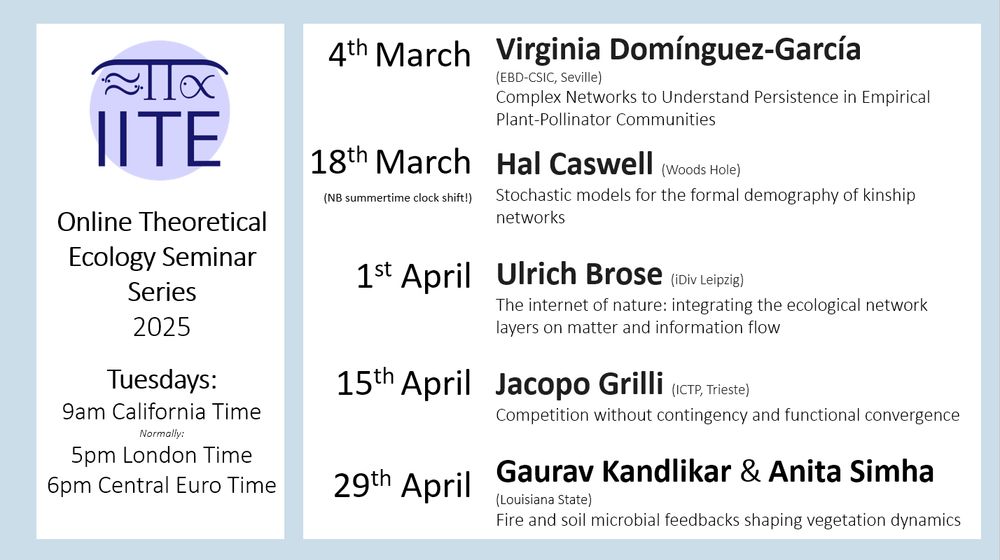
📆We are back and excited to announce our all-star lineup for next series of online seminars! Add the dates to your diaries and join theoretical ecologists from across the world - it's free and open to all via Zoom. Details here iite.info/seminar/, including email list signup.
See you in March!
31.01.2025 10:27
👍 36
🔁 24
💬 0
📌 1
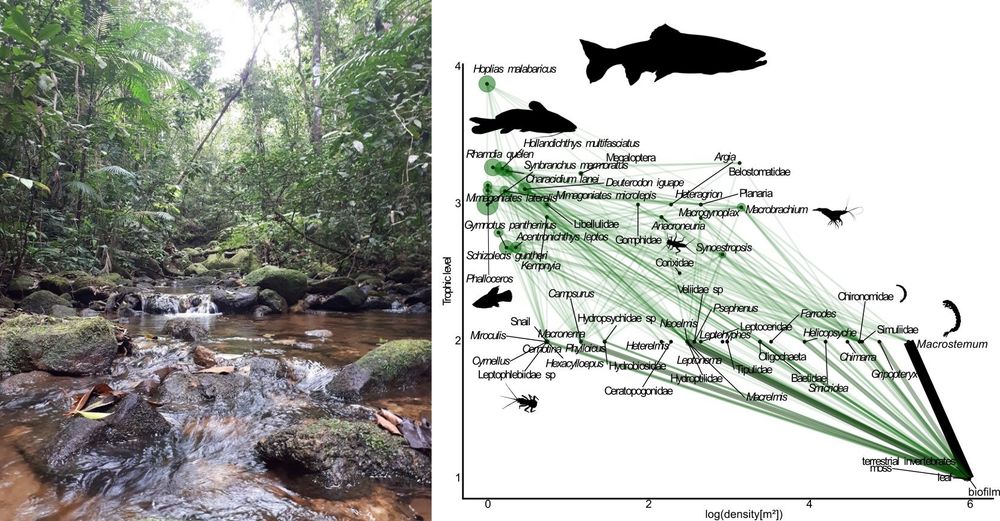
Testing the global ecology feed with some of our recent research =] 🌐 ft. @drdanperkins.bsky.social @kratina.bsky.social
"Untangling the complex food webs of tropical rainforest streams"
Are these food webs stable despite the high dynamism of tropical ecosystems?
doi.org/10.1111/1365...
04.02.2025 13:41
👍 24
🔁 5
💬 2
📌 3
Thank you
28.01.2025 22:24
👍 0
🔁 0
💬 0
📌 0
Hi! 'would be interested to join, and I'm pretty sure @davidboukal.bsky.social would be as well :) thanks in advance
28.01.2025 08:14
👍 0
🔁 0
💬 1
📌 0
I am new here! A little something about me:
*From #SaintMartin Island🌴 #SXM
* PhD degree in #Ecology about interaction between #orchids and mycorrhizal fungi 🌷🍄 at #CeskeBudejovice
*Passionate about #mushrooms
*Now living in France #Montpellier🌞 & looking for a PostDoc
#1stpost #science #PhD
22.01.2025 19:57
👍 1
🔁 1
💬 0
📌 0
Today is a great day to start the week by deleting X! Thanks #helloquittex #helloquitx!
20.01.2025 11:40
👍 2
🔁 0
💬 0
📌 0
-> Most invasions lead to neutral community changes, can be beneficial for local communities, by increases in #diversity and in communities stability. Future species invasions may have far-reaching consequences for entire communities and ecosystems, but these consequences need not always be negative
13.01.2025 23:40
👍 0
🔁 0
💬 0
📌 0
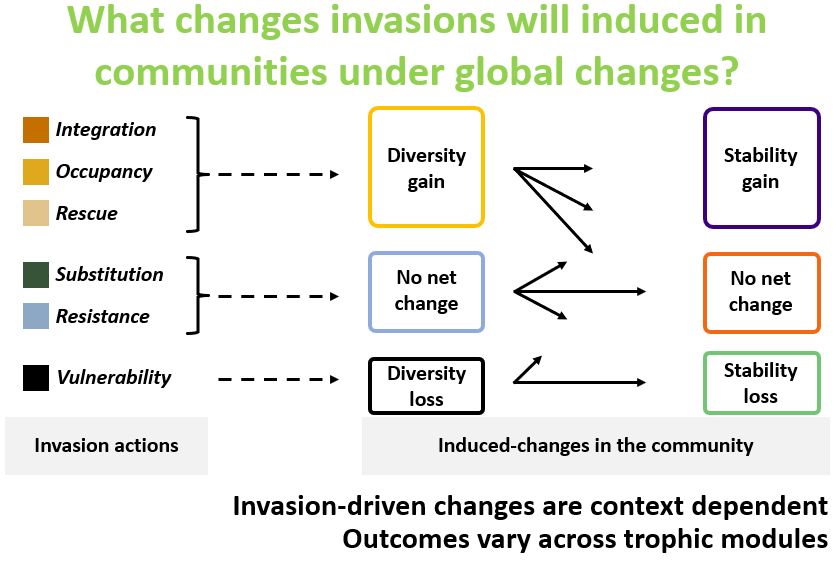
-> 2) #Invasivespecies are not necessarily bad for local communities!
Our findings challenges the conventional wisdom that #invasivespecies are usually harmful and lead to the #extinctions and #collapses of local communities.
13.01.2025 23:40
👍 0
🔁 0
💬 1
📌 0
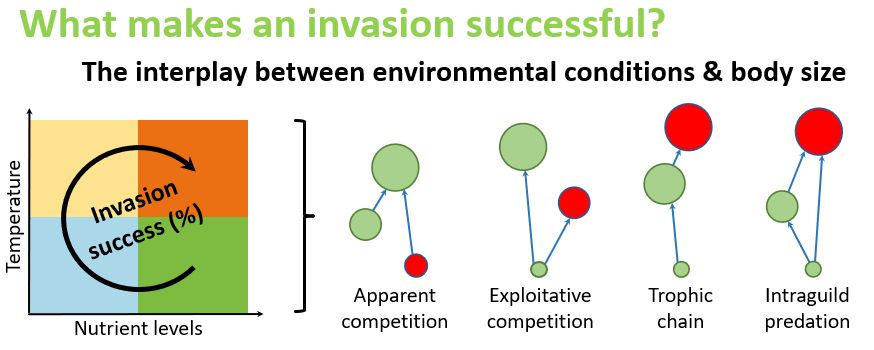
The trophic position of #invasivespecies (as #predator or #prey), the #sizes of local and invasive species & the abiotic conditions play a key role for invasion success
-> 1) #Warming and #eutrophication are likely to accelerate invasions of smaller species!
13.01.2025 23:40
👍 0
🔁 0
💬 1
📌 0
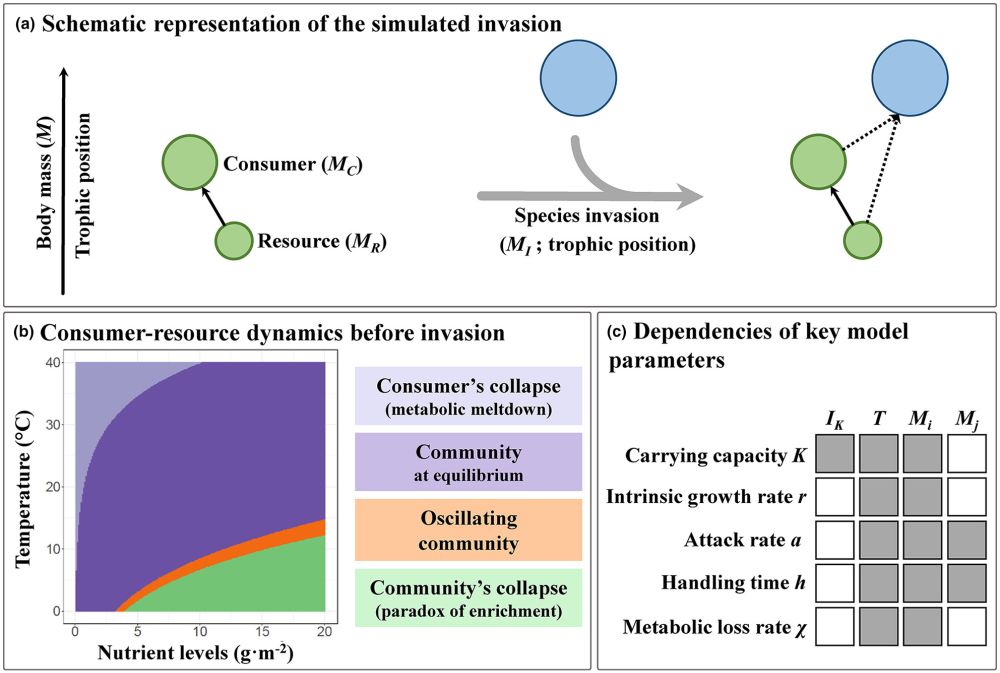
Body size and trophic position determine the outcomes of species invasions along temperature and productivity gradients
We model species invasions (characterized by varying body mass and trophic positions) in a simple consumer-resource system along environmental gradients of temperature and nutrient levels. Accounting...
Early 2024, my 2nd paper was out on the key roles of species body sizes and trophic positions to predict the outcomes of #invasivespecies in communities under gradients of #temperature and nutrients levels. A cool study with N. Pichon, A. Sentis & @davidboukal.bsky.social
doi.org/10.1111/ele....
13.01.2025 23:40
👍 1
🔁 0
💬 1
📌 0
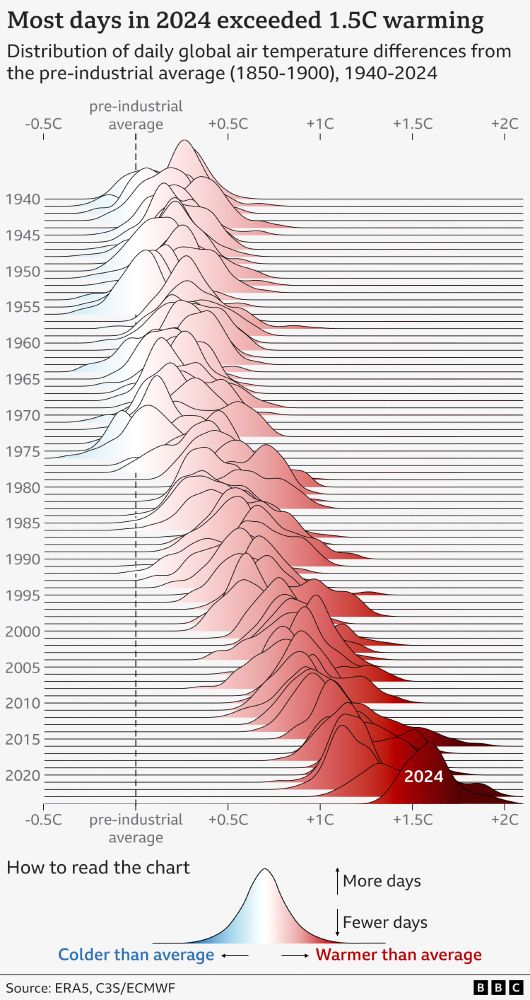
Ridgeline chart showing the distribution of global daily air temperature differences from the pre-industrial reference period (1850-1900), for every year between 1940 and 2024. Each individual year resembles a hill, shaded in a darker shade of red and further to the right for warmer years. The trend is clearly towards warmer years, with 2024 standing out as first year above 1.5C.
NEW: 2024 has just been confirmed as the warmest year on record, and the first to breach the 1.5C threshold.
We used a ridgeline (Joy Division inspired) chart to visualise daily temperature anomalies since 1940.
2024 clearly stands out with 100% of its days above 1.3C and 75% above 1.5C.
10.01.2025 08:04
👍 5914
🔁 2773
💬 211
📌 333
🐠 Oceans, rivers, lakes: they're all connected. The @ipbes.bsky.social Transformative Change Assessment Report, along with this phenomenal graphic (!), aim to highlight the shifts urgently needed to halt and reverse biodiversity loss within and safeguard life on Earth: www.ipbes.net/transformati...
07.01.2025 17:20
👍 15
🔁 5
💬 0
📌 0
📢 Please repost: Two @treesdla.bsky.social PhD positions in #tropical #ecology going with me and Dan Perkins (+V Saito & @gqromero.bsky.social ): Pollution across aquatic-terrestrial realms:
bit.ly/4g9wXow
Land use change & river food webs:
bit.ly/4fcisPH
Get in contact, deadline Jan. 20th.
07.01.2025 14:26
👍 3
🔁 7
💬 0
📌 1
Community structure and collapses in multichannel food webs
YouTube video by SIL International Society of Limnology
If you are interested for more, here is my 1st plenary talk I gave at the #SIL Congress at Berlin in 2022 for the 4th SIL Student Competition Award
www.youtube.com/watch?v=harV...
07.01.2025 10:22
👍 0
🔁 0
💬 0
📌 0
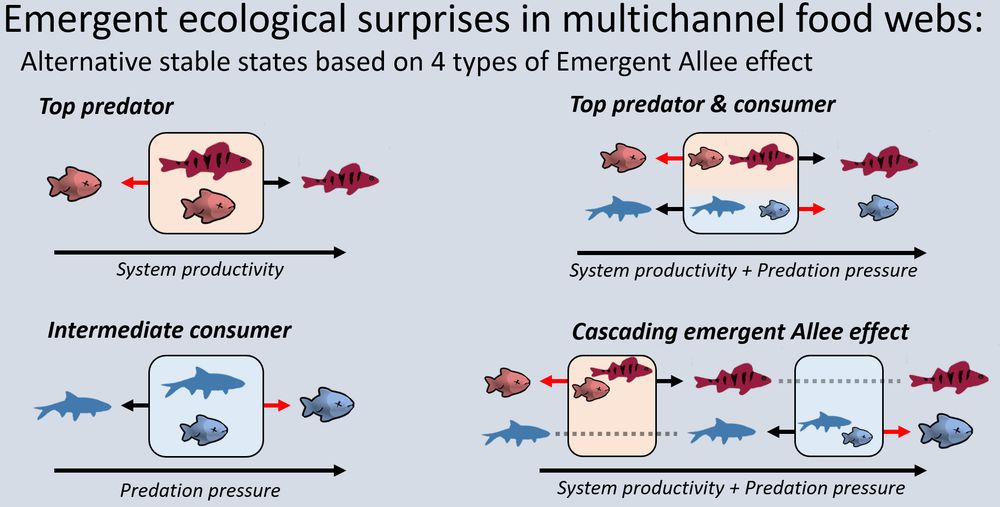
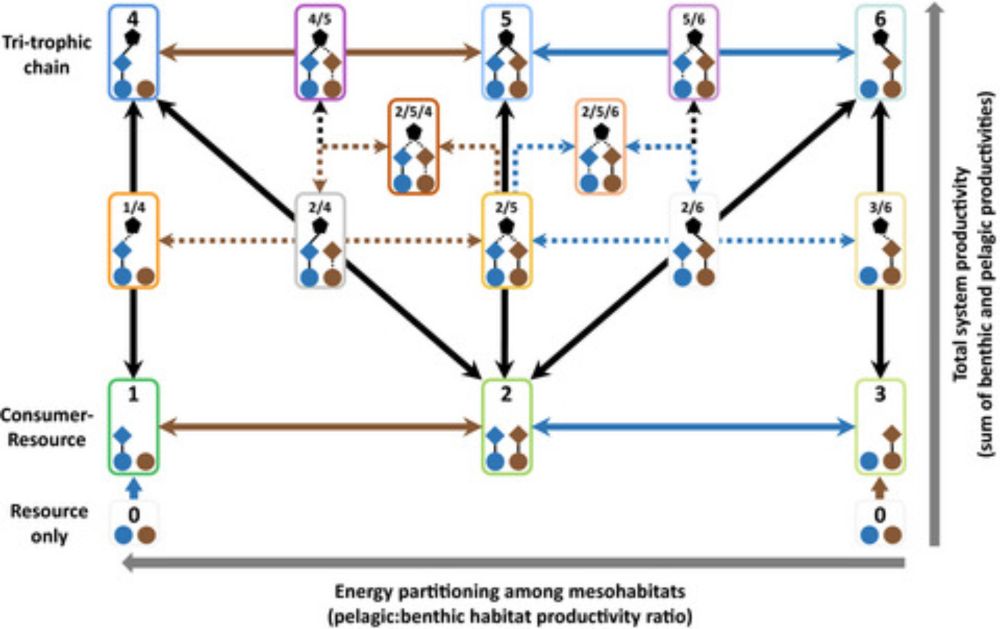
Our model highlights a diversity of potential collapses that may happen in freshwater systems in response to energetic imbalances in multichannel food webs
-> Energetic Imbalances in #freshwater communities may disrupt the food webs, causing sudden population collapses & cascade extinction.
07.01.2025 10:22
👍 0
🔁 0
💬 1
📌 0
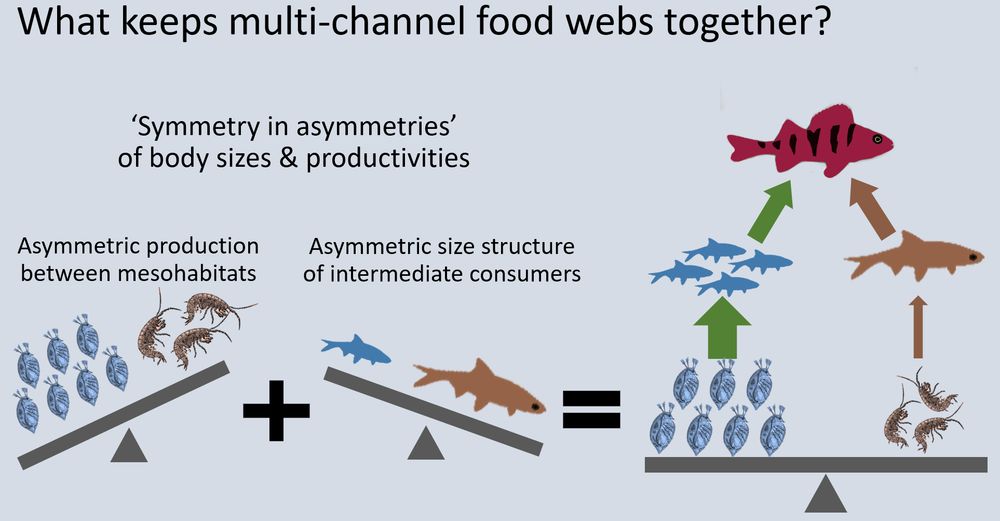
We show that a ‘symmetry in asymmetries’ is critical to maintain multichannel food webs through two compensatory levels of asymmetry (i.e., competitive abilities of the consumers and their vulnerability to predation) that modulate the energy flows in the different food web channels
-> A ‘symmetry in asymmetries’ is critical to maintain multichannel food webs through two compensatory levels of asymmetry that modulate the energy flows in the different food web channels
07.01.2025 10:22
👍 0
🔁 0
💬 1
📌 0
Using a size-structure #foodweb community model, We demonstrated how the interplay between in differences in mesohabitat productivities and consumer body sizes, typical for many benthic and pelagic communities, promotes species coexistence or extinctions in the food web.
07.01.2025 10:22
👍 0
🔁 0
💬 1
📌 0
Thanks
30.12.2024 19:14
👍 1
🔁 0
💬 0
📌 0