Difficult to top the Erasmus MC speaker present! Thank you Robin Broersen for inviting me to Rotterdam. I enjoyed the many stimulating discussions and learned a lot about the cerebellum!
05.03.2026 07:27
👍 4
🔁 0
💬 0
📌 0
Mentors in North America, nominate your excellent senior PhDs / junior postdocs!
20.02.2026 06:43
👍 0
🔁 0
💬 0
📌 0

Quantitative Approaches to Behavior and Virtual Reality - CAJAL
[…]
You have until March 3rd to apply for the Cajal summer school on Quantitative Approaches to Behavior and VR at Champalimaud! Come surf and track animals with us 🏄🪰🐟🚶
cajal-training.org/on-site/quan...
19.02.2026 17:37
👍 25
🔁 18
💬 1
📌 3
Happy to be part of this webinar tomorrow!
17.02.2026 19:25
👍 4
🔁 0
💬 0
📌 0
The 4-year program is fully funded, includes initial theoretical and practical courses and we encourage and support attendance of conferences etc. Candidates are selected through the graduate schools and fitting host labs are identified together with PIs and/or during short lab rotations.
30.12.2025 14:02
👍 0
🔁 0
💬 0
📌 0
The Course - PhD course in NEUROBIOLOGY
The Neurobiology PhD offers a top-level training activity, based on a deeply problem-oriented approach to research. With six main keywords:
Please apply to both types of fellowships (SISSA and FSE+), i.e. fill out two applications!
More info on the program and SISSA here phdneurobiology.sissa.it/eng/the-cour..., here www.fens.org/careers/job-... and here www.sissa.it
30.12.2025 14:02
👍 0
🔁 0
💬 1
📌 0
Faculty - PhD course in NEUROBIOLOGY
Copyright © 2013 SISSA. Scuola Internazionale Superiore di Studi Avanzati
We apply molecular/cellular tools, behaviour assays, and systems neuro approaches in various model organisms, cell cultures and tissue explants.
Interested candidates are encouraged to contact potential labs before application: phdneurobiology.sissa.it/eng/faculty.....
30.12.2025 14:02
👍 0
🔁 0
💬 1
📌 0
Thank you very much for the positive feedback!
18.12.2025 10:41
👍 1
🔁 0
💬 0
📌 0
Studying vision across light levels? Interested in rod photoreceptors and related (patho)physiology? Matteo Rizzi, Kate Powell and I wrote a review on rod photoreceptor activity at daylight doi.org/10.1016/j.vi... . Free access link here kwnsfk27.r.eu-west-1.awstrack.me/L0/https:%2F...
18.12.2025 09:50
👍 17
🔁 7
💬 1
📌 1

One week left to apply for the NERF/VIB-KU Leuven Center For Brain & Disease Research international PhD Call 2026!
Learn more about the projects & teams and apply now: https://cbd.sites.vib.be/en/phdcall2026
13.11.2025 08:42
👍 2
🔁 3
💬 0
📌 0

Call for applications: A fifth edition for the Early-Career Scientist Seminar Series
You are a postdoc looking for an opportunity to present your latest work and discuss with leaders in the field? Apply to the early career scientists seminar series @ircm.bsky.social ! If selected, we pay for your expenses to come spend a day with us and give a seminar! www.ircm.qc.ca/en/news-deta...
22.10.2025 14:12
👍 12
🔁 5
💬 0
📌 0

It's time for the second workshop this autumn - this time, you will have an opportunity to learn animal pose estimation with Deeplabcut! Workshop will be held Nov 20-21st in Heidelberg and is free of charge. More info on our webpage!
22.10.2025 13:40
👍 13
🔁 3
💬 0
📌 0
Very proud of Po-Yu Liao and Cinar Ilhan who beautifully presented their PhD progress reports today! I'm very happy to have you in the lab and about your exciting research!
08.10.2025 16:34
👍 1
🔁 0
💬 0
📌 0

Apply now to become a speaker at our Institute! We invite excellent postdocs in neuroscience, ecology and other fields related to our research to apply for our Emerging Scientist Talk Series. Apply by October 24: www.bi.mpg.de/ess
@chr-mayer.bsky.social @fleyes.bsky.social @michaelahau.bsky.social
19.09.2025 06:08
👍 20
🔁 22
💬 0
📌 2
mouse neuro people who use or consider using neuropixels and/or miniscopes: if there was an implant light enough to do both at the same time (+ maybe optic fiber) in a freely moving mouse, would it advance your research? would you use it?
please comment or send me a message!
18.09.2025 16:09
👍 1
🔁 0
💬 0
📌 0

Excellent end to the Italian Congress for Neuroscience (SINS) - our postdoc Lucia Zanetti chairing a fascinating session on the retina & beyond together with @serenariccitelli.bsky.social! Well done & thanks to the speakers Stefano Di Marco, @santiagorompani.bsky.social, Norma Kühn & Max Joesch
13.09.2025 12:26
👍 6
🔁 2
💬 0
📌 0
who came up with the Europass format? it's one of the worst types of CV to read - feels crowded but at the same time it takes a lot of space. the sections make sense (mostly) but the formatting, fonts, uppercase, bold etc. is terrible. and that's what we suggest/force people to use...
09.09.2025 08:57
👍 5
🔁 0
💬 0
📌 0
Congrats @anbucci.bsky.social and @ffranke.bsky.social - a beautiful and elegant piece of science
13.08.2025 16:02
👍 2
🔁 0
💬 1
📌 0
Stay tuned for diurnal/nocturnal data! :)
24.07.2025 10:56
👍 3
🔁 0
💬 0
📌 0
Also a big thank you to the reviewers, the host institutes (@nerflabs.bsky.social, @harvard.edu, and in the end also SISSA) and our funding sources, among which I was supported by @fwovlaanderen.bsky.social, @erc.europa.eu and #MSCA.
23.07.2025 16:57
👍 3
🔁 0
💬 1
📌 0
Many thanks to the co-authors for all their contributions: Bram Nuttin (ephys and analysis), @arnausd.bsky.social and Chen Liu (chemogenetics), Victoria Tong (behaviour), Julie Murmann (optogenetics) and Keimpe Wierda (patch clamp)! This long journey would have been impossible without you.
23.07.2025 16:57
👍 4
🔁 0
💬 1
📌 0
This was my first time applying my neuroscience background to questions of evolution and it has been fascinating. This collaboration with Felix and Hopi started with a scientific speed-dating event and I'm very happy about this opportunity to expand my horizon and to trigger many new studies!
23.07.2025 16:57
👍 2
🔁 0
💬 1
📌 0


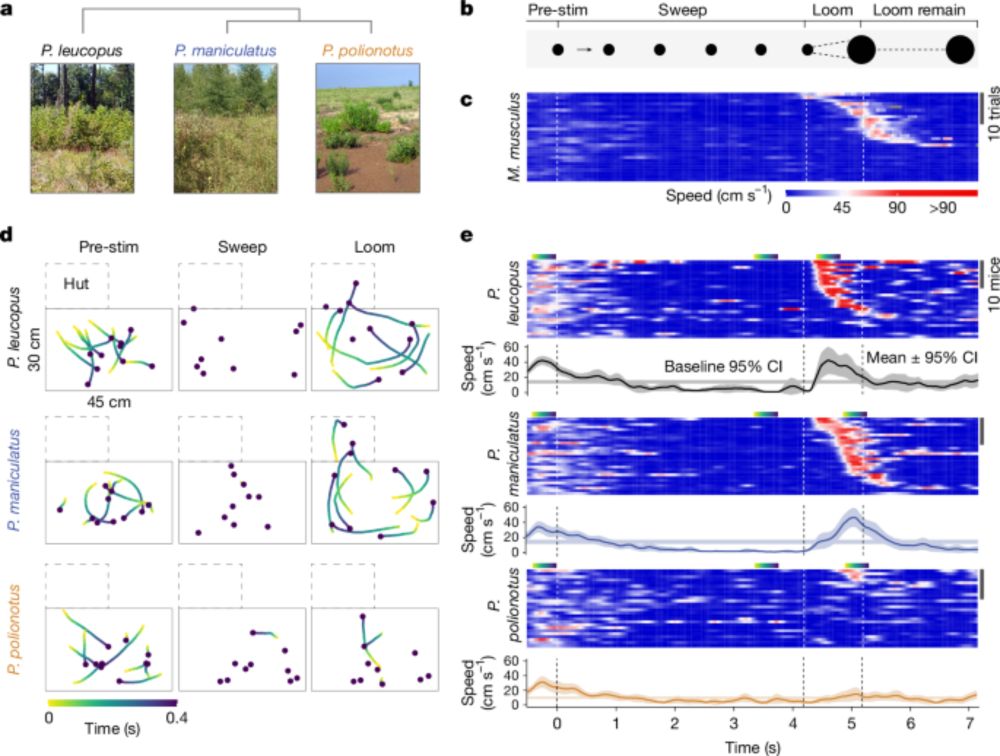
Optogenetic activation and chemogenetic inhibition of the dPAG confirmed a species-specific role of this nucleus in locomotion.
Together, these data suggest that habitat-specific evolution of threat avoidance can at least partially be traced to a central brain area!
23.07.2025 16:57
👍 1
🔁 0
💬 1
📌 0


However, neural activity in the dPAG - an important node for escape behaviour - strongly differed during locomotion: dPAG activity correlated with running in deer mice, but not in oldfield mice.
23.07.2025 16:57
👍 1
🔁 0
💬 1
📌 0

We wanted to know: what's different in these species' brains so that the same visual stimulus is translated into a different motor output? Using c-Fos and Neuropixels recordings in awake animals, we found that visual threat information is encoded similarly in both species. #brain
23.07.2025 16:57
👍 1
🔁 0
💬 1
📌 0

Testing dozens of animals, Felix found that deer mice (blue) who live in densely vegetated areas predominantly escape in response to a visual looming predator stimulus. In contrast, oldfield mice (orange), a sister-species and inhabitant of open fields, mostly pauses.
23.07.2025 16:57
👍 1
🔁 0
💬 1
📌 0
🚨Very happy that my PhD work is now out in @nature.com!
We discovered that evolution, by acting in the midbrain, shifted the threshold to escape in Peromyscus mice, to fine-tune defensive strategies in different environments
www.nature.com/articles/s41...
This was a truly collaborative effort! 🧵⬇️
23.07.2025 15:05
👍 473
🔁 103
💬 26
📌 5
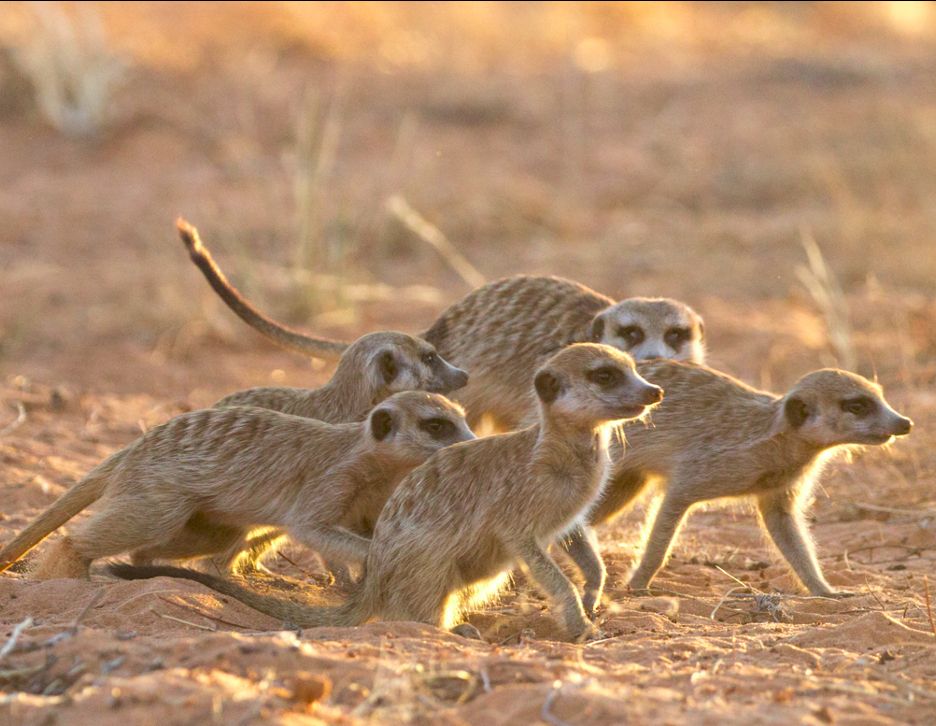
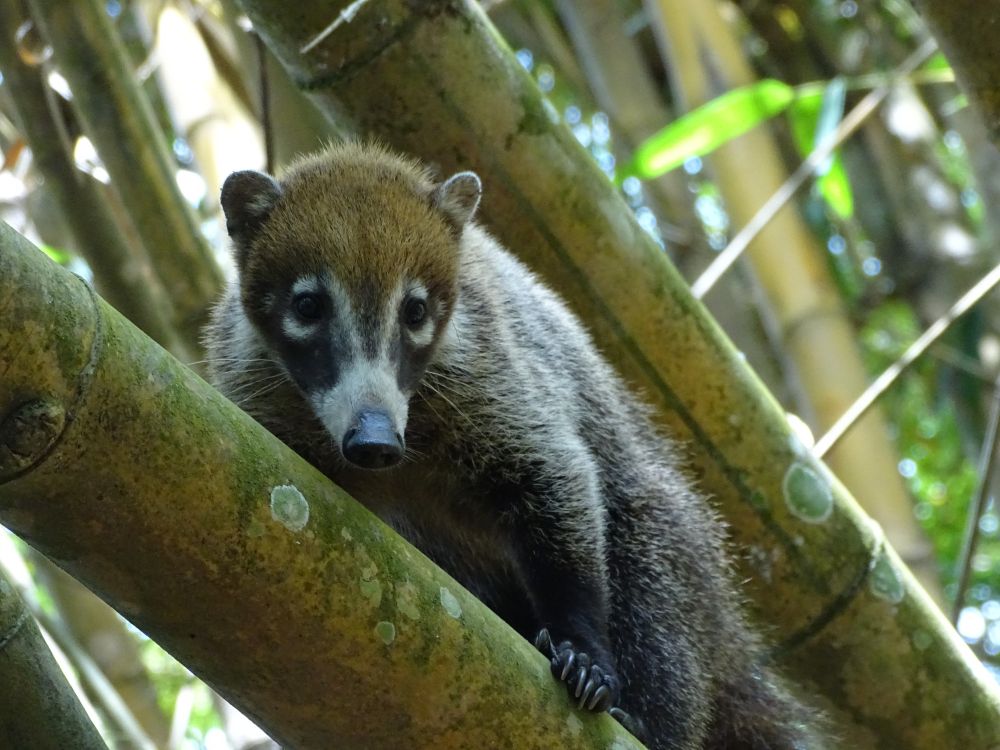
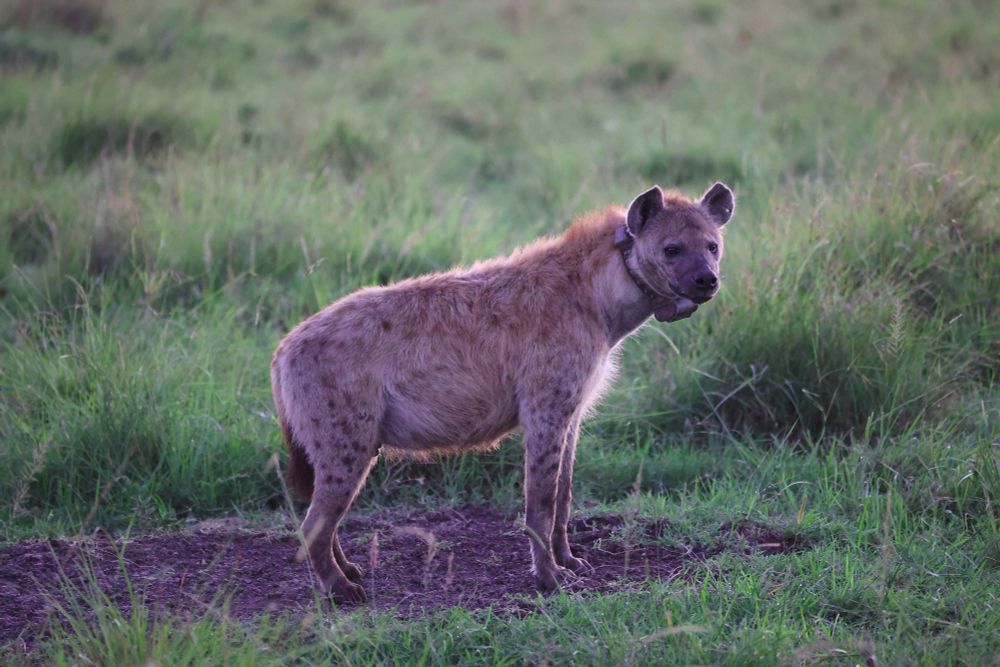
🚨 Out this week in @pnas.org 🚨
The flagship paper from my PhD @mpi-animalbehav.bsky.social @livingingroups.bsky.social - We show surprising statistical similarities in animal behaviour across states, individuals, and even species.
www.pnas.org/doi/10.1073/...
(🧵 1/10)
16.05.2025 11:40
👍 71
🔁 21
💬 1
📌 5