
In Nile Nubian (Nobiin & Andaandi):
ⲡⲁⲥⲓ̄ⲣ /bæsiːr/ 'carpenter'
19.12.2025 16:46
👍 3
🔁 0
💬 0
📌 0
In Nile Nubian (Nobiin & Andaandi):
ⲡⲁⲥⲓ̄ⲣ /bæsiːr/ 'carpenter'
* ⲁ̄ⲣⲟ̄ⲕⲟ̄ⲗ < ⲁ̄-ⲁⲣⲟ̄-ⲕⲟ̄ⲗ
(ārōkōl < ā-arō-kōl): 'pure-hearted'
ā-arō-kōl
heart-white-having
* ⲁ̄ⲇⲟ̅ⲩ̅ⲗⲕⲟ̄ⲗ (ādūlkōl): 'proud'
ā-dūl-kōl
heart-great/big-having
#Andaandi #Matokki
* ⲁ̄ⲓ̈ⲛⲟⲩⲗⲟ̅ⲩ̅ⲕⲟ̄ (āynulūkō): 'kind/pure-hearted'
āy-nulū-kō
heart-white-having
* ⲁ̄ⲓ̈ⲙⲁⲥⲕⲟ̄ (āymaskō): 'kind; good-hearted'
āy-mas-kō
heart-good-having
* ⲁ̄ⲓ̈ⲇⲁⳣⳣⲓⲕⲕⲟ̄ (ādawwikkō): 'proud'
āy-dawwir-kō
heart-big/great-having
Note:
dawwir- + -kō > dawwikkō
Due to progressive assimilation
#Nobiin

ON Nob. Andaa./Matok.
ⲁ̄ⲉⲓⲗ ⲁ̄ⲓ̈, ⲁ̄ⲓ̈ⲗ ⲁ̄
aeil āy, āyl ā
'heart, soul, self'
#NubianLanguages
‘demīra’ > Nile inundation generally.
‘misori’ > month of the Nile's annual inundation. Also, it refers to a rise in water level that doesn't break the Nile's bank or cause damage.
‘tossi’ > heavy flooding; breaks the Nile's bank & overflows, causing widespread damage.
Other terms:
• ⲁⲙⲁⲛ ⲕⲉ̄ⲣⲁ̄ⲇ (aman kērād)
aman > ‘water; river’
kēr > ‘ascend, mount, climb upon’
• ⲁⲙⲁⲛ ⲕⲟⲩⲧⲧⲁ̄ⲇ (aman kuttād)
kutt > ‘rise, stand up’
• ⲁⲙⲁⲛ ⲙⲓⲥⲟⲣⲓ (aman misori)
misori < Copt. month ⲙⲉⲥⲱⲣⲉ (mesōre)

#Nobiin
• ⲇⲉⲙⲓ̄ⲣⲁ (demīra)
• ⲧⲟⲥⲥⲓ (tossi); ⲁⲙⲁⲛ ⲧⲟⲥⲥⲓ (aman tossi)
#Andaandi / #Matokki
ⲇⲉⲙⲓⲣⲉ (demire)
Egy. Arabic > دميرة
Ultimately < Coptic.
Sahidic > ⲧⲉⲙⲏⲣⲉ (temēre)
Bohairic > ⲧⲁⲙⲏⲓⲣⲓ (tamēiri)
‘Annual Nile flooding’
#NubianLanguages
Congratulations, Erin! Wishing you both a happy life together! The wedding setup looks so beautiful❤️
Reference:
"Ebur, ivory, ivoire: ein meroitisches Lehnwort in europäischen Sprachen"
Found in:
Breyer, Francis. Schrift Und Sprache in Nubien: Studien Zum Napatanischen, Meroitischen Und Altnubischen. Harrassowitz Verlag, 2022. JSTOR,
www.jstor.org/stable/jj.20...

Wall relief depicting tusked elephant from the Meroitic temple complex of 《Aborepi》aka "Musawwarat es-Sufra" (3rd C BCE) in modern-day Sudan, dedicated to the Meroitic Lion God 《Apedemak》
Eng. 'ivory' < Fr. 'ivoire' < Latin 'ebur' < Meroitic */ambur/
It's such a good show! I'm glad I follow your recommendations coz that's how I found out about Murderbot😆🥰
New publication on Dinka by NILOMORPH member Mirella Blum - "Dialectal tone description enhances historical tonology", in @diachronica.bsky.social
www.jbe-platform.com/content/jour...
Getting Wild for Covid Awareness.
Want to help me stay in the advocacy game? $5 goes a long way.
I want helping people, and educating others to be more than a dream. That’s my goal.
gofund.me/f1f07602
#health #sick #kids #teacher #backtoschool #mentalhealth I
Going all in for Covid Awareness.
If you want to help get the word out please pitch in. $5 goes a long way. gofund.me/7817f5f5 If you’d like to help support my work, and more billboards please do so, we need to educate the public now. #covid19 #backtoschool #longcovid #mentalhealth #teacher
These look amazing Erin!😍

NEW: Read in Coptic: The Tower of Babel
Read the story of The Tower of Babel (Genesis 11:1-9), which might be titled ⲡⲓⲡⲩⲣⲅⲟⲥ ⲛ̀ⲧⲉⲃⲁⲃⲩⲗⲟⲛ, in Coptic with translation, grammatical notes and discussion.

Today I gave my first-ever presentation at the yearly Colloquium on African Languages and #Linguistics. My question to the Africanists, Afroasiaticists, Cushiticists: why do we think #Cushitic is a thing? 1/14
A bit off-topic, but I really wish the term "cushitic" had been reserved for languages of Kush like Meroitic. I'm guessing the classification is too entrenched now for a new designation?😅
* ⲡⲏⲣⲡ "wine"
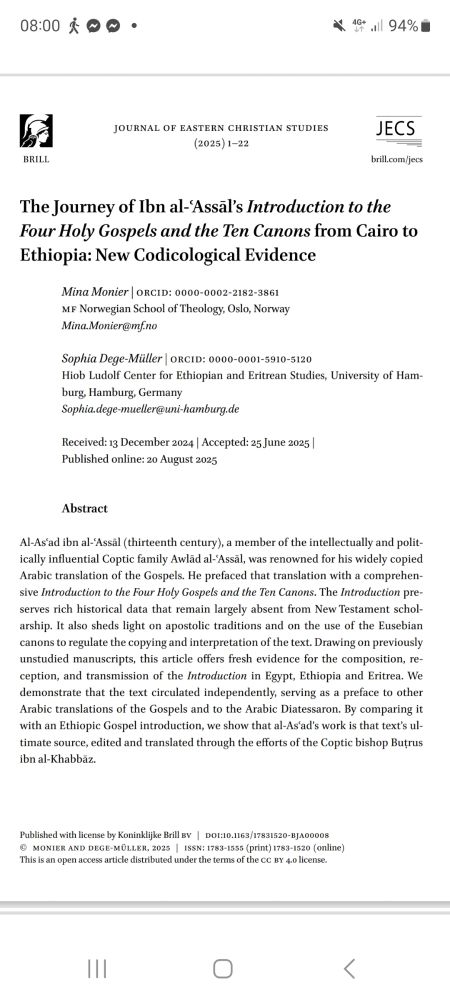
Excited to share the article that @mmonier.bsky.social and I wrote on the Introduction to the Gospels by ibn al-Assal and its Arabic and Ethiopic traditions 🤩
brill.com/view/journal...
The closest i could find 🐏📯
Now I'm starting to see ⲥⲩⲛ lol I wish there was a sharper image


I think the top one is almost certainly ⲑⲥ̄. And I suspect the partially smudged abbreviation below it is [ⲧ?]ⲩⲛ. But I'm not sure if τυν θεός makes sense here...
Translation of Greek text/nomina sacra:
'Martha, Mother of the King, [may he live] many years (πολλα τα ετη / polla ta etē)'
'The Holy Mary, God-Bearer, Mother of Jesus [the] Christ'
Left-side
ⲙⲁⲣⲑⲁ: Martha
ⲙ̅ⲏ̅ⲣ̅ (μήτηρ): Mother
ⲃⲗ̅ⲥ̅ (βασιλεύς): King
ⲡⲟⲗⲗⲁ ⲧⲁ ⲉⲧⲏ : '[may he live] many years'
Right-side
ⲑⲥ̄ (θεός: God
[?] ⲩⲛ: ?
ⲏ: The
ⲁⲅⲓⲁ: Holy
ⲙⲁⲣⲓⲁ: Mary
ⲑⲉⲟⲧⲟⲕⲟⲩ: God-Bearer
ⲙⲏ︥ⲣ (μήτηρ): Mother
ⲧⲭⲩ̄ (του Χριστού?): of Christ
ⲓ̅ⲥ̅ ⲟ ⲭⲥ̅ (Ἰησοῦς ὁ χριστός): Jesus the Christ
Left-side:
† ⲙⲁⲣⲑⲁ ⲙ̅ⲏ̅ⲣ̅ ⲃⲗ̅ⲥ̅
ⲡⲟⲗⲗⲁ ⲧⲁ ⲉⲧⲏ
Right-side:
ⲑⲥ̄
[?] ⲩⲛ
† ⲙⲁⲣⲓⲁ ⲑⲉⲟⲧⲟⲕⲟⲩ
ⲏ ⲙⲏ︥ⲣ ⲧⲭⲩ
ⲁ
ⲅ ⲓ̅ⲥ̅ ⲟ ⲭⲥ̅
ⲓ
ⲁ

The Queen's skin is painted with reddish-brown paint. She's facing forward & is dressed in golden royal robes with intricate circular designs studded with different coloured jewels and wearing brown shoes. She's also wearing a golden crown with two horn-like designs on either side, pointing outwards & a central piece with a cross on top. The crown is studded with different coloured gems. She has long black hair locks reaching to her shoulders & is holding a golden, gem-studded scepter topped with a crucifix in one hand & an embroidered handkerchief in the other hand, in the style of Byzantine court women. Next to the queen is the Virgin Mary standing taller & is also facing forward. She's wearing black robes covered in circular designs & black shoes. She's wearing a dome-shaped, gem studded golden crown with two crosses in front & a cross on top of the crown. She has a light-greenish halo around her head. She has one hand resting on the Queen's shoulder in blessing & is carrying the Child Jesus in her other arm while holding an embroidered handkerchief similar to the one Queen Martha is holding. The Child Jesus is dressed in a white tunic & has reddish hair. He has a cruciform halo behind his head painted in a light-greenish colour. He has one arm pointing downwards, holding an eye-shaped object painted in red (perhaps symbolizing the earth or underworld). His other arm is pointing upwards while holding an eye-shaped object painted dark blue with a white border & white stars inside it (perhaps symbolizing the sky or heavens).The skin of both Jesus & the Virgin are painted white in contrast to Queen Martha's brown skin.

Painting of Queen Martha of Dotawo (Makuria) w/ Virgin Mary touching her shoulder while holding Jesus as a child / 11th C. AD
Analysis of Greek text accompanying the painting in the Old Nubian script below.
#Dotawo #Makuria #NubianChristianArt #NubianArt #MedievalArt #AfricanArt #ByzantineGreek
See also:
"A Nubian Linguistic Continuum in Medieval Sudan from Darfur and Kordofan to the Nile Valley" by Claude Rilly
[4th International Nuba Language Conference, Khartoum 2023]
Limited usage of [ essi ] is still attested in modern Nobiin:
[èssí] > 'soup'
[èskàléé, àskàléé pl. èskàlèènčìì] > 'waterwheel'
[mààɲéssí pl. mààɲèssìgúú] > 'tear(s)' lit. 'Eye-water'
ON ⲉⲥⲥⲓ is likely from Old Andaandi (Dongolawi).
Cf. Andaa./Matok. [essi]
ⲁⲥⲥⲉ also attested in ON texts but translating Gr. ὄμβρος 'thunderstorm, rain' & δρόσος 'dew'
ON ⲁⲙⲁⲛ (aman)
Polysemy: 'water/ river / Nile' is the most attested word in ON texts.
Cf. Nob. [ámán]

