
I don’t fault peer reviewers for not checking each citation. I do, however fault the authors for not noticing them (or caring). the-decoder.com/over-100-fak...
23.01.2026 16:18
👍 1
🔁 0
💬 0
📌 0
I don’t fault peer reviewers for not checking each citation. I do, however fault the authors for not noticing them (or caring). the-decoder.com/over-100-fak...

“Conspiracy theories…can be understood as the political equivalent of dark-matter theories. They emerge in situations where some movement or action seems unlikely or bizarre unless you can posit some unseen element in the story, some hidden force exerting influence.”
www.nytimes.com/2025/08/02/o...

“After a brief dalliance with literacy, humanity is returning to its oral roots.”
apple.news/AWWQ7HSErTTi...
I am privileged to announce the publication of the Anti-Autocracy Handbook: sks.to/autocracy 1/12
Vaccines: because “community immunity” sounds way cuter than “preventable outbreak.”
Vaccines aren’t just personal protection—they’re community care.
They stop preventable diseases, protect the vulnerable, and keep our healthcare system from getting overwhelmed.
Immunity is a team sport.
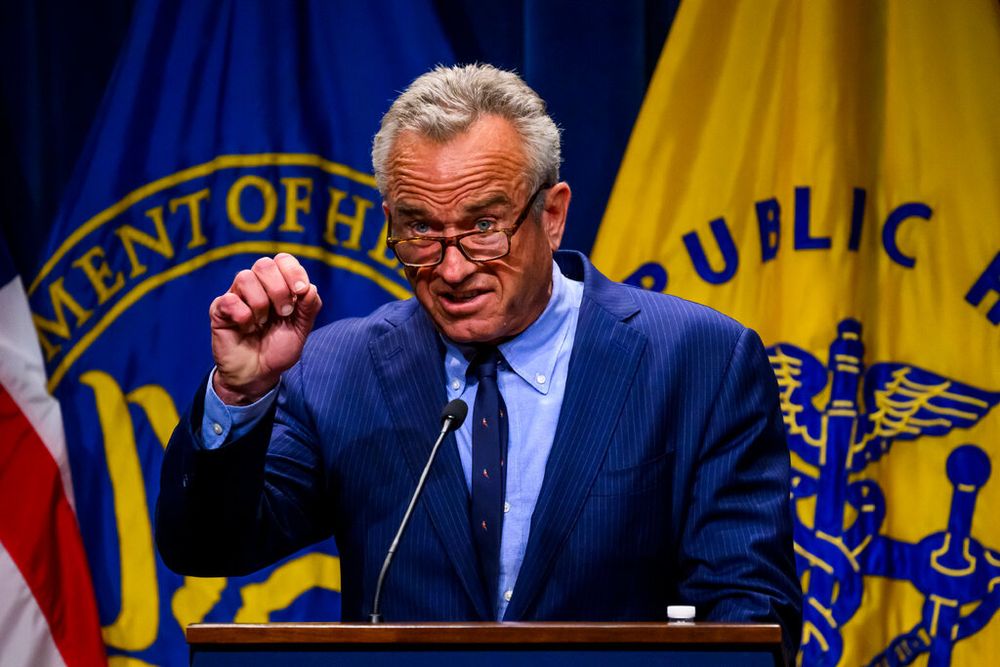
I hope he doesn’t move to ban vaccines outright… www.nytimes.com/2025/06/09/h...
I used to love using em-dashes. Now, they are seen as a signature of AI-generated text. So, I’m embarrassed to use them. The end.
Hot takes belong on social media, not in scientific journals.
Science thrives on rigor, nuance, and evidence—not speed, speculation, or snark. #scicomm
👏👏👏

Kathleen Hall Jamieson has convinced me we should try to start saying "convergent evidence" instead of "scientific consensus." Going to take a while to change, but I explored it in my column this week. www.science.org/doi/10.1126/...

In 2017, I was unbelievably lucky to be one of the first science of science communication postdocs at @appc.upenn.edu . Our main project covered #popefrancis and #climatechange. I was recently invited to speak about this work with @npr.org to honor Pope Francis www.npr.org/2025/04/21/n...


Fun at ASU+GSV with Mi-Ai Parrish!
I've already had two federal grants terminated and face a 33% pay cut due to future terminations. It's painful, but not as painful as the conversations I'm having every day with brilliant trainees in graduate school and postdoctoral positions who see little future for themselves in US science.

Join us at the Walter Cronkite School of Journalism and Mass Communication ! We have an opening for a tenured faculty position (associate or full) in Media Law and First Amendment issues. #jobs #media #communication #faculty #cronkite #arizona #asu
jobs.chronicle.com/job/37789047...

I did a podcast! The Ongoing Transformation podcast interviewed me about #misinformation about #science and our work on the @nationalacademies.org report
#sciencemisinfo #sciencecomm
issues.org/misinformati...
Scientists and journalists need to figure out right quick how to explain to the average person how a massive change in research indirects will impact the medical care they and their children get (eg at the local children’s hospital), the education their children will get, the price of tuition, etc.
“People largely learn of what the government is doing through the media — be it mainstream media or social media. If you overwhelm the media — if you give it too many places it needs to look, all at once, if you keep it moving from one thing to the next — no coherent opposition can emerge.”

Our building had an emotional support donkey visit. How was your week?
Anyone have a high school kid interested in media? Consider telling them about #CampCronkite !!
cronkite.asu.edu/community/hi...

Last night, I spoke with 12 News here in Phoenix about #factchecking and #socialmedia
youtu.be/7Y2wc7i1dnI
Does no one check these things? Could it be the case that the doi was mistyped and the wrong article was pulled by an editorial assistant?

That reference #9 is our paper, which clearly does not talk about this at all… i mean, it couldn’t even be confused with a paper that did…

In “Engineered hypoxia-responsive albumin nanoparticles mediating mitophagy regulation for cancer therapy” the authors say:
So… an article we published on science curiosity and political information processing was inappropriately cited in a @naturecomms.bsky.social article 👇🧵
As the pandemic collided with a US presidential election, I felt like I was watching a slow-motion car crash. COVID-19 vaccine attitudes polarized (as we expected)—and then that polarization spread to childhood vaccinations. The fallout is still unfolding. #scicomm #science&politics
When platforms like Facebook attached fact-check articles to original posts, it helped promote SIFT by providing immediate pathways to investigate claims and evidence. These habits empower people to pause, think critically, and make informed choices about what they trust and share.
We all want to be responsible consumers of media, and developing certain habits can help us achieve that. One framework we teach is called SIFT: Stop, Investigate the source, Find additional coverage, and Trace claims to their original context.
This is why we need to be especially vigilant—not just about our own biases, but also about how bad actors exploit these tendencies, spreading misleading and/or polarizing content to sow division.
When we see information that aligns with what we already believe, we tend to accept it without much thought. On the flip side, when something contradicts our beliefs, we scrutinize it heavily.