Some of the Nebraska cousins. "Barren" (no ear) maize plants are relatively common, particularly with smaller or less vigorous plants. Ears without tassels though, that's a much rarer phenotype to observe!
11.07.2025 02:49
👍 4
🔁 0
💬 1
📌 0

Remembering and grateful for the teachers and mentors who shaped me. And also thankful for my trainees, past and present, some of whom introduced me to a day set aside honor those same guides. Happy Guru Purnima!
11.07.2025 01:16
👍 8
🔁 2
💬 1
📌 0
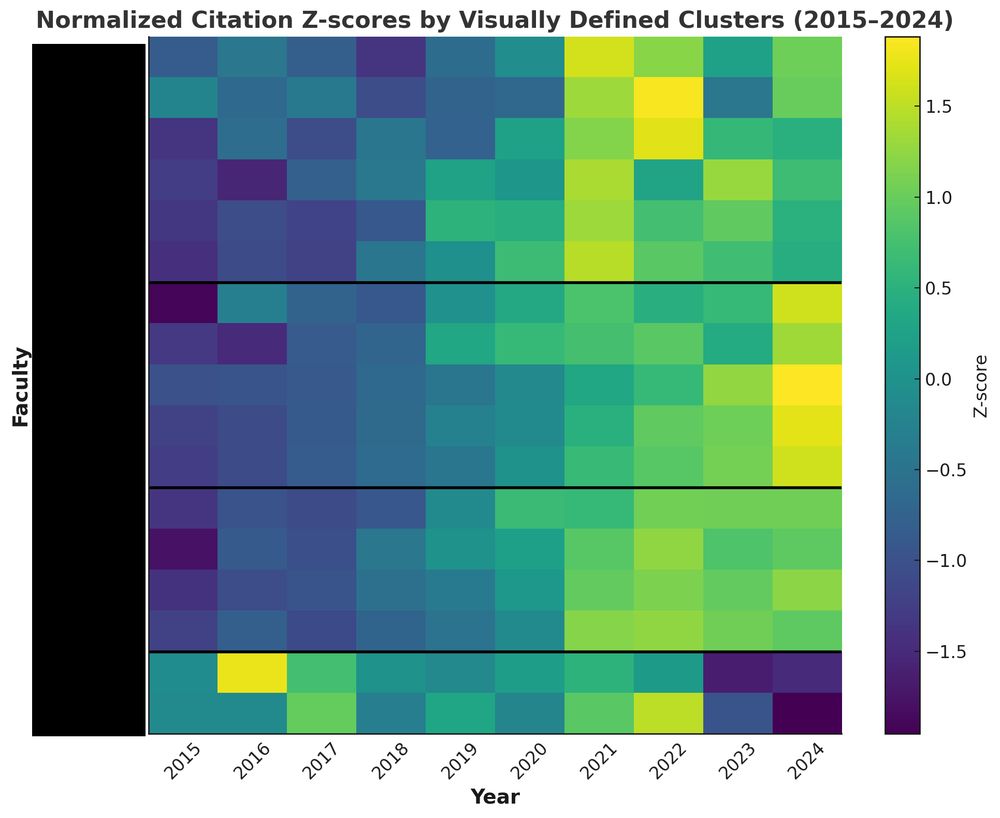
Check out the impact of the post-pandemic surge in review paper publications. Visualization of the citation histories of seventeen plant science faculty.
21.06.2025 23:00
👍 2
🔁 1
💬 0
📌 0
Wait what? Congratulations! I know was a long road to get here but you’re gonna do great.
20.06.2025 00:00
👍 3
🔁 0
💬 0
📌 0

Just had one of those great professor moments where I needed to explain something and had the perfect ear of corn to show what I was talking about right at hand.
12.06.2025 19:21
👍 14
🔁 0
💬 0
📌 0

The days that make me appreciate living in Lincoln Nebraska.
12.06.2025 01:10
👍 5
🔁 0
💬 0
📌 0

It's finally happening! After multiple rainouts and a redesign of our whole planting workflow, our nearly 1,000 line sorghum diversity panel in going into the ground today. Big thank you to Chidu, Kyle, Jon and the UNL Agronomy farm crew.
10.06.2025 16:38
👍 4
🔁 0
💬 1
📌 0
For the first time as a prof, I’m mentoring students aiming for faculty jobs in India. I understand which factors matter the most for US and Chinese faculty hiring—but can anyone help me figure out what we should be emphasizing to be competitive at Indian universities?
04.06.2025 13:46
👍 2
🔁 0
💬 0
📌 0
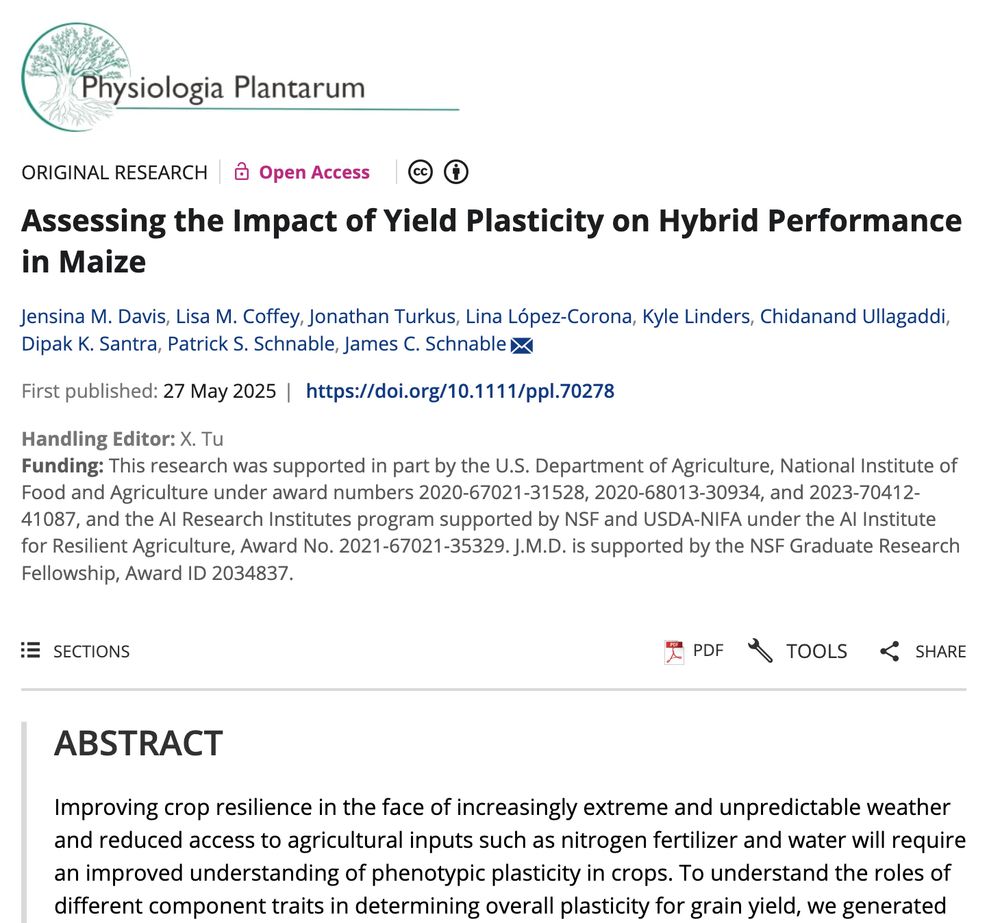
Protecting against downside risk doesn’t have to come at the expense of continued increases in the yield potential.
No evidence of a tradeoff between yield stability and maximum yield in an analysis of hybrid performance across 34 environments. New pub led by @jensinadavis.bsky.social
02.06.2025 19:31
👍 4
🔁 5
💬 1
📌 0
This is the projection. So at least a chance the final budget could still be something different. And given your interests you'd also be applying for USDA funded postdocs which are still going to be cut, but perhaps less than the NSF funded ones. But even so, yes, terrible news.
02.06.2025 14:17
👍 1
🔁 0
💬 1
📌 0

National Science Foundation's forecast for how many fewer scientists, postdocs, and graduate students we'll be able to support in 2026.
02.06.2025 00:52
👍 1
🔁 0
💬 1
📌 0
Did anyone else get a "we've been asked to pause issuance of grant funding during the transition of government" e-mail from USDA-NIFA this morning?
30.05.2025 14:02
👍 1
🔁 1
💬 1
📌 1
Just had a no cost extension request denied with only 14 days before grant funds expire. If you've been waiting months to hear back don't assume it's just the government being slow to process things and everything will ultimately work out.
22.05.2025 18:58
👍 1
🔁 1
💬 1
📌 0
Paper came back from review after seven months. The editor (not the reviewers) tells me:
1) Redo the GWAS using a different statistical model in a different software package.
2) Add a brand new RNA-seq experiment and results.
3) Please submit your revised manuscript within 14 days.
🤷
19.05.2025 13:47
👍 0
🔁 0
💬 1
📌 0


In January of 2023 Waqar Ali arrived in Lincoln with no coding background (and no winter coat). Today he published a paper using GWAS to identify genes linked to variation in how corn photosynthesizes, complete with reverse genetics validation in arabidopsis. doi.org/10.1093/jxb/...
14.05.2025 16:46
👍 3
🔁 0
💬 0
📌 0

Never got the chance. Hopefully someday.
13.05.2025 19:16
👍 0
🔁 0
💬 0
📌 0

This seems like a shockingly large effect size unless "professionally edited" is confounded with a bunch of other variables that would have a big impact on paper acceptance rates with or without the editing.
10.05.2025 18:24
👍 1
🔁 0
💬 0
📌 0

Still get excited each time I see a Waymo.
09.05.2025 15:14
👍 2
🔁 0
💬 1
📌 0

Natural variations in architectural traits. Phenotypic distribution of plant architectural traits in the Sorghum Association Panel across two growing seasons (2020 and 2021). The mean value of each trait for each growing season is depicted as dotted lines on the respective plots.
🧬🌾📊🔍 RESEARCH 🔍 📊🌾🧬
'Unveiling shared genetic regulators of plant architectural and biomass yield traits in the Sorghum Association Panel' - Singh et al. doi.org/10.1093/jxb/...
@szintri.bsky.social
#PlantScience 🧪
07.05.2025 09:56
👍 8
🔁 4
💬 0
📌 0

I helped launch and run a startup commercializing technology that could identify the fields where more fertilizer wouldn't increase crop productivity and save farmers money. SBIR funding from NSF is how we made the leap from concept to product and acquisition.
05.05.2025 14:49
👍 4
🔁 2
💬 0
📌 0

Preparing 50 trays with 4,800 slots for our first large-scale sampling effort
23.04.2025 18:48
👍 5
🔁 1
💬 1
📌 0

Grateful to work at a university that has on campus cornfields. Greenhouses and growth chamber are good and all. But sometimes need something more. Our lab will be planting our first proper summer corn nursery since 2021 this year.
22.04.2025 22:48
👍 5
🔁 1
💬 0
📌 0

I'm two decades late but really entertained by the term "mFruits."
20.04.2025 16:10
👍 3
🔁 0
💬 0
📌 0
I’m still working out how to prepare properly. But preparation side it is just a cool looking vegetable!
20.04.2025 14:30
👍 0
🔁 0
💬 0
📌 0
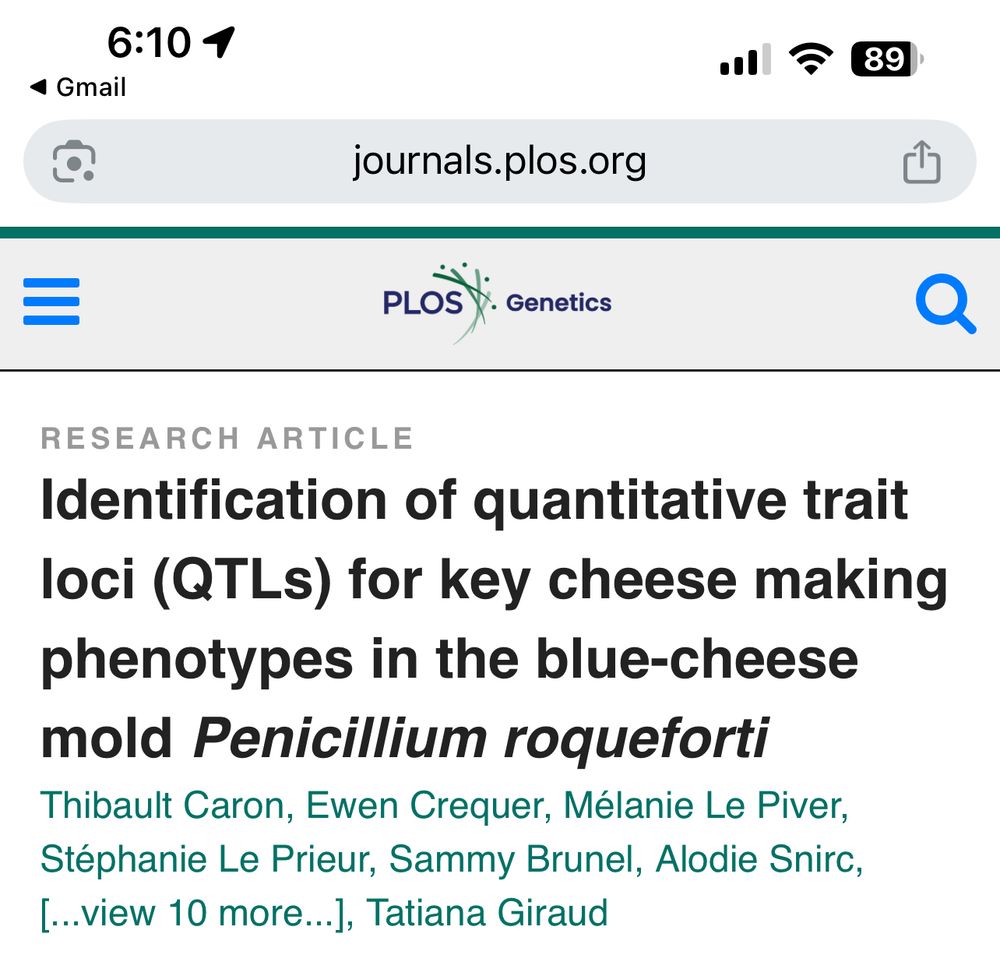
Mapping QTL is domesticated cheese molds.
19.04.2025 23:11
👍 2
🔁 0
💬 0
📌 0

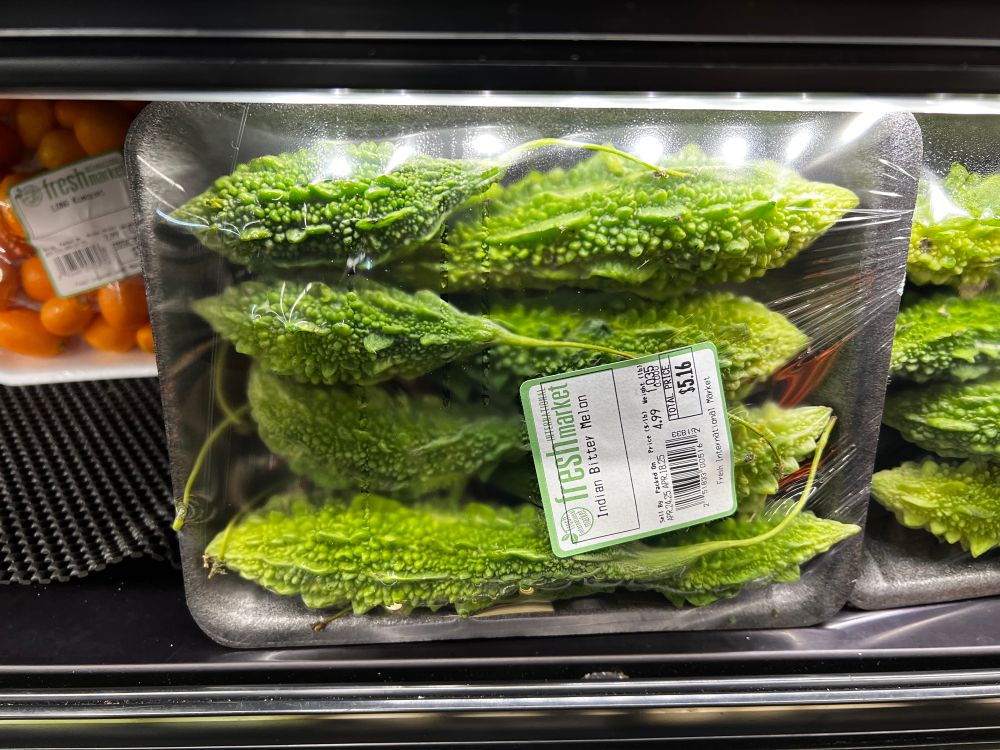
Generic bitter melon vs Indian bitter melon…
18.04.2025 23:19
👍 2
🔁 0
💬 2
📌 0
I’m pretty sure the dire scientist phenotype spontaneously evolves from other types multiple times. Dire scientists emergence is the carcinization of academia.
12.04.2025 15:12
👍 1
🔁 0
💬 0
📌 0

Spring in Nebraska. Highly recommended.
05.04.2025 20:24
👍 4
🔁 0
💬 0
📌 0