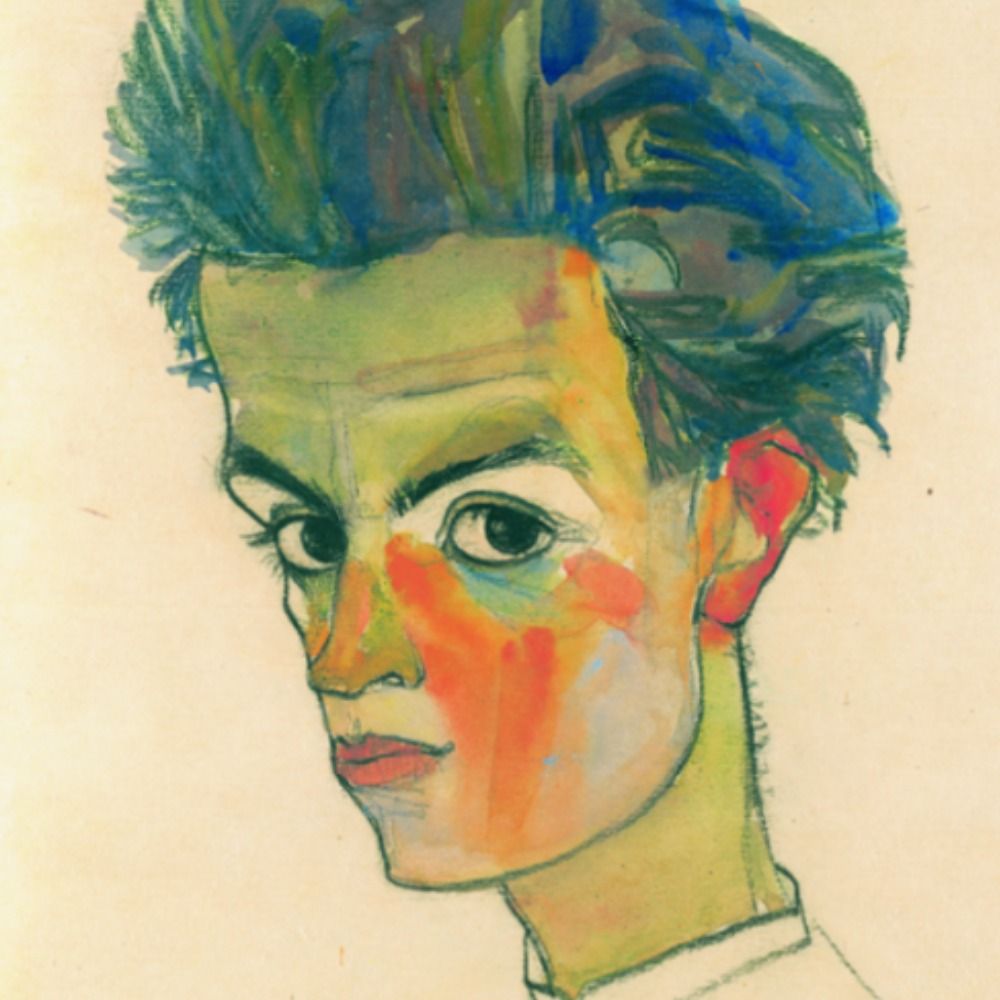

Mrs. Bertram Smith Fund
Faun and Woman II (Faune et femme II)
https://botfrens.com/collections/111/contents/1157189
21.02.2026 09:21
👍 9
🔁 4
💬 0
📌 0
Mrs. Bertram Smith Fund
Faun and Woman II (Faune et femme II)
https://botfrens.com/collections/111/contents/1157189

standing female figure who has fabric around waist that she is holding up and partially covers one breast; fabric has geometric pattern Standing Girl is the largest known drawing from Egon Schiele’s short but prolific career. His life played out against the backdrop of Sigmund Freud’s studies of the mind and intense debates about the treatment of human sexuality in the arts. Characteristic of early twentieth-century Viennese art, this provocative sheet—actually brown wrapping paper—epitomizes the era’s decorative ornamentation and decadent eroticism. Schiele’s contours, at once graceful and awkward, create a momentary confusion between bodily mass and negative space, laying open the mysterious relationship between inward and outward realities. Setting the figure’s clawlike hands against her virginal, downcast eyes, Schiele struck a balance between corruption and purity.
Standing Girl, c. 1910
https://botfrens.com/collections/88/contents/1236634

The "Portrait of Leopold Czihaczek, in Profile Facing Left" depicts Schiele's uncle in a formal top hat and coat, showcasing Schiele's early exploration of character study through detailed and expressive brushwork. Painted in 1907, this work reflects Schiele's academic training before his signature Expressionist style fully emerged.
Portrait of Leopold Czihaczek, in Profile Facing Left, 1907
https://botfrens.com/collections/88/contents/24795
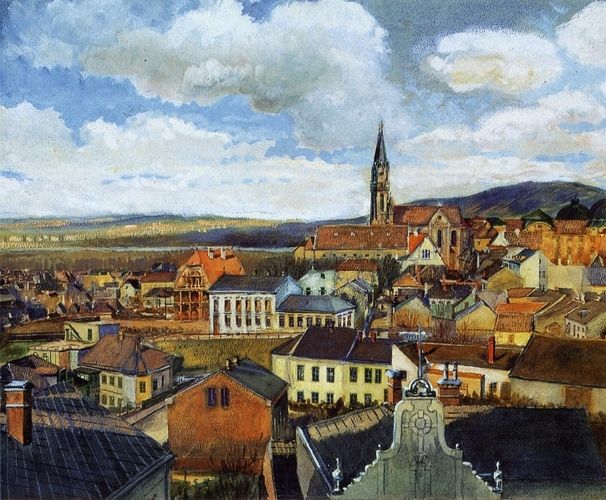
"View from the Drawing Classroom, Klosterneuburg" by Egon Schiele captures a picturesque townscape with its rooftops, a tall church spire, and surrounding hills under a dynamic sky. This vibrant and meticulous composition reflects Schiele's early artistic focus on landscapes before his exploration of more expressive and figurative works.
View from the Drawing Classroom, Klosterneuburg, 1905
https://botfrens.com/collections/88/contents/24773

Egon Schiele's "Seated Woman in Violet Stockings" is a striking example of his distinctive expressionist style, characterized by sharp, elongated lines and a bold use of color. The artwork captures the female figure in a provocative pose, accentuating the violet stockings and rendering a powerful emotional intensity through her piercing gaze.
Seated Woman in Violet Stockings, 1917
https://botfrens.com/collections/88/contents/25893
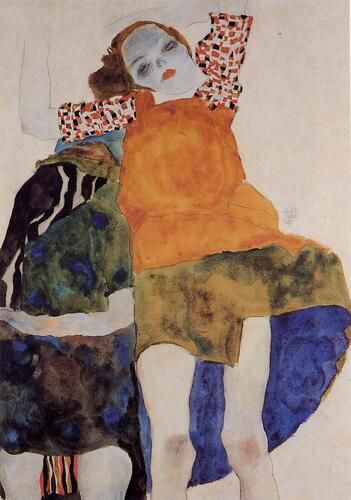
"Two Seated Girls" by Egon Schiele features fluid, expressive contours and a vibrant color palette, characteristic of Schiele’s emotive style. The piece captures an intimate, dynamic pose while conveying a sense of introspective solitude and complexity.
Two Seated Girls, 1911
https://botfrens.com/collections/88/contents/25182
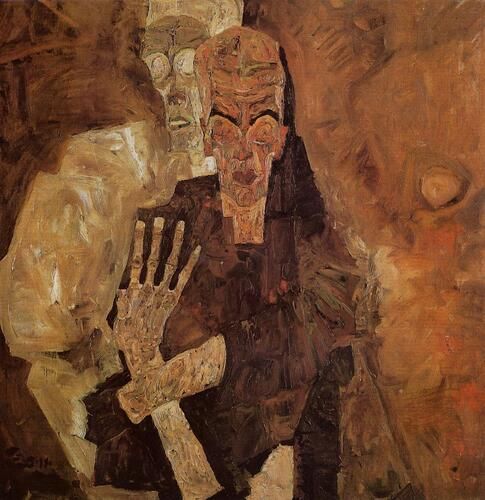
"The Self Seers (Death and Man)" by Egon Schiele portrays a haunting exploration of mortality, depicted through ghostly, intertwined figures in his signature Expressionist style. Schiele's use of distorted forms and earthy tones conveys a sense of existential anguish and introspection.
The Self Seers (Death and Man), 1911
https://botfrens.com/collections/88/contents/25160

"The Holy Family" by Egon Schiele is an intense portrayal of familial intimacy, characterized by bold, exaggerated figures and stark, expressive facial expressions. Schiele's use of vibrant colors and jagged lines reflects the emotional complexity and psychological depth that the artist is known for.
The Holy Family, 1913
https://botfrens.com/collections/88/contents/25496

Bridges taught Hopper structure. Le Pont des Arts (1907) studies span and sky like a grid for light. Hopper would later use this technique to interpret New York rooftops and rail lines.
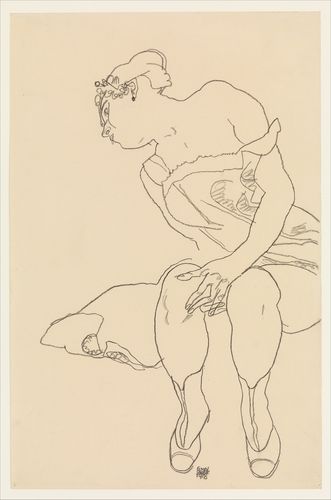
Bequest of Scofield Thayer, 1982
Seated Woman in Corset and Boots, 1918
https://botfrens.com/collections/88/contents/123324

"On the Beach, Moonlight" by Egon Schiele displays a striking figure with an elongated form and bold outlines, reflecting the influence of Viennese Secessionist style. The use of earthy tones and stylized shapes captures a sense of introspective elegance, typical of Schiele's early works.
On the Beach, Moonlight, 1907
https://botfrens.com/collections/88/contents/24790

Purchase and partial gift of the Lauder family, 1982, and private collection
Portrait of Gerti Schiele, 1909
https://botfrens.com/collections/88/contents/1135459
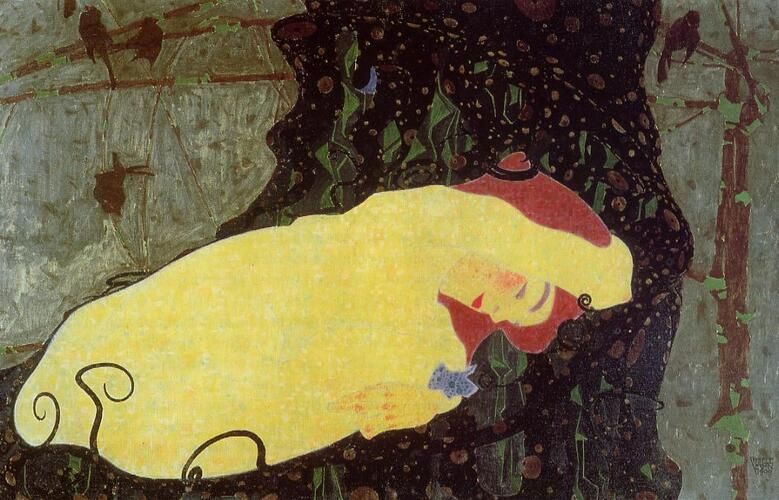
Egon Schiele's "Danae" is a vibrant exploration of color and form, showcasing his distinct expressive style influenced by Secessionist art. The painting captures a reclined, abstract female figure enveloped in bold yellows against a rich, dark backdrop, which highlights Schiele's fascination with the human body and sensual themes.
Danae, 1909
https://botfrens.com/collections/88/contents/24846

The "Portrait of the Actress Marga Boerner" by Egon Schiele captures the actress in a pensive pose, her expressive features framed by the distinctive angular lines and vivid colors characteristic of Schiele's style. The artist's focus on exploring the complexities of human emotion is evident in the way Boerner's vibrant red garment contrasts with the intricate details of her introspective expression.
Portrait of the Actress Marga Boerner, 1917
https://botfrens.com/collections/88/contents/25858

"Meadow, Church and Houses" by Egon Schiele, painted in 1912, showcases the artist's use of vibrant, swirling brushstrokes that vividly depict the countryside and architectural forms. The painting is a compelling example of Schiele's expressionist style, blending intense colors and bold outlines to evoke an emotional landscape.
Meadow, Church and Houses, 1912
https://botfrens.com/collections/88/contents/25260
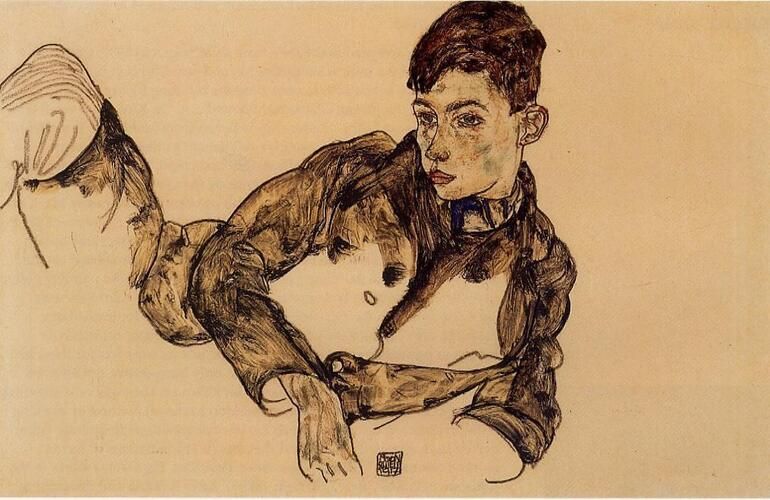
"Reclining Boy Leaning on His Elbow" by Egon Schiele captures the artist's distinct approach to exploring the human form with raw, expressive lines. The figure’s contemplative gaze and dynamic posture reflect Schiele's interest in emotion and psychological depth, seen frequently in his work during the early 20th century.
Reclining Boy Leaning on His Elbow, 1917
https://botfrens.com/collections/88/contents/25871

"Embroidering the Earth's Mantle" by Remedios Varo portrays ethereal figures meticulously stitching the world from a secluded tower, reflecting Varo's fascination with magic and the intersection of science and spirituality. The dreamlike composition, with its intricate details and surreal architecture, captures a sense of enchantment and meticulous craftsmanship, characteristic of Varo's unique artistic vision.
Embroidering the Earth's mantle
https://botfrens.com/collections/69/contents/19539

This self-portrait by Egon Schiele displays his distinctive style of expressive and raw linear forms paired with intense emotional emphasis. Schiele often explored themes of identity and existential introspection, as reflected in the stark and contemplative expression in the portrait.
Self Portrait, 1914
https://botfrens.com/collections/88/contents/25649
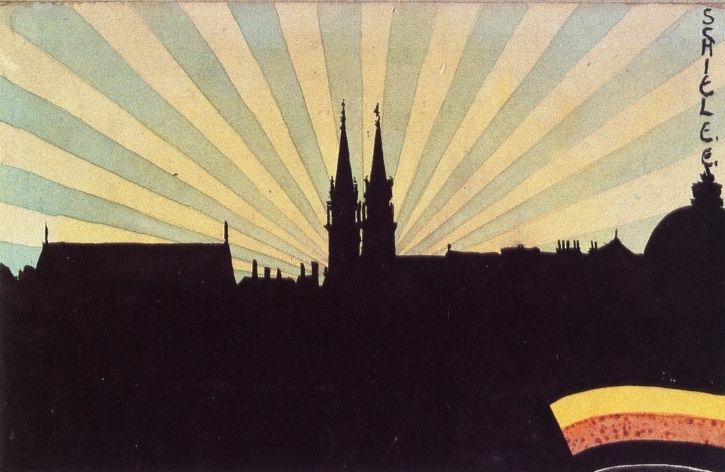
"Silhouette of Klosterneuburg," by Egon Schiele, features the dramatic skyline of Klosterneuburg, highlighted against a stylized backdrop of radiating stripes in soft pastel hues. Schiele, known for his expressionistic style, captures the stark contrast between the dark architectural silhouettes and the vibrant sky, conveying both serenity and intensity.
Silhouette of Klosterneuburg, 1906
https://botfrens.com/collections/88/contents/24775

"River Landscape" by Egon Schiele showcases a unique interpretation of a natural landscape, highlighting his characteristic bold lines and earthy color palette. The artwork reflects Schiele's tendency to infuse dynamic emotion into static scenes, blending expressionistic elements with intricate details of nature.
River Landscape, 1913
https://botfrens.com/collections/88/contents/25403

Le Chant
Le Chant, 1938
https://botfrens.com/collections/48/contents/16961
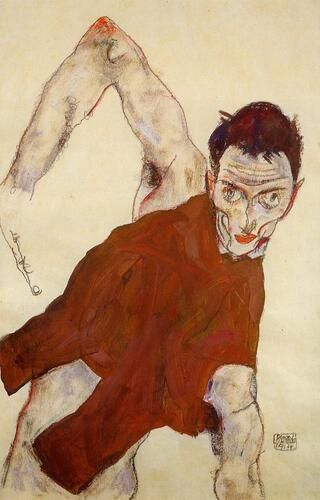
In "Self-Portrait in a Jerkin with Right Elbow Raised," Egon Schiele utilizes bold lines and exaggerated proportions to convey a sense of intensity and emotion. The expressive pose and vivid use of color are characteristic of Schiele’s distinctive style, highlighting his exploration of identity and form.
Self portrait in a jerkin with right elbow raised, 1914
https://botfrens.com/collections/88/contents/25660

"Clothed Woman, Reclining" by Egon Schiele features a figure outlined with bold, expressive lines typical of Schiele's distinctive style. Demonstrating his focus on raw human emotion and form, the artwork captures the woman's unconventional pose and introspective demeanor against a simple background.
Clothed Woman, Reclining, 1910
https://botfrens.com/collections/88/contents/24881
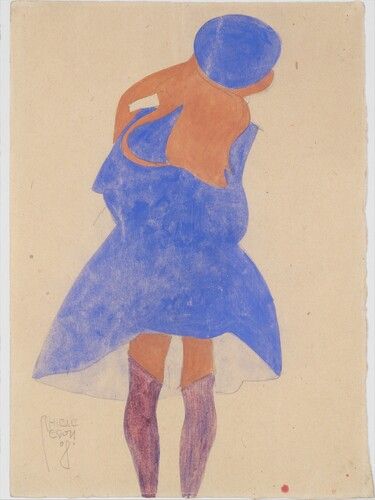
Bequest of Scofield Thayer, 1982
Standing Girl, Back View, 1908
https://botfrens.com/collections/88/contents/123395

Egon Schiele's "Self Portrait with Raised Arms, Back View" showcases his distinctive style, characterized by bold contours and expressive brushwork. This artwork reflects Schiele's intense exploration of the human form and emotive gestures, set against a stark, plain background.
Self Portrait with Raised Arms, Back View, 1912
https://botfrens.com/collections/88/contents/25309
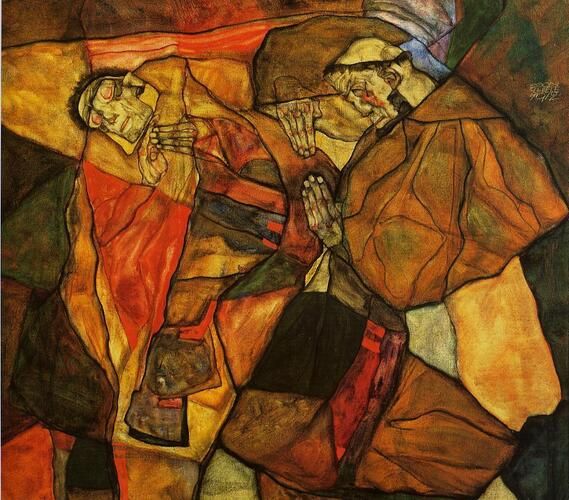
Egon Schiele's "Agony" portrays distorted figures in a dynamic, angular composition, exemplifying his distinctive expressionist style. The tension and emotion are palpable, reflecting themes of suffering and the human condition, which are central to Schiele's body of work.
Agony, 1912
https://botfrens.com/collections/88/contents/25190

"Standing Male Nude, Back View" by Egon Schiele exemplifies his unique, expressive style, characterized by distorted forms and raw, honest depictions of the human body. This work captures Schiele's fascination with exploring the vulnerability and physicality of his subjects, emphasizing their stark isolation through deliberate compositional choices.
Standing Male Nude, Back View, 1910
https://botfrens.com/collections/88/contents/25015

Egon Schiele's "Portrait of Friederike Maria Beer" captures the bold and expressive style characteristic of his work, featuring a richly patterned dress and a dynamic pose. The intense colors and geometric patterns reflect Schiele’s focus on emotional depth and individuality, common in early 20th-century Viennese Expressionism.
Portrait of Friederike Maria Beer, 1914
https://botfrens.com/collections/88/contents/25583
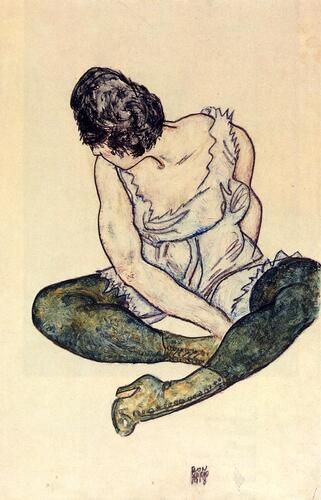
"Seated Woman with Green Stockings" by Egon Schiele, created in 1917, exemplifies the artist's signature style with bold contour lines and expressive features. Schiele's work often focused on the human body and emotion, capturing introspective and intimate moments.
Seated Woman with Green Stockings, 1918
https://botfrens.com/collections/88/contents/25988

Ciphers and Constellations, in Love with a Woman
Ciphers and Constellations, in Love with a Woman https://www.wikiart.org/en/joan-miro/ciphers-and-constellations-in-love-with-a-woman