August 6th! It's coming up fast!
25.06.2025 19:14
👍 2
🔁 1
💬 0
📌 0
Really looking forward to the next in the series ... "The Burnt"!
25.06.2025 18:01
👍 3
🔁 0
💬 2
📌 0

A large puzzle in the shape of the giant (72 cm in length) trilobite, Isotelus rex, cut from white 1/2" sheet ethafoam. The left image shows all the individual sclerites of the dorsal exoskeleton in juxtaposition, as in life. The ventral hypostome is not included in this version. The right image shows separation between the free cheeks (librigenae) and the cranidium, and between the tail shield (pygidium) and thorax.

In the left image, all the dorsal sclerites, including the 8 thoracic pleurae, are slightly separated, but remain in alignment. This configuration represents a more or less intact carcass, after decay of the arthrodial membranes. On the right, the exoskeletal elements are skewed, as might be seen in a carcass with minor post mortem disturbance. Moult remains -- in which the living trilobite actively shed the old exoskeleton -- typically show inversion and/or rotation of certain elements, often displaced some distance from each other.
I've been avoiding bsky because of ... you know, too much angst & shit. But it's #TrilobiteTuesday, so if you're feeling #disarticulated, you're not alone. Scale puzzle of #Isotelusrex (72 cm long!) I cut from ethafoam showing how the calcified dorsal #exoskeleton separated into 12 bits on #death.
24.06.2025 14:44
👍 20
🔁 4
💬 0
📌 0
Foul-mouthed, foul-brained ... foul in every conceivable way.
24.06.2025 14:06
👍 2
🔁 1
💬 0
📌 0
Nothing about pycnogonids ("sea spiders") surprises me!
24.06.2025 14:03
👍 4
🔁 0
💬 0
📌 0
SciArt Feed 🐡 Admin Reminder:
The SciArt Feed now has 3,500+ subscribers, and 1.5k+ approved contributors.
I will yeet any artist off of that approved list for being transphobic or hateful.
It remains a safe space for artists to share 2SLGBTQI+ themed science art.
Carry on.
24.06.2025 12:04
👍 56
🔁 13
💬 0
📌 1
Excellent!!
19.06.2025 01:36
👍 6
🔁 1
💬 0
📌 0
It’s great to see another of Sam’s treasures in the limelight — a fitting tribute to his collecting prowess, knowledge, and generosity!
L
19.06.2025 01:36
👍 0
🔁 0
💬 0
📌 0
I hope you get the opportunity -- both Mario and the MPE are true gems!!
18.06.2025 23:52
👍 1
🔁 0
💬 0
📌 0
This is absolutely amazing!! The MPE has some fabulous stuff .... hope we see more soon.
18.06.2025 23:36
👍 20
🔁 2
💬 0
📌 1
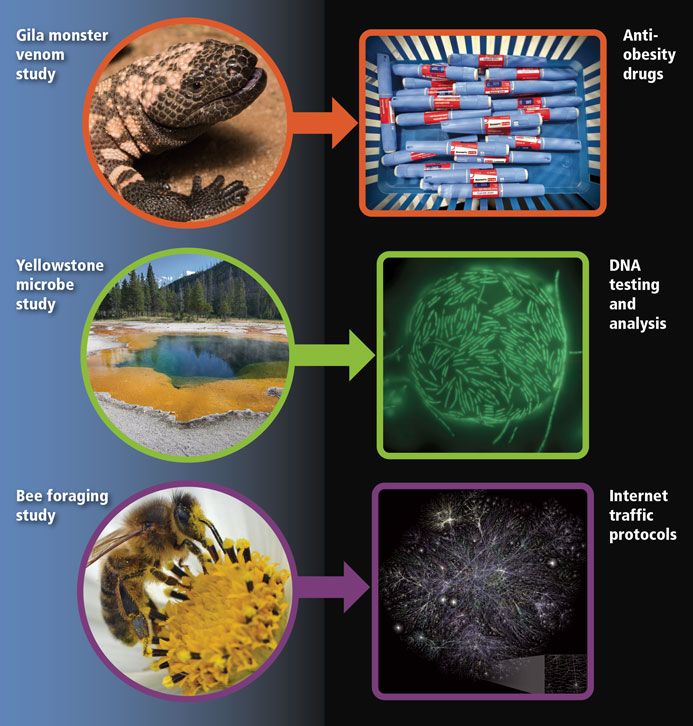
“Why Are We Funding This?”
Long-standing myths about “silly science” have contributed to the reckless slashing of government-supported research.
My latest for American Scientist Magazine helps give scientists the tools to fight back against politicized charges that our research is silly or pointless- tools that will work whether you’re asked “why are we funding this” from your asshole uncle at Thanksgiving or an asshole US Senator.
🧪🌎
17.06.2025 21:47
👍 1054
🔁 548
💬 34
📌 36

An artwork showing a strange aquatic humanoid creature, with blue skin in a chitonous armor having fun riding an armored anomalocaris in similar colors. But below her a giant creature is swimming, and the head of the monster is going in her direction...
Thank you so much for 4.9k ! Lets do a small #artshare to celebrate !
Introduce yourself and drop below some of your favorite art !
17.06.2025 05:25
👍 93
🔁 28
💬 19
📌 0
Awesome!!
17.06.2025 18:13
👍 5
🔁 1
💬 1
📌 0
Fantastic — save for the location. I won’t be crossing the border for quite some time …
17.06.2025 14:41
👍 2
🔁 0
💬 0
📌 0

Another 🚨Paper alert🚨 Everything you ever wanted to know about colony development in graptolithine pterobranchs 🪸 Still much to uncover, but this sums up what we know so far. Enjoy, it is open access 😜
doi.org/10.1111/ede....
17.06.2025 14:35
👍 16
🔁 6
💬 0
📌 0

A black & white photo of an enrolled isoteline trilobite. The specimen is viewed from beneath, with the cephalon facing downward -- only a narrow band of the ventral cephalic doublure is exposed at the top of the image, with the median connective suture just visible. The dorsal pygidial shield is broken away, leaving an impression of the ventral doublure as a broad arcuate band with curving parallel terrace ridges. Overlapping thoracic pleurae can be seen on either side of the specimen. Underneath the missing pygidium, the hypostome -- detached from the cephalic doublure -- is revealed from the ventral side. It is of classic isoteline form, with a deep posterior embayment giving a broadly "forked" appearance. Anastomosing terrace ridges are well displayed, running more or less parallel to the lateral margins. The scale bar at the bottom of the image is 20 mm in length.
Enrolled Isotelus latus w dorsal pygidium broken away revealing classic isoteline "forked" #hypostome (ventral "mouth plate") disarticulated from cephalic doublure. Beautiful preservation of fingerprint-like #terrace ridges! #Ordovician (~450 MYA), Lindsay Fm, Colborne, #Ontario 🇨🇦 #TrilobiteTuesday
17.06.2025 13:20
👍 18
🔁 3
💬 0
📌 0

The Fossil Files
In “The Fossil Files”, a pair of palaeontologists delve into the latest discoveries from the world of palaeontology and seek to bring fossils to back to life. Each episode, Susie and Rob will discuss ...
So @fossilrob.bsky.social & I have a new podcast: The Fossil Files. Each week, we discuss a recently published paper on fossils. It's kind of like journal club, but with only mine and Rob's opinions. You can listen on our website or on Spotify: fossils.libsyn.com or open.spotify.com/show/2jWWagt...
16.06.2025 13:25
👍 56
🔁 27
💬 1
📌 2

Nice small display on fossil folklore at the Dorchester Museum stand, Lyme Regis Fossil Festival.
15.06.2025 06:58
👍 14
🔁 4
💬 0
📌 0

#MolluscMonday Non-marine bivalves pack a spectacular stone panel in a 16th century fireplace at Hardwick Hall (NT), Derbyshire. This ‘cockleshell marble’ is associated with the Tupton coal seam of Late Carboniferous age.
16.06.2025 05:23
👍 60
🔁 15
💬 0
📌 1

Large, light grey, semicircular shells of a distinctive pterioid bivalve mollusc are strewn over the surface of a darker grey limestone slab. The thin valves carry well-developed radiating ribs, with sets of finer ribs between more prominent ones. Faint concentric growth lines are also visible. Some valves are more or less complete, while others are fragmentary; there is considerable overlap of individual shells.
On #MolluscMonday: a #fossil #shellbed of the iconic Late #Triassic (~210 MYA) #bivalve, Monotis (Pacimonotis) subcircularis, Pardonet Fm, NE #BritishColumbia 🇨🇦. This subgenus has an extensive circum-Pacific distribution in rocks of similar age.
16.06.2025 14:33
👍 66
🔁 8
💬 0
📌 0

Support FlyingTrilobite
Support FlyingTrilobite
If you enjoy my work and would like to send a few bucks my way, I have a Ko-fi:
ko-fi.com/flyingtrilob...
15.06.2025 14:07
👍 27
🔁 16
💬 1
📌 2
Sharing with the #SciArt Feed:
(And yes the SciArt Feed can be "political"—science and art both reflect political facets of society.)
14.06.2025 19:41
👍 71
🔁 12
💬 0
📌 0

An offshore view, taken from a small boat in choppy seas, of deeply eroded coastal monoliths (or sea stacks) composed of distinctly layered Middle Ordovician carbonate rocks. The overall tone of the image is grey-blue, from the rough waters in the foreground, to the shoreline rock exposures in mid-right view, to the uniformly overcast skies in the background. Above the barren wave-swept shoreline, a forest of wind-blown spruce trees encroaches from the right.
Another archival entry for #Strataday: Coastal monoliths in the Middle #Ordovician (~460 MYA) Mingan Fm, #Mingan #Archipelago #National #Park #Reserve, #Quebec 🇨🇦. Differential erosion of Mingan Fm #limestones has sculpted these striking features. Scanned slide from a 1998 #GAC-MAC field excursion.
14.06.2025 15:31
👍 8
🔁 0
💬 0
📌 0
Collection Manager, Recent Invertebrates
Click the link provided to see the complete job description.
The Sam Noble Oklahoma Museum of Natural History is hiring a Collections Manager in Invertebrate Zoology. Come work with us!
13.06.2025 19:17
👍 28
🔁 21
💬 1
📌 0
File this under, if he wanted to, he would (grow some iridescent feathers to impress you). 💅
Until then, appreciate the gorgeous iridescence of these "little flying jewels" from our ornithology collection with Oliver Haddrath (Collections Technician).
13.06.2025 19:40
👍 26
🔁 4
💬 2
📌 0

A small, irregularly shaped slab of limestone is being held by hand in the raking sunlight. The flat surface, stained pale orange by iron minerals, shows a series of straight parallel grooves or scratches -- these are glacial striations cut by the passage of abrasive rock fragments and mineral grains embedded in the sole of the glacier. Numerous fossil fragments are seen on the slab surface. Some of these have been ground through at various angles and show as complete or partial cross sections. Other fragments (lower left and far right) have escaped glacial sectioning and still stand in relief.

Close up of the glacially polished slab surface showing several medium- and high-spired gastropods in section, as well as the outlines of rhynchonellid brachiopods.

More of the same surface with sections through trepostome bryozoans and a planispiral gastropod.
Current events call for a "don't let the bastards grind you down" kind of post. These #Ordovician #bryozoans, #brachiopods & #gastropods entered the #fossilrecord ~450 MYA only to be scoured by a Pleistocene glacier. Be like these #fossils - endure! Verulam Fm, Ramara Tp, #Ontario 🇨🇦 #FossilFriday
13.06.2025 20:04
👍 57
🔁 15
💬 2
📌 3
For Toronto creatives, this Social Creator Jam for @gandersocial.bsky.social looks interesting, and I'll be attending thanks to receiving an invite from a former colleague. June 25th in the evening.
And no, I don't love the use of AI imagery and won't be quiet about that.
lu.ma/9ibyo92a?tk=...
12.06.2025 19:46
👍 8
🔁 1
💬 0
📌 0


