This is cool, Drew. Going to add to my survey research course syllabus to teach in a few weeks!
01.03.2026 18:41
👍 0
🔁 0
💬 0
📌 0
This is cool, Drew. Going to add to my survey research course syllabus to teach in a few weeks!

I am chairing the Emerging Scholar Award committee for the APSA EPOVB section this year. Send in your submissions (self-nominations welcomed!) with a cv to me and the committee (@wzcmarsh.bsky.social and Holli Semetko) by March 1 for consideration! More info here: apsanet.org/membership/o...
To clarify a question I've been getting: sending a CV with your nomination is sufficient, no need to send a nominating letter!
I am chairing the Emerging Scholar Award committee for the APSA EPOVB section this year. Send in your submissions (self-nominations welcomed!) with a cv to me and the committee (@wzcmarsh.bsky.social and Holli Semetko) by March 1 for consideration! More info here: apsanet.org/membership/o...

Any other political scientists getting these weird emails from thelighthousecommunity@proton.me?
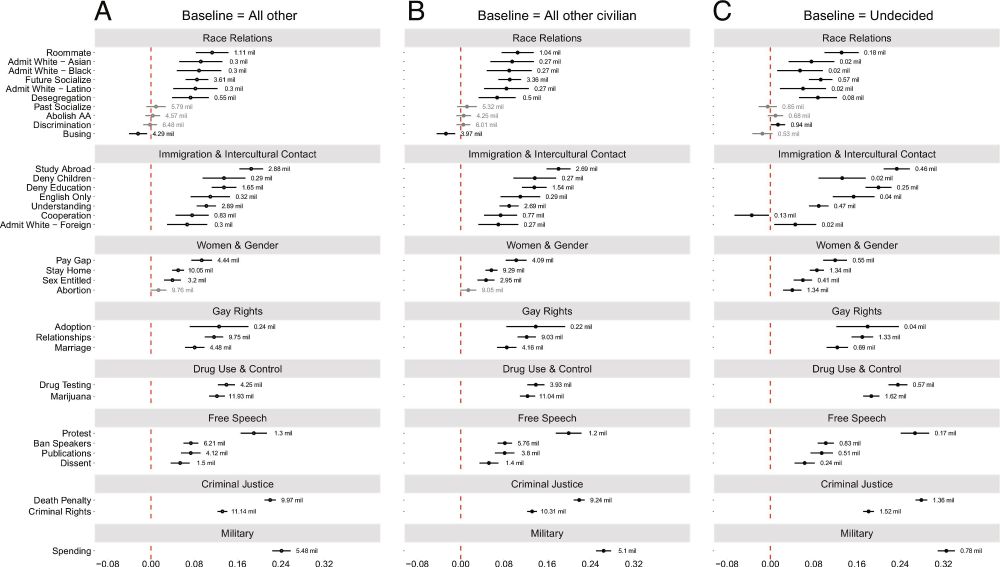
New article out (w Marcel R, Ben N, and David S) in @pnas.org. We show that young folks who signal interest in becoming cops hold more conservative views on race, multiculturalism, gender, and sexuality, etc.than their peers intending careers in other fields www.pnas.org/doi/10.1073/...

It takes a long time to get detailed precinct-level data for a presidential election. We're now at 99 percent complete.
www.nytimes.com/interactive/...

Our @apsrjournal.bsky.social article is now in print! We develop a theory to explain why the public doesn't become more prosocial toward LGBTQ+ people after illegitimate anti-LGBTQ+ violence and provide causal, externally valid, evidence for the theory across 4 studies doi.org/10.1017/S000...

New today at Science Advances from @kshoub.bsky.social and me. We revisit the question of whether a local tragedy (mass shooting) influences voter behavior. They do, at least at the local level, with some important caveats and implications for policy. Short thread...
www.science.org/doi/10.1126/...

Engagement-based #algorithms amplify intergroup hostility + moral-emotional content, leading it to be overrepresented in your feed
This leads us to falsely perceive that people want to see this kind of content and share more of it.
This technology fuels false polarization: osf.io/preprints/os...

This is an excellent review article discussing open questions/challenges in causality and causal inference. arxiv.org/pdf/2508.17099

seine: Semiparametric Ecological Inference Ecological inference (EI) is the statistical problem of learning individual-level associations from aggregate-level data. Without certain identifying assumptions and proper estimation methods, researchers can easily draw incorrect conclusions from aggregate data, finding patterns where none exist, missing important individual-level patterns, or even concluding an effect runs in the opposite direction than it actually does. This is known as the ecological fallacy. The seine package allows researchers to perform modern ecological inference quickly, accurately, and transparently. Double/debiased machine learning allows for controlling for confounding covariates, which increases the plausibility of identifying assumptions. Machine learning can be used to estimate the key regression model and avoid strong parametric assumptions made by existing EI methods. Sensitivity analysis and benchmarking let researchers understand how violations of their assumptions will affect results. A tidy interface makes the package modular and easy to use, and works well with pipe-based workflows. Minimal dependencies and efficient estimation routines keep everything fast and lightweight.
A few weeks ago I shared a new WP on doing ecological inference—learning individual relationships from aggregate data, such as vote choice by race from precinct data.
Excited now to introduce `seine`, our open-source R package for doing EI easily and efficiently!
corymccartan.com/seine/

abstract of article
📢 New paper w @mfroman.bsky.social and Ben Newman: Why do some conservative White Americans support abortion? It's not gender or religion. They want to slow the growth of disliked out-groups. bit.ly/4mFYYXd
Thanks @rcenteno.bsky.social! Let us know if you have any thoughts!
This is part of a larger book project with @mfroman.bsky.social tentatively titled Making Americans: The Racial Politics of Reproduction. We welcome any and all feedback on the project as we move forward with additional studies.
Bottom line: White backlash to demographic change is not only about who enters the country, but also who is born into it.
Our findings show:
🔹 Demographic change can shift even “fixed” attitudes like abortion.
🔹 Reproductive politics isn’t just moral or religious—it’s racialized.
🔹 White backlash may increasingly target reproduction, not just immigration.
We refer to this logic as racialized Malthusianism: the fear that out-groups will reproduce, erode in-group dominance, and reshape the political/racial order. This connects contemporary “Great Replacement” rhetoric to a longer history of racialized population control.

experimental results
We replicate with experiments: When prejudiced Whites are primed to think about population growth, their support rises for assuring Latina women---but not White women---have access to abortion, contraception, and sterilization.

plot showing relationship between demographic change and support for abortion among different racial and ethnic groups

plot showing relationship is almost exclusively driven by prejudiced whites
Across large-N surveys and original data, we find:
➡️ Whites in places with more Latino growth are more supportive of legal abortion.
➡️ This effect is absent among non-Whites.
➡️ It’s driven exclusively by Whites higher in prejudice.
We test whether prejudiced White Americans support abortion as a means of limiting non-White population growth.

plot showing switch from immigration-led to birth-led demographic change from 1970s to 2020

young people are decreasingly white and increasingly latino
Most research on White backlash to demographic change focuses on immigration. But today, the U.S. is diversifying less through immigration and more through non-White births.
abstract of article
📢 New paper w @mfroman.bsky.social and Ben Newman: Why do some conservative White Americans support abortion? It's not gender or religion. They want to slow the growth of disliked out-groups. bit.ly/4mFYYXd

🌅📙 64.3
#NostalgicDeprivation in Europe 🇪🇺
These authors (🧵⬇️) look at impact of #NostalgicDeprivation on support for #PopulistParties across both Eastern and Western Europe 🌍 linking populist attitudes and voting.
🔗 buff.ly/HuJNAqL
My coauthor on this project, Marcel, has a much more comprehensive thread on our new paper if you want to read through!

🚨NEW PAPER 🚨 Are police more right-wing and biased against marginalized groups than the general public? If so, why? My new article in
@pnas.org w/ @tylerreny.bsky.social, Newman, and Sears provides some answers. 🧵1/n
New article out (w Marcel R, Ben N, and David S) in @pnas.org. We show that young folks who signal interest in becoming cops hold more conservative views on race, multiculturalism, gender, and sexuality, etc.than their peers intending careers in other fields www.pnas.org/doi/10.1073/...
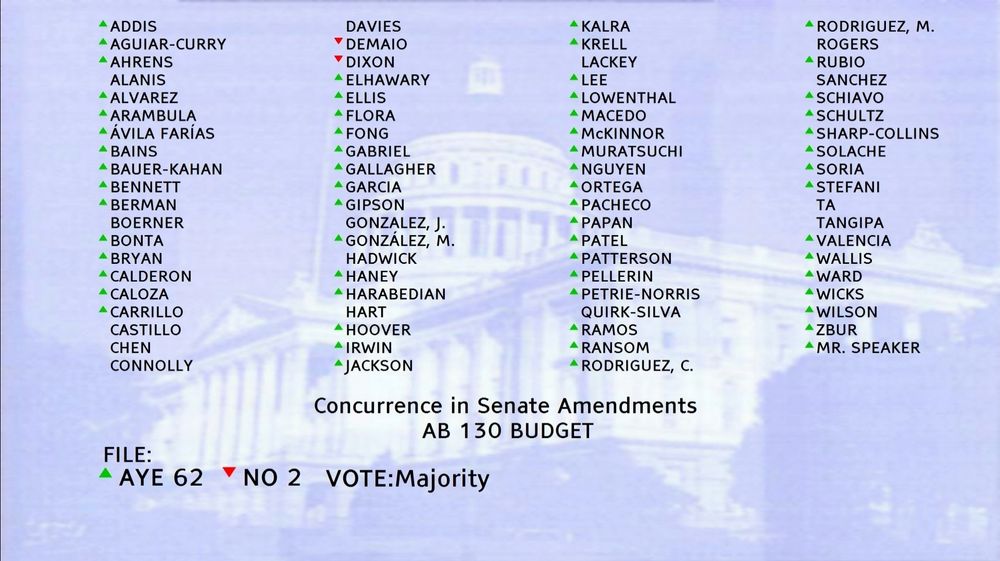
The impossible has become possible: we've passed a clean CEQA infill exemption. This is probably the most important thing California has done on housing in the present YIMBY moment.