Reminder: a little over one week left to submit abstracts for the individual‑based conservation topical collection. Happy to chat if you’re considering contributing!
06.03.2026 10:36
👍 6
🔁 5
💬 0
📌 0
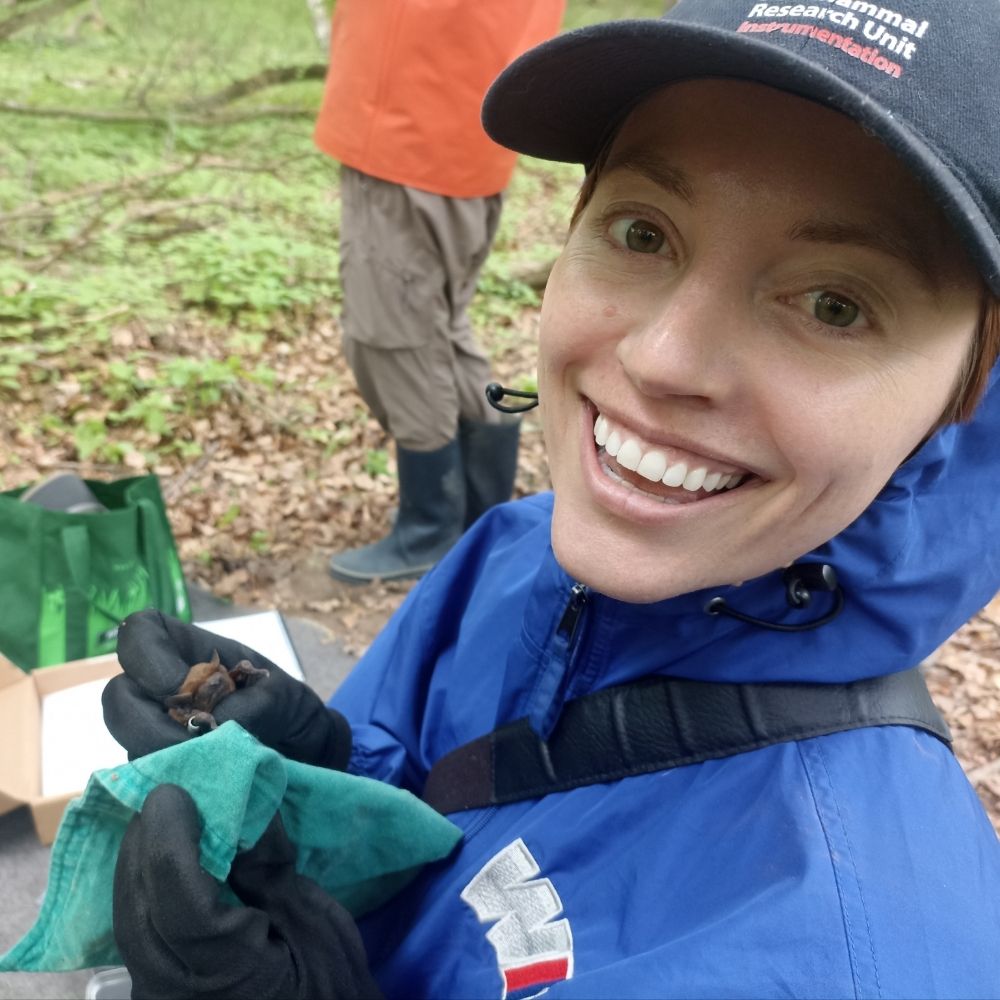
@caragallagher
Human girl - Ecomodeller - Tenure Track Researcher @aarhusuni.bsky.social - Energetics, behavior, & agent-based modelling ⚡🐾🖥️ - Graphic art enthusiast 🖌️ - Editor @ibe.pensoft.net & Movement Ecology
Reminder: a little over one week left to submit abstracts for the individual‑based conservation topical collection. Happy to chat if you’re considering contributing!

First Event Announcement
📅 March 5th
⏰ 6 PM CET / 9 AM PST
Dawn of Cetology: The Scientific Pursuit of Whales, from Antiquities to the Twentieth Century

Disease dynamics in wildlife: We used a spatially explicit eco-epidemiological model to analyze classical swine fever spread in Northern Germany. Discover how host movement decisions shape disease spread. #EcoEpidemiology #FLI @ufz.de 🐖 Read here: doi.org/10.1002/ecs2...;
@ecosphere-ua.bsky.social

Why do individual differences matter for species survival? 🧬
This is what our latest topical collection - "Individual-based #conservation" is trying to explore
💎 Diamond #OA (No fees for authors or readers)
📅 Deadline: 15 March 2026
Submit your abstract today ⤵️
ibe.pensoft.net/news/1106

A more complex natural landscape showing a river, mountains , and further down stream, farming and industry. The labels and arrows demonstrate a more complex relationship with cycling carbon and carbonate equilibrium.

Simple landscape showing a river flowing through a natural landscape. A black CO2 arrow points to the trees at the top and two black arrows show the carbon flowing down stream and also back into the atmosphere.
Whatever the level, we can tailor graphics to communicate your research to different audiences! These graphics both represent the same research but contain vastly different amounts of information.🧪🐡
We loved working on this project!🎨 Check out the fantastic paper here: www.nature.com/articles/s41...
📣Call for Abstracts: Individual-Based #Conservation
🦁Explore how individual #heterogeneity drives conservation success in this new topical #collection from our💎Diamond #OA journal.
📅Deadline: 15 March 2026
More information can be found here⤵️

Flyer describing the Topical Collection, with an image of a cheetah and journal information. Full details in the link.
Excited to announce our Topical Collection at @ibe.pensoft.net on Individual‑based Conservation!
We aim to highlight approaches integrating individual heterogeneity into management and conservation practice.
Please submit, share, & reach out with any questions!
Details: ibe.pensoft.net/news/1106
Absolutely thrilled to see this project taking flight! 🚀 Such a fantastic team tackling a really important topic. Can’t wait for the full suite of forecasting challenges to drop, hoping many of you will jump in and give them a go once they’re live!
Interested in doing a PhD in biodiversity predictions 📈🐦🌸🪲📈? The Ciaxa Foundation has launched a call for PhD fellowships in 🇪🇸 Excellence Research Centers. @ebdonana.bsky.social is one of them: lacaixafoundation.org/en/doctoral-... 🧪🌎
🚨 Job alert 🚨 Postdoc position in ecological forecasting 📈 as part of the Horizon Europe OSCARS call. The postdoc will be based in lovely Sevilla (fantastic place to live) and will include working closely with several European forecasting projects. Apply by Dec 11! 🌎🧪 globalchangeeco.com/jobs

Postdoc position(s) available!
Work on:
- Muskox movement ecology
- Ecosystem & carbon dynamics
These can be done back-to-back for someone keen on both topics or split into two separate roles.
📄 Full details in the attached flyer!
#AcademicJobs #PostdocPositions #Ecophysiology #EcologyJobs

🧊 Did your model freeze in time? Let’s bring it back to life!
Join our hands-on workshop “Building Near-Term Iterative Forecasting Workflows” at #TIBS2026 – Aarhus, 6 Jan 2026 🌍
We’ll explore how to turn static predictions into dynamic, self-updating forecasts. @paniw.bsky.social

Are you involved in ecological forecasting in Europe?
We’re mapping forecasting applications across the continent — from SDMs to observatories with predictive potential.
Our goal: make EU forecasting more connected and identify both immediate and long-term forecasting potential.

Title and author list for the synthesis paper titled "Understanding and Predicting Population Response to Anthropogenic Disturbance: Current Approaches and Novel Opportunities" published in Ecology Letters.
The latest paper from the DISCAR synthesis group is out at Ecology Letters! We discuss the key approaches to predicting human impacts on wildlife populations, highlighting avenues for incorporating indirect effects, such as energetic modelling. doi.org/10.1111/ele....

New York Times article discusses @nature.com paper by our Rune Dietz, Christian Sonne, and others at @au.dk and the University of Copenhagen 🌐🐋🧪🌏
@newyorktimeshaiku.bsky.social @ucph.bsky.social
#Science #Research #impact #Mercury #Arcticchange

And what an honor to publish in the newly launched journal @ibe.pensoft.net! A massive thank you to everyone involved.

Illustrated figure of empirical examples of where animal energetics can be linked to decisions related to A) why move, B) how to move, and C) when and where to move.
Thrilled to share this labor of love led by Dr. Leonna Szangolies! The final chapter of her PhD, & a great example of how papers can keep collaborations alive across distance. Thanks to Drs. Florian Jeltsch & Lewis Halsey, bringing together expertise across these vast, often siloed areas of ecology.
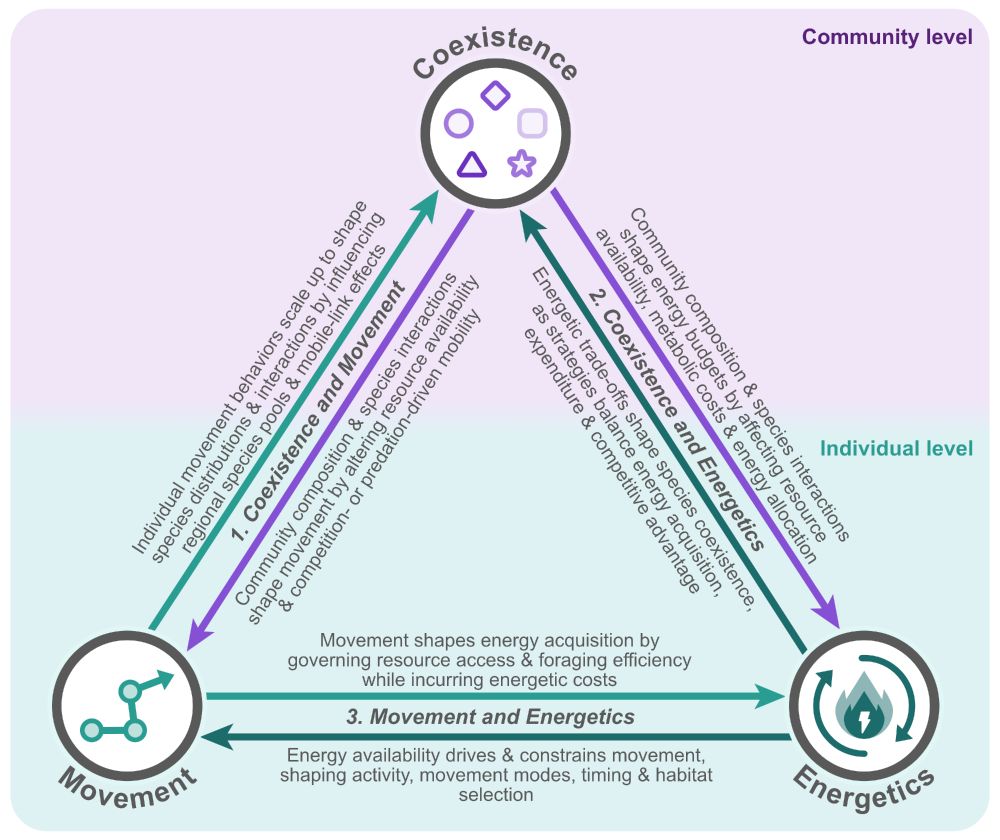
Triangle of links between the processes, highlighting their general interactions.
Animal energetics, movement, and coexistence are inextricably linked. What insights emerge when we consider these processes together? In our new paper, we present a conceptual framework that integrates these domains, outlines their connections, and highlights the value of their joint study.
Thanks so much, Mark! It’s so exciting see this out in the world, and I’m really proud to have contributed to the IBE collection 😁

A graphical abstract depicting the paper title, author list, and brief description of the paper. One images displays an adult common gullemot with one logger on each leg, next to a chick. The second image displays a close-up of a common guillemot's legs with both loggers shown. The text reads: An improved method to derive behavioural budgets and energetics from geolocator data in Common Guillemots Uria aalge Lila Buckingham, Maria Bogdanova, Francis Daunt, Robert Furness, Sophie Bennett, Ruth Dunn, David Jardine, Mark Newell, Ewan Weston & Jonathan Green We deployed two devices (time-depth recorder & geolocator) on 39 Common Guillemots for one non-breeding season. We allocated time to behaviours using 1) both devices (see Buckingham et al. 2023) and 2) only geolocators, following previous methods. We compared the behavioural budgets. We could not extract foraging behaviour (diving) when only using geolocator data. We devised an improved method for estimating behaviours and energetics in Common Guillemots using geolocator data. We also provide guidance for studies of other diving seabirds that rest at sea. Photos by Andrew Carter Seabird 37 (2025) Early Release
Do you use geolocators to estimate foraging time, behaviour, or energetics in diving seabirds? See our new paper for insights from a study of Common Guillemots.
doi.org/10.61350/sbj...
@theseabirdgroup.bsky.social

After years of non-stop brainstorming and hard work with
@alamarins.bsky.social & co, we're thrilled to present IBASAM (v3): a spatially explicit demo-genetic individual-based model for anadromous salmonids (meta)populations. @inrhttps://ibe.pensoft.net/articles.php?id=153305

Our Senior Researcher Fredrik Christiansen completed the third photogrammetry field season on bowhead whales in Disko Bay, Greenland. Together with MSc student Oliver Nowak and local hunters, he measured over 500 whales during March to June to investigate their prey consumption and condition.
Our Senior Researcher Fredrik Christiansen recently completed the third photogrammetry field season on bowhead whales in Disko Bay, Greenland. See Thread.
🌐🌏🐋🧪
@FChristiansen.bsky.social
#marinemammology #ecology #cetaceanresearch
#Arctic #MarineEcology #Research
#Science
This week I'm out in the Danish #BalitcSea on the #SAMBAHII Project, working to monitor the remaining 500 Baltic #harborporpoise. Here, we are deploying a 4-channel array to calculate the #dectectionFunction, or the likelihood of detecting porpoise #echolocation in the study area.
📣 New paper alert ! 📣
Image-based bio-logging offers unique insights into marine predator behaviour 🦭 🦈 🐧 🐢 and ecosystem functioning, but demands advanced analytical tools. #MarineConservation #AI #ComputerVision #BioLogging
Grateful to the global inter-disciplinary collaborative effort! 🙏 😊
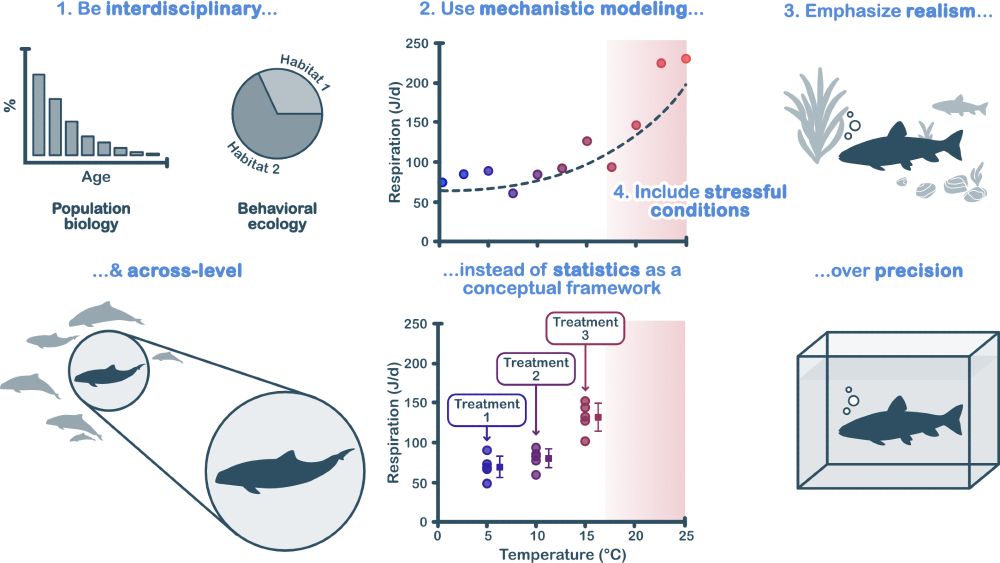
Graphical abstract illustrating four recommendations for ecological modeling with aquatic animals. Be interdisciplinary and across levels: Includes icons for population biology (a bar chart of age structure) and behavioral ecology (a pie chart showing habitat use), plus a zoomed-in illustration of individual porpoises within a group. Use mechanistic modeling instead of statistics as a conceptual framework: A curved line plot shows respiration increasing with temperature, with data points color-coded by temperature and a shaded area indicating stressful conditions. Emphasize realism over precision: Shows a fish in a naturalistic habitat with plants and conspecifics, contrasted with a lone fish in a bare tank. Include stressful conditions: Reiterated through both the curved plot and a separate graph with three treatments, where respiration increases across treatments and with temperature, with the highest temperature range shaded in red.
Excited to share our new paper on how empirical research can better support mechanistic models—through realistic, interdisciplinary data and by embracing complex, individual-level mechanisms. Born from a @ecologicalsociety.bsky.social symposium!
doi.org/10.1111/2041...
@methodsinecoevol.bsky.social
Postdoc call in Mechanistic Biodiversity Modelling (up to 6 ya) at my lab @unibonn.bsky.social. We focus on modelling terrestrial plant communities, island biogeography, range dynamics, eco-evolutionary feedbacks, diversity gradients, tropical forests, vascular epiphytes. Pls rt! shorturl.at/CL1ny
✏️The African EFI Chapter has officially launched! The group will host a short course in Cape Town late 21-25th July. Applications close 9 June.
Find details and the link to the application form at: ecoforecast.africa/events/curre...
Please share with African colleagues and collaborators!
Tomorrow is the last day to apply! 🏃♀️
We found that moderate fragmentation can buffer drought impacts—by easing competition and supporting energy storage across the landscape, leading to more similar energy balance among species.
A great example of how individual energy dynamics can reveal unexpected pathways to community resilience ⚡
Excited to share our new paper led by Leonna Szangolies!
We used a mechanistic, individual-based model grounded in animal energetics to explore how drought and habitat fragmentation interact to shape species coexistence 💻🐁🐀🐿️
