We think that our fellow environmental historian communities may be interested! @nichecanada.bsky.social @aseh.bsky.social @asehearlycareer.bsky.social @envhistnow.bsky.social @carsoncenter.bsky.social @eseh.bsky.social @esehnextgate.bsky.social
04.03.2026 16:56
👍 4
🔁 1
💬 0
📌 0

Spring is the season of GERMINATION and we’re ready for new ideas to take root. 🌱
Submit your work now for our Spring issue!
We’re looking for fresh perspectives and research that helps new conversations grow.
Our spring deadline is March 31st for peer reviewed research.
g-ehr.com/submit/
04.03.2026 16:54
👍 12
🔁 11
💬 1
📌 1

What can a viral Apple video teach environmental historians? Adam Rome’s “Mother Nature Meets Apple’s CEO” uses corporate climate storytelling to rethink activism, regulation, and business responsibility in the late-20th-century environmental movement.
g-ehr.com/special-feat...
02.03.2026 15:00
👍 2
🔁 0
💬 0
📌 0

In Against the Tide, Elizabeth Hameeteman shows how solar desalination once offered a decentralized, low-energy alternative to fossil and nuclear water systems.
It provides an inspiring historical lens on the entanglement of infrastructure, environment, and technology.
g-ehr.com/peer-reviewe...
04.02.2026 13:32
👍 2
🔁 1
💬 0
📌 0

So happy to see the cover of this collection! Out this spring/summer as the final volume of A Cultural History of the Environment, huzzuh! #EnvHist
03.02.2026 17:47
👍 39
🔁 8
💬 1
📌 0

Dive into We Have Never Been Husbands to Parrots (Part 2)! 🦜 Nancy J. Jacobs skillfully blends animal history, human care, and the “Grey Anthropocene,” challenging how we think about domination, domestication, and interspecies relationships.
Part 2 of this 3 Part series.
g-ehr.com/special-feat...
28.01.2026 16:10
👍 1
🔁 1
💬 0
📌 0

Looking for new ways to think about ecosystems and history?
This piece from Miles Powell uses Pacific Northwest salmon to link rivers, oceans, and communities, making a lively case for “meta-ecosystem” history and more connected environmental storytelling.
g-ehr.com/peer-reviewe...
19.01.2026 16:33
👍 8
🔁 3
💬 0
📌 0
Just a reminder that Wednesday the 31st is the last day to submit for our peer review section winter quarter deadline.
Start 2026 off right by publishing your work with us.
29.12.2025 11:59
👍 2
🔁 1
💬 0
📌 0
We would love if you can spread the word among your environmental history colleagues. 💙
@nichecanada.bsky.social @iceho.bsky.social @aseh.bsky.social @eseh.bsky.social @carsoncenter.bsky.social @envhistnow.bsky.social
10.12.2025 14:48
👍 4
🔁 0
💬 0
📌 0

Photograph of a tree with snow with text stating the winter deadline to submit to Germinate is December 31st.
Don't miss the chance to submit to Germinate!
The winter deadline for our peer reviewed section is December 31st. Submissions are welcome between 1,200 and 2,000 words that connect the environmental present to its past.
We're excited to read your work!
g-ehr.com/submit/
10.12.2025 14:40
👍 15
🔁 13
💬 1
📌 3

Come for the gorgeous visuals, stay for the text accompanying the visuals!
g-ehr.com/special-feat...
07.10.2025 21:44
👍 14
🔁 6
💬 0
📌 0
The Great Acceleration (Domination without Domestication in the Grey Anthropocene, Part 1) – Germinate
We like Parrots and we cannot lie!
Our first article is a special feature by Nancy Jacobs! It is part one of a three part three series, drawing upon her 2025 Presidential Address at the ASEH in Pittsburgh.
07.10.2025 21:40
👍 5
🔁 2
💬 0
📌 0

We are here!!
01.10.2025 14:16
👍 8
🔁 4
💬 0
📌 2
@nichecanada.bsky.social @aseh.bsky.social @asehearlycareer.bsky.social @iceho.bsky.social
01.10.2025 14:16
👍 0
🔁 0
💬 0
📌 0

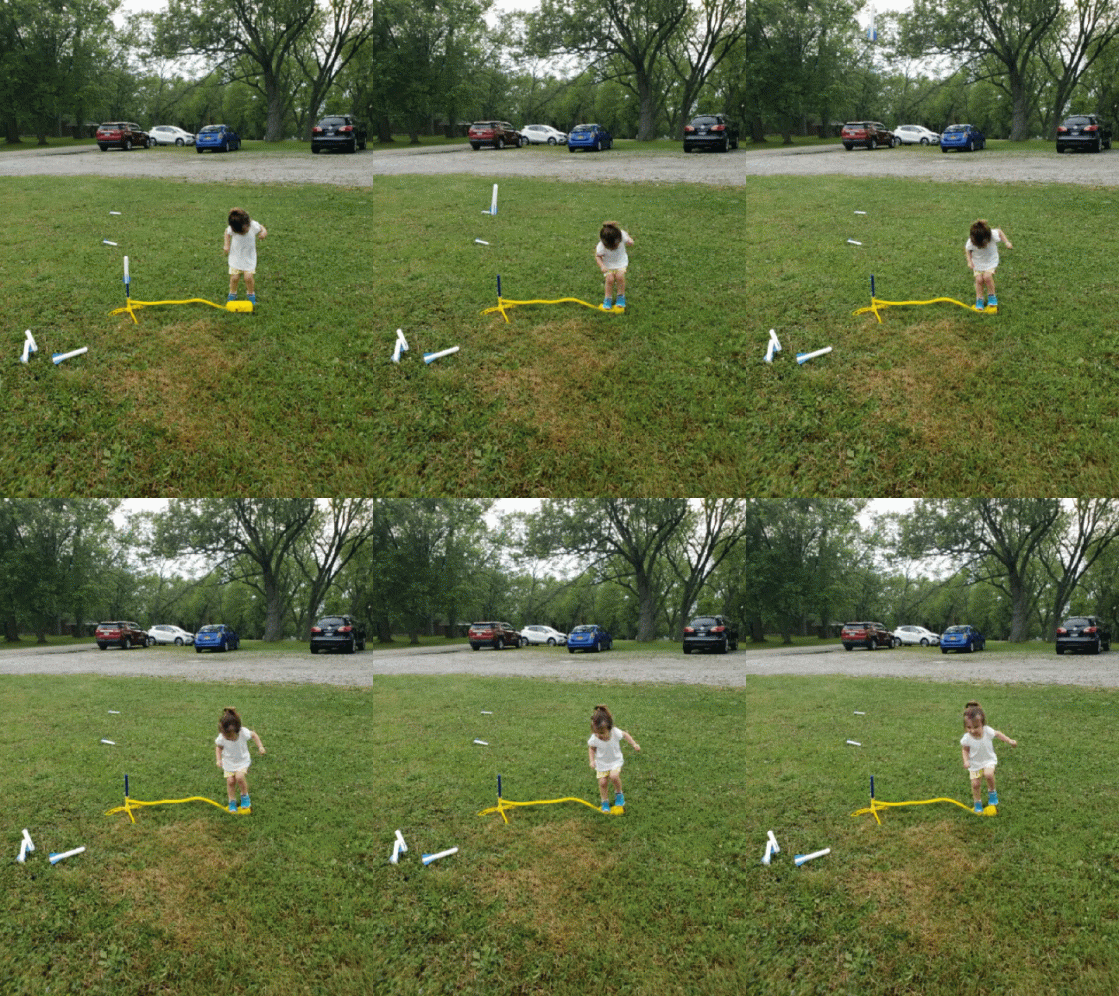
a little girl in a white dress is playing with a rocket in a park
ALT: a little girl in a white dress is playing with a rocket in a park
We are here! Germinate officially has a space in the interwebs of the world: www.g-ehr.com
We welcome a variety of submissions and always love to hear from prospective authors. Please email g-ehr@aseh.org with any queries!
01.10.2025 14:12
👍 4
🔁 3
💬 1
📌 2
American Society for Environmental History - Germinate: Environmental History Review
We'd love to see your work! Germinate invites submissions that explore, illuminate, investigate, observe, and/or interpret topics connecting the environmental present with its past. Peer-reviewed research & non-peer reviewed storytelling welcome. Until website is live, see: aseh.org/Germinate-En...
12.09.2025 21:58
👍 0
🔁 0
💬 0
📌 1