Exciting to be a part of this!
03.03.2026 19:11
👍 2
🔁 1
💬 0
📌 0

@drjerbs
Early career research scientist at Yale, macroecology, quantitative climate change ecology, avian ecology, GIS and species distribution models, scale in ecology.... birder, photographer, human dad, cat dad, baseball fan
Exciting to be a part of this!

Thrilled to share our new paper out in @science.org, led by François Leroy and Petr Keil! Using the Breeding Bird Survey, we document not only a continent-wide decline in bird abundance since the 1980s — but, crucially, the acceleration of these declines over time. www.science.org/doi/10.1126/...

Leading a organized session at #WBF2026 on climate change and biodiversity! Titled "Linking anthropogenic climate change to shifting biodiversity patterns". If submitting an abstract, you can send it directly to the session (under NEX track)! worldbiodiversityforum.org

🚨Now out in @pnas.org! Our group provides a framework to mathematically link environmental niches from individual to population and species scales. Our approach enables more accurate forecasting of biodiversity change across organismal levels. 🧪 www.pnas.org/doi/10.1073/...
We are turning Earth into a unlivable Hot House Earth
Earth was about 2.65 degrees Fahrenheit (or about 1.47 degrees Celsius) warmer in 2024 than in the late 19th-century (1850-1900) preindustrial average.
The 10 most recent years are the warmest on record.
climate.nasa.gov/vital-signs/...
Nature Ecology & Evolution highlights our paper about bird niches keeping pace with climate change in a news & views feature:
www.nature.com/articles/s41...
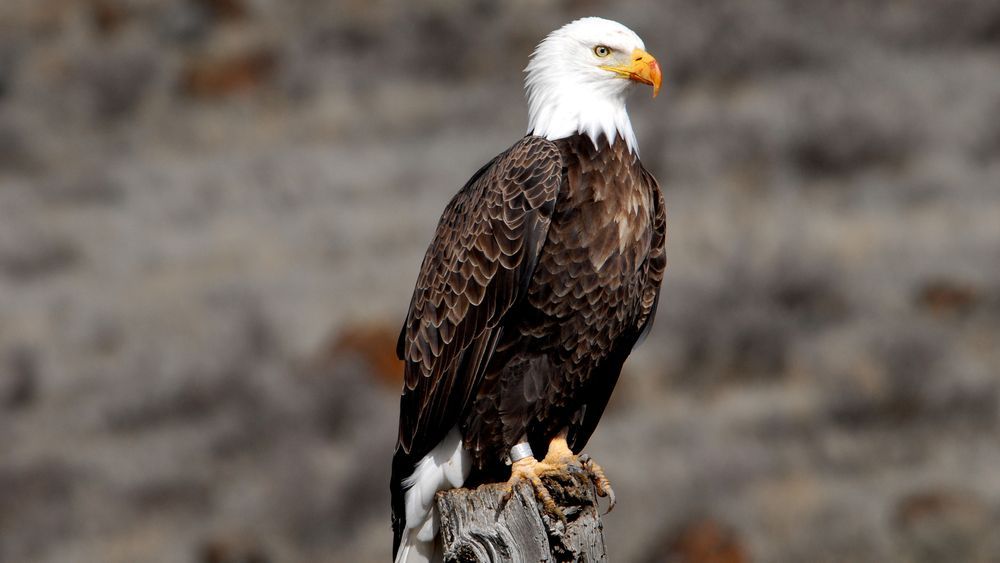
Trump vs. Birds: Proposed Budget Eliminates Critical Research Programs • The Revelator therevelator.org/trump-vs-bir...
Both traill's I'd say
What's the location?

Species’ historical niches are becoming increasingly mismatched with contemporary climates even in a highly mobile taxon like birds, raising concerns about the ability of other wildlife to persist in a warmer world. Other wildlife may have to rely on phenological or behavioral changes.

We found similar results when repeating these analyses using eBird alone or Breeding Bird Survey data, highlighting the robustness of the findings.

Species possessing traits associated with dispersal, such as long-distance migratory behavior or high hand-wing index, succeeded most in limiting their niche loss (partial residual plots).

Species moving the furthest north succeeded most in limiting their niche loss. Move north, avoid warming. However, only very few species moved north far enough to fully erase their exposure, and in most cases they only partially limited their exposure.

Therefore- species averted much more of their expected exposure in summer, when they are more at risk of physiological consequences of heat stress- but still only avoided half of the expected warming in this season.

Most redistributions were only partially effective. Species moved their ranges ~0.65° latitude north in both seasons, mitigating their expected exposure by ~1.28 °C in summer (48% of expected if they were stationary), while only mitigating ~0.47 °C (11% of expected) in winter.

We developed a method to account for biases in tens of millions of species observations from GBIF and evaluate how 406 bird species native to the US and Canada have mitigated their environmental niche loss using geographical redistributions from 2000-2020.

As climate change accelerates, species can move poleward (north, in North America) or up mountains to limit their exposure to heat. While these movements have been extensively reported, it remains unclear whether species have succeeded in limiting their exposure to novel conditions.

bird
NEW SCIENCE! 🚨🚨🚨🧪🪶🌐
Our paper is now online at @natecoevo.nature.com! “Geographic redistributions are insufficient to mitigate exposure to climate change in North American birds”. We know birds are moving north with climate change, but what are the consequences?
www.nature.com/articles/s41...

A high lipid diet leads to worse infectious disease outcomes. Interesting implications for wildlife food supplementation. Always exciting to have a new manuscript out! Congrats @ashley-love.bsky.social @sauerscientist.bsky.social
@jexpbiol.Bsky.social
journals.biologists.com/jeb/article/...

To understand how climate change affects natural ecosystems we need to know how warming influences species interactions. In our newest paper we show that predator-prey interactions fundamentally change across latitude leading to context dependent effects of warming. 🧪
doi.org/10.1111/oik....
The #climate/water paradox: As temperatures rise, more #water evaporates into the atmosphere & more precipitation occurs. But land areas are getting drier not wetter. Why? Because more water evaporates from soils. The rain that falls is in intense events in fewer regions, leading to worse #floods 👉
Last month's total #Arctic sea ice volume averaged the 3rd lowest on record for the month of November...
Data using PIOMAS: psc.apl.uw.edu/research/pro... 🌊

Just had an idea
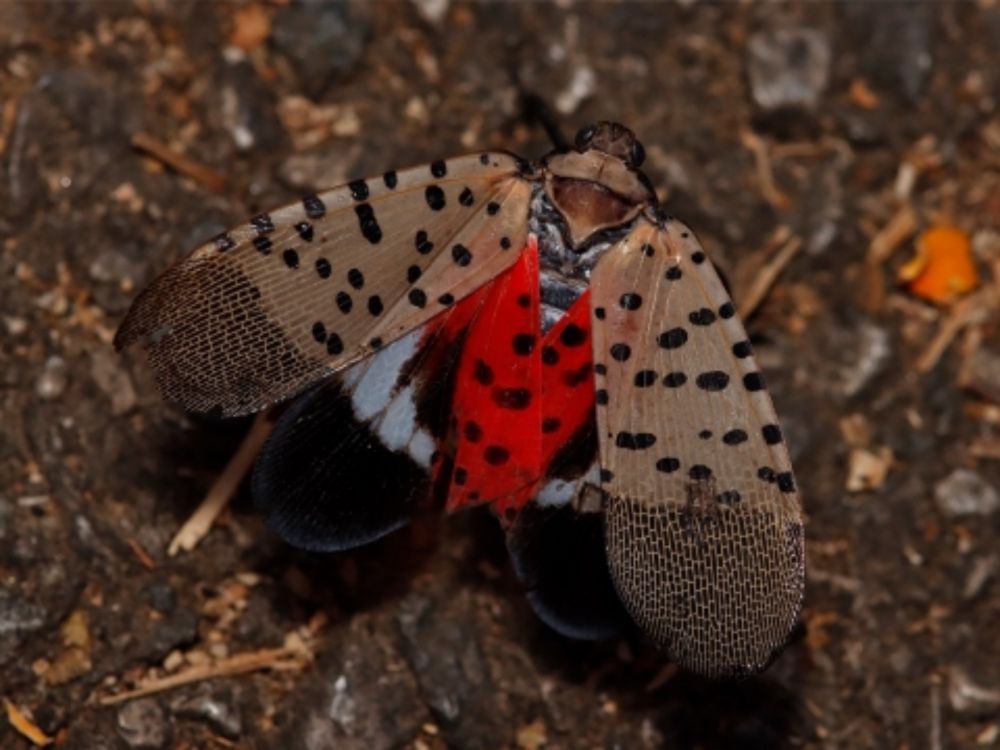
‼️📝 New paper! 1st undergrad honor thesis from the lab! Hannah Owen looked at thousands of #spottedlanternfly @inaturalist.bsky.social images to study spatio-temporal & phenology patterns of the invasion, and to understand the role of #urban environments in their spread
www.nyu.edu/about/news-p...

Saw/heard 104 bird species in Florida over Thanksgiving... crossing 100 was a goal I slowly become obsessed with, made tougher with all the best spots being closed due to hurricane. Here's a prairie warbler ebird.org/tripreport/2... 🪶 #birds
Wait, do I want cool science to drown out all of the politics?!
Yes. Yes, I do. 🧪
Yep. One of the most feeder friendly birds in the Eastern US. Usually one of the first species to find the feeder
Recently discovered a fun webpage called Probability Playground where you can interactively explore probability distributions.
It’s helpful especially for distributions with parameters that are not immediately intuitive. Very cool!
www.acsu.buffalo.edu/~adamcunn/pr...
It's just right wing projection which is all they ever do. All of their media and social platforms are echo chambers
Why don't I ever see these articles about fox news, oann, 100 different podcasts and YouTube channels, X, truth social, 4chan, etc being echo chambers for the right?


