
Fascin' Pit
06.02.2026 05:57
👍 5
🔁 0
💬 0
📌 0
Fascin' Pit
Universities use a simplistic kludge of an overheads model where overheads/F&A are charged only on the salary portion of a grant at a >100% rate. The result is that hiring people, especially early-career researchers, is extremely difficult, because that has to bear the entire overhead burden.
And even that scheme has just been cut by ~30%. The entire national basic science research budget is now about $32m USD.
There are many features of the US system that I wish the NZ system would/could emulate: program officers for support (we have none); receiving scores on proposals; the sheer number of funding schemes (NZ has 1 for basic science, with a 10% success rate and 1 round per year, max award ~550kUSD).
The legal term is "turkey pardon"
These scholarships fully fund the three-year PhD program.
To apply, send the following to Prof. Simon Davy simon.davy@vuw.ac.nz:
- Cover letter
- CV
- Copies of academic transcripts
- Writing sample (e.g. Publication, MSc thesis chapter)
- Names of two academic referees (inc. a thesis supervisor)
PhD Scholarship! 📯
Two PhD scholarships are available to study symbiont loss in coral bleaching. Students will contribute to a three-year project funded by @royalsocietynz.bsky.social . Students will be supervised by @davylab.bsky.social and @clintoak.bsky.social at VUW. #PhDOpportunity #coralreef

I saw some of these corals in person, and I'm angry that my kids won't. www.science.org/doi/10.1126/...
#coralreefs #climatechange

Lipid nanoparticles are absorbed by the anemone Exaiptasia diaphana and stimulate lipid metabolism, including beta-oxidation and the TCA cycle.

We show that anemones absorb #lipid nanoparticles directly from seawater, stimulating their #metabolism. Details, and potential applications for #coral reef restoration and aquaculture, in our new preprint!
www.biorxiv.org/content/10.1...
#science #marinebiology #symbiosis #proteomics

1/6 Call for session proposals
16th International Coral Reef Symposium, 19–24th July 2026, Auckland, Aotearoa New Zealand.
Session proposal deadline: Sunday 15th June 2025.
Details and submission link at www.icrs2026.nz/call-for-ses...
My suspicion is that it contributes heavily to its ability to quickly recolonize post-bleaching, and potentially to its infection of a broad diversity of hosts in the Caribbean.
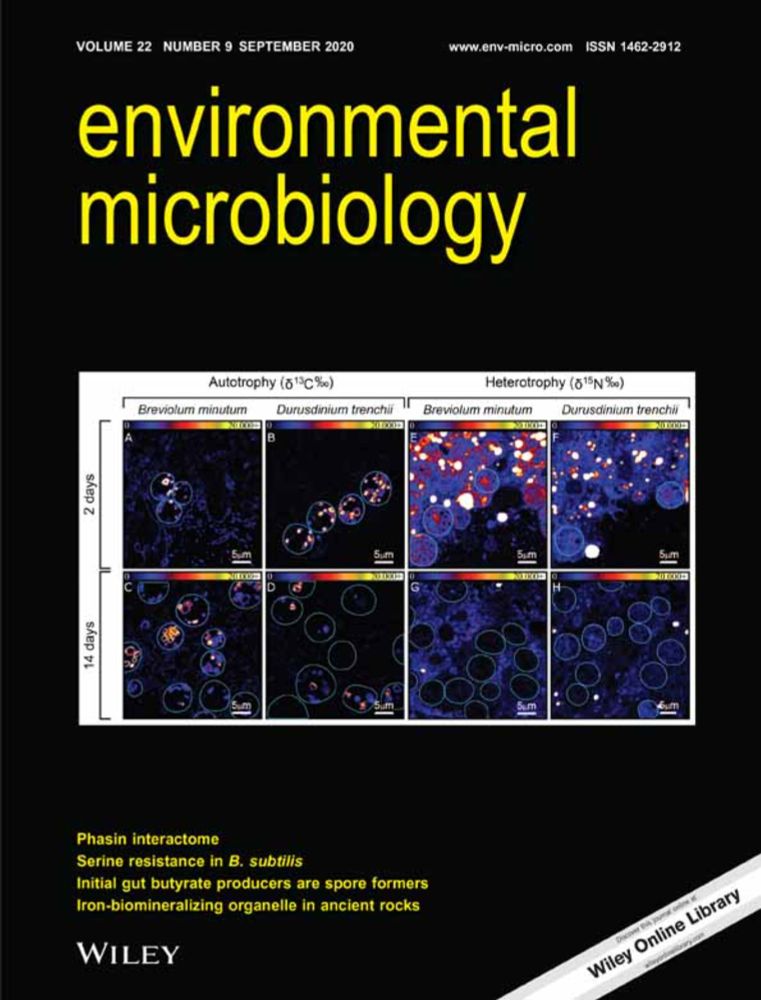
Possibly. We've got a previous paper showing that Durusdinium is better at acquiring nitrogenous compounds from the host, which may be a mechanism of how it escapes host control: enviromicro-journals.onlinelibrary.wiley.com/doi/abs/10.1...
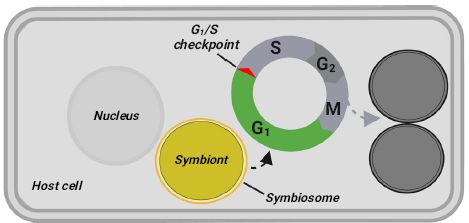
Cell cycle arrest in the cnidarian-dinoflagellate symbiosis.
Corals maintain stable populations of essential photosynthetic symbionts by controlling their cell cycle, not by eating them! Our new #PNAS paper monitored and modelled #aiptasia cell cycle, autophagy, and expulsion for over a year. #symbiosis #microbiology www.pnas.org/doi/10.1073/...
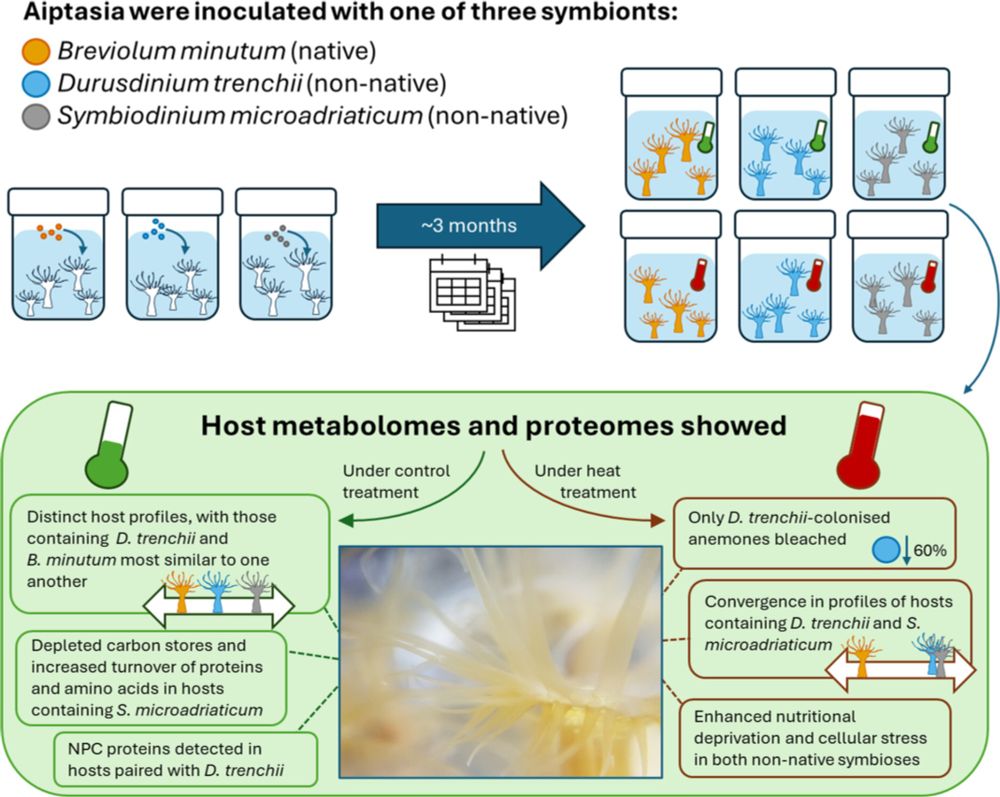
How can new heat-resistant algae help host metabolism and immunity during #coralbleaching? Do they become better partners over time? Our new paper (tinyurl.com/465k5hpx) uses combined #proteomics and #metabolomics to show how they help their hosts, or not, during thermal stress. #microbiology
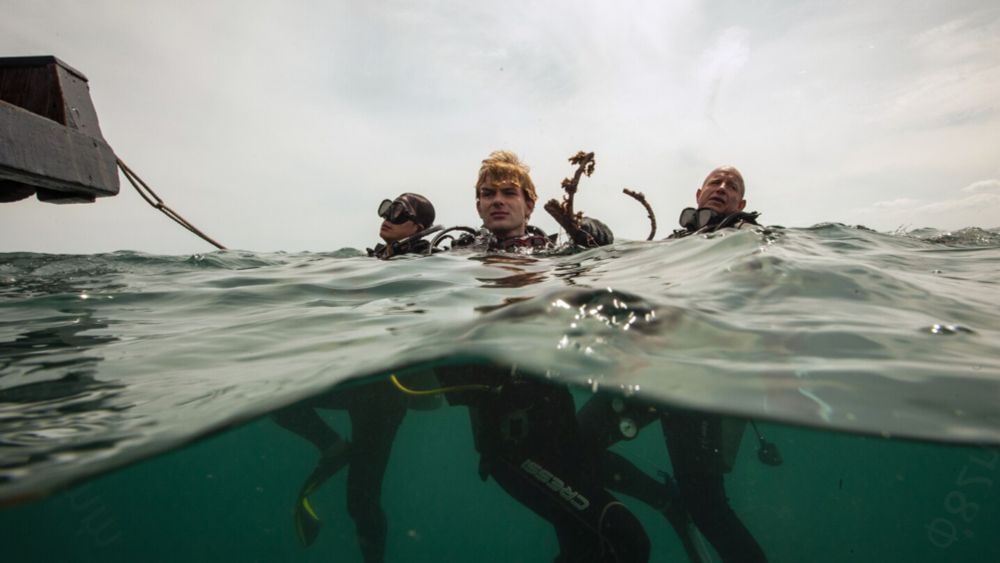
Quoted in a new article describing the extreme fishing pressure and decline of coral reefs in Vietnam, and local efforts to reverse course: apnews.com/article/viet... @emmafcamp.bsky.social #coralreefs
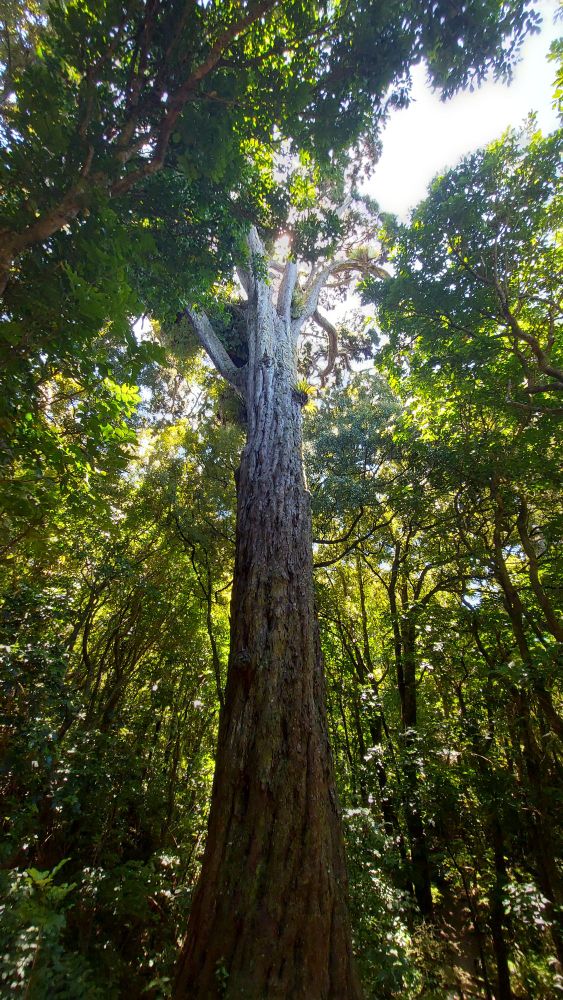
Moko, an 800 year old rimu tree.
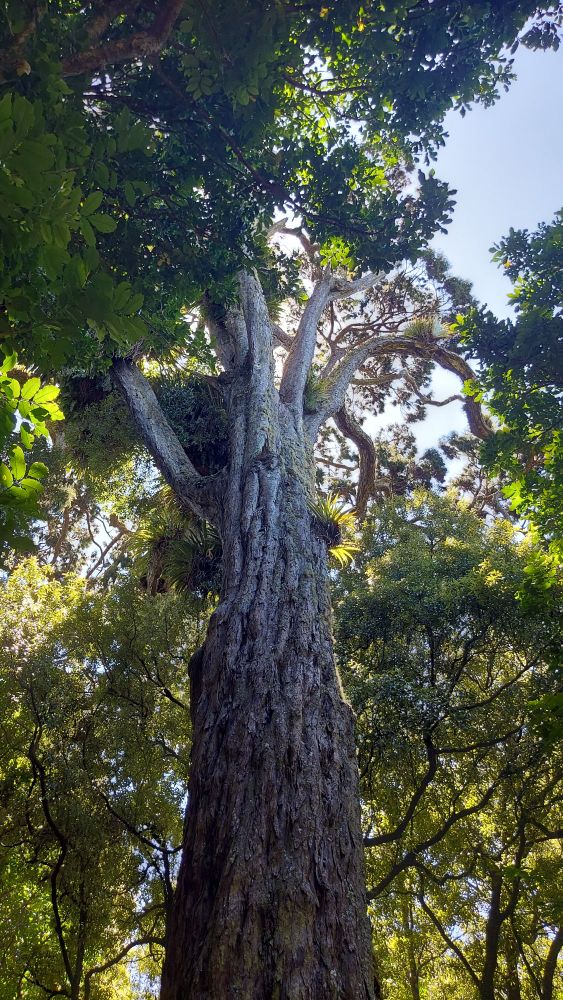
This is Moko, an 800-year-old rimu in Ōtari-Wilton's Bush in Wellington. Enormous, covered in epiphytes, and very near the city center!
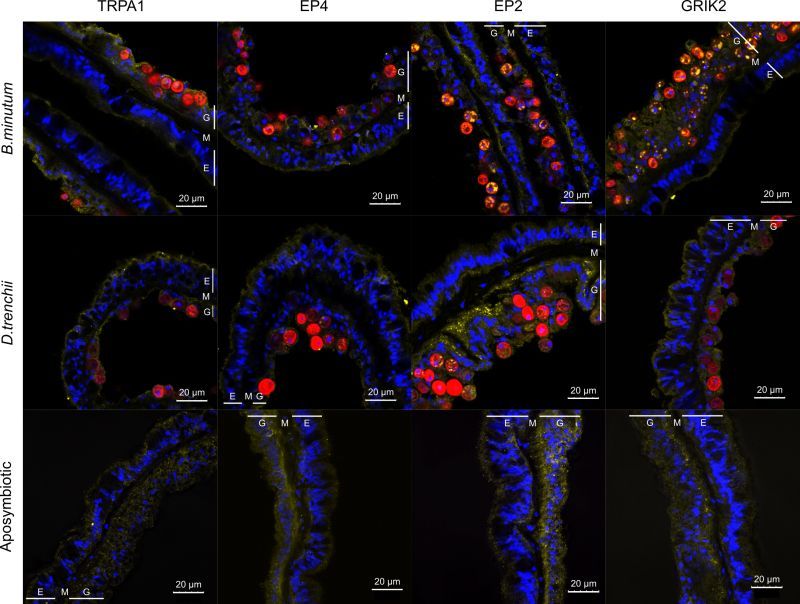
Immunocytochemistry fluorescent microscopy image showing the localisation of different oxylipin receptors in the anemone Exaiptasia diaphana.
Andrea's new paper explores oxylipin receptors in the coral symbiosis and how they may be important for the stability and the functional biology of coral reefs. Congrats Andrea!
enviromicro-journals.onlinelibrary.wiley.com/doi/abs/10.1...
#symbiosis #coralreefs #cellbiology
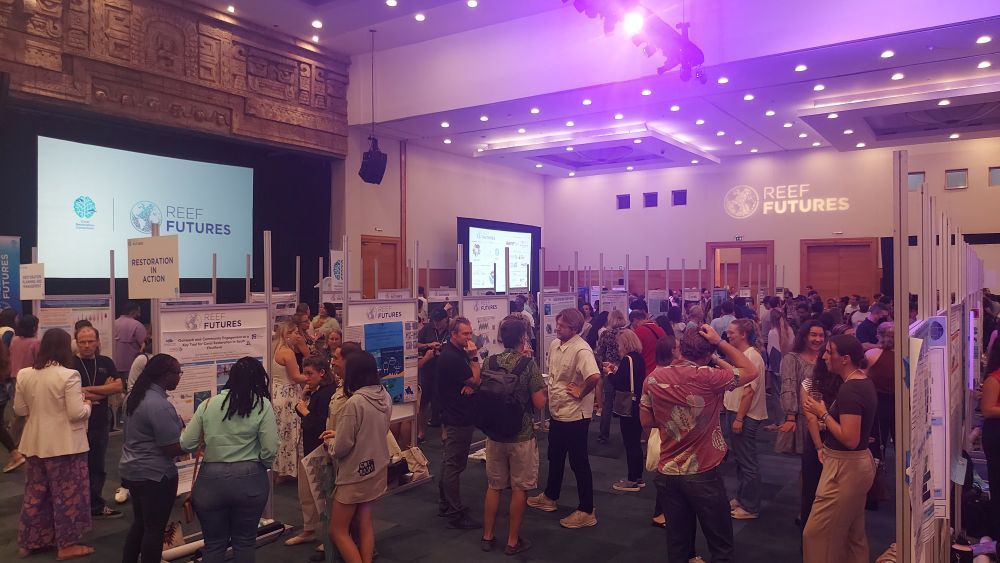
Reef Futures conference poster session
The methods and scale of coral reef restoration efforts have advanced immensely in the past few years, some of these tools are amazing. Enjoying learning about the latest global efforts at #ReefFutures !
But of course you're familiar with Aiptasia! :)
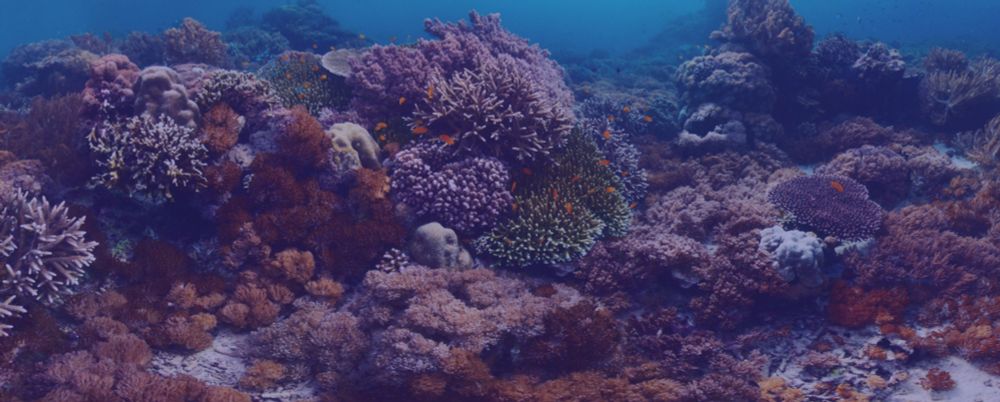
Exaiptasia diaphana ('Aiptasia'), a symbiotic anemone and model for the coral-dinoflagellate symbiosis. Great in the lab and you can do lots of good undergrad work with it. aiptasia-resource.org
Hi, yes please, thanks for organizing.
Hi #TeamMassSpec: For those of you on the facility management side of the party, how do you go about finding potential #proteomics clients/customers, either academic or commercial? We're considering new strategies.
Hi, I'd love to be included!
Hi Monica, please add me and thanks for setting this up.
Looks like a good list to be on! Please add me when you have a chance.
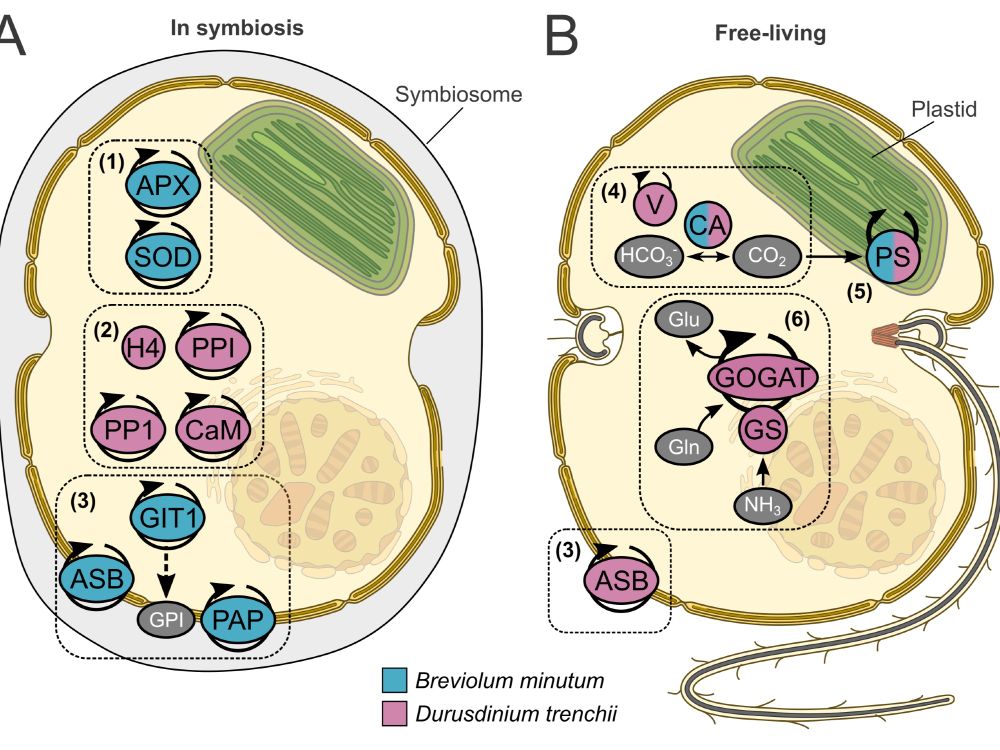
Summary of proteomic changes in Breviolum minutum and Durusdinium trenchii during symbiosis establishment with the anemone Exaiptasia diaphana.
We detailed how dinoflagellate proteomes shift over time during symbiosis establishment, and contrasted physiological and immune pathways in successful and opportunistic symbionts. See our new paper in ISMEJ! academic.oup.com/ismej/advanc...
