Professorship in population genetics in the field of evolutionary anthropology and medicine (W2)
Faculties & Facilities
Leipzig U and the MPI for Evolutionary Anthropology (MPI-EVA) have an open faculty position (W2) in evolutionary population genetics! This position is tenured and comes with generous core funding. We are eager to welcome a new colleague! Deadline March 11.
www.uni-leipzig.de/en/newsdetai...
05.03.2026 16:38
👍 50
🔁 80
💬 0
📌 0

cat: 1066
Landscape with a rider (unfinished) - 1966
https://botfrens.com/collections/61/contents/20512
19.02.2026 19:14
👍 135
🔁 25
💬 0
📌 0
Research engineer - Uppsala University
Research engineer, Department of Organismal Biology, Uppsala University
The @scilifelab.se Ancient DNA Unit is recruiting a (permanent) Research Engineer for planning user projects and generating #aDNA 🧬 data:
Application deadline: March 25th 🧪🏺
www.uu.se/en/about-uu/...
05.03.2026 08:11
👍 16
🔁 22
💬 0
📌 0

Perché ci piace la musica
La sensazione di appagamento che dà dipende da un collegamento tra due aree cerebrali: lo sappiamo perché ad alcune persone manca
How does music become pleasurable? A nice article (in Italian) on recent research suggesting that musical pleasure comes from the interplay between the brain's auditory and reward centres, including our research on the genetics of music enjoyment
www.ilpost.it/2025/08/13/p...
05.03.2026 09:57
👍 2
🔁 1
💬 1
📌 0
The Remarkable Science of Sound | Sound Waves: The Symphony of Physics | BBC Earth Science
YouTube video by BBC Earth Science
Well, look at that. My BBC documentary on the science of sound from years ago has just popped up on the BBC Earth Science channel. If you fancy some cool sound science in your day, here you go:
www.youtube.com/watch?v=Zp_u...
04.03.2026 19:22
👍 134
🔁 27
💬 3
📌 0

04.03.2026 06:52
👍 8702
🔁 3265
💬 30
📌 46

In this new review in Nature Reviews Psychology our researchers Judith Holler and Anna K. Kuhlen argue that conversation is not simply one person speaking while another listens. It is more like a partnership between minds. www.mpi.nl/news/why-con...
03.03.2026 12:13
👍 9
🔁 5
💬 0
📌 1
ORIGINAL SIN comes out on Tuesday!
If you’re in the US & want a signed copy, order from Black Pearl Books in the next week. Just be sure to note that you want it signed (& any instructions about the inscription) in the order notes at checkout.
shop.blackpearlbookstore.com/item/ymASTSS...
28.02.2026 20:00
👍 12
🔁 4
💬 0
📌 0
Per protocol analysis strikes again!
Folks, if you randomize but then don‘t analyze some of the people who got randomized (maybe because they didn’t adhere to instructions, maybe because they dropped out), randomization will no longer do all the heavy causal inference lifting.
25.02.2026 17:28
👍 190
🔁 56
💬 6
📌 3

Genetic underpinnings of chills from art and music
Author summary Many people experience chills when listening to music, reading poetry, or viewing art. Yet not everyone feels these reactions in the same way. These differences provide a window into ho...
A particular moment in my favourite Radiohead song always gives me goosebumps every time I play it. Turns out susceptibility to such “chills” (induced by music, poetry, art) varies between people & that genetic differences play a part. Check out our new paper, led by @giacomobignardi.bsky.social. 👇🧪
19.02.2026 18:59
👍 37
🔁 12
💬 4
📌 2
"what if English isn't the student's first language, why wouldn't they use google translate, claude, chatgpt etc".
that's all good. as with much AI hate it's good to be specific: "written by ChatGPT" is v different to "written by the student with a bit of translation help"
only one of those is OK
20.10.2025 21:48
👍 15
🔁 3
💬 1
📌 0
Bioinformatician/Staff Scientist in Medical Genomics
Do you want to help us improve human health and understand life on Earth? Make your mark by shaping the future to enable or deliver life-changing science to solve some of humanity’s greatest challenge...
I have an opening for a staff scientist or bioinformatician in my group at the Sanger Institute (closing date 24 March). Our current projects focus on disentangling rare and common variant contributions to rare neurodevelopmental conditions and to neurodevelopmental and perinatal traits. 1/2
25.02.2026 20:56
👍 14
🔁 13
💬 1
📌 0

Beyond Mendel: a call to revisit the genotype–phenotype map through new experimental paradigms
Abstract. The long-standing notion that genotypes map to phenotypes through simple one gene–one trait relationships continues to shape both research in the
New Perspective!🔥It's fascinating how scientists from different fields but interested in the same question [e.g. genotype-phenoytpe relationship] can have such different perspectives. Here we put in our 2 cents wrt genetic effects being context-dependent, and pheno variation being mostly polygenic
18.02.2026 09:55
👍 32
🔁 20
💬 0
📌 0

Have you ever wondered 🤔... Does phenotypic variance respond to environmental perturbation? Does it have a genetic basis? Are mean and variance regulating loci exposed to different selection pressures? These and more questions are explored in our new preprint 🔥
www.biorxiv.org/content/10.6...
23.02.2026 15:37
👍 83
🔁 47
💬 2
📌 4
I'm very honored to be recognized for the 2026 Janet Taylor Spence Award. ❤️ Thank you to the APS and congratulations to the other recipients this year!
23.02.2026 19:05
👍 22
🔁 2
💬 2
📌 0

Foto of a feminine nonbinary person in a purple floral shirt in front of a purple poster. The poster is displaying a structural equation model analysing the influence of parental education on children’s school grades. The person is smiling cheekily to the side.

Foto of a child with four fluffy buns and blue sunglasses. The child has lowered the sunglasses below their nose and is gazing over them.
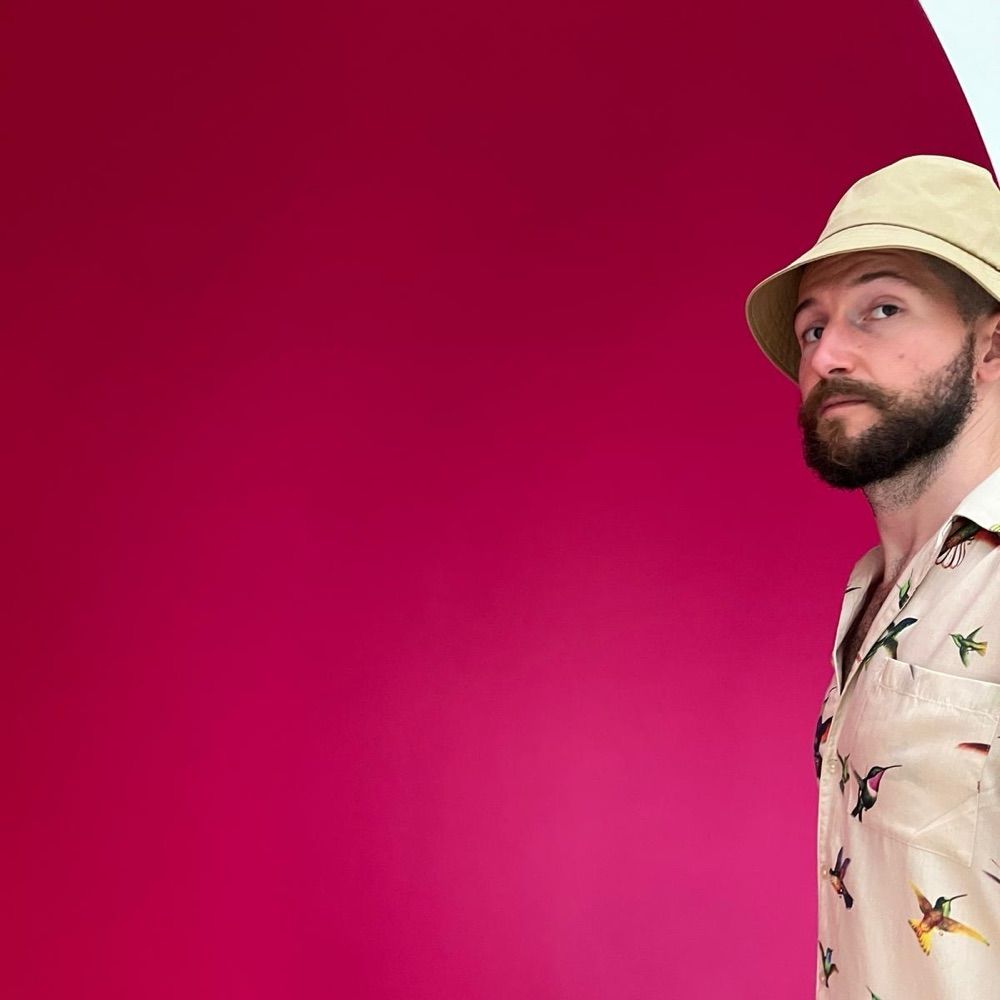
Hi, I’m this week’s curator, Josi! I‘m a PhD student in statistical genetics 🧬 and use #RStats to do #SEM. I dabble in #DataViz and recently wrote my first #Rpackage. My hobbies are reading #Fantasy books 📚 and #maximalism. You may catch me at a conference matching my outfit to my poster 🤓🧜🏽♀️ #rladies
23.02.2026 17:51
👍 59
🔁 9
💬 2
📌 1

Front cover of my book, titled "Comparative musicology: Evolution, universals, and the science of the world's music" (published today by Oxford University Press)

1st of my 4-page essay published in Nature today titled "Music is not a universal language - but it can bring us together when words fail"
Picture caption: "Puerto Rican rapper Bad Bunny (centre) performed in Spanish at the half-time show of the 2026 American Football Super Bowl LX."
My book is now published! 🌏🎶🧪
You can download it for free at academic.oup.com/book/62353 - I’d be grateful if you do!
I also published an accessible summary with audio/video today in @nature.com: www.nature.com/articles/d41...
Try reading that first, then give the whole book a read if you like it!
23.02.2026 12:10
👍 108
🔁 50
💬 8
📌 5
I've been reading comparative cognition for almost 30 years now, and it continues to be frustrating how terrible other primates are at vocal learning and music perception, two hallmarks of human cognition. The gulf is so great, makes it hard to test theories of our cognitive evolution.
23.02.2026 07:40
👍 64
🔁 13
💬 2
📌 0
Genetics help explain who gets the ‘telltale tingle’ from music, art and literature | Max Planck Institute
Why does one song give you chills - but not your friend? Research shows genetics explain part of it, life experience does the rest. Even goosebumps have a backstory. www.mpi.nl/news/genetic...
#science #music #art #emotion #genetics
20.02.2026 11:48
👍 5
🔁 1
💬 0
📌 0
Follow up on the genetics of chills from art and poetry. This time, including chills from music too 🧵 ⬇️
19.02.2026 19:59
👍 20
🔁 10
💬 2
📌 0

Yes!!! I think of these chills as a potentially universal biological component of openness to experience (From the preprint you all cited back in the day, now much more polished in published form). Once the GWAS is published so we can share the sumstats publicly, I'd love to see what you all find!
19.02.2026 20:08
👍 2
🔁 1
💬 0
📌 0

Genetic underpinnings of chills from art and music
Author summary Many people experience chills when listening to music, reading poetry, or viewing art. Yet not everyone feels these reactions in the same way. These differences provide a window into ho...
We hope that these findings help motivate larger genetic studies of sensitivity to the arts (including chills).
Especially, if you have such samples to make that happen 👀 👀 tagging completely at random (TCAR) here @tedmond.bsky.social @michelnivard.bsky.social @dr-appie.bsky.social
Paper 👇
19.02.2026 19:59
👍 2
🔁 0
💬 1
📌 0
Thanks to coauthor @danielleadmiraal.bsky.social, the Lifelines cohort for making this possible, @mpi-nl.bsky.social @mps-cognition.bsky.social, and Else and @profsimonfisher.bsky.social for everything else!
19.02.2026 19:59
👍 1
🔁 0
💬 1
📌 0
Beyond heritabilities, we also note a moderate genetic correlation between proneness to chills across art domains, indicating genetic overlap across susceptibility to intense experience from art, poetry and music.
19.02.2026 19:59
👍 0
🔁 0
💬 1
📌 0

On the etiology of aesthetic chills: a behavioral genetic study - Scientific Reports
Scientific Reports - On the etiology of aesthetic chills: a behavioral genetic study
But when compared to twin heritability estimates, they outline a gap between molecular-based (~7%) ➡️ pedigree-based (~30%) ➡️ twin heritability (~36%).
And that gap is worth thinking about.
19.02.2026 19:59
👍 0
🔁 0
💬 1
📌 0

They call me 007 (meme) adapted from a post by @krichard121212 on the other social. 0% of causal variants, 0% mechanisms discovered, 7% of variance explained
Genetic similarity “explained” up to 30% of the variance in chills. But this association is tricky: people who share genetic variants also tend to share environments. When we isolate effects beyond familial resemblance, it drops to roughly a fourth of that (~7%).
These numbers alone don't say much
19.02.2026 19:59
👍 1
🔁 1
💬 1
📌 0
In this short paper, we look at whether self-reported chills from art, poetry, and music are associated with genetic similarity between individuals 🧬
19.02.2026 19:59
👍 0
🔁 0
💬 1
📌 0