
📣 Call for Applications — TRAJECTS PhD 2026
Do you have a research proposal aligned with Just Transition & Sustainability?
This could be your opportunity 👇
02.03.2026 10:14
👍 0
🔁 2
💬 1
📌 0
📣 Call for Applications — TRAJECTS PhD 2026
Do you have a research proposal aligned with Just Transition & Sustainability?
This could be your opportunity 👇

Screenshot of a paper abstract in Geo: Geography and Environment by Bjørk Tørnqvist & Bregje van Veelen (2026) entitled: 'Mental Oil Spills: Visualising Petroleumscapes to Uncover Petro-Hegemony in Stavanger, Norway' with an orange banner at the top. With the urgent need to address climate change, it is critical to confront fossil fuel dependency, particularly in the Global North. This requires confronting the spatio-cultural dimensions of fossil fuels, including how they have become embedded in those locations most closely tied to the fossil fuel industry. This article integrates insights from energy geographies with Hein's concept of petroleumscape to unpack how oil is embedded in Stavanger, Norway's oil capital. This article argues that attention must be paid to local petroleumscapes in order to better unpack how fossil fuel dependency becomes spatially embedded in locally differentiated ways, while simultaneously reinforcing a global petroleumscape. Through qualitative participatory mapping, the article visualises perceived spatialities of petroleum by Stavanger's citizens. Empirically, the article finds that although petroleum is seen as at once hyper-visible and obscured, the city is characterised by a petro-omnipresence. Furthermore, the article finds that petroleum produces a particular social space through the funding of public goods, while also producing social inequalities that are experienced spatially through unequal housing patterns and leisure activities. These insights contribute to uncovering the obscured, yet all-encompassing influences of petroleum on social–ecological spaces in a highly oil-dependent and oil-producing region.
🛢️New in Geo🛢️
'Mental oil spills: Visualising petroleumscapes to uncover petro-hegemony in Stavanger, Norway' by Bjørk Tørnqvist & @bvanveelen.bsky.social
This paper is part of an ongoing Special Section: 'Mapping Climate Change Perceptions'.
doi.org/10.1002/geo2... #geosky

Poster showing a wind turbine from frog perspective. The picture is in light pink and blue nuances and announces a PhD course in energy humanities. More information can be found in this website. https://www.uis.no/en/research/collaboration/the-greenhouse-centre-for-environmental-humanities/humanities/apply-for-phd
I am really excited to announce the call for the PhD Course in Energy Humanities!
Held at the @greenhouseuis.net from 1-5 December.
Applications are welcome until 24 October.
#envhum #envhist #energyhistory
Great looking job and very useful application advice for those unfamiliar with Nordic academia!
This also reminds me of the guardian article about Curtis Yarvin in December
@environmentalpol.bsky.social
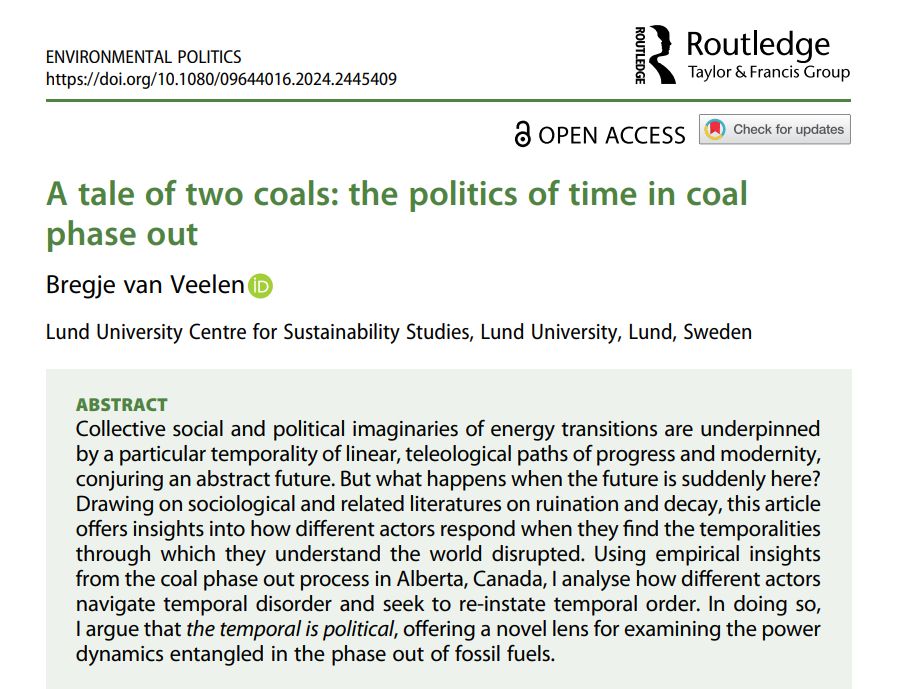
The full paper is available, open access here: doi.org/10.1080/0964...
Altogether the paper shows that processes of coal phase out are not straightforward, linear processes, but struggles, and that time plays a key role in them, requiring us to come to grips with coal's unfinished histories and continued promise.
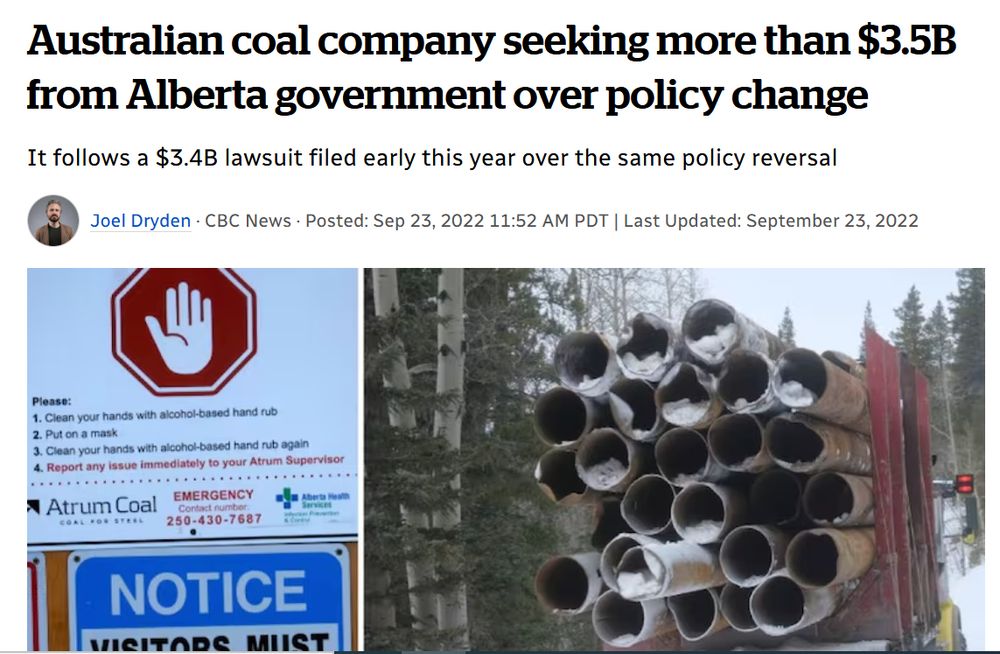
I also discuss how coal companies were using 'temporal strategies' to counter the 2022 reinstatement of the coal mining ban, by calculating their financial losses not based on money spent, but on anticipated future returns. These lawsuits seem to play a part in the current reversal of the ban.
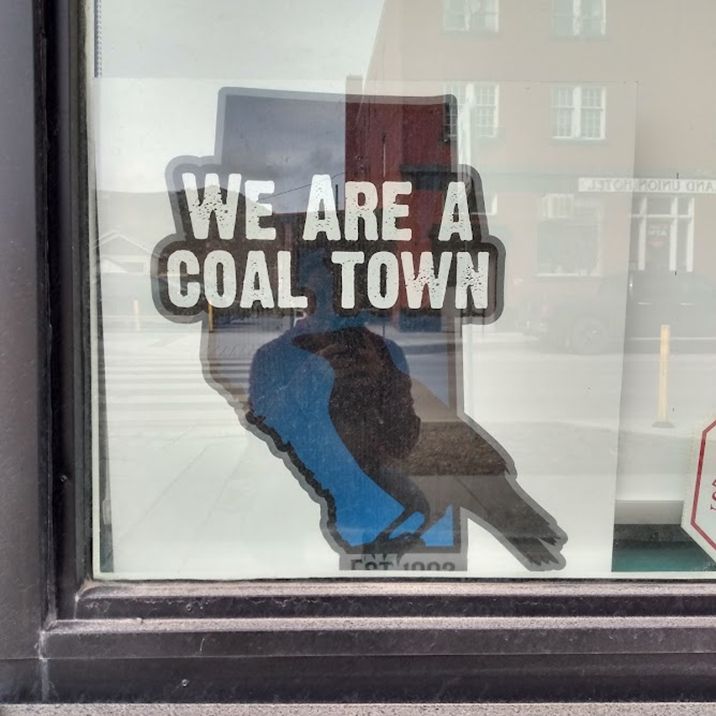
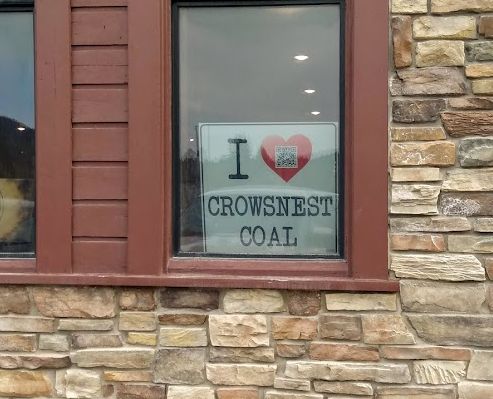
In it, I explore how decades after the closure of the last mine, coal continued to have a promissory power for some in the local community, embodying hope for a better future.
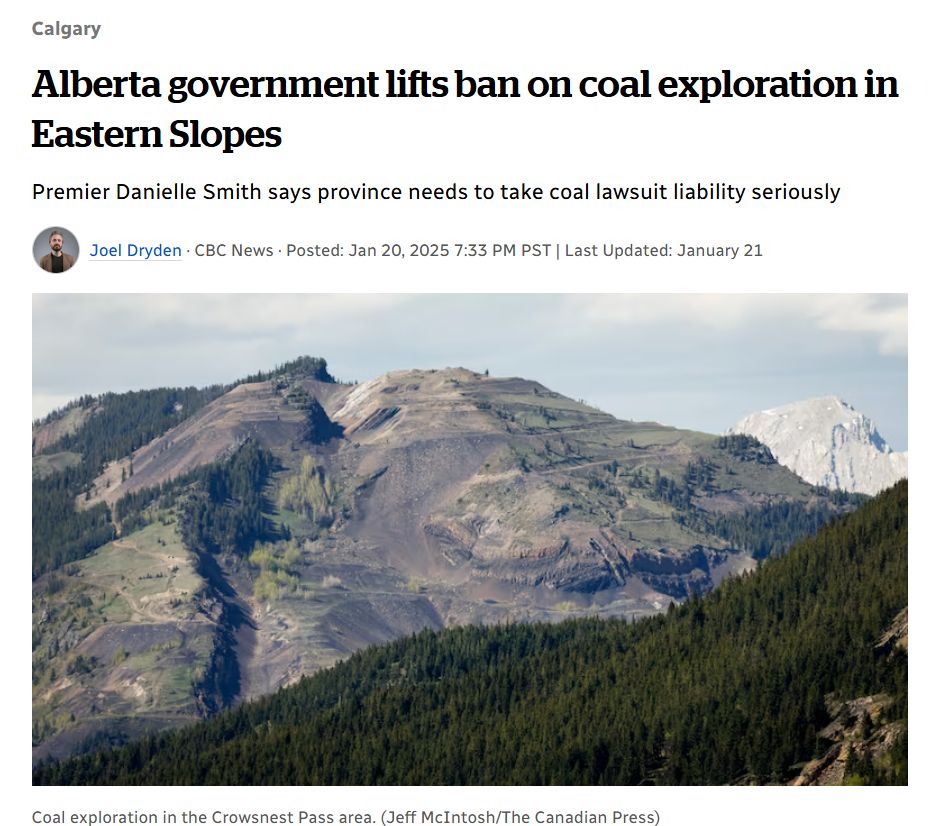
Newspaper story of Alberta liftin ban on coal exploration: https://www.cbc.ca/news/canada/calgary/aer-grassy-mountain-eastern-slopes-brian-jean-1.7436871
The provincial government in Alberta has (once again) lifted the moratorium on coal mining . They previously did this in 2020, before reinstating it the following year. I discuss this in the second part of this recently published paper, exploring coal's lingering promise doi.org/10.1080/0964...
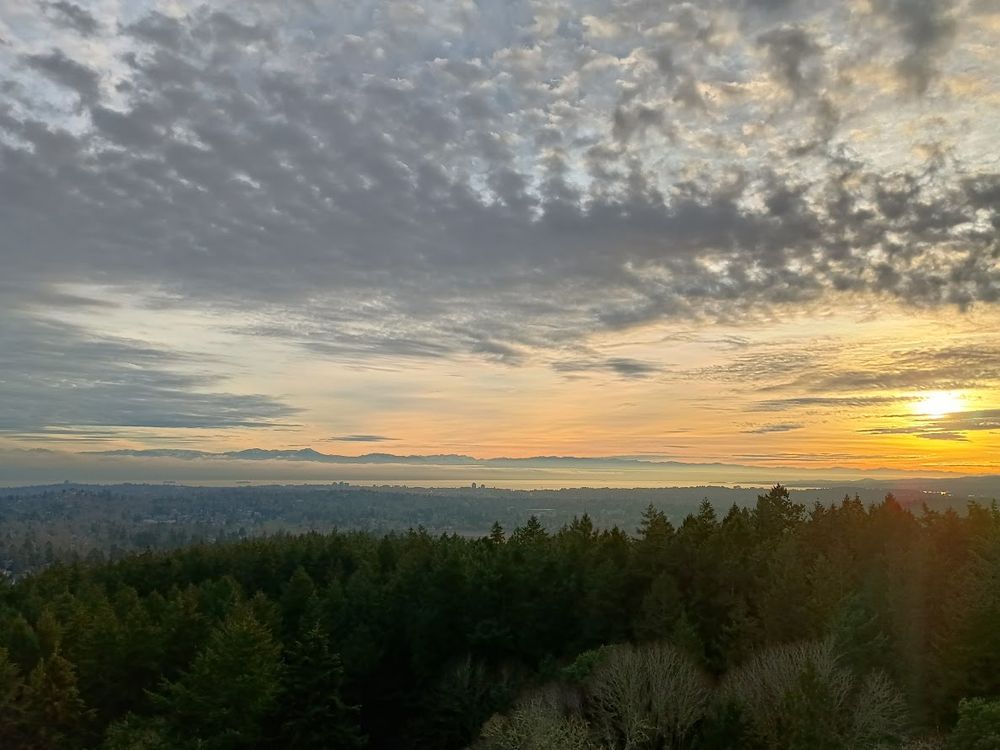
A picture of forests, the Salish sea, and Canada's 11th province in the distance.
It feels somewhat frivolous to post this with everything going on in the world, but nonetheless I feel very fortunate to be back at @uvic.bsky.social, spending the next two months reading, writing, and connecting with some of my favourite Canadian energy scholars.
Sorry, seems like we forgot to include our contact details 🤦♀️. If anyone would like to attend, please send you title+abstract to these email addresses:
We have posted two tenured positions as assistant professor in #Anthropocene history at our centre, please help share widely:
www.kth.se/lediga-jobb/...
www.kth.se/lediga-jobb/...
One is in #envhist and one is in history of science.
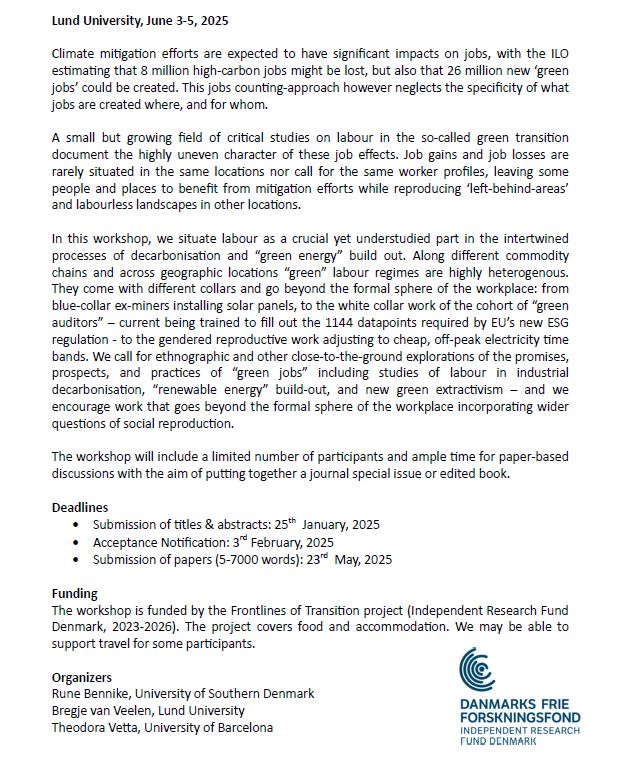
The full 'Call for Papers' text
Workshop / Call for papers
Green Jobs: Exploring labour within shifting energy regimes
Lund University, June 3-5 2025
Deadlines:
- Abstract submission: 25 January
- Acceptance notification: early February
- Paper submission (5-7000 words): 23 May
We'll pay for your food and accommodation :).
We can’t understand the geography of capitalism in our present moment without seeing how these old industries overlap with the new.
"Two Towns" features an interactive map showing how ex-industrial towns were not “left behind” but actively made into havens for low-paid work.
In one of my courses students read books about alternative economic ideas/models (e.g. @katearonoff.bsky.social, @kateraworth.bsky.social, @mazzucatom.bsky.social) and analyse how they can address sustainability challenges. I would love to include more non-European/N.American books. Any suggestions?
Thank you!
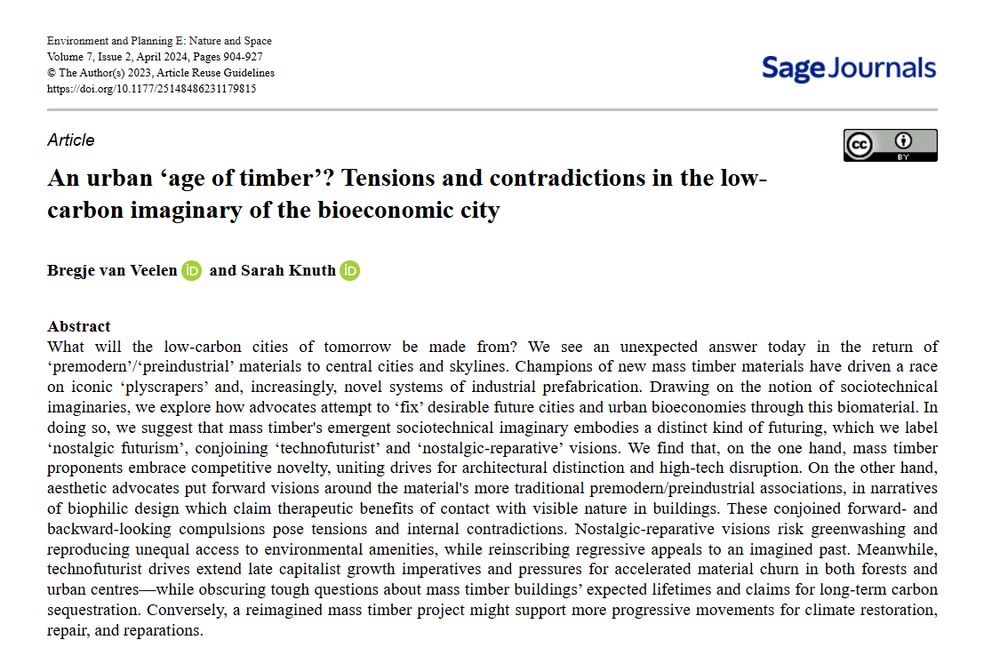
Abstract of the paper "an urban age of timber"
Paper: An urban ‘age of timber’? Tensions and contradictions in the low-carbon imaginary of the bioeconomic city
doi.org/10.1177/2514...
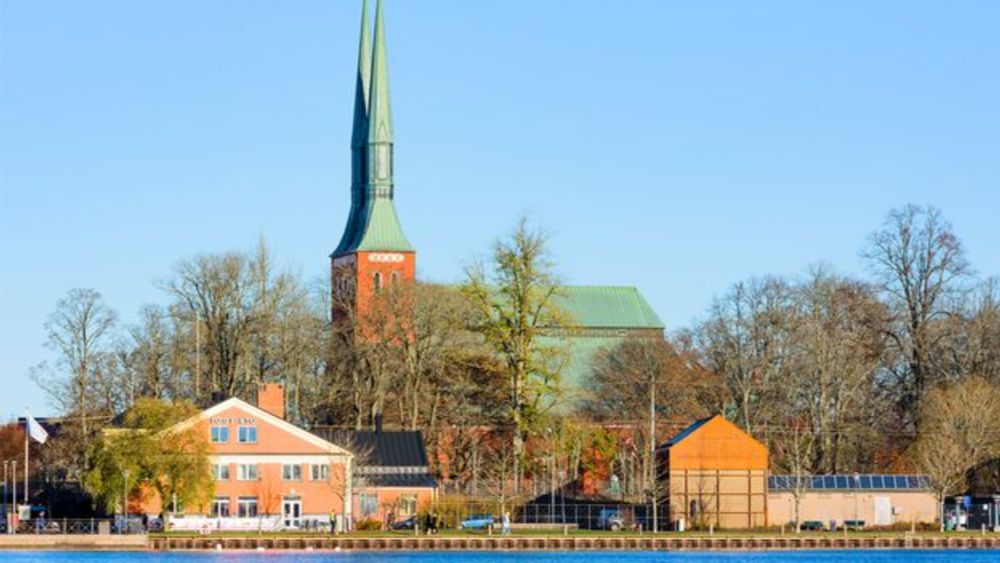
This news article exemplifies perfectly what Sarah Knuth and I wrote about in a paper earlier this year: How the push for timber relies on a mix of nostalgic and technofuturist visions while overly simplifying the supposed carbon benefits of these new developments.
Could you add me too? Thank you :)
A student forwarded this article to me yesterday. It looks very interesting and I can't wait to read it (when I find the time...)!
Interested in energy & climate issues? Here are 9 starter packs to fill your feed with.
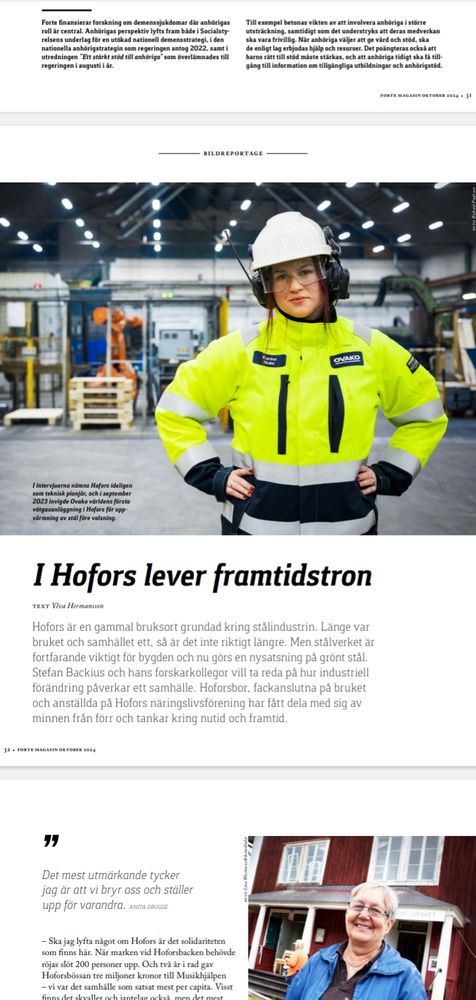
For the Swedish speakers: one of my research projects, Changing Places of Work, is featured in the latest Forte magasin. The report (and project) explores what the transition towards fossil-free steel making means for old industrial towns. forte.se/wp-content/u...
Come work with me and the amazing team at The Center for Environment, Community, & Equity at AU! We're hiring a postdoc to work on our project studying civic engagement and activism around climate in the US. The fellow will also help oversee our new DataCorps Program. for details:
We have a Call for Papers out on ‘Green capital landing' in the journal Finance and Space. The SI highlights how carbon finance actors and instruments enable, or impede, capital to land in specific (green) territories.
The deadline for abstracts is 10 January. More info: bit.ly/RFAS1.
