
Sign-up to receive City Buzz: z.umn.edu/CityBuzzSignUp
19.12.2025 19:54
👍 0
🔁 0
💬 0
📌 0
@msp-lter
The Minneapolis-St. Paul Long Term Ecological Research site studies interactions between urban nature and people in the context of environmental and social change, to improve environmental outcomes for all residents.

🐝What's the buzz? Find out by perusing our Fall 2025 City Buzz Newsletter! Learn what our researchers & partners have been up to over the past few months through featured blog posts, updates from our Co-Directors, and site news & media mentions.
z.umn.edu/CityBuzzFall25
Dr. Adrienne Keller, a former MSP LTER postdoc in the University of Minnesota College of Biological Sciences, spearheaded the study used in their article.
You can check out the MSP LTER's publicly available data here: z.umn.edu/MSPLTER-Data

A beautiful fall walk starts with open scientific data! 🌳🍂
A @startribune.com article used a publicly-available dataset built by MSP LTER researchers to map 340,000 trees across the #TwinCities in an effort to predict where to see the best fall color—and identify disparities in #treecanopy cover.

JOB ALERT! Do you also love large ecological experiments? Become coordinator of our big new geo-biosphere experiment in @terra-cluster.org. 7-year position! Follow link for details.
@gfoesoc.bsky.social
@britishecologicalsociety.org
@ecologicalsociety.bsky.social
@uslter.bsky.social
Please repost!
Hosted by the University of Minnesota in partnership with Great River Passage Conservancy (@greatriverpassage.bsky.social) , with support from the City of Saint Paul (@cityofsaintpaul.bsky.social), Urban Bird Collective, and Pig's Eye Park Friends.
Researchers will lead tours of the field plots, demonstrate how #biochar is being used to reduce the effects of pollutants, and answer questions about their work. Plus, enjoy naturalist talks, guided birding walks, and learn about the land's history and natural resources!

Event flyer advertising the following event details "join University of Minnesota researchers and partners for an afternoon at Pig's Eye Park on Saturday, October 25 from 1 to 4 pm."
Join University of Minnesota College of Biological Sciences (@umncbs.bsky.social) researchers & partners for an afternoon of learning and exploring in St. Paul's Pig's Eye Regional Park, on Saturday, October 25 from 1-4pm! For more information & to register, visit: z.umn.edu/Oct25PigsEye

The image shows "silly" research (reptile venom, microbes in Yellowstone Park, bee foraging patterns) that actually turned out to be transformational (anti-obesity drugs, DNA testing, and internet algorithms, respectively). From the article "Why are we funding this?": If someone had said, “Who cares how desert lizard venom works? Let’s not fund that research,” we never would have discovered semaglutide, a key component of drugs such as Wegovy and Ozempic, which have helped millions of Americans lose weight. If we hadn’t funded research into how bizarre microorganisms thrive in boiling Yellowstone geysers, we never would have discovered the bacterium Thermus aquaticus, whose Taq polymerase enzymes now enable medical tests for countless genetic diseases. If we had decided not to study how bees optimize nectar foraging and distribution among a colony because it sounds silly, we never would have developed an algorithm that allocates internet traffic among computer servers—a technology that powers the $50 billion web-hosting industry.
"Useless" and/or "silly" federally-funded research has turned the United States into the world’s leader in science and technology over the past 75 years. Such science is under attack throughout the federally-funded agencies in the United States. More at: www.americanscientist.org/article/%E2%...

🌽It's #MNStateFair time!
🌱Aug 23 & 28, we'll be at The Common Table in the SE Hall of the Ag Hort Bldg. Enter our prize drawing for 1 of 3 prize packages valued up to nearly $500!
🥘Aug 25, 11am, 1pm, 3pm, Team Cook Fresh will be doing cooking demos in the SE corner of the Eco Experience Bldg.
5/5| Many of these groups want to connect—to share recent successes, upcoming projects, and opportunities to seek or offer support. This series is designed to provide a platform for that connection-building. We hope you will join us!
4/5 | In the Twin Cities, we approached this question through the lens of urban trees and forests. Our findings reveal urban tree care is a shared effort: 135 organizations help steward nearly 900 square miles of canopy across the Metro.
3/5 | The Twin Cities Tree Stewardship Mapping Project is part of a broader research initiative taking place in over 24 regions around the world, each exploring the same core question: Who cares for the local environment?
2/5| Do you maintain, manage, or advocate for urban trees and forests? Are you looking to get involved? At this series of informal gatherings, we will share survey findings, build connections, and explore how stewardship research can strengthen our collective capacity to care for the urban forest.

Poster with tree illustration and words "Tree Stewardship Mapping Project, Twin Cities USA"

Flyer advertising three informational gatherings for the Tree Stewardship Mapping Program in the Twin Cities: Friday, Aug 29, 8-9:30am at Rivoli Bluffs Farm; Saturday, Sept 6, 3-6pm at Bang Brewing; and Thursday, Sept 18, 3-6pm at Eloise Butler Wildflower Garden.
1/5 | Join us for informational gatherings about the Twin Cities Tree Stewardship Mapping Project! msp-lter.github.io/stewmap/even...
Friday, Aug 29, 8-9:30am at Rivoli Bluffs Farm
Saturday, Sept 6, 3-6pm at Bang Brewing
Thursday, Sept 18, 3-6pm at Eloise Butler Wildflower Garden

✨🍁Now Open! 🍁✨
The application for the Fall 2025 Young Voices of Science Program is now open through Friday, September 5th! Please share with your community!
Application Form: forms.gle/Q7PvvNWQowF9...
🔗No need to be a student to apply!
#science #sciencecommunication #scicomm
The publications collected in this month's LTER Network News really demonstrated the wide range of impactful research the LTER does. Here's the list:
mailchi.mp/lternet/lter...
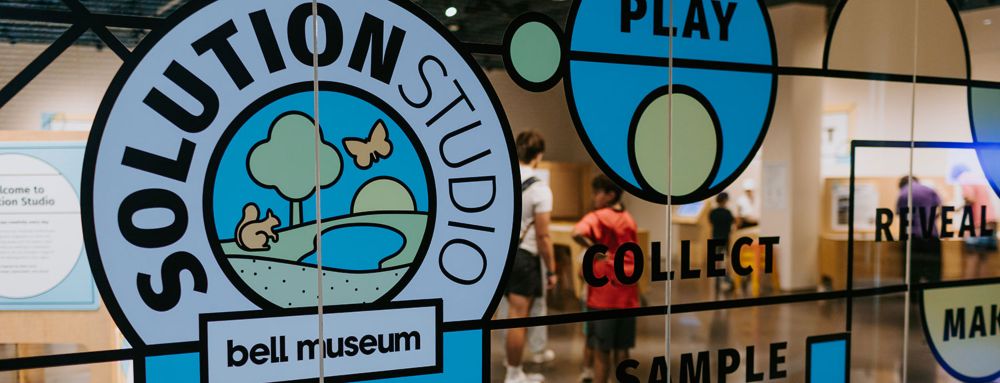
You can visit the 2025 Solution Studio at the Bell Museum from now until August 31. Click here to learn more: bellmuseum.umn.edu/solution-studio-2025/ 2/2
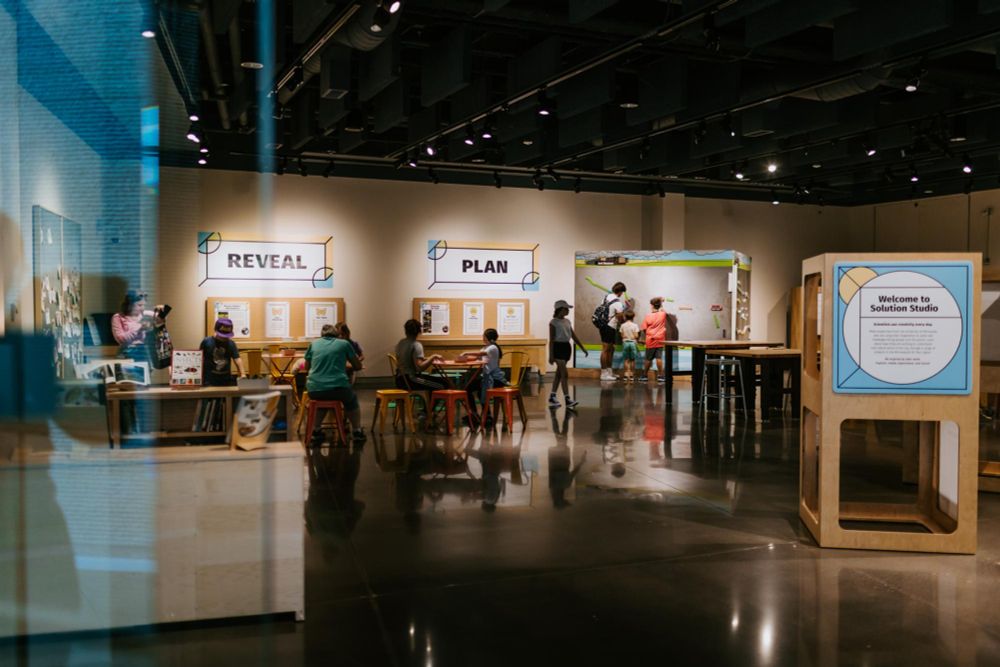
Immerse yourself in MSP LTER urban ecological research at the Bell Museum's (@bellmuseum.bsky.social) Solution Studio, the award-winning makerspace where everyone is an ecologist! Learn more in today's #MinnesotaDaily article featuring our partnership w/ the Bell z.umn.edu/SolutionStudio25-News. 1/2
Really excited for this new round of synthesis groups. This one, especially, is the first to emerge from our new synthesis skills for early career researchers course.
We pre-recorded our annual Overview Talks for partners and other colleagues. If you would like to view these, please reach out to us!
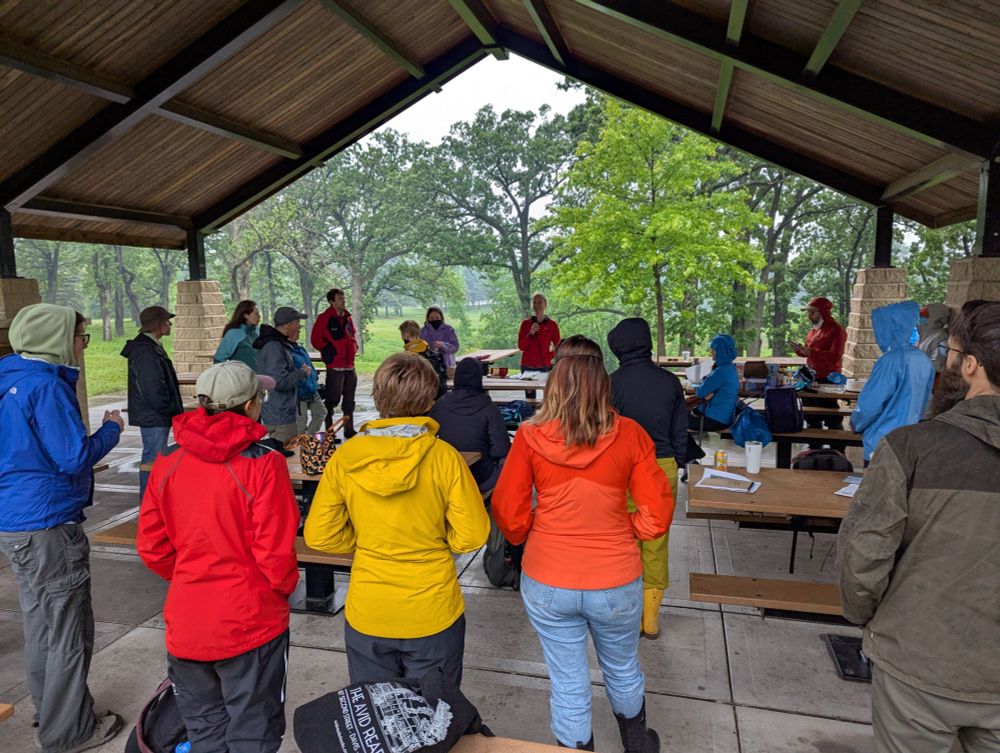
MSP LTER researchers standing in an outdoor pavilion at Battle Creek Regional Park watching a researcher give a field talk on lake/pond/stream research.

MSP LTER researchers standing outside in the rain looking down at a sample from a nearby pond at Battle Creek Regional Park.
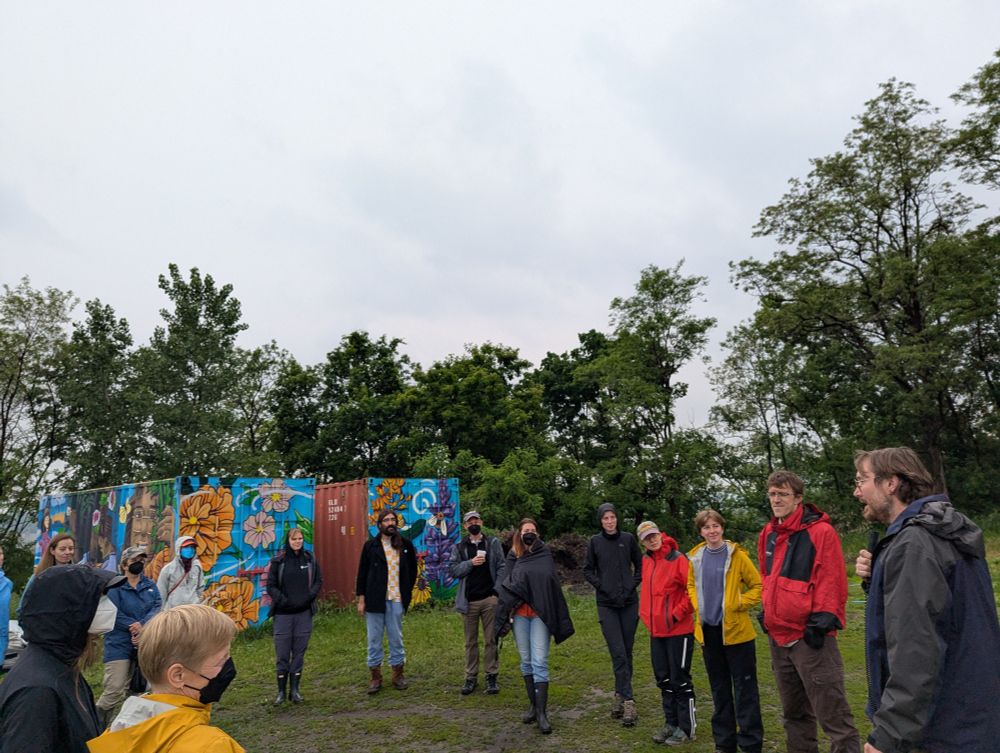
MSP LTER researchers standing outside in a circle at Rivoli Bluffs Farm & Restoration Site, listening to David Woods from Urban Roots talk about joint research at the site.
We took to the field on Day 2 despite smoky conditions, when researchers and partners (like @urbanrootsmn.bsky.social ) presented their work at active research sites -- at Battle Creek Regional Park and Rivoli Bluff Farm & Restoration Site. 3/4
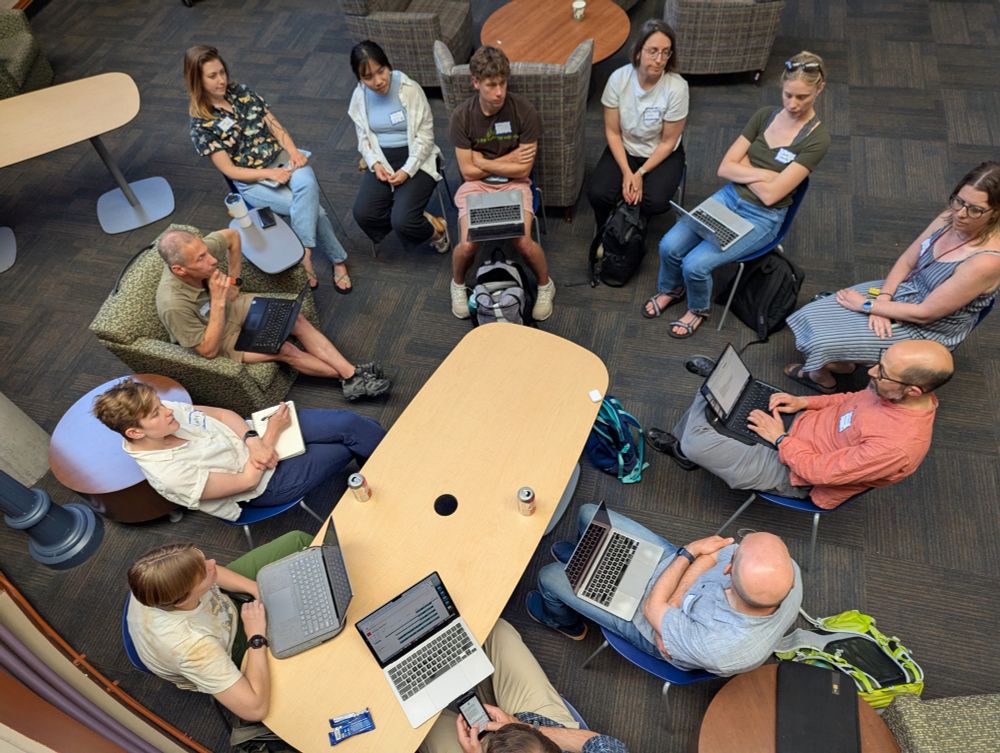
Birdseye photo of MSP LTER researchers discussing future research questions, as a group.
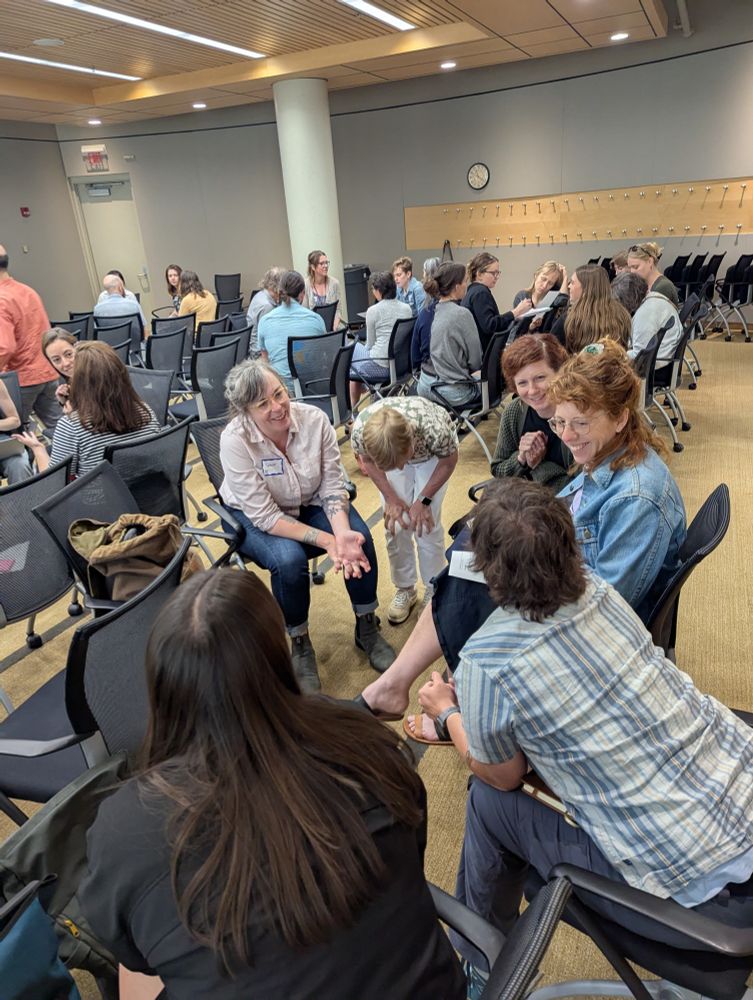
MSP LTER researchers in small-group discussion about research questions.
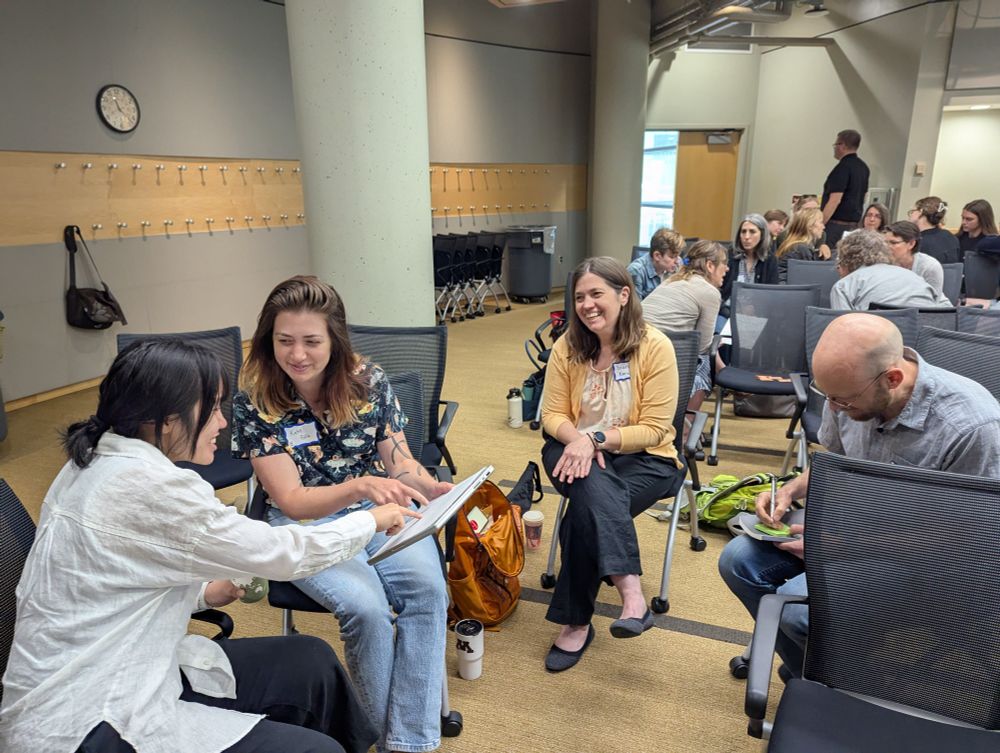
MSP LTER researchers in a small-group discussion about research questions.
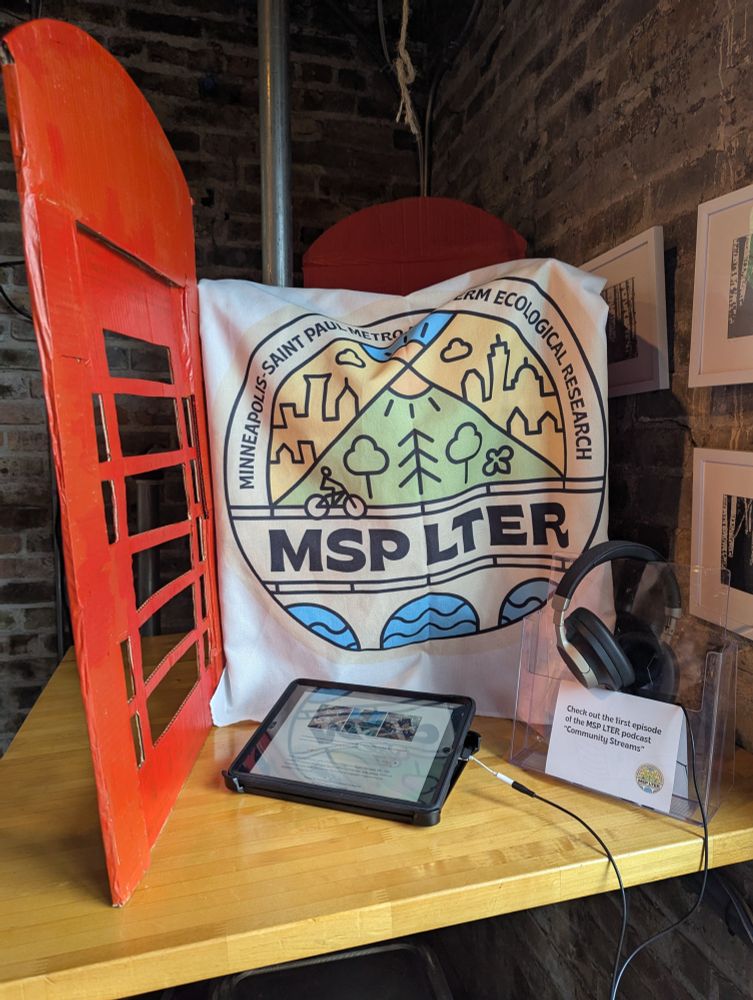
Display with MSP LTER banner with iPad for Community Streams podcast.
Day 1 saw us crossing our arms in contemplation, and listening intently to one another, as we brainstormed future research directions across disciplines. The day concluded with a celebration of our new Community Streams Podcast (more on that coming soon!). 2/4
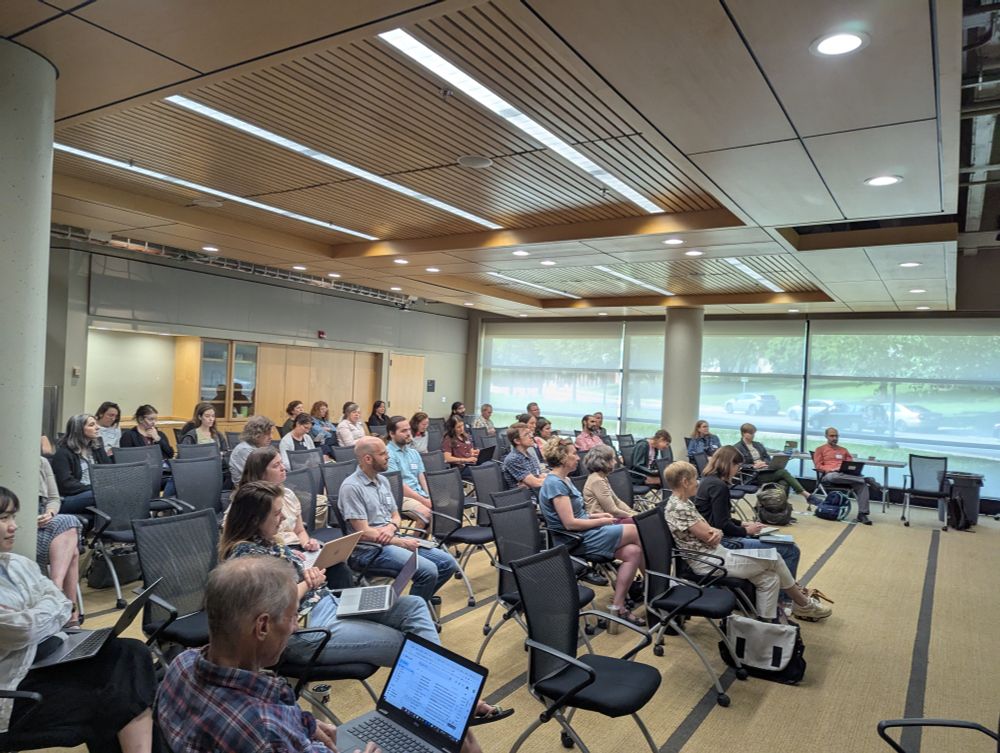
MSP LTER researchers watching a presentation in a large room.
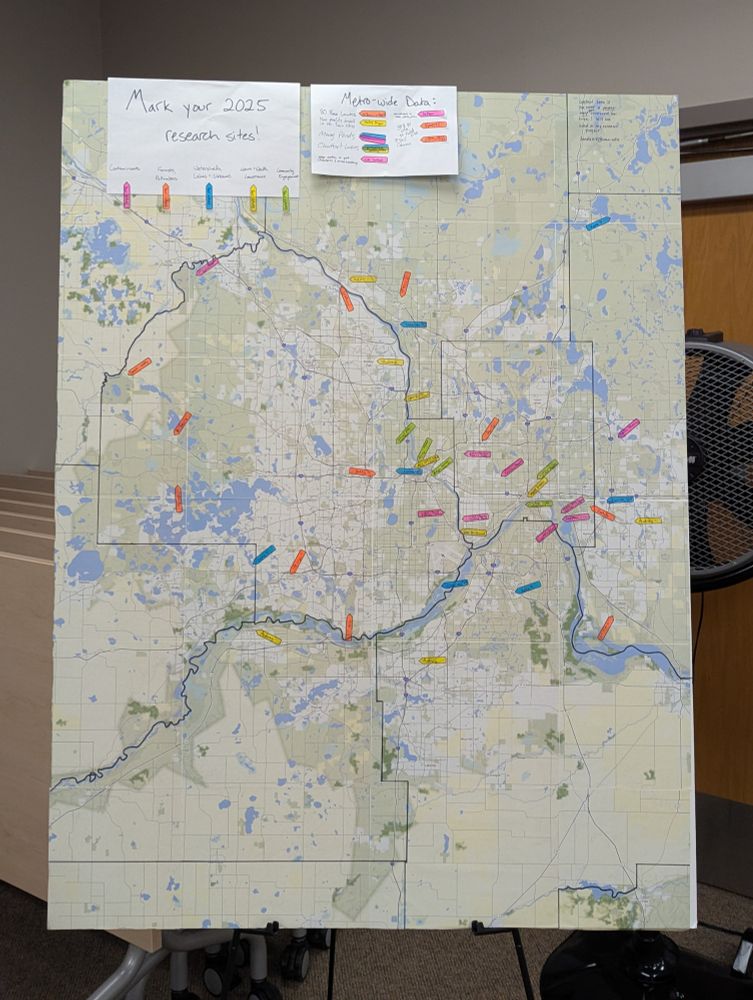
Map of seven-county metro area with MSP LTER research sites marked.
Last month, MSP LTER students, postdocs, staff, faculty, and other researchers gathered for our annual two-day Summer Symposium. In a break from our typical format, we gathered as a smaller group to reflect on where we have been and where we would like to go as an urban ecological research site. 1/4

A flyer, that says, "LTER Network, NEON and Environmental Data Initiative present: ECOLOGICAL DATA SYNTHESIS: A PRIMER ON ESSENTIAL METHODS AND TEAM SCIENCE- Assembling and stewarding a team- Operational data synthesis- Accessible, useable, and citeable products- Practical help for your synthesis project Sunday, August 10, 9am-4 pm@ ESA Annual Meeting Add short course #3 to your registration (even if you’ve already registered!) Course website: https://lter.github.io/eco-data-synth-primer/"
Attending the @ecologicalsociety.bsky.social #ESA2025 meeting in #Baltimore this summer? Join us for an #EcologicalDataSynthesis #Workshop on Sunday, August 10th! I'll be helping out, alongside folks from @uslter.bsky.social #NEON and #EDI. #Synthesis #TeamScience
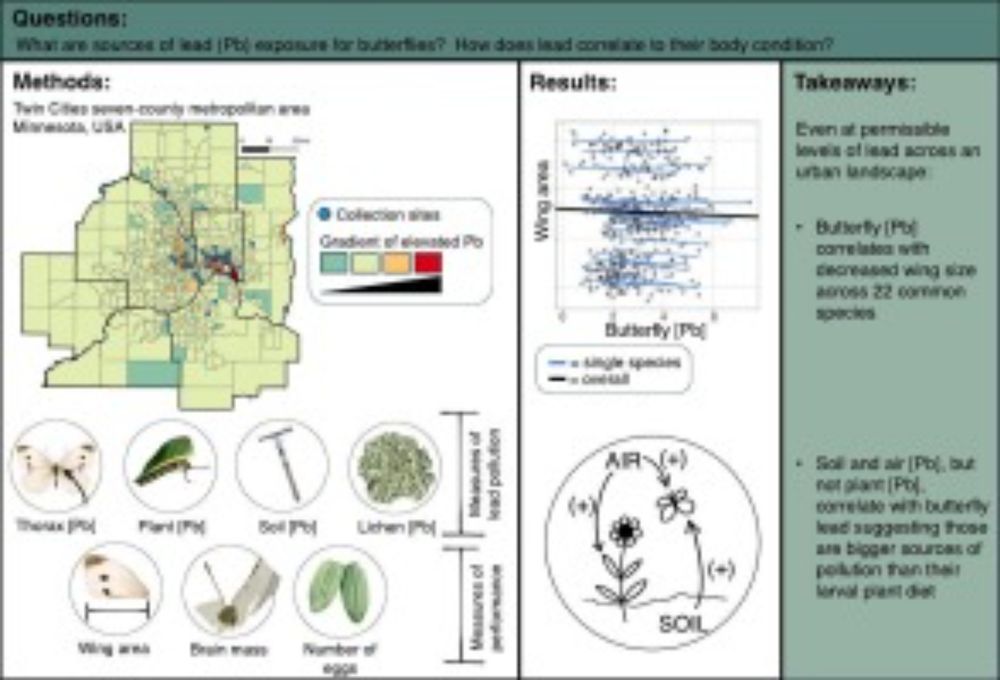
You can read their recent paper on this subject here: z.umn.edu/KemmerlingEtal2025
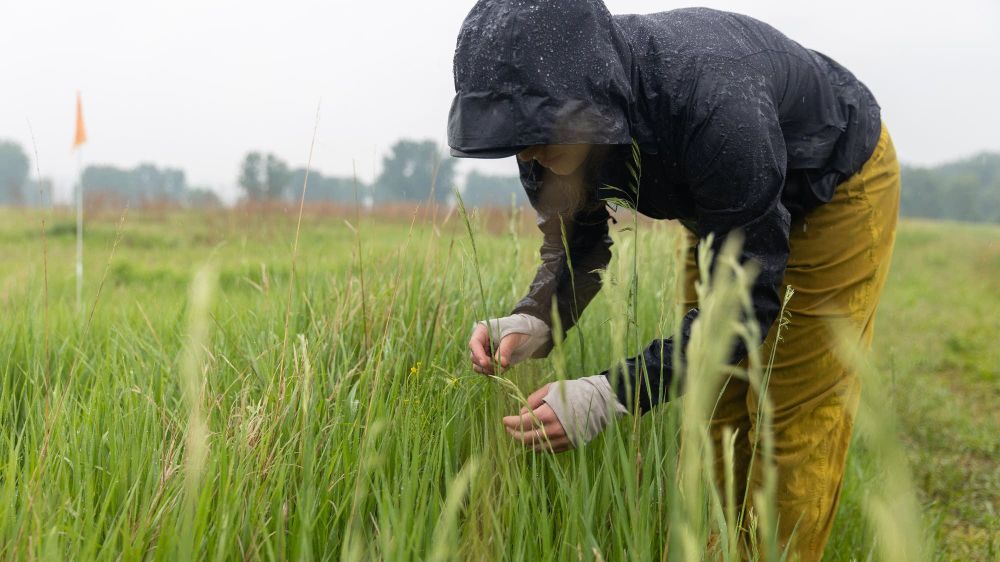
@mprnews.org covered critical MSP LTER research being conducted by Co-Director Emilie Snell-Rood and postdoc Lindsey Kemmerling that explores the negative impact lead pollution has on the health of pollinators like butterflies #heavymetals #pollution #pollinators z.umn.edu/MPR-lead-butterflies
Are you going to #ESA2025 and do you want free, continental-scale biodiversity data? Tools to access, quickly explore, and work with NEON and LTER datasets in your R environment? Check out our short course: events.rdmobile.com/Sessions/Det...
@uslter.bsky.social @cyverse.bsky.social

The MSP Tree Stewardship Mapping Project analyzes how groups collaborate and care for trees to identify opportunities for groups to coordinate more effectively and share resources. View the map and network to learn more!
sallydonovan.github.io/mspstewmap/
@msp-lter.bsky.social @uslter.bsky.social

Check out today’s YouTube release, Why Do LTERs Matter to Natural Areas Practitioners?
Special thanks to the Bureau of Land Management, the USDA Forest Service, Esri, and @uslter.bsky.social.
Stay tuned! We're dropping new YouTube content every Friday at 11 a.m. ET.
Link in profile.