
I agree! Very very strong PE group.
27.02.2026 15:39
👍 0
🔁 0
💬 0
📌 0
I agree! Very very strong PE group.
the Grillo-Prato connection strikes again
the process could be sped up even more if we could get Claude Code to also write the desk rejection letters, QJE style
working on the new book? 🤓
what are you doing with it?

not the same point but with a point about forms of leadership and electoral systems: www.sciencedirect.com/science/arti...
such a cool team

New paper with Salvo Nunnari which aims to detect (partisan) motivated reasoning (MR) using experimental designs based on information order. This provides a flexible way to detect deviations from Bayesian updating which can be explained by MR.
osf.io/preprints/so...
currently lost in the maze
finally! straight to the top of the reading list

New paper!
elliotlipnowski.com/wp-content/u...
🥳
think of all the second period selection effects though

Call for Submissions: Democratic Resilience and the Politics of Belonging
Columbia, June 4-5, 2026
Co-Organizers: @aalrababah.bsky.social (Bocconi), @gemmadipoppa.bsky.social (Columbia), Shigeo Hirano (Columbia), @ginvernizzi.bsky.social (Bocconi)
Submit: lnkd.in/eiPgt_w5
Details ⬇️
Please share!
Call for papers in the formal theory section at EPSS 2026 @epssnet.bsky.social.
Call for papers is open: epssnet.org/belfast-2026...
We welcome individual and panel submissions on all substantive areas of political science!
🤓
🥳

Voter Information and Distributive Politics Benjamin Blumenthal Abstract Does more information benefit voters? I examine this question in a novel setting of distributive politics and electoral accountability. Homogeneously-informed electorates can benefit from less information through improvements in the control or screening of politicians. For heterogeneously-informed electorates, I show that the distribution of resources and voter welfare is affected by the nature of informational heterogeneity and by voters’ ability to communicate with each other. When communication is impossible, less-informed voters can be better off than more-informed voters.
My paper "Voter Information and Distributive Politics" has been accepted for publication at the AEJ: Micro 🥳 Ungated version here: osf.io/preprints/so...
thankfully, papers from PE experts never make this mistake. right?
brb, putting in my response to referees

The more subtle problem, however, is that this is a theory of democracy as the provision of information about what the public thinks, more than it is a theory of democracy as decision making. Pitkin again:
excellent point
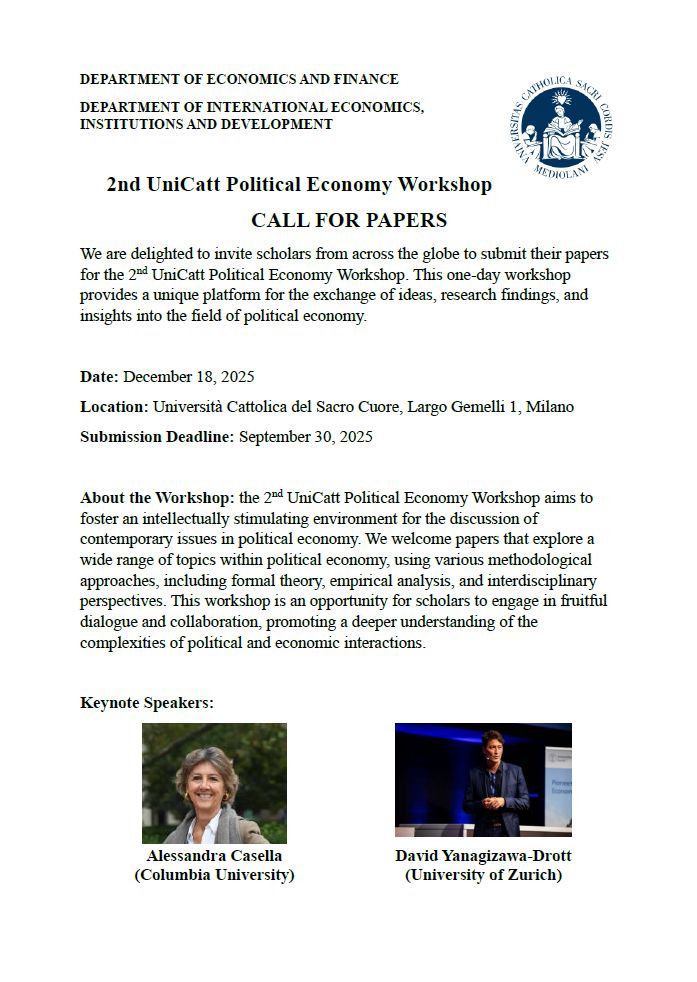
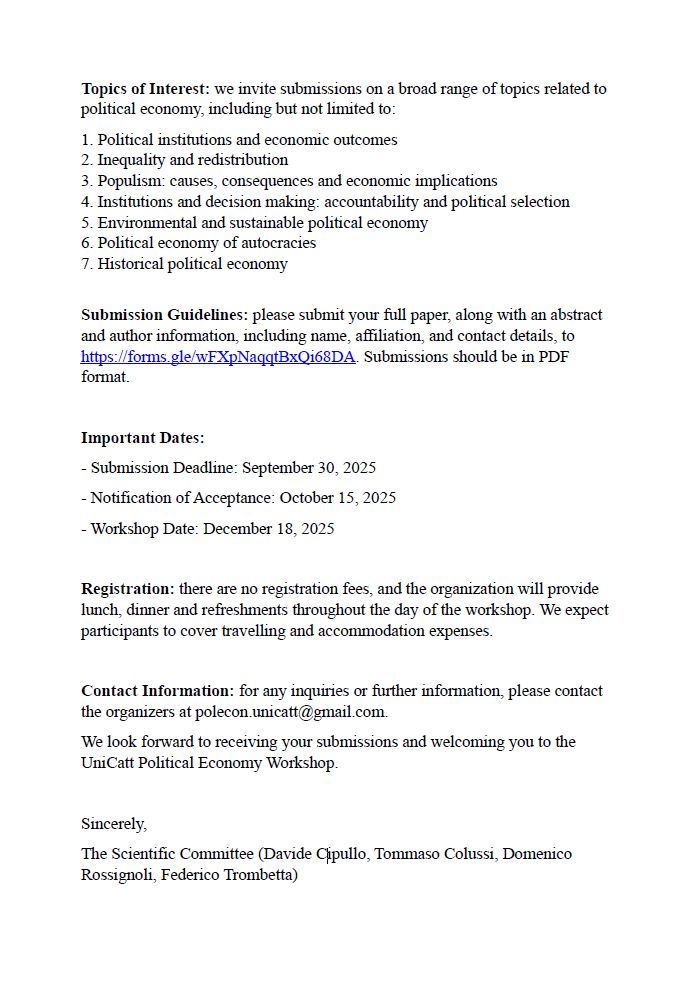
🚨Davide Cipullo, Tommaso Colussi, Domenico Rossignoli and I are excited to open the call for the 2nd UniCatt Political Economy workshop! We have 2 great keynotes: Alessandra Casella and David Yanagizawa-Drott. Send us your papers (theory or empirics) and let us meet in Milano on December 18.
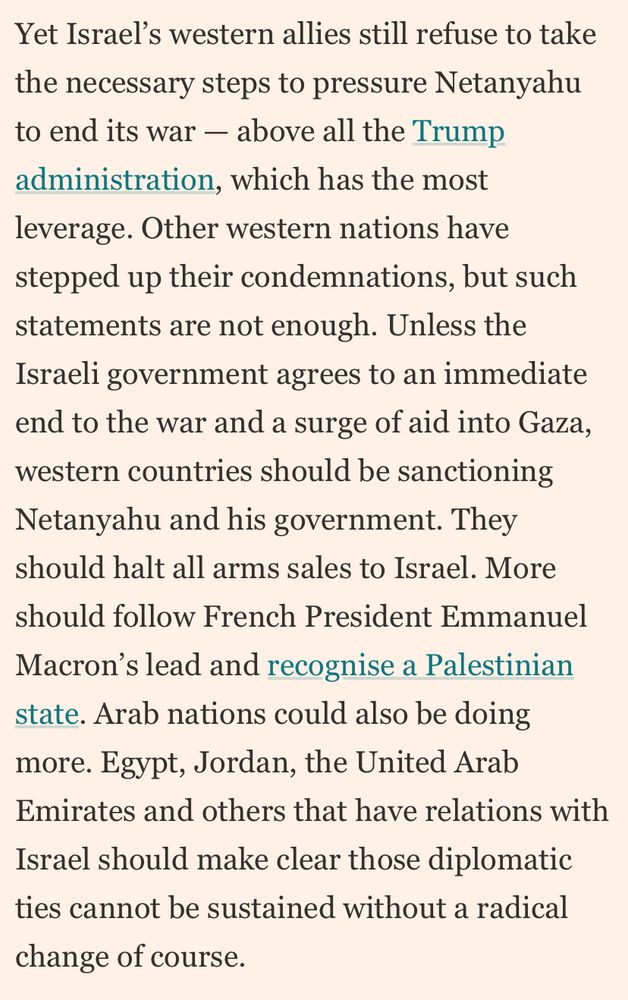
FT Editorial: "Unless the Israeli government agrees to an immediate end to the war and a surge of aid into Gaza, western countries should be sanctioning Netanyahu and his government." www.ft.com/content/69d5...
as theorists, do we even know what an exchange rate is?
looks interesting! I tried it and two of the top 3 comments are about purported inconsistent notation, when the problem comes from refine reading lower case kappas as k.

🚨 New paper with Jie Ma and @keithschnak.bsky.social: Democratic Accountability with Citizen Coproduction
As always: read it, cite it, love it!
Link: osf.io/preprints/os...
Wow, so it’s really accurately doing our job 😅
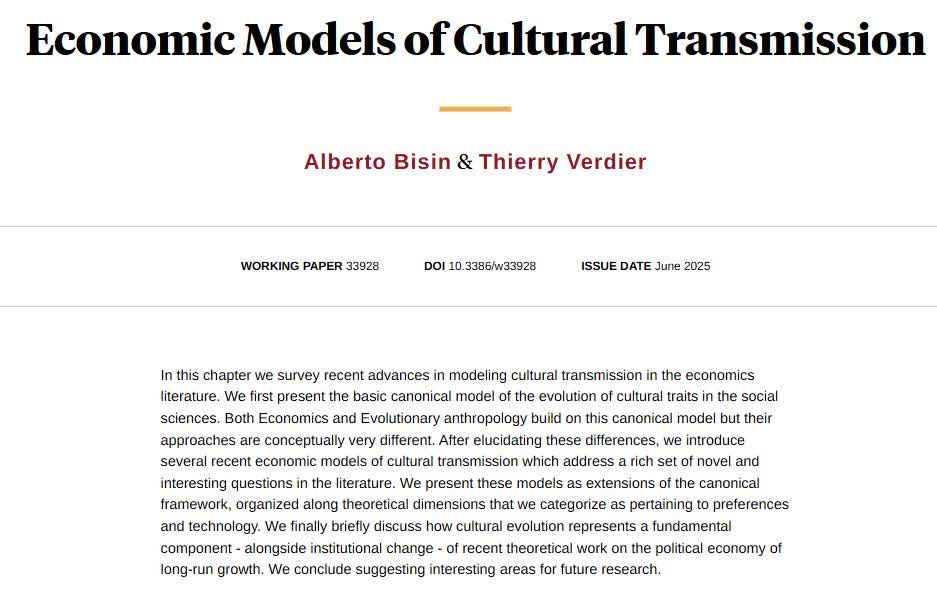
A survey of advances in modeling cultural transmission in economics and how these models differ conceptually from those employed in evolutionary anthropology, from @albertobisin.bsky.social and Thierry Verdier https://www.nber.org/papers/w33928
the EPSA/EPSS war 😔