Plasmon Polaritons in Disordered Nanoparticle Assemblies
Multilayer assemblies of metal nanoparticles can act as photonic structures, where collective plasmon resonances hybridize with cavity modes to create plasmon-polariton states. For sufficiently strong coupling, plasmon polaritons qualitatively alter the optical properties of light-matter systems, with applications ranging from sensing to solar energy. However, results from experimental studies have raised questions about the role of nanoparticle structural disorder in plasmon-polariton formation and the strength of light-matter coupling in plasmonic assemblies. Understanding how disorder affects optical properties has practical implications since methods for assembling low-defect nanoparticle superlattices are slow and scale poorly. Modeling realistic disorder requires large system sizes, which is challenging using conventional electromagnetic simulations. We employ Brownian dynamics simulations to construct large-scale nanoparticle multilayers with controlled structural order. We investigate their far- and near-field optical response using a superposition T-matrix method with two-dimensional periodic boundary conditions. We find that while structural disorder broadens the polaritonic stop band and the near-field hot-spot distribution, the polariton dispersion and coupling strength remain unaltered. To understand the effects of nanoparticle composition, we consider assemblies with Drude model particles mimicking gold or tin-doped indium oxide (ITO) nanocrystals. Assemblies of ITO nanocrystals, which have lower carrier concentrations, exhibit ultrastrong coupling, in contrast to Au nanoparticle multilayers that display deep strong coupling. Finally, we demonstrate that while computationally efficient mutual polarization method calculations employing the quasistatic approximation modestly overestimate the strength of collective plasmon coupling in these assemblies, they reproduce the polariton dispersion relations determined by electrodynamic simulations.
Disorder is inevitable in colloidal assembly. Sharing our latest in ACS Photonics, led by Tanay Paul and Allison Green in collaboration with @deliamilliron.bsky.social, exploring the role of structural disorder in extreme light-matter coupling of plasmonic nanocrystals pubs.acs.org/doi/full/10....
30.09.2025 18:09
👍 10
🔁 1
💬 1
📌 0
Since 2022, my colleagues and I have been targeted by political attacks. Early on, we worried that political actors would specifically target our projects & universities for defunding. But in the end, they came after everyone. The strategy of keeping heads down was never the right one.
13.05.2025 20:32
👍 1468
🔁 481
💬 19
📌 15

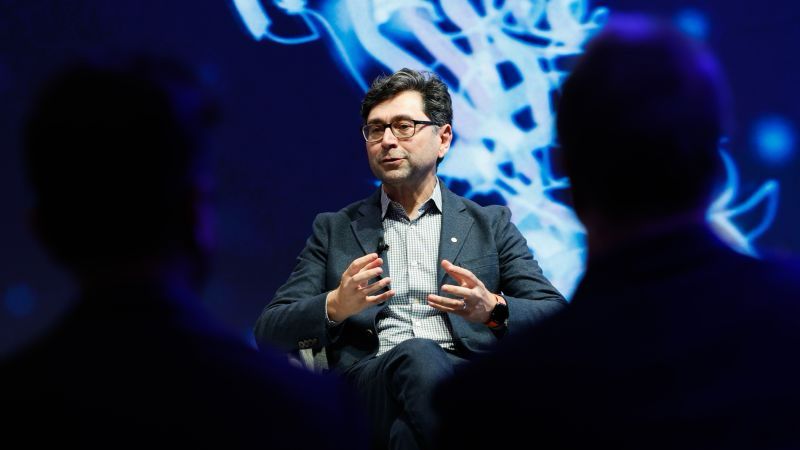
Why I’m Resigning from the NSF and Library of Congress
I cannot participate in systems that require dishonesty as the price of belonging.
"For me, the answer now lies in refusal, the withdrawal of participation from systems that require dishonesty as the price of belonging."
Today I am resigning from the National Science Board and the Library of Congress Scholars Council.
I wrote about my decision in TIME.
time.com/7285045/resi...
13.05.2025 11:19
👍 17208
🔁 5956
💬 475
📌 508
A 50% cut to science funding (which is close to what Trump is proposing for NIH) would result in huge negative long-term economic outcomes:
*7.6% cut in GDP
*8.6% cut in federal revenues
*equivalents of making the average American $10,000 poorer
30.04.2025 12:54
👍 637
🔁 312
💬 10
📌 7

The NIH budget is on a fast track to disaster
An NIH insider explains what Republicans are likely to do next, and what we can do
Important info here on the details of how they plan to dismantle NIH and NSF. They are counting on scientists to keep their heads down and stay “neutral,” when the only hope is to organize and stand up for science and equal opportunity to do science donmoynihan.substack.com/p/the-nih-bu...
28.04.2025 13:42
👍 1
🔁 1
💬 0
📌 0
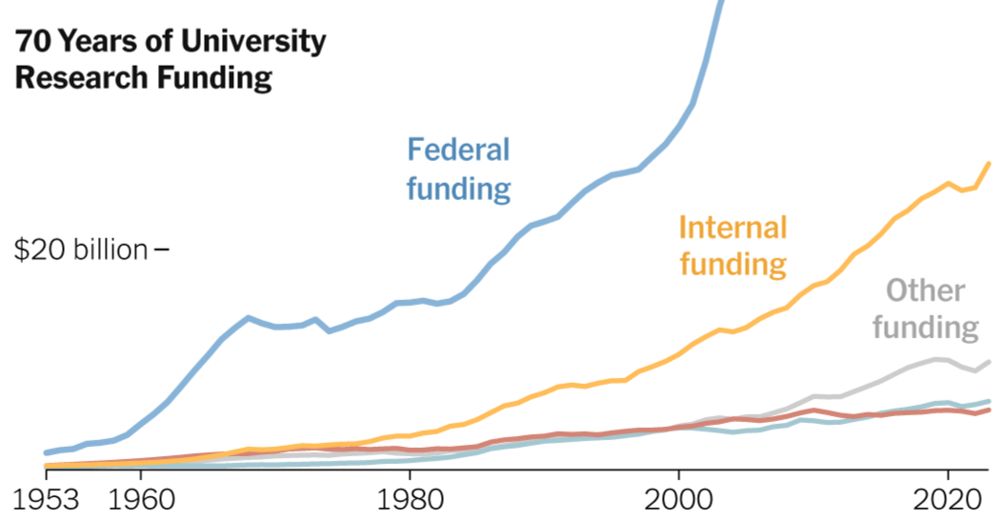
How Universities Became So Dependent on the Federal Government
For decades, universities got billions in federal dollars for research. The relationship was mutually beneficial, until President Trump decided it wasn’t.
much has been said about the NYT's framing of the growth of the government-university research complex as a story of higher ed "dependency" on government
it's a silly and ahistorical way to characterize a carefully thought out national strategy, one imagined by
1/
www.nytimes.com/2025/04/18/u...
22.04.2025 12:14
👍 93
🔁 41
💬 2
📌 13
It me
18.04.2025 21:56
👍 41
🔁 6
💬 1
📌 0
Ok so yeah, this has quickly become the #1 misunderstanding about the canceled grants
the grants are not “subsidies” or “entitlements” to Harvard or Princeton or whatever
they aren’t going into universities’ endowments
they are competitive contracts won by these universities to do research
18.04.2025 11:55
👍 7419
🔁 2487
💬 123
📌 100

International students in the U.S. are reeling amid revoked visas and terminated records
The moves also affect a temporary work program heavily used by STEM graduates
“I’m going to keep trying to maintain the life that I have here,” a Nigerian student says. “But what life am I fighting for if people don’t want me here?”
International students in U.S. are reeling from terminated records and revoked visas. My latest for @science.org
www.science.org/content/arti...
16.04.2025 19:09
👍 82
🔁 21
💬 0
📌 1
University of California, what’s up girl? I know you’re public, but you’re big & beautiful. Also, the #1 employer in the state.
16.04.2025 16:14
👍 19
🔁 6
💬 0
📌 0
The Chronicle covers the growing MADC* movement!
Faculty senates at Indiana, New Jersey, Massachusetts, and Nebraska state flagships have ALL passed resolutions for Mutual Academic Defense Compacts!!
Will your institution be next? Make it so!
*because we're mad, see? <groan lol>
14.04.2025 20:56
👍 31
🔁 8
💬 1
📌 2

The Attack on International Students
New surveillance and punishment systems are a warning to us all
New, from me: Marco Rubio used to boast that he was banned from China, calling it a totalitarian state.
Now he combines a) new surveillance capabilities to monitor and punish international students, with b) little accountability or due process. 🧵
donmoynihan.substack.com/p/the-attack...
13.04.2025 14:46
👍 2058
🔁 646
💬 102
📌 67

LEFT: Near-field electric field enhancement maps of nanocystal layers in cross-section showing spatial concentration in different layers RIGHT: Reflection spectra in the mid-IR depending on the number of nanocrystal layers stacked on a Au-backed Ge substrate, demonstrating ultrastrong coupling and increasing splitting of spectral modes where reflection drops to zero.
Photonic integration of plasmonic metal oxide nanocrystal assemblies for ultrastrong coupling and infrared spectral tuning. Collaboration with @utmid-ir.bsky.social and @tmtruskett.bsky.social now out in @pubs.acs.org ACS Nano.
@texasche.bsky.social
#ChemSky 🧪
pubs.acs.org/doi/10.1021/...
12.04.2025 18:25
👍 11
🔁 2
💬 0
📌 0

LEFT: S(q) from small angle X-ray scattering showing comparison between theory predicted structure and observed structure in colloidal nanocrystal dispersions with added polymer. RIGHT: Phase diagram comparing theoretical predictions for phase boundaries (FVT, GFVT) with experimental observations of phase stability for varying polymer concentration and ratio of sizes between nanocrystals and polymers.
How do polymer co-solutes induce attractive interactions between colloidal nanocrystals? Quantitative theory-experiment analysis with @tmtruskett.bsky.social group using small angle X-ray scattering. @texasche.bsky.social @chemistry.bsky.social
www.science.org/doi/10.1126/...
#ChemSky 🧪
11.04.2025 19:52
👍 15
🔁 1
💬 0
📌 0
from "learn to code!" to "learn to put screws in iPhones!" in a few short years. really makes you think about Employable Skills
07.04.2025 12:38
👍 3361
🔁 541
💬 66
📌 30
Good for John Hartwig. He is of course correct, and it’s important to say these things loudly and clearly, both abroad and in the US.
07.04.2025 12:13
👍 74
🔁 18
💬 0
📌 2

I do love The Daily Texan. You go, student journalists!
"This Editorial Board opposes all attempts to ban drag and believes the Board of Regents should reverse its ruling to uphold our constitutional right to free speech at our University."
thedailytexan.com/2025/04/04/d...
04.04.2025 15:44
👍 281
🔁 65
💬 10
📌 1
Harvard’s moment of truth - The Boston Globe
The stakes are high, but the choice should not be difficult.
“Harvard now faces one of the most consequential choices in its history: Submit to extortion and make itself complicit in the most profound assault on academic freedom and constitutional governance of our time—or go to court. The stakes are high, but the choice should not be difficult.” (Fixed link)
04.04.2025 19:44
👍 2975
🔁 851
💬 133
📌 66
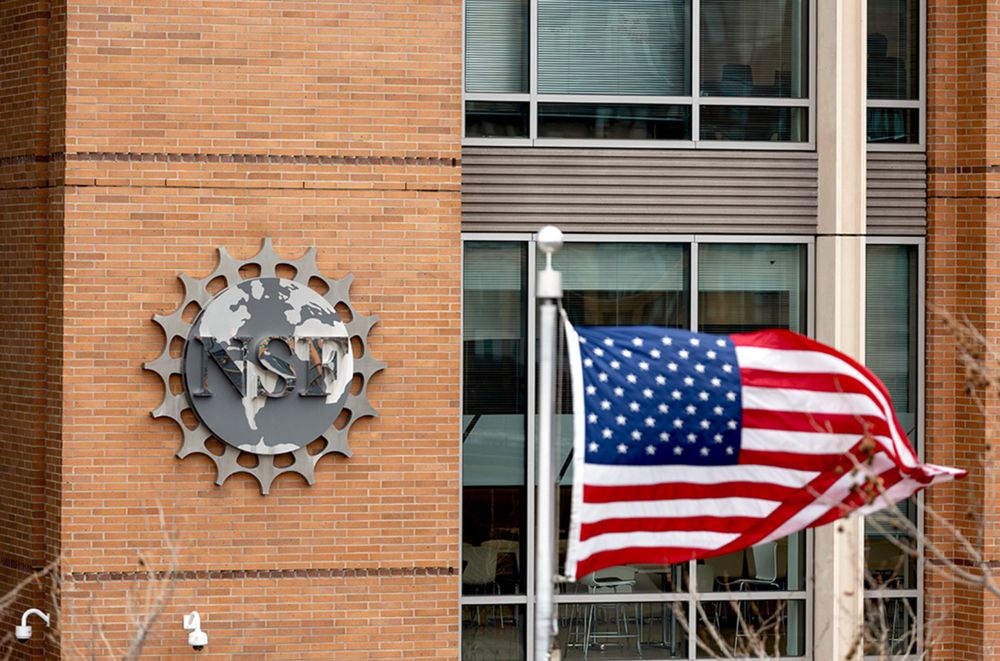
NSF has awarded almost 50% fewer grants since Trump took office
The reasons aren’t clear—and the agency’s director claims the president’s policies haven’t slowed grant awards
This hasn't gotten much attention—but new National Science Foundation grants have dropped by almost half since Trump took office, an analysis by @davidimiller.bsky.social shows. www.science.org/content/arti...
(Story by @policyhound.bsky.social)
01.04.2025 16:02
👍 103
🔁 86
💬 6
📌 4
The Continuing Crisis, Part X: Reductions in Force, Gains in Centralized Power
The news across HHS today is awful, and the stated reasons behind it all are lies:
01.04.2025 16:10
👍 79
🔁 35
💬 2
📌 7

Who becomes a trustee? At Columbia there are 21, all of them from business, law and technology, with the exception of a former journalist. Although they are in charge of an academic institution, none of them is an academic. None as ever led a classroom or a lab meeting or medical rounds with interns. None has gone through the process of tenure, where their teaching, publication record and service are rigorously assessed by colleagues in the field both from within the institution and outside it. None as ever had their work peer-reviewed by anonymous readers or panels of experts. None has ever published in academic or scientific journals or presses and had their ideas debated in the public sphere. None has ever framed a hypothesis and tested it on the basis of evidence they have collected. None, in short, has sought truth and had their search confirmed by objective scholars and scientists.
Arjun Appadurai and Sheldon Pollock on boards of trustees: “Who actually runs Columbia University?” www.theguardian.com/commentisfre...
01.04.2025 11:49
👍 680
🔁 258
💬 16
📌 47