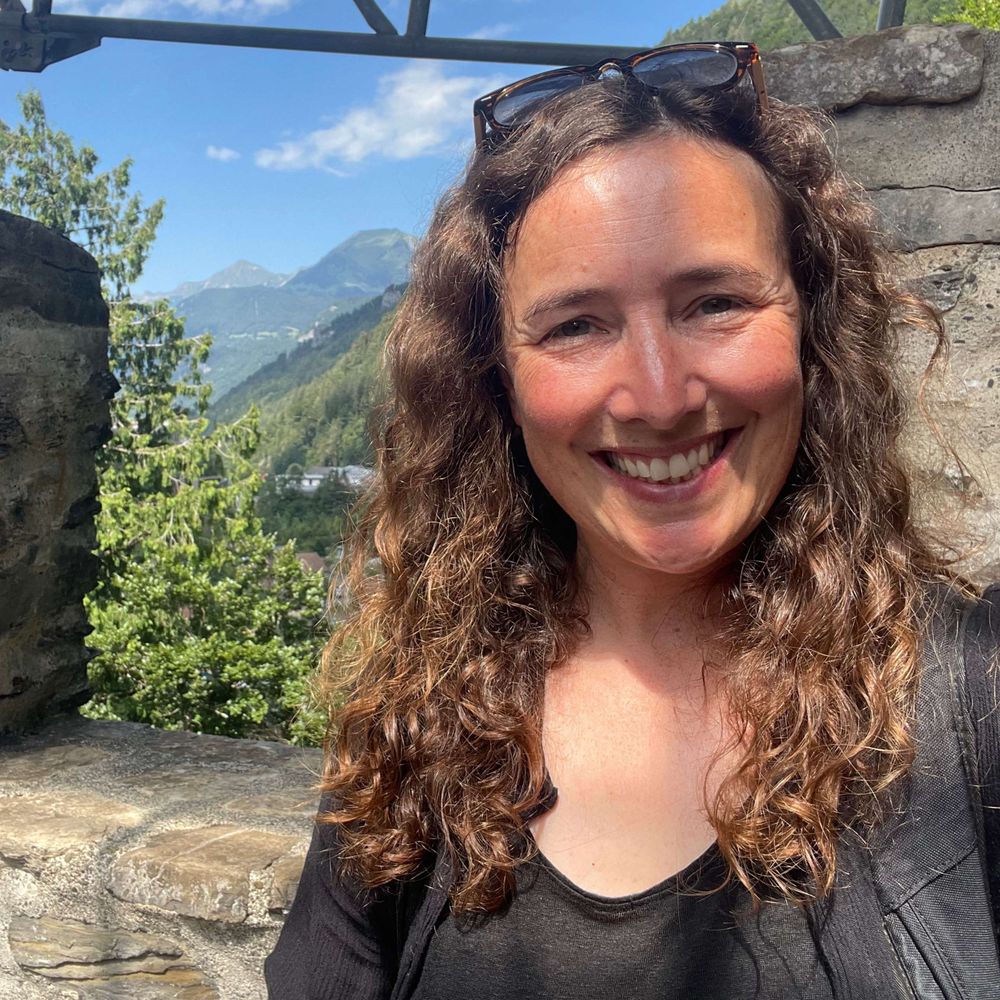
The #OBVI #LivingBioreactors science team spent a little over a month aboard R/V Falkor (too) in the South Atlantic off the coast of Argentina, with support from @SchmidtSciences Ocean Biogeochemistry Virtual Institute. Watch the full video: https://www.youtube.com/watch?v=dMlZ5qe69pU
24.02.2026 19:46
👍 47
🔁 18
💬 1
📌 0
Jaw-dropping jellyfish, Poralia sp, 1,414m
(ID, Dr. Anela Choy)
“There are many mysteries to uncover,” Choy writes. “But perhaps this beautiful brownish, reddish medusae has a unique role to play in connecting carbon flow between the deep water column with the seafloor.” #OBVI #LivingBioreactors
18.02.2026 20:58
👍 68
🔁 27
💬 1
📌 2
Well I could be wrong, but I know we saw some on this dive.
14.02.2026 13:30
👍 1
🔁 0
💬 0
📌 0
I think these were Collodarians, a type of colonial radiolarian. We’ve been collecting a lot of them, but I was surprised to see them so deep. The ones in the upper ocean live with algal symbionts.
14.02.2026 02:56
👍 2
🔁 0
💬 1
📌 0
Yes, today!
13.02.2026 10:22
👍 1
🔁 0
💬 0
📌 0
Yes we are trying to span as many biomes as we can with the time we have. Tomorrow we arrive at our northern most location.
12.02.2026 01:38
👍 1
🔁 0
💬 0
📌 0

Working on image processing code in my new office on the Falkor too, while we transit to the next station. #LivingBioreactors @schmidtocean.bsky.social
09.02.2026 17:11
👍 15
🔁 1
💬 1
📌 0
Better than my constant typos. Foraminifera are also protist that are part of the “Rhizaria” group, so that means forams rads and phaeodarians all had a common ancestor at some poin. I think it is interesting that most of them make some type of mineral shell/structure.
06.02.2026 19:23
👍 1
🔁 0
💬 0
📌 0
this depth range but they are too small to see in the ROV. There are other underwater camera instruments that can image smaller radiolarian cells. also they are not as delicate as phaeodarians so they come back in net tows more intact.
06.02.2026 11:34
👍 0
🔁 0
💬 3
📌 0
But related to radiolarians. Some of my colleagues still call the “rads” though. There is some really nice work showing that different specuses live at different depth ranges in the ocean. They can be found in the surface all the way into the abyss. I think true radiolarians also live across…
06.02.2026 11:34
👍 0
🔁 0
💬 1
📌 0
Hi Veronica, welcome to the rabbit hole! Phaeodarians and radiolarians are super amazing protists. I think the past footag from the ROV saw a phaeodarian. They were originally classified as radiolarians >100 years ago, but more recently were reclassified into their own subgroup separate..
06.02.2026 11:34
👍 1
🔁 0
💬 1
📌 0
*Anitra !
05.02.2026 13:48
👍 0
🔁 0
💬 0
📌 0
My co-PIs Anita and Anela are so inspiring. Check out this video explaining why I am spending 35 days at sea! #LivingBioreactors @schmidtocean.bsky.social #OBVI @mbarinews.bsky.social
05.02.2026 12:40
👍 12
🔁 3
💬 1
📌 0
The first active is part of an art project by our artist at sea. She will provide an explanation of the performance when we start. I can’t wait to see it.
04.02.2026 22:50
👍 3
🔁 0
💬 1
📌 0
Deja vu: starting another ROV dive tonight. I hope we see more deep sea phaeodarians tonight. #LivingBioreactors
04.02.2026 22:35
👍 10
🔁 2
💬 2
📌 1

Halfway through our #LivingBioreactors cruise track from Argentina to Brazil (orange carrot on the map). We couldn't decide whether we should stop at station 6 or station 7 and are now somewhere in between. So I guess we decided on 6🤷♀️7?
🫠
03.02.2026 15:57
👍 4
🔁 1
💬 1
📌 0
Just starting another #LivingBioreactors ROV dive. Check it out on the @schmidtocean.bsky.social YouTube live stream.
03.02.2026 11:49
👍 4
🔁 0
💬 1
📌 1
Maybe Tuesday or Wednesday.
01.02.2026 12:07
👍 2
🔁 0
💬 0
📌 0
Our next #LivingBioreactors ROV dive is tonight (midnight our time). Hope we can capture the night time upward migration of midwater animals. @schmidtocean.bsky.social
28.01.2026 02:29
👍 4
🔁 0
💬 2
📌 1
Yes, exactly. They are called Detritus Samplers, or I heard a few call them Jelly jars. The lids on top and bottom closed too slowly. The ROV pilots are working on a modification that will make it easier to collect specimens in them.
27.01.2026 00:10
👍 2
🔁 0
💬 0
📌 0
It sounds like there are lots of people excited to tune into the next #LivingBioreactors ROV dive aboard the Falkor too. FYI I think this will be two days from now. We are steaming offshore and deploying a bunch of really cool instruments before getting eyes in the midwater.
24.01.2026 09:22
👍 6
🔁 0
💬 1
📌 1
But, the Falkor also had a sauna. I haven’t found one on his ship yet . 😢 Life is hard. 😆😉
24.01.2026 09:13
👍 1
🔁 0
💬 0
📌 0
Both ships are among my favorite to sail on. This new ship is much larger with more lab space, a much larger aft deck for our gear, and lots of comfortable spaces for sitting in the rare moments when we don’t have to be working. Lots of lounges and a mess hall with natural sunlight.
24.01.2026 09:13
👍 2
🔁 0
💬 1
📌 0
We are currently at our “shakedown” station, testing equipment. We will be diving with the ROV in a few days and will focus on the “midwater”, quantifying and collecting pelagic animals.
23.01.2026 01:49
👍 4
🔁 0
💬 0
📌 1


Happy #CTDAppreciationDay from the #LivingBioreactors cruise on the Falkor too. Our CTD is friends with an ISIIS-DPI shadowgraph camera. @schmidtocean.bsky.social @mbarinews.bsky.social #OBVI
22.01.2026 16:16
👍 20
🔁 4
💬 2
📌 0

Just sailed off on the Falkor too for a 32 day research cruise from windy Argentina! We are studying deep sea animals and how their gut microbiomes transform marine snow as it sinks to the deep ocean. @schmidtocean.bsky.social #LivingBioreactors #OBVI @mbarinews.bsky.social
21.01.2026 21:58
👍 18
🔁 2
💬 2
📌 0
This article also features an illustration by our recent Maxwell/Hanrahan Foundation-supported science illustrator Julia Devine.
18.01.2026 19:00
👍 0
🔁 0
💬 0
📌 0
SINKER is a new imaging instrument plugged into our underwater cable in Monterey Bay. If you want to learn more, Enoch Nicholson will be presenting on this project at the upcoming AGU Ocean Sciences Meeting in February.
18.01.2026 19:00
👍 1
🔁 0
💬 1
📌 0
😍 so inspiring
16.12.2025 00:51
👍 1
🔁 0
💬 0
📌 0