There was a scrum in front of the Slovak net a few minutes ago and I thought the Slovaks were fighting each other for a good 15 seconds
20.02.2026 20:25
👍 2
🔁 0
💬 0
📌 0
There was a scrum in front of the Slovak net a few minutes ago and I thought the Slovaks were fighting each other for a good 15 seconds
Anyone: Its cold
Me: Yes. Cold and hard.
I live right down the street from Schreiner's and I constantly make the "its a real sausage factory joke" to my wife. She rolls her eyes.

Another Night by the Real McCoy. Another popular Eurodance album from the 90s.
The random weapons firing orange flames in random directions is giving big GI Joe box art vibes (probably just about as practical too)
Also, the suture labels don't point to sutures
The "inferior" view is a weird mixture of things that would actually be seen in an inferior view (e.g., occipital condyles) and things that would be seen in a superior view of the base of the skull (e.g., sigmoid sinus, internal acoustic meatus)
Came here to say this. I think this article may have an AI hallucination reporting what should happen as having already happened.
I use "like an orange on a toothpick" waaay too often
A Passage to Indiana
Electrolite
And if they lasted long enough, stalagmites "might" reach the ceiling
(13/13) I think that does it. This has been a long term labor of love, but I'm happy to see it finally published. On behalf of my collaborators, thanks for listening and thanks to everyone who helped along the way.
(12/x) and hyaenodonts (carnivorous mammals distantly related to living dogs and cats). The new material strongly supports the third option. Wyolestes is a hyaenodont. It expands the diversity of hyaenodonts and it seems to be one of the few not adapted to eating vertebrates.
(11/x) As for what Wyolestes is related to, previous studies had suggested a variety of different relationships. Possible relatives included mesonychians (generally large-bodied predators and scavengers related to living hoofed mammals), didymoconids (weird burrowing mammals from Asia),...
(10/x) That fits the skeleton which overall indicates generalized habits, but does show some evidence of digging adaptations in the forelimbs. Wyolestes probably used it forelimbs, including long fissured claws, to dig for worms or tear open insect nests.
(9/x) The most similar living mammals include several species that specialize in eating invertebrates like earthworms, including the falanouc and Owston's palm civet. We suspect that Wyolestes was specialized for eating some combination of large invertebrates and social insects like ants.
(8/x) There's no evidence for a proboscis. In fact, the foramen that transmits nerves and vessels to the snout is very small, more like a dog than anything with a mobile snout.
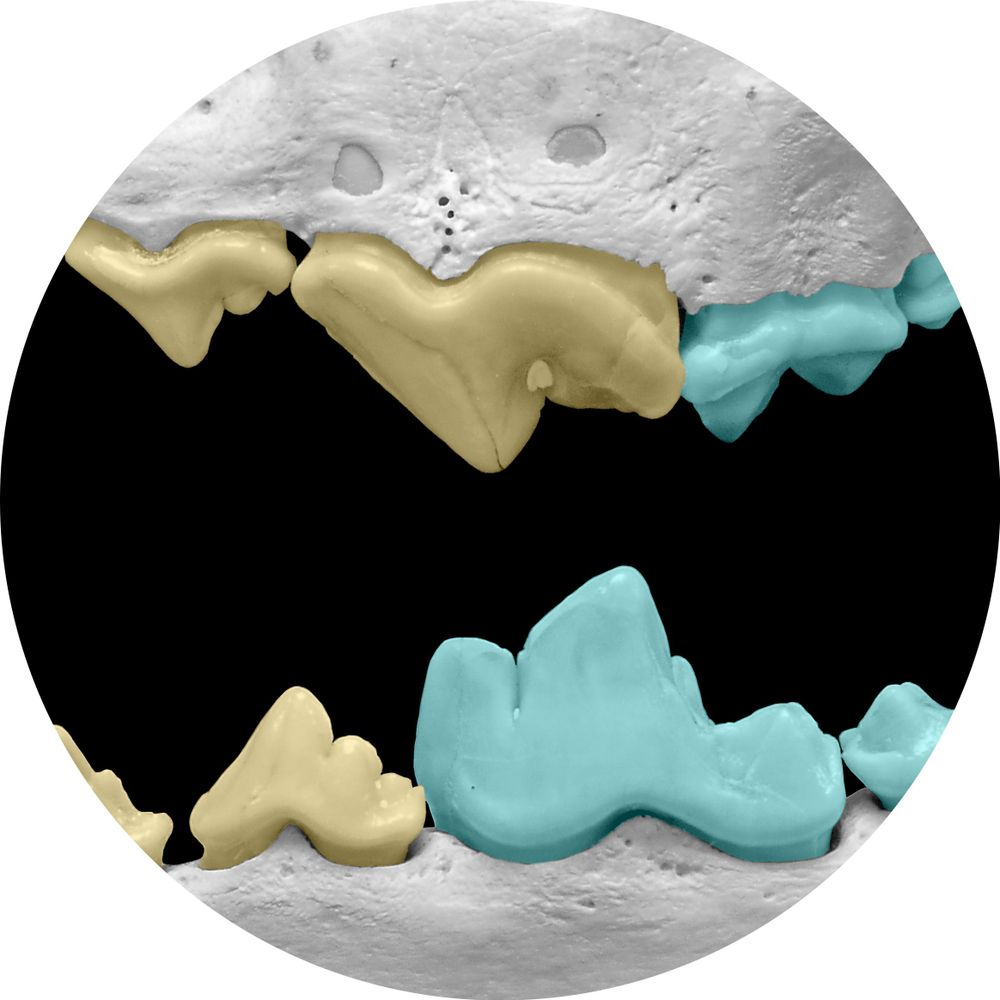
(7/x) Done with a summer outreach session, so let me pick this up. Wyolestes has teeth that look like a lot of carnivorous mammals, but without the big shearing blades that most carnivores have. It also has a very narrow, elongate skull, exaggerated a little bit by crushing, but not too much.
(6/x) The new monograph describes and illustrates all of that new material to answer basic questions of what was Wyolestes related to and how did it live. Unfortunately, I timed this badly, so the answers to those questions will have to wait an hour or two...
(5/x) As the study progressed, we ended up identifying additional specimens. Pat Holroyd from the UCMP pointed us to a different Smithsonian specimen including a nearly complete ankle. We stumbled across a specimen at Yale including more postcrania and well-preserved ears.
(4/x) Many years of preparation, description, and illustration followed. Along the way, we began a collaboration with Maureen O'Leary at StonyBrook to include unpublished postcranial material of Wyolestes from Baja California.
(3/x) Ken Rose, my advisor and now coauthor, convinced Red to donate the skull to the Smithsonian and take us to the spot he had found it. We ended up collecting a partial skeleton, greatly improving what was known of Wyolestes.
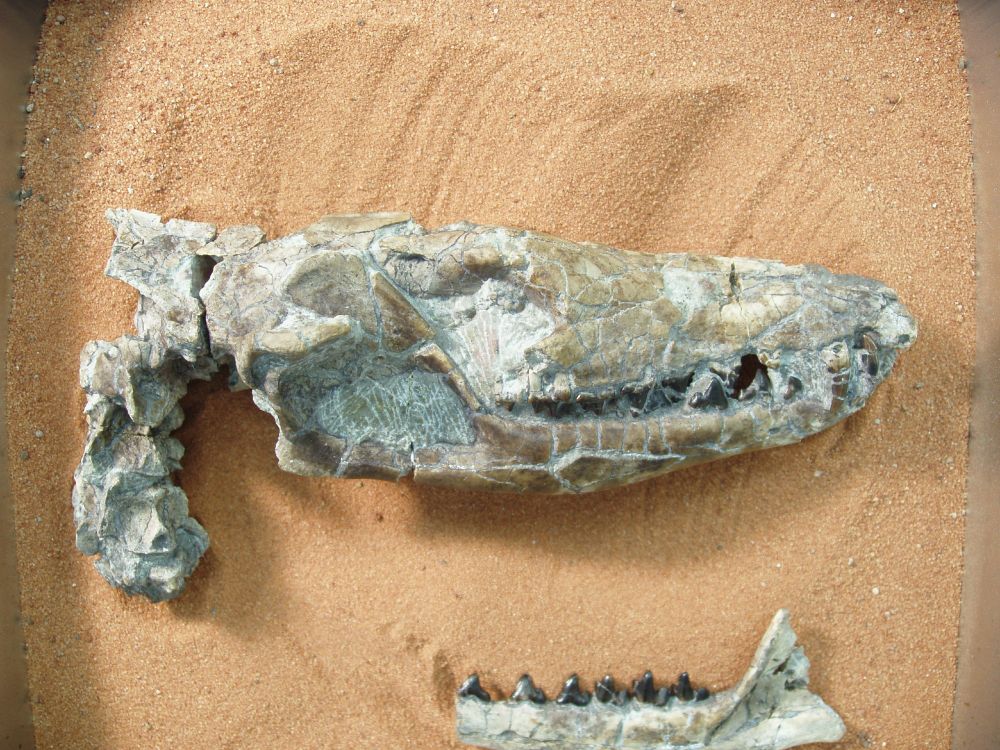
This project started way back in 2002 when I was a second year graduate student. A local collector, Vincent "Red" McHoes, brought a spectacular specimen to the annual 4th of July party in Powell, Wyoming
Happy to announce publication of a very long term project, a revision of the weird early Eocene mammal 𝘞𝘺𝘰𝘭𝘦𝘴𝘵𝘦𝘴 with Maureen O'Leary and Ken Rose (1/x)
bioone.org/journals/bul...
