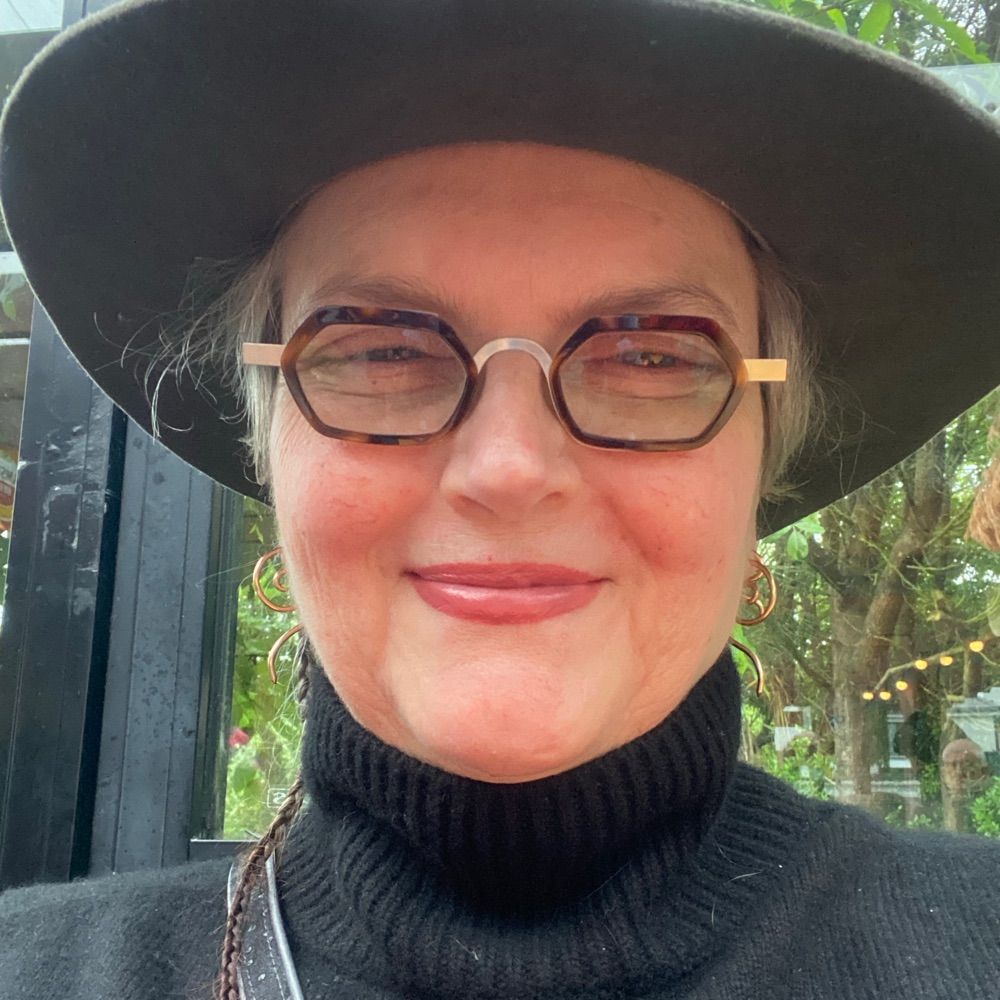
Me, my Mom (RIP) and Jane at Shetland Wool Week
Out of a Bluesky…a snap of what I was doing 7 years ago! I’ll be doing that again at the end of this week (but without Mom and Jane :-( )
21.09.2025 19:19
👍 4
🔁 0
💬 0
📌 0

Flying DUB->SFO->AUS today as the first day of 10 weeks’ travel. I’ll be in AUS the rest of March, then LA to do more sorting of the Momibilia for a week, then to Japan to study Saori Weaving and to visit with InnerSource Japan. Luckily Mark and Autumn will be taking care of my house and my Gibson.
12.03.2025 12:43
👍 6
🔁 0
💬 1
📌 0
…Irish gov was distracted by Brexit for years. We need for that not to happen again.
07.02.2025 13:16
👍 0
🔁 0
💬 0
📌 0
Q: Data protection and CEOs lining up behind the current American administration. Is there an opportunity for Ireland to position itself within Open Source at the EU?
A: a) John: this could definitely happen since there’s been a dynamic shift on the tech side b) John maybe offer Leitrim to the US?…
07.02.2025 13:15
👍 0
🔁 0
💬 1
📌 0
…like buying a round to contribute to the craic. We don’t do enough to call out good behavior and the value it creates d) Clare says increased Skills training is also needed.
07.02.2025 13:11
👍 0
🔁 0
💬 1
📌 0
…Medical devices are shifting to more open software and hardware so we could be looking for lessons there b) Dermot remembers when classical Internet was a new idea. Collaboration exists in pockets. It’s also a philosophy and an ideology c) Kathryn thinks there are parallels in Irish society….
07.02.2025 13:09
👍 0
🔁 0
💬 1
📌 0
Q: From the floor…Open Source was a massive change and insight for the questioner when he first started contributing. What structures do they need to put in place? Contributions aren’t just code.
A: a) John says companies who have contributed know how to do it but we could do more to prepare…
07.02.2025 13:06
👍 0
🔁 0
💬 1
📌 0
Dermot says find one partner who can collaborate with you to make 25k profit on both sides. But also Ireland doesn’t spend nearly enough at a government level. We need to change the story of Ireland, taking the strikes out of our past and bringing culture forward to marry it with our tech output.
07.02.2025 13:03
👍 0
🔁 0
💬 1
📌 0
Q: What can we actually do?
A: a) John says think about where you have a strong niche and look for locally offices of leaders in that niche. IDA can make introductions b) Kathryn says create resources to find like-minded companies, and help individuals advertise their skills locally c)…
07.02.2025 13:01
👍 0
🔁 0
💬 1
📌 0
A: Dermot: Believes Ireland needs to be shown how to leverage Open Source. Don’t start with a moonshot. Build trust from the start. Ireland could build a catalog of proven companies. We need to create more developers who have the skills to work in an Open way.
07.02.2025 12:57
👍 0
🔁 0
💬 1
📌 0
Q: Kathryn: Still believes that Open Source has a “marketing problem”. IMHO she just doesn’t get it but she’s far from unique in this small country. She thinks Open Source is not “building from scratch”…so she still doesn’t get that consulting body shops are always borrowing from Open Source.
07.02.2025 12:43
👍 0
🔁 0
💬 1
📌 0
Fyuz 2024
Q: Clare: FYSE is an association designed to bring together Telco sector players. Can you say something about that work?
A: John: We’re trying to get them to do their platform collaboration in Ireland. Hopefully it should be a pattern for future similar efforts www.fyuz.events
07.02.2025 12:40
👍 0
🔁 0
💬 0
📌 0
First panel discussion of Main Track at inaugural National Open Source Summit: Dermot Casey IRDG, Kathryn Lynch Innovation Ireland, John Durkan IDA, Moderator Clare Dillon…(an Irish panel to discuss increasing collaboration in the Irish Tech sector).
07.02.2025 12:37
👍 1
🔁 0
💬 2
📌 0
Q: What about forks?
A: Bill H: The first rule of forking is, Don’t Fork
The second rule of forking is, See the first rule.
The third rule of forking is if you must fork, be prepared to do some heavy lifting and honor the original project as much as you can.
07.02.2025 12:33
👍 1
🔁 0
💬 0
📌 0
Q: EU is defining “Stewardship”. Is this a key concept?
A: Bill admits not much knowledge of EU policies, but in general it may help to have that type of endorsement.
07.02.2025 12:30
👍 0
🔁 0
💬 1
📌 0
Q: Can you use a license like Apache for the whole life of a project?
A: Yes, and there will be stories about how you solve conflicts.
07.02.2025 12:29
👍 0
🔁 0
💬 1
📌 0
Community Etiquette Lessons:
-Be courteous,
-Don’t flaunt your title, -Don’t be a drive-by committer,
-Start small, build trust
…
07.02.2025 12:27
👍 0
🔁 0
💬 1
📌 0
(Note, not sure why I’ve lost thread. there are now two “replies” to my last post that I can’t see) @support.bsky.team ??
07.02.2025 12:25
👍 0
🔁 0
💬 0
📌 0
Open Governance by a 3rd party with a reputation as a good steward is vastly preferable to direct hosting of a project within a corporate space. This is why IBM supports Linux Foundation, Apache Software Foundation, etc.
07.02.2025 12:24
👍 0
🔁 0
💬 0
📌 0
Free as in Puppies. As a deep pocket, you need to factor in long-term support of the bets you make. Inference in AI models are the most expensive part of the system. WatsonX needed inference and used one from TGI. Last year they changed the license, but VLLM was a new entrant with an Open license…
07.02.2025 12:20
👍 0
🔁 0
💬 0
📌 0
From a Skills perspective: reputation can be quickly acquired by donating code to Open Source projects. You prove both your technical chops and your ability to collaborate with others. Make your developers into heroes (and don’t try to make them anonymous).
07.02.2025 12:17
👍 2
🔁 0
💬 2
📌 0
Users interact with applications (on a phone for instance) but if you’re working on a platform it’s important to capture hearts and minds of developers. It’s 1000x harder to do that if you’re not Open Source. PyTorch has 100,000 developers who already know it.
07.02.2025 12:14
👍 0
🔁 0
💬 1
📌 0
Potential benefits? 1) Speed of innovation 2) Potential cost savings in development 3) Interoperability. First movers can control a large community (For better or worse, OpenAI is the de facto API)
07.02.2025 12:13
👍 0
🔁 0
💬 1
📌 0
IBM is all-in on Open Source for several reasons, but #5 - “Leveraging an open source codebase allows you to focus more resources on differentiating enhancements” is a huge reason. Story about the evolution of Watson from 100% proprietary to mostly open. This fell out of @innersource.bsky.social
07.02.2025 12:11
👍 0
🔁 0
💬 1
📌 0
There have also been investments in @apache.org, @kubernetes.io,
@pytorch.bsky.social, and many other projects. They typically target things they need for their own customers…but they are contributing to the gestalt of Open Source in so doing.
07.02.2025 12:07
👍 0
🔁 0
💬 1
📌 0
IBM Invests $1 Billion in Linux » Linux Magazine
Big Blue writes a big check for Linux server and cloud development.
Next up is @billhiggins.bsky.social VP of WatsonX and Open Innovation from IBM. He’ll be talking about how IBM does Open Source. By the late 1990s IBM had developed an opinion that Open Source (especially Linux) merited a $1 billion investment in Linux in 2001. www.linux-magazine.com/Online/News/...
07.02.2025 12:04
👍 0
🔁 0
💬 3
📌 0
Q: Academia’s rhythm causes change of leadership on University-led projects. Also provosts come and go. How do we navigate this?
A: Develop a broad set of contacts. Over time continuity mechanisms will emerge, but it will take time so for now you have to build the bridges.
07.02.2025 12:01
👍 0
🔁 0
💬 1
📌 0
Q: How do you deal with slowness of funding against pace of change in Open Source?
A: There’s a rise of VC community funding which is very interesting.
07.02.2025 11:58
👍 0
🔁 0
💬 1
📌 0
Q: How can Universities support enhanced Security required by today’s governments?
A: Managing risk is something we study. The EU is making changes in their risk profile by fostering Open Source. Researchers are drawn to OSPOs because they circumvent classical checks and balances…
07.02.2025 11:57
👍 0
🔁 0
💬 1
📌 0