A female Kākāpō on a nest with a young chick. Credit: Andrew Digby
Eva at her nest tonight on a very wet Pukenui/Anchor Island. Her chick Evohe-A2 is doing ok and her foster egg underneath her is about to hatch. #kakapo #conservation #kakapo2026 #birds
06.03.2026 10:17
👍 305
🔁 61
💬 5
📌 4
It's such an adventure watching what appears in water bodies.
Every pond--and puddle and bird bath that hasn't been cleaned for a while--is a gateway into freshwater biology.
04.03.2026 07:10
👍 1
🔁 0
💬 1
📌 0
...and eventually the most long awaited starter pack: the one to connect all those interested in molluscs! Please message me if you prefer to opt out or if you wish to suggest new members (just briefly add the reason) go.bsky.app/Eh4qpKr
26.02.2026 12:05
👍 18
🔁 8
💬 0
📌 1
Good article, but the framing is wrong. There is not a dearth of interest in taxonomy. There is a scarcity of funding and positions, which is a deliberate choice by funding agencies and institutions. The youth love taxonomy! It's the olds that are failing to meet their passion!
03.03.2026 04:00
👍 301
🔁 85
💬 5
📌 7

About 25 little orange and brown bugs on a red and green Eucalypt leaf. Each nymph has made its own white fan or shell shaped shelters. They suck nutrients under the leaf. The birds love to eat the lerps and the bugs underneath and you can hear quite a satisfying crack sound as they forage.
Psyllids are quite underrated #insects. They are tiny leaf dwellers and some make elaborate sugary shelters (lerps). These are Cardiaspina sp. nymphs with their intricate fan-shaped covers. #Tasmania
01.03.2026 21:23
👍 24
🔁 8
💬 0
📌 0

A small kākāpō chick and a hatching egg in a nest. Credit: Andrew Digby
Checking on #kakapo Waa's nest on Anchor Island a couple of nights ago: a day-old chick (Waa-A3-2026), and an externally-pipped egg, which hatched a few hours' later. #conservation #parrots #birds
28.02.2026 10:43
👍 254
🔁 59
💬 3
📌 3
What a huge relief!
27.02.2026 06:38
👍 1
🔁 0
💬 1
📌 0


[New Paper] Provides the first description of cold seep fauna in the Sea of Japan, revealing just a few species living in very cold water. We also found a new snail species -- named Provanna cocytus after the icy hell in Dante's "Divine Comedy"!
OPEN ACCESS: onlinelibrary.wiley.com/doi/10.1155/...
26.02.2026 03:35
👍 20
🔁 7
💬 1
📌 2

Macro photo of a brown stink bug in face view on a leaf, guarding a tightly-clustered bunch of eggs that are shaped and colored exactly like a full tray of dark beer with foam on top.
Finally, the bug is back with a round of the Guinness.
25.02.2026 01:59
👍 8306
🔁 1771
💬 93
📌 90
His usual intense expression is back!
What a gorgeous trio they are.
22.02.2026 02:41
👍 7
🔁 0
💬 2
📌 0
Get well soon, Jock.
Lots of pats and gentle snoot boops.
20.02.2026 06:56
👍 2
🔁 0
💬 0
📌 0
My cartoon about my friend Jon
YouTube video by firstdog onthemoon
Here is the spoken cartoon version of my tribute to Jon Kudelka www.youtube.com/watch?v=3cv9...
17.02.2026 04:32
👍 223
🔁 49
💬 14
📌 4
dun-dun-dun(nart)
14.02.2026 01:36
👍 2
🔁 0
💬 0
📌 0

My photo shows a ‘roaring’ hippo statuette made of Egyptian blue faience, a ceramic material made of ground quartz. The hippo is seated with head at left, and turned to front. The hippo’s original tusks (top incisors and lower canine teeth are known as tusks), are missing, so it looks as if the hippo is smiling. The blue body is decorated in black with Nile river plants such as water weed and lotus flowers. This decoration depicts the hippo’s marsh habitat as well as having layers of symbolism associated with regeneration e.g. lotus flowers open with the sun in the morning and close at night symbolising rebirth. Height 7.5 cm, length 12.5 cm. On display Ny Carlsberg Glyptotek, Copenhagen.
A little blue hippo made by an Egyptian artisan around 4,000 years ago! 🦛 ❤️
Decorated with river plants and lotus flowers, blue faience hippos are associated with the life-giving Nile and rebirth. Ny Carlsberg Glyptotek. 📷 by me
#Archaeology
11.02.2026 18:58
👍 1398
🔁 394
💬 28
📌 42
Been trying to process this. Absolute legend.
09.02.2026 07:50
👍 1
🔁 0
💬 0
📌 0
www.abc.net.au/news/2026-02...
09.02.2026 05:10
👍 9
🔁 2
💬 0
📌 0

14.12.2025 20:29
👍 1860
🔁 295
💬 10
📌 0

Sea cucumbers spend their lives burrowing into and eating mud + sand. But this beautiful species—Enypniastes—is also capable of swimming by slowly undulating the cape-like structure around its top. And it's not a trick of the light: its organs actually glow in the dark, which may deter predators.
03.02.2026 19:00
👍 80
🔁 25
💬 0
📌 0

Sea hare in a tide pool
yall want to see a sea hare, which is a puppy-sized sea slug with a very relaxing vibe
04.02.2026 01:56
👍 104
🔁 14
💬 3
📌 0
Some of those descriptions have a great rhythm.
scaly, branny, furfuraceous
scrobiculate (with shallow pits)
rivulose (with little channels)
hygrophanous (dark when wet)
03.02.2026 12:23
👍 1
🔁 0
💬 0
📌 0

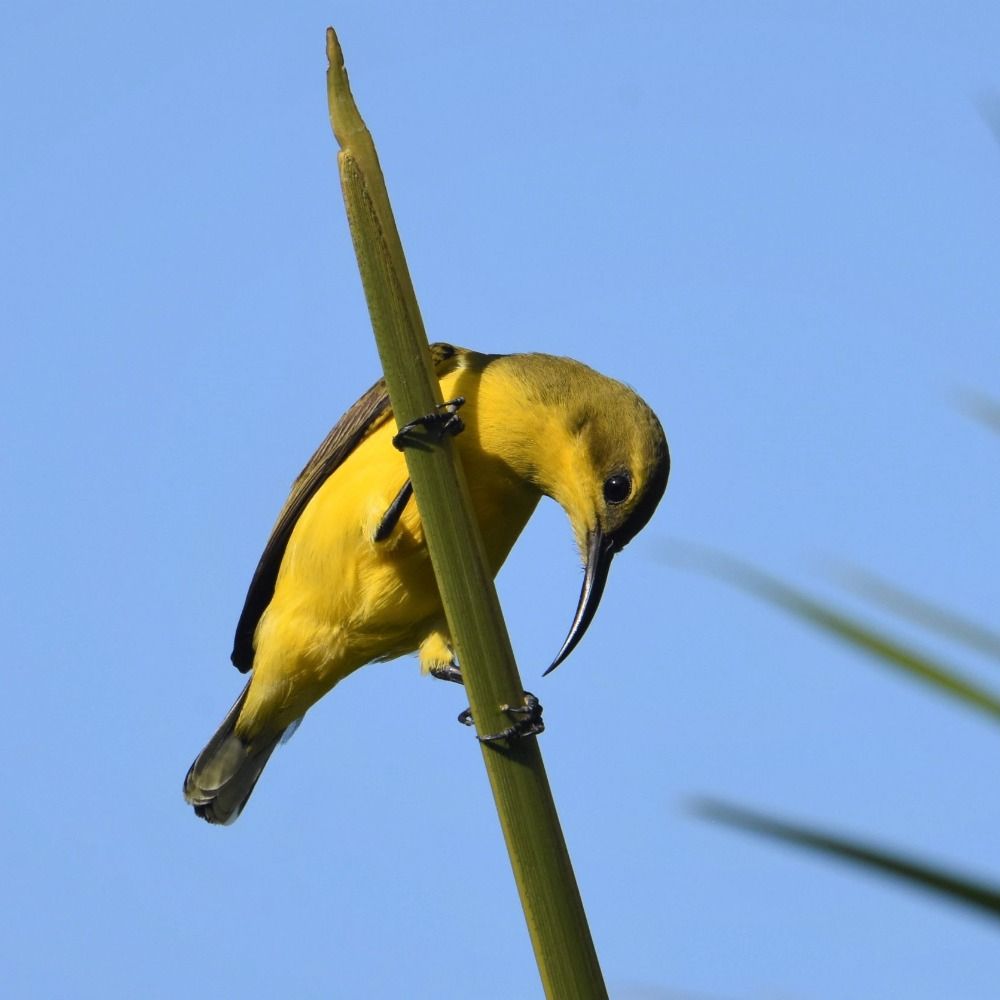
Look at the gorgeous green red grey combo on this baby gang gang - such a beautifully unexpected mix of colours
01.02.2026 09:16
👍 354
🔁 53
💬 4
📌 3


Today I had the good fortune of meeting a few beautiful firetails and until now I far not fully appreciated their fantastic snoots
30.01.2026 07:25
👍 373
🔁 66
💬 10
📌 4

Discovered on a wall in limestone hills covered with mixed-deciduous forest in northeastern Thailand, two land snails were recently described as new species.
Find out all about them here: doi.org/10.3897/zook...
28.01.2026 08:03
👍 14
🔁 3
💬 1
📌 0

Flier of information on workshop:
"A Workshop on Land Mollusca of Eastern North America with Emphasis on the Southern Blue Ridge Mountains.
26–29 May 2026, CLEMSON, SC
The course will provide a general overview of land snail and slug biology, collection, preservation, and identification. Emphasis will be placed on taxa found in the southern Blue Ridge Mountains.
The main purpose of the course is to aid in identification of specimens. Students will gain experience using keys to identify families, genera, and even some species.
The workshop will consist of lectures, laboratories, and fieldwork. Students will be shown collecting techniques and have an opportunity to collect their own macro- and microsnails during a field trip.
Instructors:
Denise Furr
Schiele Museum of Natural History
Emily Phifer
Schiele Museum of Natural History
Organized by:
Michael L. Ferro
Clemson University
Arthropod Collection
Cost: US$450 per person. Includes four (4) nights accommodation, full meals, pick up and drop off at Greenville-Spartanburg International Airport (GSP), books, and supplies.
More information:
clemsonbugs.org/workshops.html"
Clemson will be hosting a workshop on Appalachian land snail and slug identification in May, led by Denise Furr and Emily Phifer from the Schiele Museum.
More info and register here: clemsonbugs.org/workshops.html
27.01.2026 01:40
👍 13
🔁 2
💬 2
📌 1