Link to the original preprint below, hope to be able to share a heavily revised version very soon!
doi.org/10.1101/2024...
02.03.2026 13:40
👍 1
🔁 0
💬 0
📌 0

@ophirshalem
Scientist, Associate Professor, Department of Genetics, Perelman School of Medicine, University of Pennsylvania, Children’s Hospital of Philadelphia Functional genomics, Proteostasis, Neurodegeneration www.shalemlab.org
Link to the original preprint below, hope to be able to share a heavily revised version very soon!
doi.org/10.1101/2024...
As we are sending back the revised version of our pooled prime editing gene tagging paper, I am happy to share a website for design of prime tagging libraries, including some images, all generated from a single pooled transduction and in situ sequencing.
primetagging.org

Happy to announce our paper comparing embryonic gene expression between C. elegans and C. briggsae, work led by Christopher Large with Rupa Khanal and in collaboration with Junhyong Kim and Bob Waterston. www.science.org/doi/10.1126/...
Congratulation @shiraweingarten.bsky.social! Beautiful work!
Excited to to see our collaboration with @gburslem.bsky.social published today! This is part of our ongoing long term goal of achieving scalable non-disruptive and direct imaging and perturbation of the endogenous proteome

Check out our paper, now extensively revised and published in @cp-molcell.bsky.social! This has been a real tour de force led by Stephanie Sansbury and @ysereb.bsky.social and we are very excited about the findings and future potential of this approach
www.cell.com/molecular-ce...

Super excited to be launching NimbusImage.com! Cloud-based image analysis to democratize machine learning!
Documentation here!
docs.nimbusimage.com

Two new preprints online today!
One with @dremilygoldberg.bsky.social on lysine lactylation
www.biorxiv.org/content/10.1...
Another with @taabaman.bsky.social on new peptide tools to study caspases www.biorxiv.org/content/10.1...
We have a postdoc position available for a very cool collaborative project! Synthetic chemistry expertise is a must!
Unfortunately due to the funding source, this position is only available to US citizens or permanent residents.
chemistryjobs.acs.org/job/postdoct...

Pooled optical screening bootcamp!
Huge congratulations to former lab postdoc @ysereb.bsky.social for starting his own independent lab! Make sure to follow him for exciting future science and check out his lab if you are looking for opportunities in the NJ/NY area!
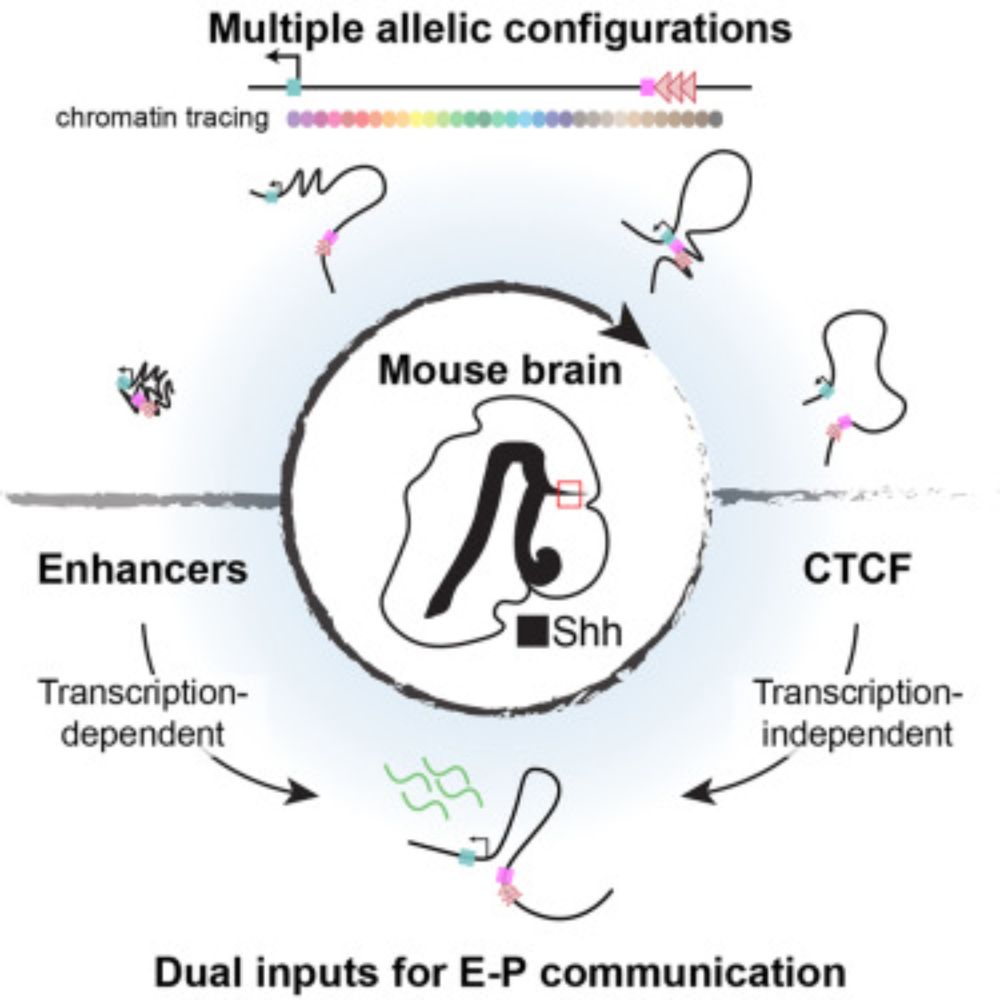
Our study with @ericjoyce.bsky.social led by Jailynn Harke is out. We show that allelic configurations at the Shh locus are predominately compact in the mouse forebrain, and that long range E-P interactions rely on transcription dependent and independent mechanisms. www.cell.com/molecular-ce...

Late-stage graduate students and junior postdoctoral fellows are invited to attend the 2025 Recruitment Summit for CHOP/Penn Postdoctoral Scholars in Cell Biology and Genomics
careers.chop.edu/us/en/event/...

New paper ALERT!! Mara Cowen, PhD discovered and defined how conserved autism-associated genes modify a 'social' behavior in C. elegans!! So proud of her work in the lab!
www.nature.com/articles/s41...
Fascinating work from Jongens and @erikaholzbaur.bsky.social labs showing that FMRP granules mark mitochondrial fission sites in axons and dendrites and serve as sites of local translation!
t.co/wXqtte3pqp

Happy Friday! New preprint to discuss, led by @ekaplan.bsky.social, entitled "Activity-based selection for enhanced base editor mutational scanning"
www.biorxiv.org/content/10.1...
A thread...
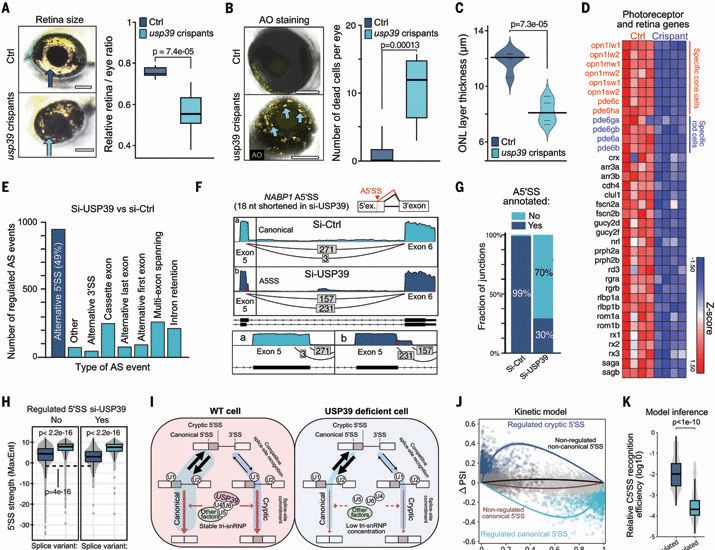
Pathogenic proteotoxicity of cryptic splicing is alleviated by ubiquitination and ER-phagy
www.science.org/doi/10.1126/...
I would guess quite a bit, WPRE is used to stabilize long non terminated transcripts. It is used in lentivirus vectors to compensate for the fact that you cannot use polII termination sequences between the LTRs as this would terminate transcription during lenti production.
Given that lack of nuclear localization can have a profound impact on editing and gene perturbation efficiency, we suggest further investigation across both cultured and in-vivo postmitotic cell models.
Addition of a neuronal specific NLS (2X MeCP2) was able to rescue neuronal nuclear localization, expression level and improve activity when sgRNAs were delivered 2 weeks after differentiation
Other CRISPR enzymes we tested (nCas9 and Zim3) where also found mostly in the cytoplasm of neurons, but were not unstable in neurons
We found two neuronal specific issues: cytoplasmic mislocalization of CRISPR enzymes after differentiation and the destabilization of the KRAB domain outside the nucleus, which was specific to dCas9-KRAB (using the KOX1 domain).
This work was spearheaded by Gregory Cajka, brilliant graduate student in the lab, and Matthew Liu, extremely talented undergrad and post-bac research tech.

Happy to share our new paper where we explore why dCas9-KRAB protein levels drop so drastically after neuronal differentiation in WTC11 and KOL2.1J iPSC lines.
www.biorxiv.org/content/10.1...