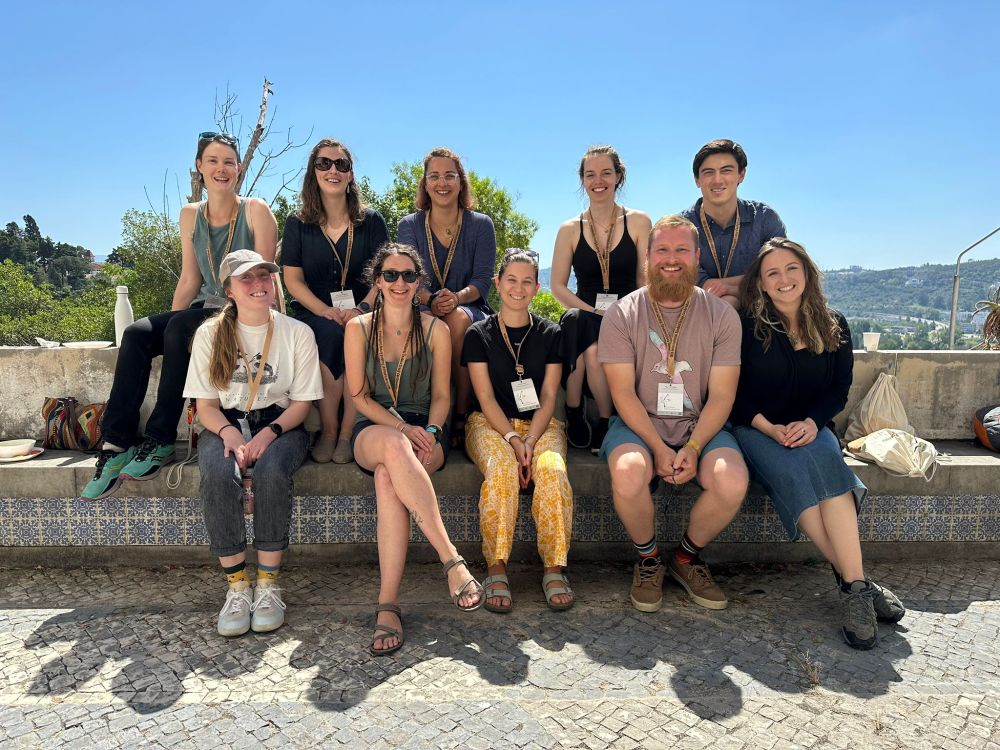
Hello! We're now on #Bluesky! PhULMaR is a PhD lab group for those around the British and Irish Isles studying birds that use the #marine #environment. Currently headed by @bardseyben.bsky.social @dianepavat.bsky.social, we meet online on the last Friday of each month. Get in touch to join!
09.07.2025 10:43
👍 35
🔁 17
💬 3
📌 4
A female Western Gull was recorded riding 150km in a garbage truck from San Francisco to a compost facility in Central CA, probably to forage. TWICE. An innovator, an icon, a genius.
This is one of my favorite @waterbirdsociety.bsky.social papers I've ever handled as managing editor #ornithology
03.06.2025 08:24
👍 3349
🔁 1132
💬 57
📌 144
Out now:
A new predictive method: Towards biologically realistic estimates of home range and spatial exposure for colonial animals. With @jasonmatth.bsky.social, @jwejeglinski.bsky.social and others.
besjournals.onlinelibrary.wiley.com/doi/10.1111/...
04.04.2025 08:28
👍 17
🔁 6
💬 1
📌 0

A dandelion flower. Half is coloured as normal (yellow) and half is coloured based on the different way it is seen in the Ultraviolet spectrum. This half has a red centre and a white ring around the edge.

An enamel pin in the shape of a flower with six petals, two leaves, and a plant pot. It is shown twice to illustrate colour change. On the left, the petals are white and it is indoors. On the right, the petals are pastel shades of the LGBTQ+ pride flag and it is outdoors in sunshine.
The science behind the #SciArt!
Lots of flowers have colours that can't be seen within the human visible spectrum. So I made a pin badge that changes colour to reveal a (visible) rainbow using the uv in sunlight! canopyrobin.etsy.com/listing/1885...
10.04.2025 07:54
👍 93
🔁 28
💬 3
📌 1
Thanks so much, Sophie ☺️ Really lovely to see you too!
09.04.2025 09:07
👍 1
🔁 0
💬 0
📌 0

Great Skua chick and egg being measured with calipers, taken by Danni Thompson.
If you haven't yet watched our recent panel discussion on #seabird careers & would like to, give us a DM & we'll send you the link 🍿
If you'd like access to events like this in the future, remember you can join the Seabird Group for only £15/ year as a student! 🕊️🎟️
Pic: @scottishseabird.bsky.social
08.04.2025 11:44
👍 21
🔁 8
💬 0
📌 0
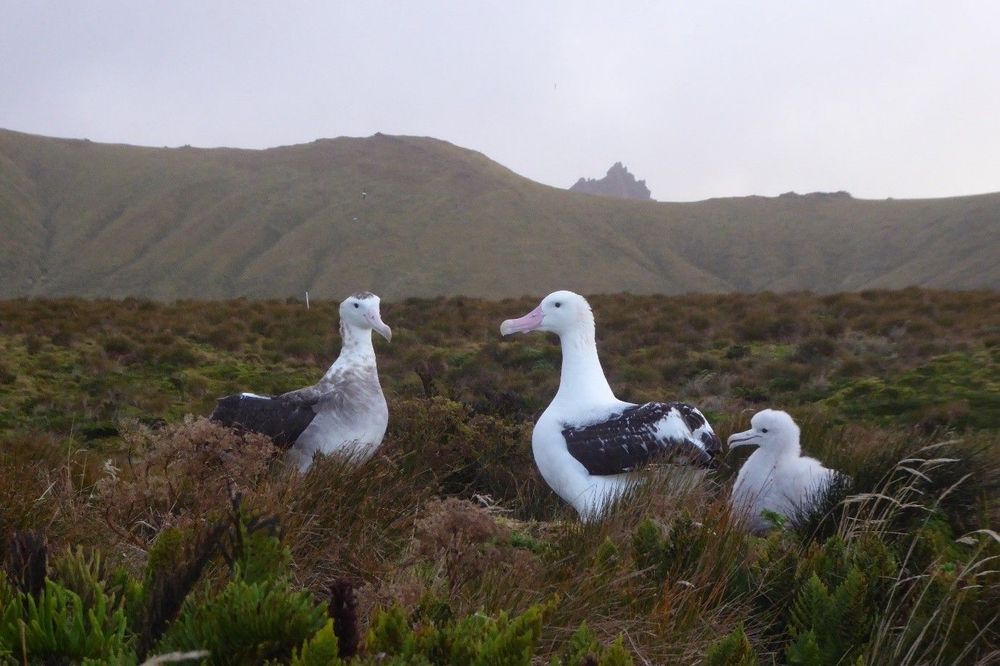
NEW BLOG in #ornithology shows why we need dedicated people on #islands to count #seabirds - we can't do it from space: buff.ly/fmntPtk The corresponding paper is here: buff.ly/0D2gi1F
07.04.2025 06:28
👍 43
🔁 10
💬 0
📌 0
What a great few days at #BOU2025. Loads of interesting & inclusive science, & a really supportive & friendly bunch of people. A great place to give the first talk of my PhD on #FalklandsShags & delighted to have been highly commended for my Bluesky thread 👇🏼
📸: @vulturecat.bsky.social
07.04.2025 11:53
👍 30
🔁 3
💬 1
📌 1
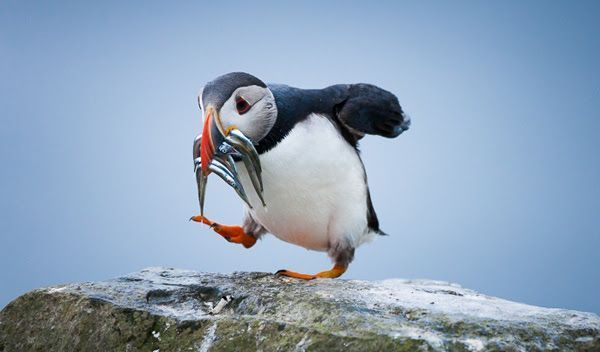
NEW JOB in #ornithology to study the diet of #seabirds in Norway: buff.ly/vOjoAfc . Application deadline 7 April 2025.
05.04.2025 07:33
👍 59
🔁 36
💬 0
📌 0
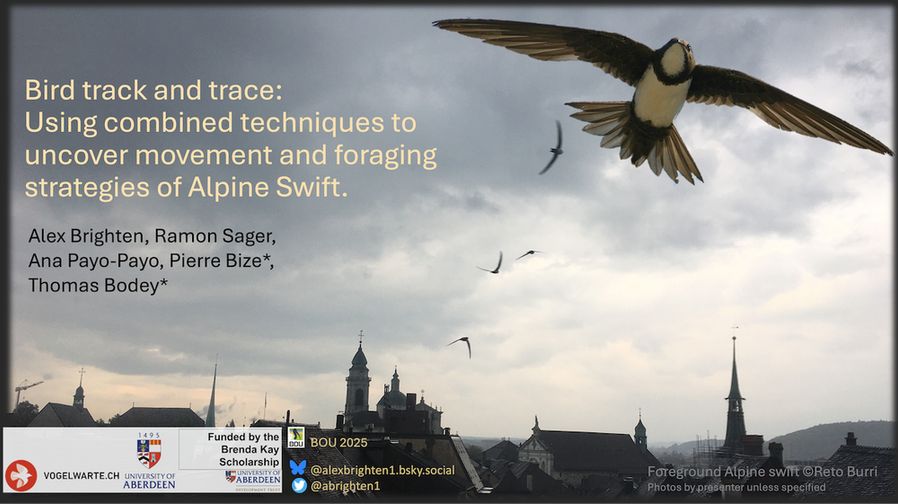
Presentation title slide showing Alpine swift in the foreground (photo credit: Reto Burri) and the Swiss town of Solothurn in the background with weather imminent.
Uncovering Alpine swift foraging behaviour using GPS tracking & DNA metabarcoding! For the first time we describe Alpine swift foraging movements and what factors impact foraging trips, short-term range area size, & the prey diversity fed to nestlings #BOU2025 #ornithology 1/7
03.04.2025 11:15
👍 66
🔁 19
💬 2
📌 3
Please please please fill this out 🙏 we are trying to understand people’s perspectives of hosting scientific conferences on Bluesky 🦋 and everyone’s viewpoint is super helpful
#BOU2025 #ornithology 🪶
Please share with your networks / feeds
04.04.2025 08:09
👍 8
🔁 7
💬 0
📌 0

7/7 Huge thanks to @thomasbodey.bsky.social @bescott-abdn.bsky.social Ana Payo-Payo, Al Baylis, @raorben.bsky.social Amandine Gamble, @isotopesuk.bsky.social @ronamcgill10.bsky.social @jasonisotopes.bsky.social @quadratdtp.bsky.social @saerifi.bksy.social @uniofaberdeen.bsky.social
03.04.2025 10:45
👍 11
🔁 1
💬 0
📌 0

6/7 Key takeaway: it’s important to remember that all populations are made up of unique individuals & this ultimately affects the results & conclusions of our research; we especially need to consider this when making inferences from studies at the population or even species level.
03.04.2025 10:45
👍 11
🔁 0
💬 1
📌 0

5/7 Repeatability is really useful for comparing populations & addressing wider Qs, & indeed, we found specialists within our generalist spp. But only when considering multiple traits at the individual level can we start to identify nuance in variation, even for colonies with little repeatability.
03.04.2025 10:45
👍 9
🔁 0
💬 1
📌 0

4/7 Using Kvalseth’s Coefficient of Variation to study individual repeatability, we found evidence of repeatability & variation among individuals & traits at all colonies.
If only studying one colony/trait we'd reach different conclusions about how repeatable individuals are within a population.
03.04.2025 10:45
👍 8
🔁 0
💬 1
📌 0

3/7 We deployed GPS & TDR tags to explore foraging behaviour & collected feather & blood samples to explore diet through stable isotope analysis (d13C & d15N).
We extracted metrics & analysed repeatability using rptR, finding differences in repeatability both among & within colonies.
03.04.2025 10:45
👍 11
🔁 0
💬 1
📌 0

2/7 By studying breeding #FalklandsShags at several colonies we asked: Are specialist birds consistently specialist across a range of traits such as diet & foraging behaviour, or does it simply depend on the trait being studied?
03.04.2025 10:45
👍 10
🔁 0
💬 1
📌 0

1/7 Variation between individuals is important as it determines how adaptable to change a population might be. Even generalist spp are often comprised of specialist individuals, but specialisation is often only studied across single traits which is limiting.
#BOU2025 #ornithology #seabirds #ecology
03.04.2025 10:45
👍 82
🔁 29
💬 1
📌 2
Really great first day & a half at #BOU2025. Lots of interesting & superbly presented science so far - looking forward to hearing more tomorrow & sharing some of my own work on #FalklandsShags.
02.04.2025 17:26
👍 13
🔁 0
💬 0
📌 0

Picture of a lapwing chick with a small radiotag attached to the back. Map of mainland Orkney above showing the location of study sites, which are in various areas across the island.
1/6
🔍Investigating drivers of wader chick survival on Orkney
Lapwing chicks face high mortality—our radiotracking study in 2024 explored survival rates, habitat effects & predation risks. What did we find? 🧵#BOU2025 #ornithology
02.04.2025 12:45
👍 32
🔁 16
💬 1
📌 1
Rose-ringed parakeet hanging around Larbert Loch nr Falkirk this week. Never seen one in the area before. #BirdingScotland
06.03.2025 17:28
👍 5
🔁 1
💬 0
📌 0

European data on animals aloft now publicly available
Weather radars detect more than weather, they also continuously register the movements of billions of animals (birds, bats, insects) in the air. Those data are now publicly available for large parts o...
Weather radars continuously register the movements of billions of animals in the air! We have now published datasets covering large parts of Europe, providing an overview of the aerial habitat in a way no other method can.
Data is available on Alofdata.eu , see our blogpost:
go.nature.com/3F0wQ0L
05.03.2025 09:47
👍 122
🔁 61
💬 2
📌 3
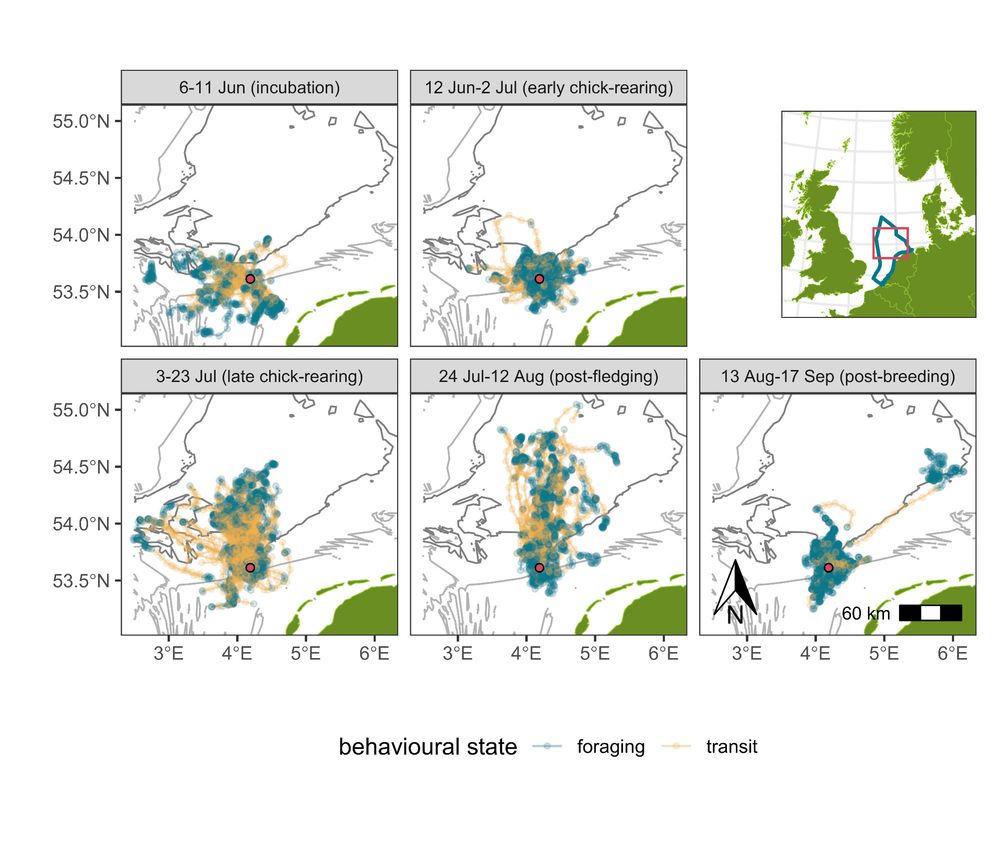
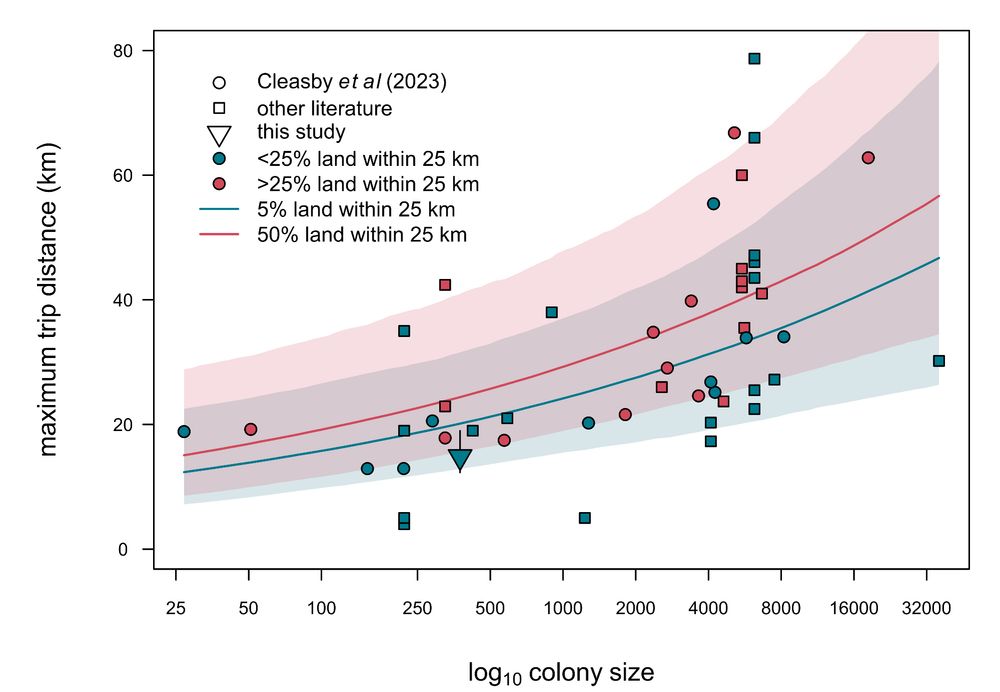
New #OA paper in the #seabird journal (@theseabirdgroup.bsky.social)! We GPS-tracked Black-legged #Kittiwakes breeding on an offshore platform in the Dutch sector of the North Sea. In short, we show that they have a short foraging range compared to coastal... 1/6
www.seabirdgroup.org.uk/seabird-37
05.03.2025 10:29
👍 27
🔁 20
💬 1
📌 1

New tools support LGBTQ+ inclusive fieldwork
A guide to planning safe, inclusive and equitable fieldwork for LGBTQ+ people has been launched by a research team.
Fieldwork is not always safe, inclusive or equitable for LGBTQ+ people – but they are not alone.
Researchers in the Faculty of Environment have created a toolkit to support fieldworkers to make sure they plan with and for LGBTQ+ colleagues.
environment.leeds.ac.uk/news/article...
05.03.2025 09:00
👍 29
🔁 24
💬 1
📌 1
Wonderful photos! Quite likely one of Amandine Gamble's (Cornell Uni - doesn't seem to be on here yet) from the Falklands Wildlife Health Project
03.03.2025 12:00
👍 0
🔁 0
💬 1
📌 0

A reminder that the deadline for our Research Grants is the 28th of February - this Friday! 🕊️
Get your applications in this week if you haven’t done so, via seabirdgroup.org.uk/grants.
24.02.2025 14:52
👍 25
🔁 16
💬 1
📌 0


