
Happy Halloween! 🎃 Don’t forget, do NOT shut down your copy of Windows Frighty-8 tonight… 👀🔪🩸🧟♂️👻
31.10.2025 18:34
👍 49
🔁 8
💬 2
📌 0
Happy Halloween! 🎃 Don’t forget, do NOT shut down your copy of Windows Frighty-8 tonight… 👀🔪🩸🧟♂️👻
Sorry - still got a lot going on atm with life. 😩

Skype is a telecommunication app acquired by Microsoft in 2011. Integrated in Windows from Windows 8 (2012) to 10 (2015), in 2013, it replaced Windows Live Messenger (formerly MSN Messenger). In February 2025, Microsoft announced Skype would be shutting down & replaced by Teams.

Jade was a visual style introduced in Windows Vista build 4066, from February 2004. Like the earlier Plex & Slate styles, it was a placeholder for Vista’s (2006) final style, Aero. While Plex & Slate were similar to Windows XP’s (2001) Luna style, Jade is much closer to Aero. ✨

ClearView was a tabbed UI designed to replace the Program Manager from Windows 3.1 (1992). Tested in early builds of Windows 95 (1995), it was designed by Daniel Oran. In response to user testing, it was eventually replaced by the Start Menu & Taskbar (also designed by Daniel).

Happy New Year! 🥳 I entered 2024 being emotionally, financially & physically abused by my then-partner. I’m entering 2025 with new love & hope. I’m sharing this for anyone who may be in a similar situation to know that there is light at the end of the tunnel. Keep going. 💪

Windows 95 build 90c is an early build of Windows 95 compiled on 29th March 1994. This build has the Start menu & taskbar at the top of the screen by default (a design that debuted earlier that month in build 89e) & refers to itself as Windows 94 (the only build known to do so).


The Windows 10 Fall Creators Update, from October 2017, debuted Microsoft’s Fluent Design language & support for the ARM64 architecture. It was the last Windows 10 (2015) update not to be named after its time of release & would become the final release of Windows 10 Mobile. 📲🪦

Windows 1 Development Release 5 is the earliest available build of Windows, compiled in October 1984. It was part of the so-called Development Release series, intended to help developers design apps for Windows 1 (1985). It includes a selection of sample apps for this purpose.
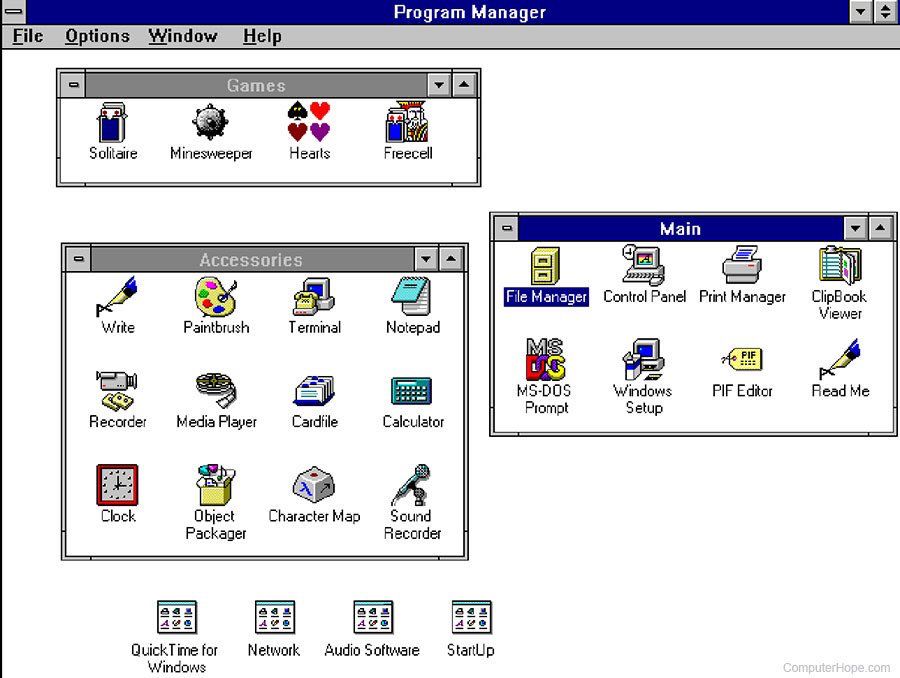
Windows 3 (1990) debuted Program Manager: a new shell that catalogued installed apps. It replaced the text-only MS-DOS Executive from Windows 1-2 (1985-7). For the first time, apps were represented by icons even when not running. They could also be grouped to aid organisation. 🧹

The Windows 2 April 1987 Build is the earliest known build of Windows 2 (1987). Still using Windows 1’s (1985) colour scheme, it showcases 2’s new window controls & full support for overlapping windows. This replaced the tiled windows in Windows 1 that users had found confusing.


Windows 3 build 33, from 27th July 1989, is the last known build of Windows to use its original shell - the MS-DOS Executive. This would be replaced by the new Program Manager in time for 3’s final release. This build’s boot screen displays the message “We Believe in Magic!”. 🪄

In July 1996, Microsoft was sued by Caldera, who owned a competitor to their MS-DOS operating system, called DR-DOS. They claimed the fact Windows 95 (1995) could only run on top of MS-DOS was anti-competitive & illegal. In January 2000, Microsoft settled out of court for $280m.

Running Windows XP’s (2001) Logon screensaver in the Home Premium edition of Windows Vista gives this curious result: the OS is referred to as “Windows XP Freestyle”. Freestyle was the codename for Windows XP Media Centre Edition (2002), which this seems to be a holdover from. 👀

User account pictures are images that represent users within Windows. Officially introduced in Windows XP (2001), they actually first appeared in Windows Codename Neptune - a cancelled version of Windows that Microsoft worked on in the late 1990s. What’s your go-to user pic? 🤳

Following Windows NT 4’s release in 1996, Microsoft focused work on its successor: Windows NT 5. In 1998, Microsoft announced NT 5’s final name would be Windows 2000, “reflecting our customers’ choice of NT as the mainstream OS”. But many alternative names were also considered.

Windows 8 (2012) introduced accent colours - colour schemes that could be applied to its new, touch-optimised UI, such as the Start screen. Starting with Windows 10 (2015), the accent colours were also applied to the desktop. This remains the case in Windows 11 (2021). 🎨🖌️

Microsoft has accidentally released several Windows development builds over the years, mainly via the Windows Insider Program. A notable e.g. is Windows 10 build 18947, that went to the Fast Ring on 24th July 2019 & featured an early version of Windows 11’s (2021) new Start menu.


Microsoft refers to Windows releases by codenames during development, before their final name is decided. Famous examples are Windows Codename Chicago (Windows 95, 1995), Codename Neptune (scrapped, late 90s) & Codename Longhorn (Vista, 2006). What’s your fav Windows codename? 🤓

Windows 1 (1985) included an analogue clock app to show users the time. Simply called Clock, a digital mode was added in Windows 3 (1990). In Windows 95 (1995), its function was absorbed into the Notification Area in the new Taskbar. It last appeared in Windows NT 4 (1996). ⏰

Service Packs were collections of updates, fixes & enhancements released for various Windows versions, starting with Windows NT 3.1 Service Pack 1 (1993). Windows 7 Service Pack 1 (2011) is the last Service Pack, with Microsoft now prioritising regular updates via Windows Update.

Outlook Express was an email app included with Windows starting with Windows 98 (1998). It was based on the earlier Internet Mail app included with Internet Explorer 3 (1996). Last seen in alpha builds of Windows Vista (2006), it was replaced by Windows Mail in the final release.


Windows 95 (1995) introduced a brand new Windows user interface, centred around the new Start menu & Taskbar. For users who preferred the older Program Manager UI seen in Windows 3 (1990) & Windows 3.1 (1992), an option was included during 95’s setup to switch back to it. 👍


During the development of Windows Vista (2006), creative director Jenny Lam sent amateur photographer Hamad Darwish on a commissioned photoshoot in Oregon, USA. He took 6000 shots, eventually submitting 15 for potential use in Vista. Two made it: Lost Sensations & Destinations.

Windows 3 build 14, from early 1989, is the 1st known prerelease build of Windows to display a watermark in the bottom right corner of the desktop. This now-familiar feature was removed within a year & didn’t reappear (minus debug builds) until build 1351 of Windows 98 in 1996.

My TV & Movies is a cancelled app meant for watching & recording TV. It was present in the Media Centre Edition variants of some Windows Vista (2006) - a.k.a. Codename Longhorn - development builds, between build 3706 (29th October 2002) & build 4029 (29th June 2003). 📺🔴

Royale Noir is a cancelled dark variant of Windows XP Media Center’s visual style, Royale. Leaked online in October 2006, it is notably incomplete, with unusually dark inactive titlebars, plus the Start button graphics for hover & clicked states unchanged from regular Royale.◼️🖌


Windows Home Server (2007) was a version of Windows designed for use on so-called “stay-at-home” servers, touted as a home backup solution for consumers. A children's book - “Mommy, Why Is There A Server In The House?” - was released to promote the operating system. 📖

Before the Start menu & Taskbar, the Windows 95 team tested this UI. They found users had trouble deciding what each button on the “Taskbar” (at this point, called the Tray) did. E.g. to search Help, do you go to Find or Help? 😵💫 Did they make the right call scrapping this? 👀
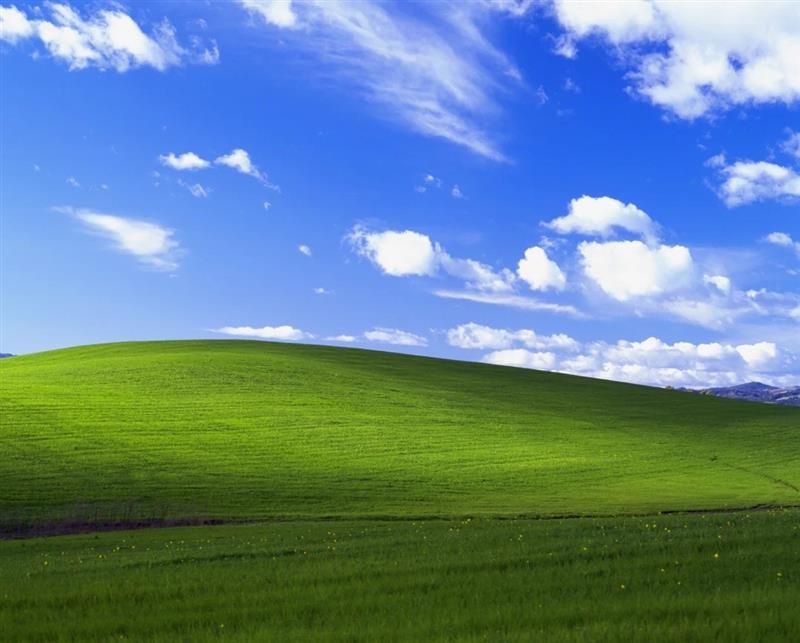
Originally the default wallpaper of Microsoft's Windows XP, this photo shows green rolling hills with a vibrant blue sky and white clouds in the background. Charles O'Rear took the photo in California, USA.
We've always been a fan of blueskies.