
24. Send encouraging emails at the end of the semester to relevant students.
25. Smile (see principle #2).
08.02.2026 18:17
👍 0
🔁 0
💬 0
📌 0
24. Send encouraging emails at the end of the semester to relevant students.
25. Smile (see principle #2).
21. Sitting in on colleagues’ lectures for the same course is useful.
22. Teaching dialectically and showing the history of thought is useful.
23. Get student buy-in on the electronics policy.
17. Ensuring students get reps in is important.
18. Cold calling is useful.
19. Connecting to current events is useful.
20. Teaching centered on questions may be useful.
14. “See the other side”: help students understand the perspective of other students.
15. Considering extreme cases is usefully clarifying.
16. Rapid feedback is important.
12. Teaching facts and encouraging memorization of facts is underrated.
13. Simple, decisive empirical moments are both more memorable and plausibly more important evidence than fancy complicated evidence.
9. It’s okay or may even be good if learning feels painful.
10. Repetition is important.
11. Consistency is important, e.g. in notation and terminology.
7. Each and every theory must be presented back by empirical evidence, not passed down as wisdom of the ancients.
8. Inoculation is an important part of the job: against appealing-but-wrong ways of thinking; and against popular-but-wrong “facts”/memes.
4. Teaching is hard because of the curse of knowledge.
5. Teach in multiple ways.
6. Keep it simple – but that doesn’t mean easy: teach fewer things but teach them more deeply.

Some teaching principles: #econsky
basilhalperin.com/essays/teach...
0. Have extreme empathy.
1. Grading should be predictable.
2. Enthusiasm matters! Show that you care – channel your enjoyment!
3. Actively solicit feedback.
...

Bonus: thoughts on math
You can also subscribe here 🤠 basilhalperin.substack.com/p/some-princ...


...and the principles

Some excerpts, starting with goals...

New post: Some principles for teaching
basilhalperin.com/essays/teach...

For more, check out the website: stripe.events/fellowship
We invite graduate students and early-career researchers who are interested in studying the economics of AI to apply – ***regardless of prior experience working on the topic*** #econsky
I very much wish to thank Patrick Collison, Emily Glassberg Sands, and the team at Stripe for their generous support of this initiative – I am honored to be a part of it
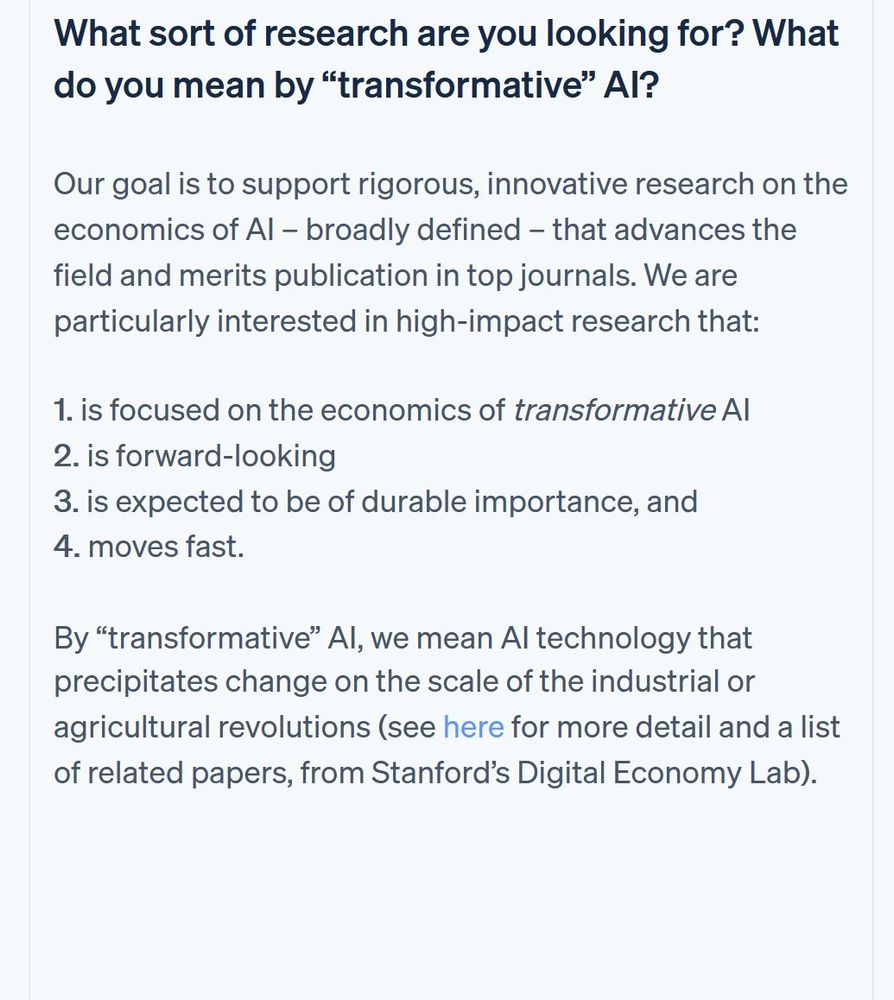
We welcome researchers interested in any aspect of the economics of AI, broadly defined. We are particularly interested in research that:
1. is focused on the economics of *transformative* AI
2. is forward-looking
3. is expected to be of durable importance, and
4. moves fast :)
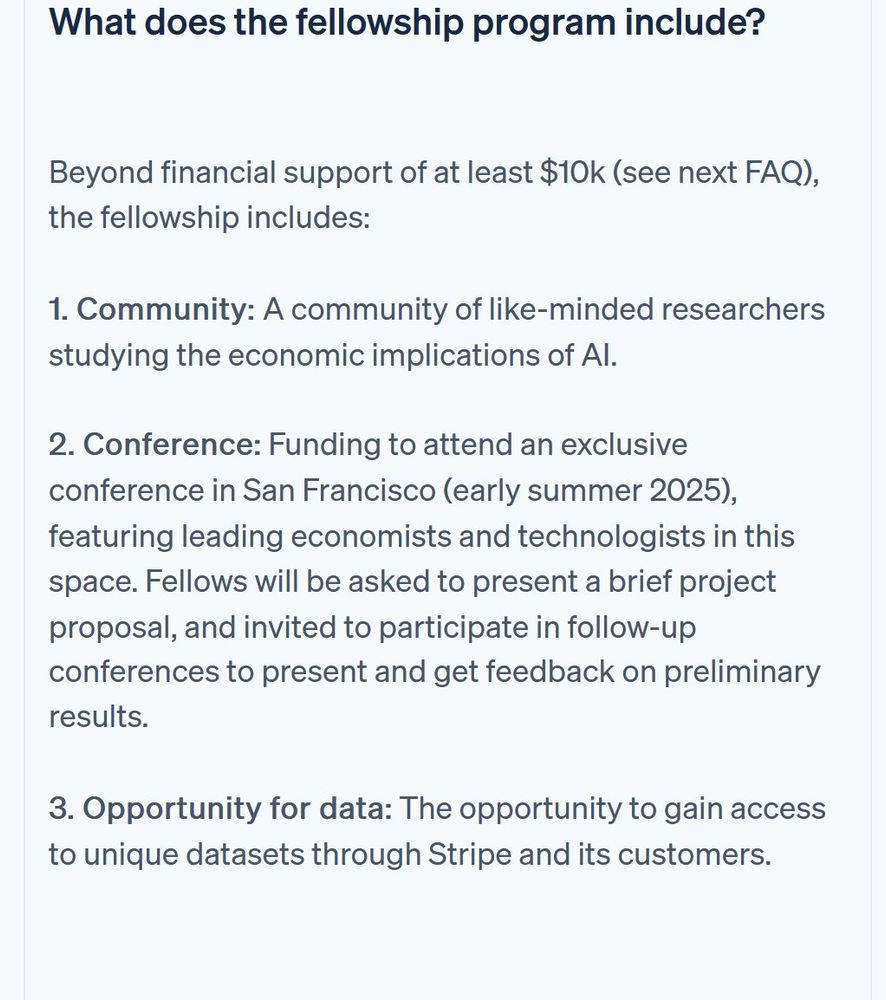
What you’ll get:
– $10k, and you should ask for more if you have a reason
– a conference in SF in a few months with senior economists and AI developers
– opportunity to access Stripe data and/or work with its customers
– a community of fellow nerds

Introducing the Stripe Economics of AI Fellowship:
The economics of AI remains surprisingly understudied. The fellowship aims to help fill that gap, by supporting grad students and early-career researchers with $, data, a conference, and community –

In the latest episode of our podcast, Justified Posteriors, we discuss whether interest rates should rise in anticipation of AGI (as predicted by @basilhalperin.com). Our priors are quite different! Do check it out.
empiricrafting.substack.com/p/if-the-rob...
(thanks for these great posts!)

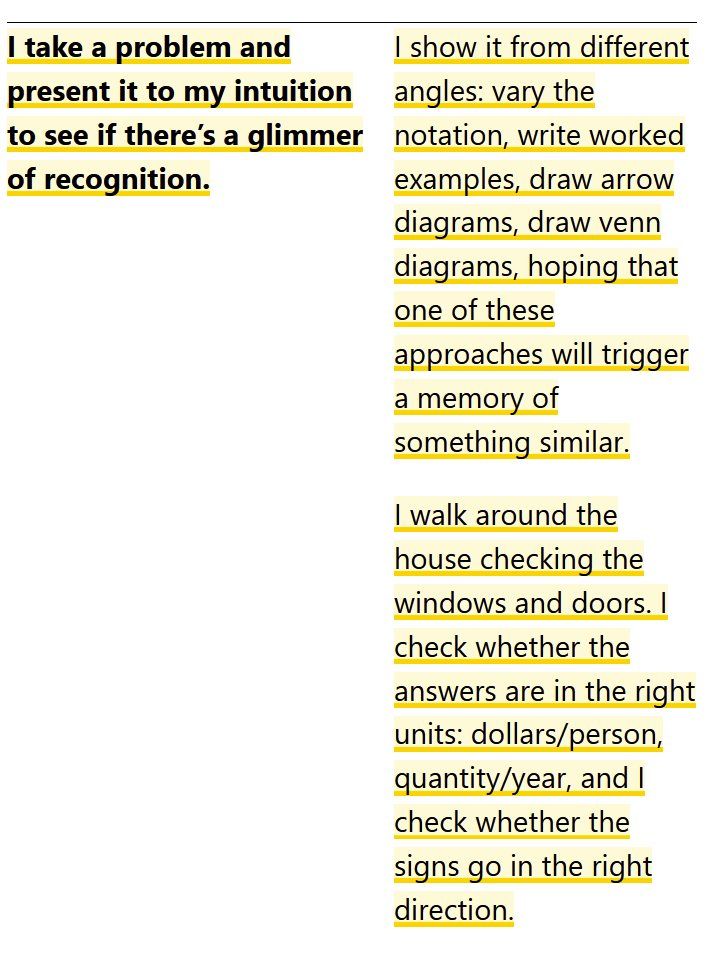
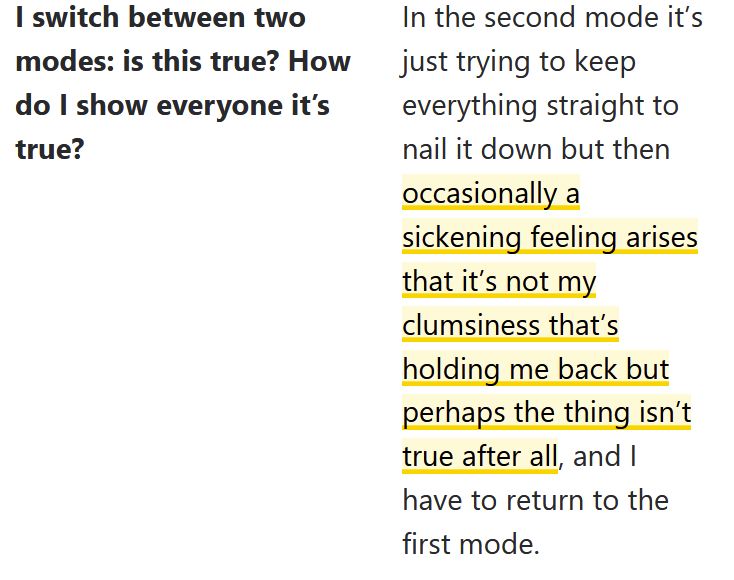

Anyway Tom’s post is very poetic and deeply resonant personally with my own experience pushing Greek letters around, check it out
“When I’m trying to concentrate on something my weasel thinks of something I could order on Amazon.”
During the worst periods of modeling ( = early in a project) I have to block everything – not just the news or the blogs or the obvious stuff, but Amazon, Instacart, Wikipedia...
“On a good day it’s like swimming in cold water. I don’t want to get in but once I’m in I don’t want to get out.”
“If it’s writing or programming I can just bring up a window and type away. If it’s deriving things then my mind is constantly drifting”
[more I would say about this^ offline]
Tom relatedly talks about a jungle metaphor: “When you’re programming you get incremental feedback: you can see the mountain peak and you’re slowly getting closer to it. With proofs you’re going through the jungle and you don’t know if you’re getting closer or farther away...”
You might be trying to explore an infinite, pitch black space of zero value…
…or the light switch might be 1 foot in front of your face.
It’s so hard to tell! The cold uncaring uncertainty is what drives you [rather, me] mad
- …or maybe you even find a wall, but you feel and feel over the wall, you haven't found a light switch yet, you don't know if you should keep searching here or go try to find another wall
- …or there may be no walls, no light switches in ANY direction!