Hi,
The full program is here;
docs.google.com/document/d/1...
13.09.2025 02:28
👍 1
🔁 0
💬 0
📌 0
Hi,
The full program is here;
docs.google.com/document/d/1...
The CJE special issue in honour of James is accepting submissions until December 1st,
see more details here:
drive.google.com/file/d/1GJRm...
Looking forward to Celebrating @James MacKinnon next week in Kingston.
Friday, September 12th is the last day to register, you can do that here:
events.fin.queensu.ca/cgi/registra...
The program is available here:
docs.google.com/document/d/1...
Hope to see you there. 1/2
The conference has a deadline of July 15th. For more information see the conference website: www.econ.queensu.ca/about/events... 3/3
The special issue is edited by Steve Lehrer, Morten Nielsen, and myself, with a submission deadline of December 1st. For more information, see the call for papers: drive.google.com/file/d/1GJRm... 2/3

Excited to be a part of a special issue of the Canadian Journal of Economics in honour of James MacKinnon, this complements the conference being held in Kingston on September 18-19. Please consider submitting your papers to both the conference and the special issue. 1/3
Or get a fancy printer.
youtu.be/D4dwETeyMrQ?...

Excited to open the call for papers for the 40th Canadian Econometric Study Group (CESG) conference. The conference will be in Ottawa from October 17 to October 19, this year's theme is `Credible Econometrics'. For more details, see caneconometrics.ca/annualMeetin...
#econtwitter #cdnecon
boottest is now also much faster for calculating the WRE thanks to both partialling out exogenous controls, before the bootstrap, and from reducing the total number of calculations by first calculating groupwise inner products similar to doi.org/10.1016/j.ec... . 4/4
boottest is normally quite fast. When there are many clusters, it can be a bit slow. David Roodman added a #JuliaLang option ",julia" which can 10x speed. See arxiv.org/pdf/2404.09309 for more about interfacing Stata with Julia. 3/4
The standard wild cluster bootstrap is usually quite reliable.
onlinelibrary.wiley.com/doi/full/10.... introduces WCR-S, which improves reliability with heterogenous clusters. This can be invoked using the ", jackknife" option. 2/4
I'm thrilled that our boottest article recently surpassed 1000 citations. This is beyond what we ever expected. To celebrate, I’ll highlight two new features added since the article was published. The first concerns speed, the second reliability. #econTwitter 1/4
TFW you threaten to fire the Governor of the Bank of Canada and a former Governor takes your job.
For sure.
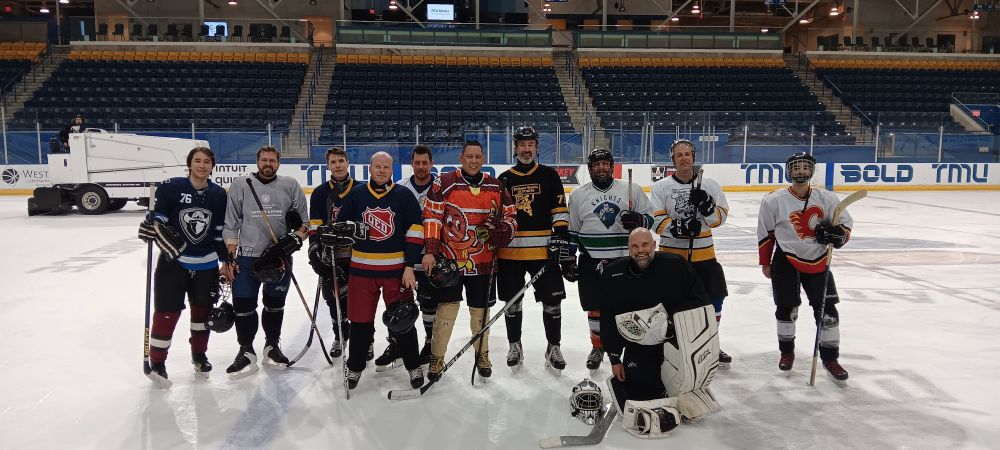
Are you going to the CEA 2025 conference in Montreal? Do you play hockey? Lanny Zrill and I are organizing the second annual ice hockey game.
The game takes place on Thursday, May 29th from 17h00-17h50.
To join us please email ceahockey@gmail.com for more details. #cdnecon #econtwitter
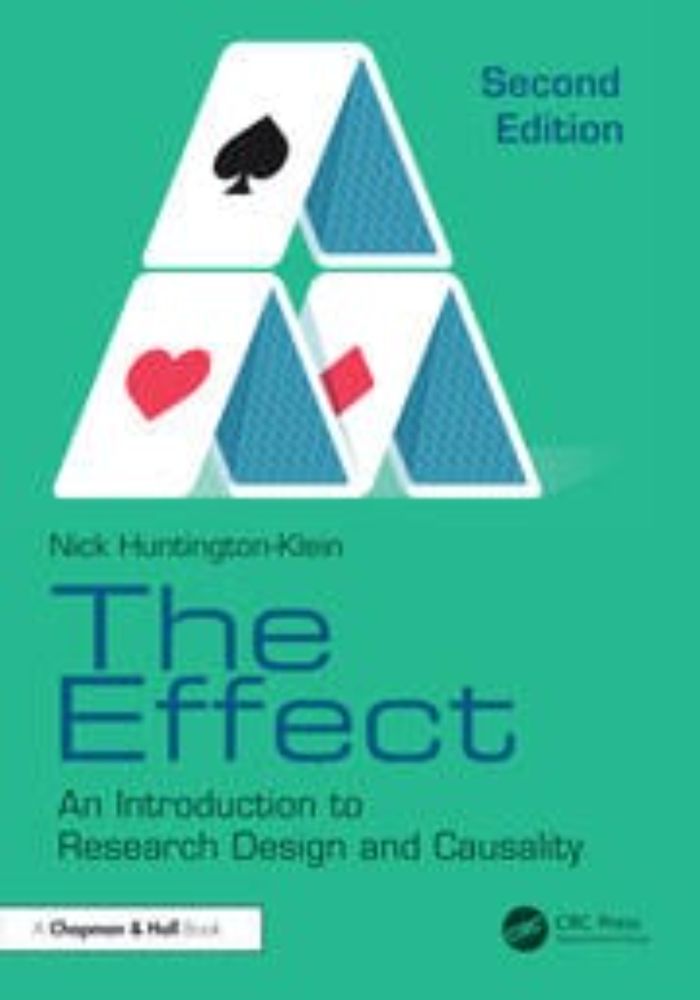
The second edition of The Effect is now available for preorder! This version has a whole new chapter on Partial Identification, a considerable update on staggered treatment and control variables in DID, and zillions of other little updates throughout. www.routledge.com/The-Effect-A...

Skated to work today for the first time since the pandemic.
That said, the four U Sports divisions seems like a good middle ground between 1 and 10/13.
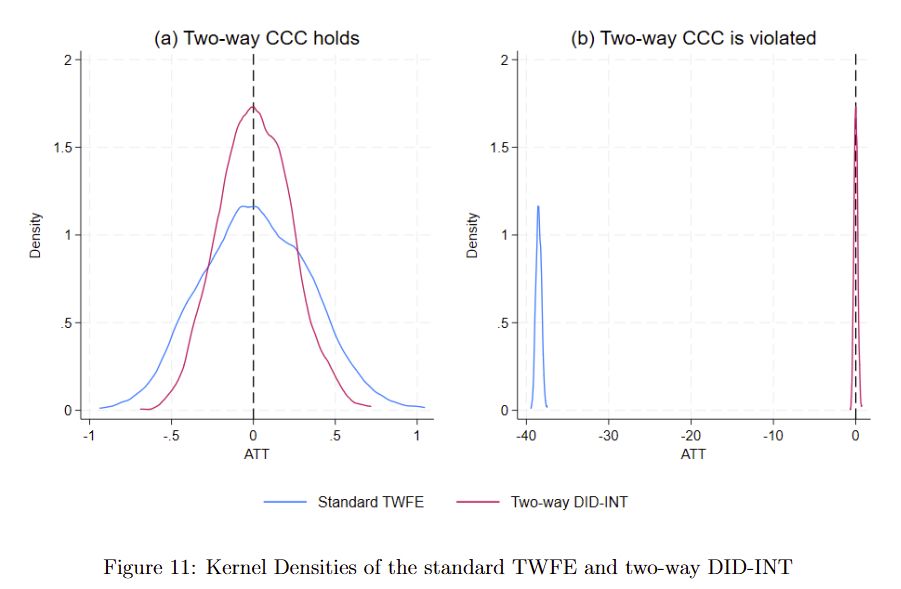
Our Monte Carlo simulations confirm the theoretical results: Standard TWFE, CS-DID, and FLEX, are biased when the two-way CCC is violated, while our DID-INT estimator is unbiased. Any comments are greatly appreciated. 5/5
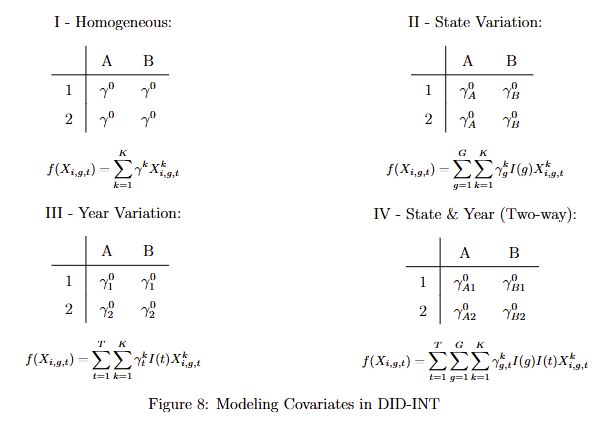
We define three types of CCC assumptions: state-invariant, time-invariant, and two-way CCC. Time-varying covariates are OK as long as we account for the specific CCC violations. We need to adapt the estimator to match the way that the covariates enter the DGP. 4/5
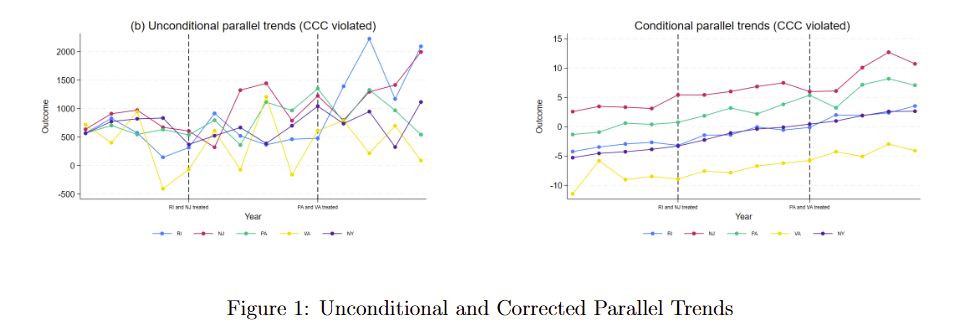
We introduce a new estimator: (Two-Way) Intersection Difference-in-Differences (DID-INT), which provides unbiased estimates of the ATT even when CCC is violated. This approach can reveal parallel trends that are otherwise hidden. 3/5
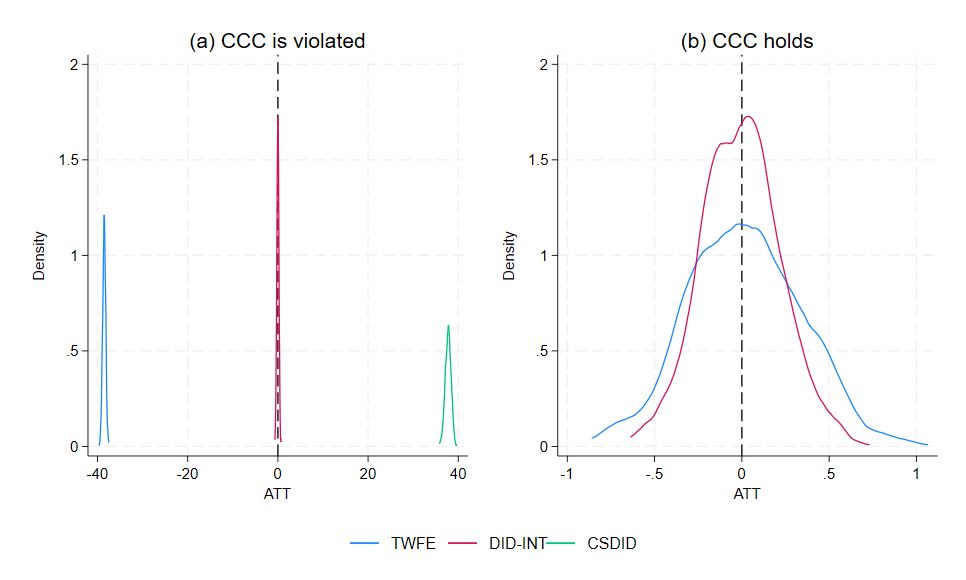
Existing DiD methods often assume that covariate effects are constant across groups and time, which we term the two-way CCC assumption. We show that when this assumption fails, both conventional TWFE and CS-DID estimators can be biased. 2/5

Excited to share my latest work with @sunnykarimcu.bsky.social on Difference-in-Differences with time-varying covariates. We introduce the common causal covariates (CCC) assumption and show how its violation biases DiD estimators. Check it out! arxiv.org/abs/2412.14447 1/5
This paper uses new data on the spatial distribution of firearms and firearm owners in Canada. We hope it is informative for firearms regulation in Canada and elsewhere. Any comments are greatly appreciated as we hope to submit it for publication soon. 3/3
Finding little relationship between legal gun density and crime is in the context of the existing firearms regulations. Legal owners need to go through in person training, pass tests, provide references, and can have licenses revoked due to crimes or safety concerns. 2/
The Canadian government recently expanded the list of banned firearms. Do municipalities with more licensed firearm owners, or registered firearms, experience more firearm deaths or crimes? Essentially, no. See our recent paper here: github.com/mattdwebb/CD... #cdnpoli 1/
Sorry you can't make it, was looki forward to seeing you. Thanks for organizing a bunch of sessions.
Welcome to all my new followers. I suspect many of you will be underwhelmed by my irregular posts about hypothesis testing and causal inference.
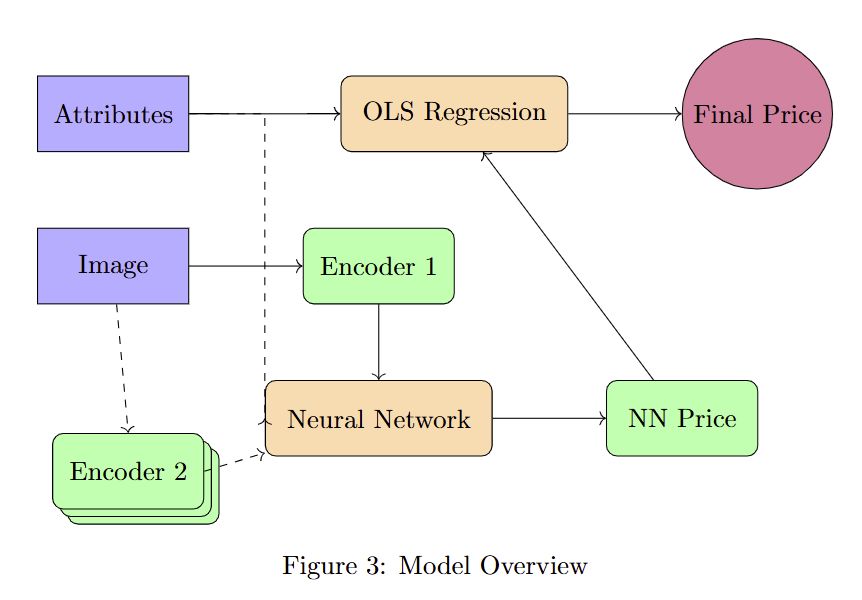
Creating diagrams in tikz, with either text based or photo
based prompts.