Broke: I-5
Woke: Lid I-5
Woke 2: Depave I-5 and fill with a linear park and tens of thousands of housing units
05.03.2026 21:24
👍 236
🔁 21
💬 6
📌 2
Broke: I-5
Woke: Lid I-5
Woke 2: Depave I-5 and fill with a linear park and tens of thousands of housing units

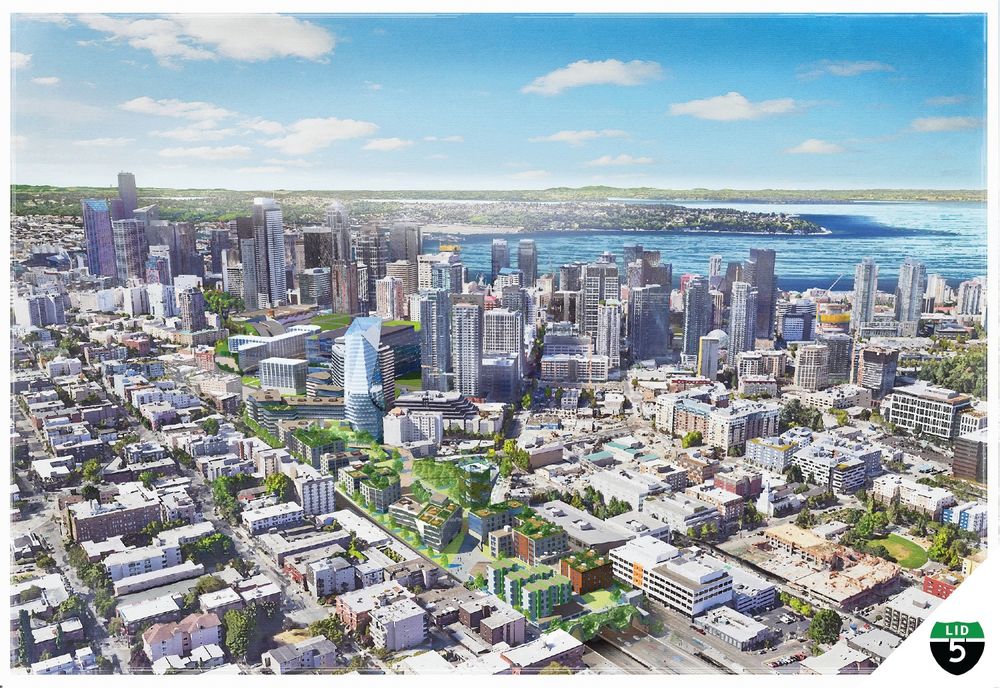
WSDOT finally has a plan to tackle the highway ramps that swirl around Seattle's next light rail station, a concept that includes the demolition of an off-ramp that mars a Seattle city park.
But transportation advocates are pushing the state to think bolder.
www.theurbanist.org/2026/03/04/w...

Screenshot from Wikipedia with a photo of Katie Wilson under the heading “Mayor of Seattle.” Below the photo is text reading Incumbent Katie Wilson since January 1, 2026.
Good morning to everyone, but especially to Mayor Katie Wilson.

Whether you've donated, attended our events, or written to an elected official, you've helped power this movement forward and gotten us closer to lidding I-5 and a stronger Seattle. Thank you.

Want to take a small step forward today? An easy step is to donate whatever is meaningful to you. lidi5.org/donate/
Today only one of those councilmembers is still in office, and we're on the sixth mayor. This work takes patience and perseverance through election cycles, economic dips, and social crises. we couldn't do this work without the enthusiasm and backing of our community of supporters.
December marked a decade of sustained advocacy, research, design innovation, and community leadership behind Lid I-5. Ten years ago the Lid I-5 campaign kicked off with a presentation at Seattle City Hall. The core reasons and motivations for our work are the same today as a decade ago.
Welcome, mayor-elect Wilson, we look forward to working with you.
www.wilsonforseattle.com/ecdev
Welcome, mayor-elect Wilson, we look forward to working with you.
www.wilsonforseattle.com/ecdev
Mostly agree. We're baked into suburban sprawl and we don't have enough transit service to meet demand and need in the Puget Sound. We are watching the NYC congestion pricing metrics with interest. Seattle has about 60% the congestion of NYC, however Inrix measures that.
We're not sure.


Lots of love for lidding I-5 in Seattle (or just getting rid of it?) at the "Life After Cars" book event at Town Hall with @brooklynspoke.bsky.social @sgoodyear.bsky.social @nerd4cities.bsky.social. Get the book and join our fight at www.lidi5.org.
If you want more democracy, you need fewer cars.
Check out our live thread from Monday night's event on Seattle's relationship with freeways, by @kuow.org and @wgbh.org.

That's a wrap! Great event by @kuow.org and @wgbh.org, hosted by @spl.org.
Closing question from Coss. What do you imagine for South Park in 25 years? Panelists say kids are getting to school safely, community hubs, family life, new businesses and accessible jobs, beautiful parks, and a place of generational hope and repair. Future change is driven by the community.
Audience question on other failed projects that didn't do enough public outreach. Nickels says the Seattle Commons in what is now South Lake Union. He thinks the voters were skeptical of the billionaire booster and voted no twice.
Audience question on example of the monorail expansion that died. Nickels says his budget director said the finance plan was very risky (junk bonds) and sent it back to the voters with that new information, who ended it.
Audience question about other highway opportunities. Nickels mentions Aurora Avenue, new traffic lights, narrower, etc. James mentions lidding I-5 in the U District. Chinatown-ID has big impacts on people. There are other opportunities citywide.
James says an early infusion of state and federal dollars are helping in the planning process. There is a lot of uncertainty with federal funding, so not sure how implementation will be funded. Maybe philanthropy could be part of the picture.
The coalition also has strong partners in government. And the coalition is learning as it goes, they are not experts.
Reconnect South Park is being intentional about building an inclusive coalition. Coss asks if the coalition trusts the City of Seattle to get it right. Vásquez says this not a good time to ask if his community trusts the government. But there is energy, hope, and excitement for a vision.
McNichols notes that transportation philosophy often depends on who has political power. Since the 1990s there is a new emphasis on making urban neighborhoods more livable. Vásquez says at the same time South Park has become more unified in its voice. South Park Bridge is a good example.
90% of the traffic on Highway 99 in South Park is regional, not coming to or from South Park. Vásquez also says South Park deserves the right and best solution, whatever that ends up being. Interviewed an Uber driver who changed mind in a conversation about impacts of the highway.
McNichols asks if the viaduct removal has changed the sense of possibility. If through-traffic must be maintained, what is being considered? James says there are four other north-south arterials or highways within a mile. Study shows an even distribution of traffic if the highway is removed.
James says the City has studied a variety of options. Removal, change to a boulevard, put it in a tunnel (now off the table), and mitigating the highway as it exists. Coss asks what seems most likely? James says removal is a credible option and community gives positive feedback on it.
In areas to the north and south (Shoreline, Tukwila) Highway 99 has been transformed into more a city street. And the segment through South Park only has the traffic volume of an arterial street with less cars than other parts of the highway.
James says Highway 99 was built in an incredibly disruptive way. It cuts through the street grid at a diagonal on the surface level, and left only two cross streets remaining, with 22 dead-end streets. I-5 opened only a few years later and 99's federal designation was downgraded to a state highway.