Mine is “presumably” for some reason. My advisor’s voice, presumably.
03.03.2026 14:59
👍 1
🔁 0
💬 1
📌 0
@jacekbl
Assoc. Prof. of music history at Wayne State University. 19th/20th-century France, sound studies, histories of (sight)reading, street music. Author, Fanfare for a City (UC Press, 2024). Non-ac words in Exacting Clam, Gargoyle Magazine, Twin Flame Literary
Mine is “presumably” for some reason. My advisor’s voice, presumably.

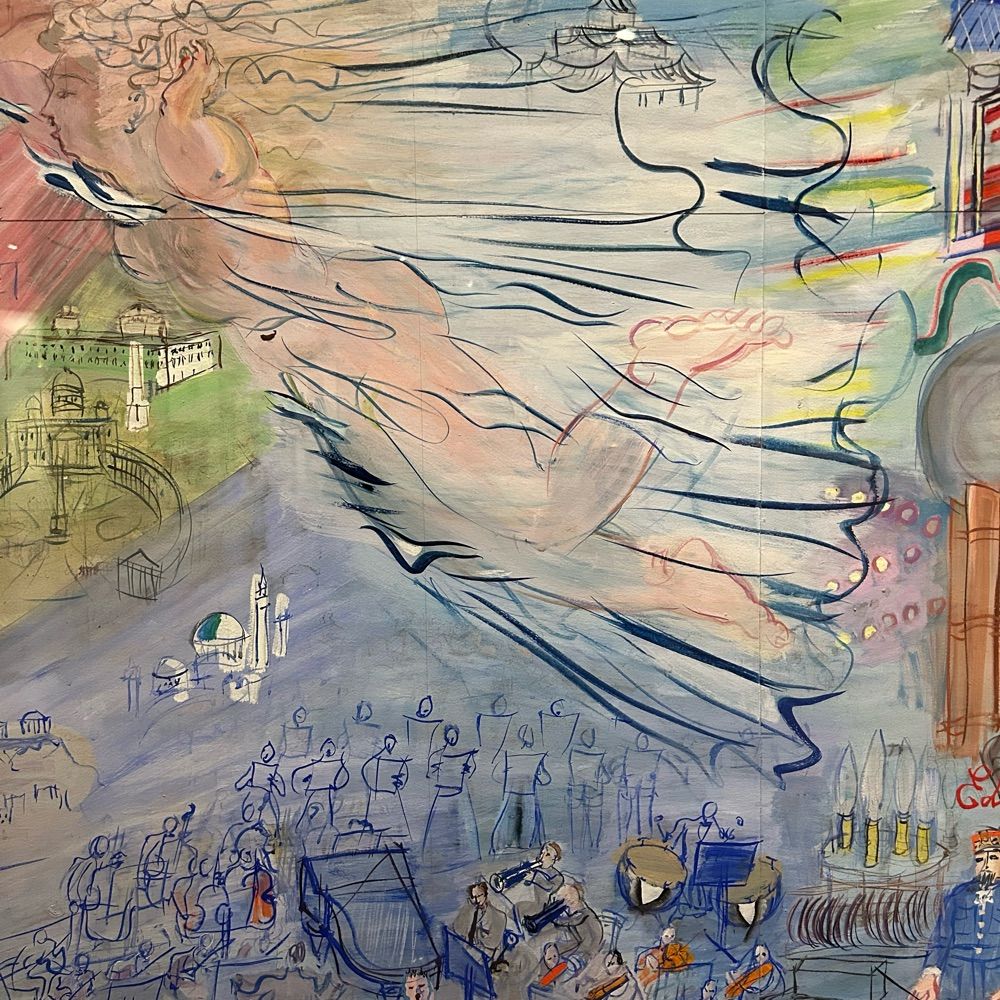
Turandot in concert at Music Hall Detroit. Excellent singers sang excellently; projected visuals of palaces and ponds delivered in 4k crispness. Gongs gonged, pagodas pagoded. And confetti for the happy couple! Opera uncritically celebrating its own Opera-ness.
A socialist mayor who succeeds at snow removal is SO MUCH more important to the socialist cause than a socialist senator who says the right thing.

PROOFS PROOFS PROOFS
(article coming out in 19th-Century Music next month)
Is *all* theater "hybrid" theater? My new review is up on H-France:
h-france.net/vol26reviews...
This could be an Emma Stone monologue in a Lanthimos movie. 🔥
Oo i have a story coming out that would be up your alley.

It's the listicle you've all been waiting for: @carolinefrmus.bsky.social ranks (almost) every piece by Darius Milhaud: van-magazine.com/mag/every-pi...

Close Reading Is For Everyone Dan Sinykin and Johanna Winant Call for Pitches Based on our previous Close Reading for the Twenty-First Century, we are at work on a new version that’s shorter, slimmer, and aimed at a more general audience. We’re looking for a new set of contributors who would write excellent, brief, model close readings of texts that high schoolers might know and care about. Think: “The Gettysburg Address,” Macbeth, and Plato’s “Allegory of the Cave,” but also song lyrics, idioms, or even a visual image. What is your best, most instructive, most exciting, most welcoming example of how a close reading builds a real argument out from a tiny, perhaps overlooked detail? If you’re interested in pitching us, please send us your 250-word close reading of the text you propose. Your close reading should be mappable using our vocabulary of close reading: the five steps of scene setting, noticing, local claiming, regional argumentation, and global theorizing. (Our close reading of “The Red Wheelbarrow” in the early pages of our introduction is the sort of thing we’re seeking.) If we think we can use yours, we’ll ask you to expand it to a 1,200 word essay in which you explain how your close reading works step by step. We seek close readings both of texts that are canonical and also ones that aren’t. And so we invite contributors both from the discipline of literary studies, and other disciplines across the university, and the public humanities beyond it. Send your pitches—please include your name and contact info—to daniel.sinykin@emory.edu and jwinant@reed.edu by March 15.
CALL FOR PITCHES
@dan-sinnamon.bsky.social and I are at work on a new version of Close Reading for the Twenty-First Century aimed at a more general audience.
We’re looking for new contributions: your model close readings of texts, canonical and not, from literary studies and not.
Details below!

halftime show fromt eh supebowl showing a set on the field featuring a nyc bodega
This kind of smart, walkable, mixed-use urbanism is illegal to build in most American cities.

“Perhaps what the score most resembles is a topographical map, with the arcs like a distant outcropping of mountains and the arrows at the bottom right bringing sketched-out directions to mind.”
@oliviagiovetti.bsky.social on political possibilities of graphic notation.

My new story "Mieszko" is up on Twin Flame Literary:
twinflameliterary.com/mieszko/
Where can you donate to MN anti-ICE protesters? Anyone know?

Launched a new "author" website. HMU:
sites.google.com/view/jblaszk...

“Next Door seems created by AI, algorithmic and connected nowhere. The only Manhattan you get is from the bar.”
The problem with imperialism is that it violates borders while also enforcing them, like a snake shedding its skin while swallowing a mouse whole.

One of my class assignments is to rewrite mvt 5 of Berlioz’s Symphonie fantastique “but it’s Gen Z.” And it never, ever disappoints.

The 900-word sentence by David Foster Wallace in Mister Squishy written out in full
Hannah Smart on the 900-word David Foster Wallace sentence she's spent the last year diagramming, against the advice of well-meaning family
and friends: https://lareviewofbooks.org/article/nothing-ever-happens-mister-squishy-and-the-year-of-the-sentence-diagram/

Coming soon in 19th-Century Music: a cultural history of sight-reading at the Paris Conservatoire

in case this hasn’t made it over here yet amsaccountabilityarchive.carrd.co
Call for Papers: Global Musical Modernities and Local Agency, 7-10 May 2026, Toronto
https://www.rma.ac.uk/2025/11/09/call-for-papers-global-musical-modernities-and-local-agency-7-10-may-2026-toronto/

Yellow graphic with dark blue text reading Fall Sale. 50% off with code FALL25. Available Books & Journal Issues. Oct 20-Nov 9. Duke University Press logo is in bottom right corner.
Have you checked out our fall sale yet? Save 50% on books & journal issues with coupon FALL25.
buff.ly/Bk390cu

"Communism must become ecological. And yet this argument is incomplete if it does not include its corollary: political ecology can become truly revolutionary only by becoming communist"

Sensory studies 2026: a state-of-the-art review www.tandfonline.com/doi/full/10....
Will reading become obsolete? How A.I. could transform our relationship to the written word.

I’m presenting new material—on “The Science of Sight-Reading: Notation and/as Ocular Technology in fin-de-siècle France”—
at the American Musicological Society Midwest Chapter on Oct. 11. The conference will be livestreamed.
amsmidwest.weebly.com/fall-2025-co...
Best if enjoyed with Cortot's fumbling yet ethereal recording: www.youtube.com/watch?v=_8O9...

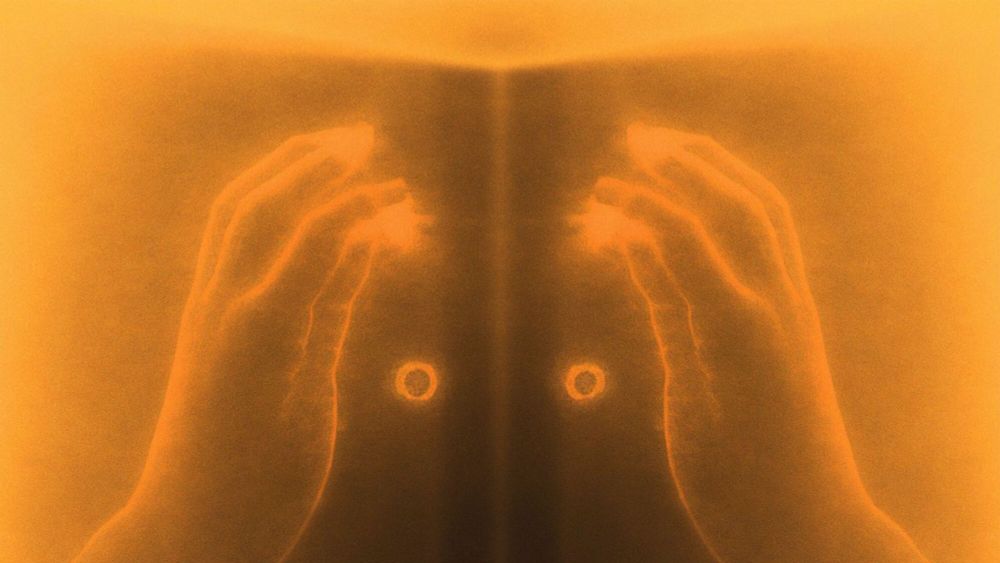
Intense-looking slide from my upcoming talk,"The Science of Sight-Reading: Notation and/as Ocular Technology in fin-de-siècle France."The hands are Alfred Cortot's, recorded in slow motion then freeze-framed bar by bar.The slurs in the score are not phrasing; they denote lateral/vertical motion.
