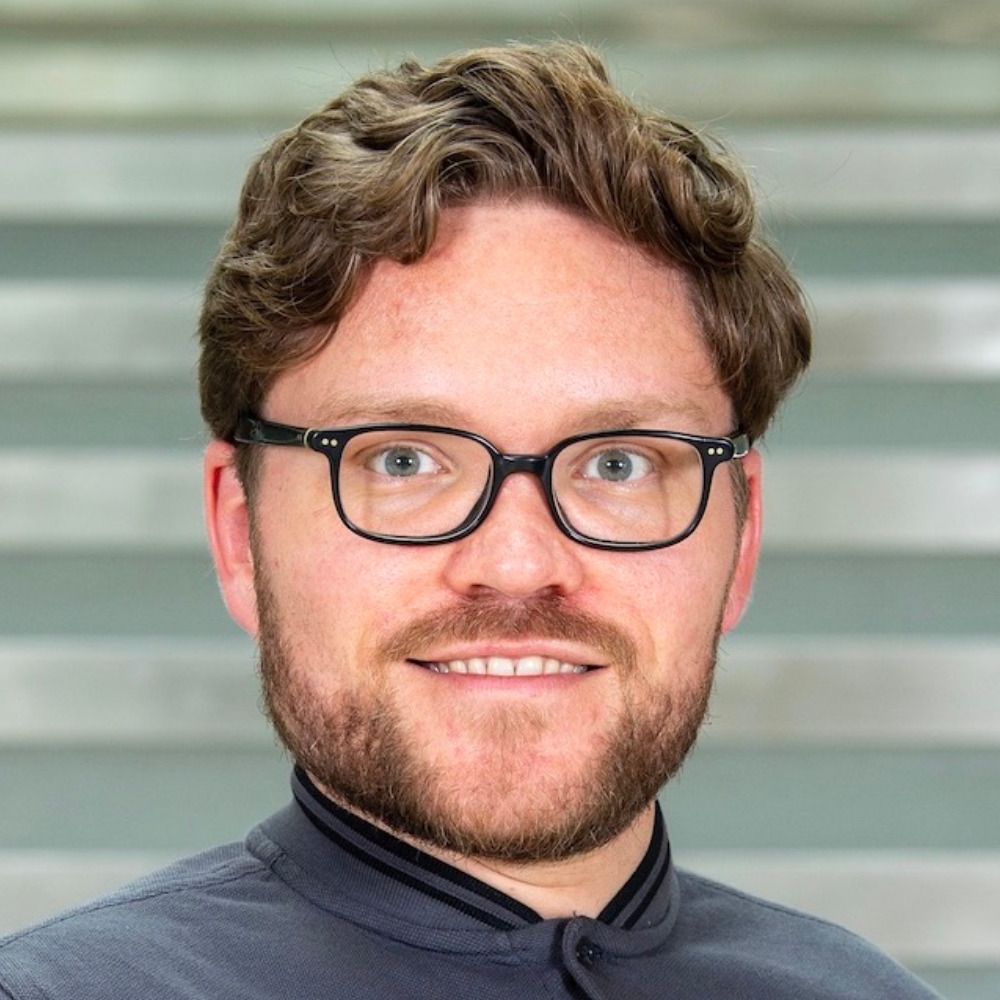
🔈 Deadline extended to 19 February (AoE)!
04.02.2026 12:51
👍 1
🔁 1
💬 0
📌 0
🔈 Deadline extended to 19 February (AoE)!
Submissions for #TDIS2026 are due in 3.5 weeks. If you have new ideas, methods, or tools around how #experimentation with #IoT or #edge systems could be improved, please take a look at our CfP. We are looking for workshop papers (4/6 pages) by 5 Feb to be presented in #Edinburgh on 27 Apr. 📱 🖥️ 🛰️ 🚉 ⚡
2/2: Important dates:
- workshop paper submission: February 5, 2026
- notification of acceptance: March 12, 2026
- workshop day: April 27, 2026
Find the full Call for Papers and our preliminary Program Committee on our website: tdis.gitlab.io/tdis26/
#IoT #edge #cloud #systems #experimentation

Workshop title, topics of interests, and important dates from https://tdis.gitlab.io/tdis26/ 4th International Workshop on Testing Distributed Internet of Things Systems Held in conjunction with ACM EuroSys 2026 April 27, 2026, in Edinburgh, United Kingdom The 4th International Workshop on Testing Distributed Internet of Things Systems (TDIS) will again bring together computer systems researchers and practitioners who focus on testing, evaluating, and measuring distributed IoT systems across the edge-cloud continuum to provide a forum for ongoing work presentations and discussions. ...
1/2: We are organizing #TDIS again, our workshop on testbeds, benchmarking, and experimentation tools for distributed systems in the IoT/edge/cloud continuum. The workshop will be held again alongside ACM #EuroSys, which will take place at the end of April 2026 in #Edinburgh!

Promotional graphic for DiveIn CDT PhD recruitment. The left side shows individuals working with technical equipment in a lab setting. The right side contains text: “Applications Now Open – Fully-funded 4 year PhD. Applicant Webinar – 26th November. More info at divein.org.uk.” Logos for University of Glasgow, UKRI Engineering and Physical Sciences Research Council, and DiveIn CDT appear at the bottom.
📣 Applications Now Open!
🌊 Dive into mission-driven interdisciplinary #STEM research with a fully funded 4-year PhD starting Sept 2026
✅ Co-create your project
✅ Enhanced stipend
✅ Cohort-based experience
✅Partner network
📅 Applicant Webinar: Nov 26
👉More info & registration: www.divein.org.uk/apply

New vacancy Professor and Head of School School of Computing Science Closing date: 30 November
Could you be our next Head of School?
We're seeking an innovative, forward-thinking leader to join us in this academic leadership role, accountable for providing a coherent academic vision and direction for the School.
Apply by 30 November: www.jobs.gla.ac.uk/job/professo...
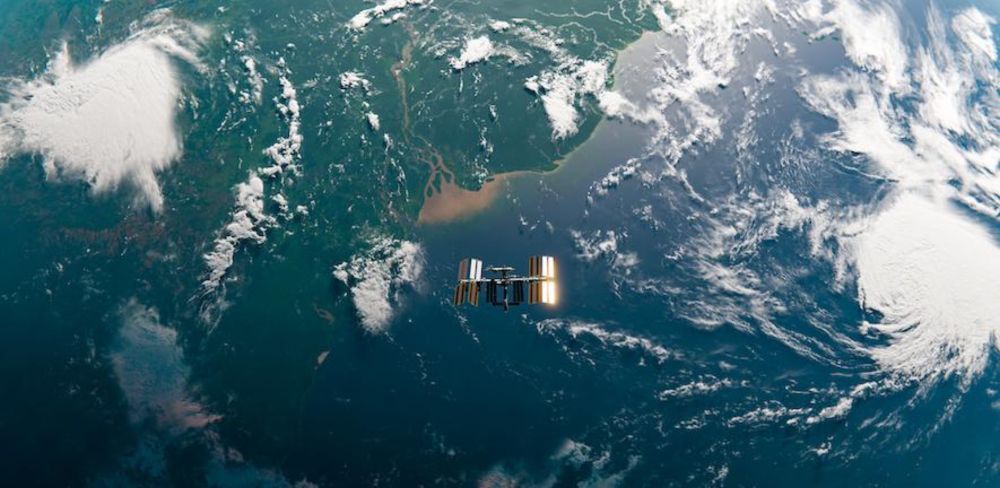
Part 1 covers the 2nd Programming for the Planet conference (@propl.dev) organised by @kcsrk.info @dorchard.bsky.social and me. There were talks, demos and discussions about what we can do as computer scientists to avert the climate and biodiversity crises anil.recoil.org/notes/icfp25... 🌍
📣THREAD: It’s surprising to me that so many people were surprised to learn that Signal runs partly on AWS (something we can do because we use encryption to make sure no one but you–not AWS, not Signal, not anyone–can access your comms).
It’s also concerning. 1/

A woman wearing a virtual reality headset and holding VR controllers interacts with a red robotic system. A man beside her observes and adjusts the robot’s arm. They are in a modern lab or office environment with glass walls.
Thinking about a PhD in Computing Science?
Join us on 12 Nov at 12:30 PM in the Sir Alwyn Williams Building (Room 422/423, Level 4) for our PhD information session!
Come along and ask questions, get advice, and network with academics and current PhD students.
@uofgcompsci.bsky.social

A picture of a foggy street
Edinburgh castle failing to render, likely thanks to the AWS outage

Promotional graphic announcing that applications to join the DiveIn CDT 2026 cohort open in November. Includes the message 'Get ready to DiveIn!' with logos of the University of Glasgow, UKRI EPSRC, and DiveIn. Website link: divein.org.uk
⌛Countdown is on!
Applications to join DiveIn in 2026 open in November
🥽Ready to DiveIn? Here's what awaits:
💷£4K enhanced stipend
🧠Co-create your PhD research project
🔗Interdisciplinary support
🌍Inclusive research culture
🤝Career-focused external partners
💡Express interest: www.divein.org.uk/apply/

Okay, for the folks who asked: here's the majority AI view, writing up the reasonable, thoughtful view on AI that the vast majority of people in tech hold, that gets overshadowed by the bluster and hype of the tycoons trying to shill their nonsense. anildash.com/2025/10/17/t... Please share!
Are you a computer science postgraduate research student at a Scottish university? Would you like £500 to help with your conference travel?
If so then please apply to the @sicsa-scotland.bsky.social travel fund sicsa.ac.uk/sga/phd-trav...

PROPL '25: Proceedings of the 2nd ACM SIGPLAN International Workshop on Programming for the Planet. Now online: dl.acm.org/doi/proceedi...
Looking forward to the workshop next week @icfp-conference.bsky.social/SPLASH
... and I am already looking forward to our next outing! Hopefully, then also with Max MacDonald (who is starting his PhD in October), Matthew Waters (who is another MSci student working with us), and Vasilis Bountris (who is planning to visit us from HU Berlin)!
@uofgcompsci.bsky.social 🏰 🖥️ 🎓


Joining me this time were Kathleen West, James Nurdin, Youssef Moawad, Giulio Attenni, and Magnus Reid.
I am very lucky to get to work with such a bright and friendly group of young researchers at Glasgow! 😊


I believe that research works best as a team sport, with all the obvious benefits, and think that teams work best when there are chances to get to know each other away from the desks from time to time. For example, when there is a tricky flat tire to fix together midway through a bike trip... 🚲 🌬️ 🔧


We had a fantastic away day as the Carbon-Conscious Computing lab (lauritzthamsen.org/lab/) of the University of Glasgow last week! 💻 ☁️ 🌱 In keeping with our mission, we took our bikes out for a ride around the Isle of Bute! 🚉 ⛴️ 🌊
If you speak two languages well, have you tried counting to 10 in alternating languages? I found it surprisingly mind-bending.
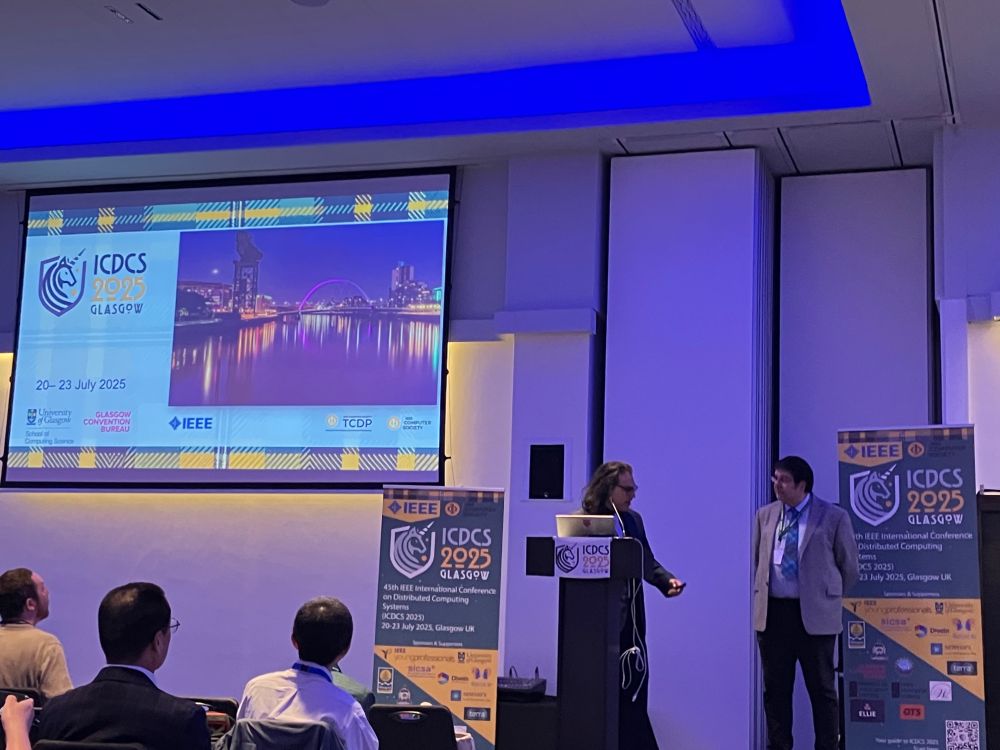
The general co-chairs of ICDCS 2025, Christos (Chris) Anagnostopoulos and Iadh Ounis, opening the main conference on Monday morning
Many thanks to Chris Anagnostopoulos for the kind invitation to attend and to the whole organizing team and many volunteers for the fantastic conference in Glasgow! 🙏
Always so good to meet colleagues in person – some for the first time, some again after a while! 😊
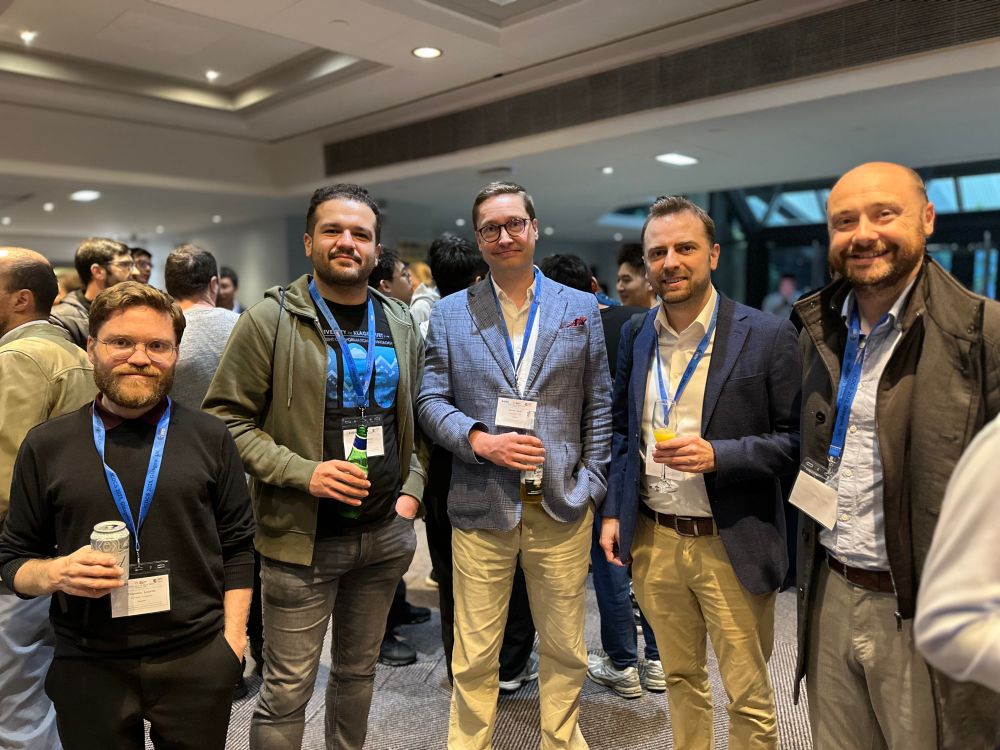
Having a good time with Drs Reza Farahani, Lauri Lovén, Ilir Murturi, and Paul Harvey ahead of the banquet dinner
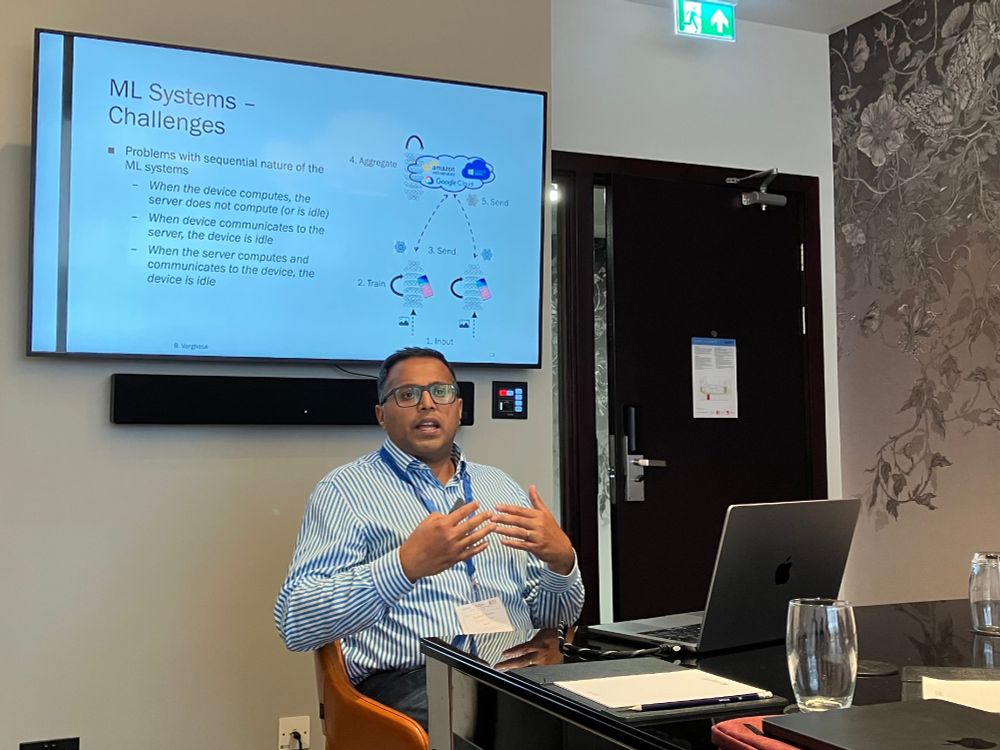
Dr Blesson Varghese explaining how ML can be made feasible on small edge devices in his workshop keynote
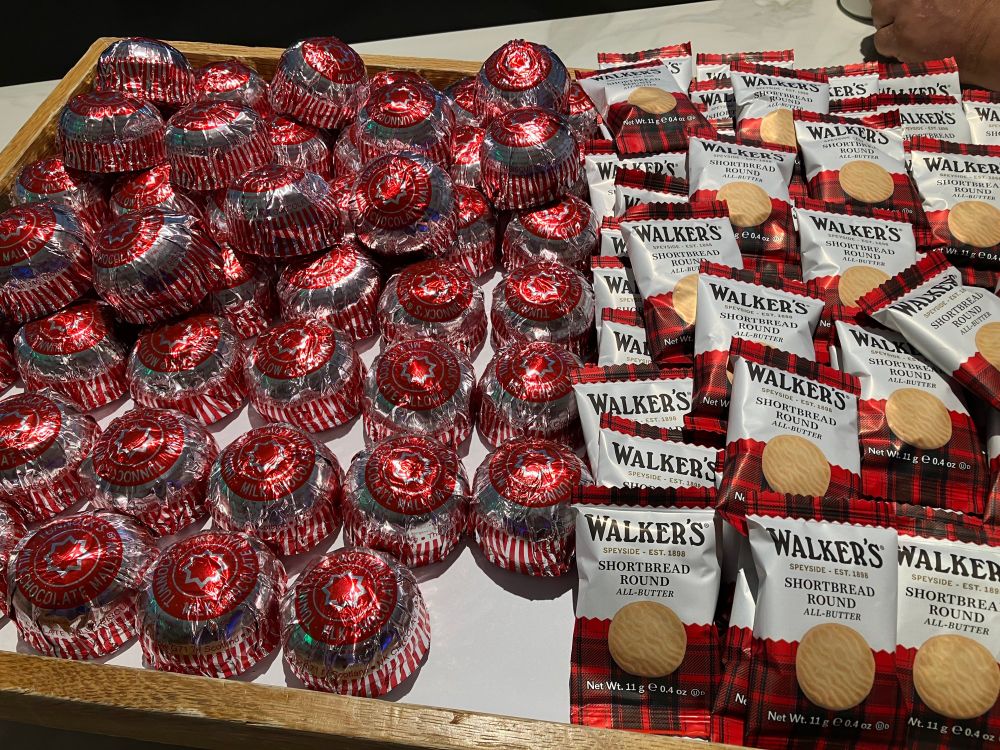
Scottish treats in the coffee breaks – Tunnock's Tea Cakes and shortbread too!
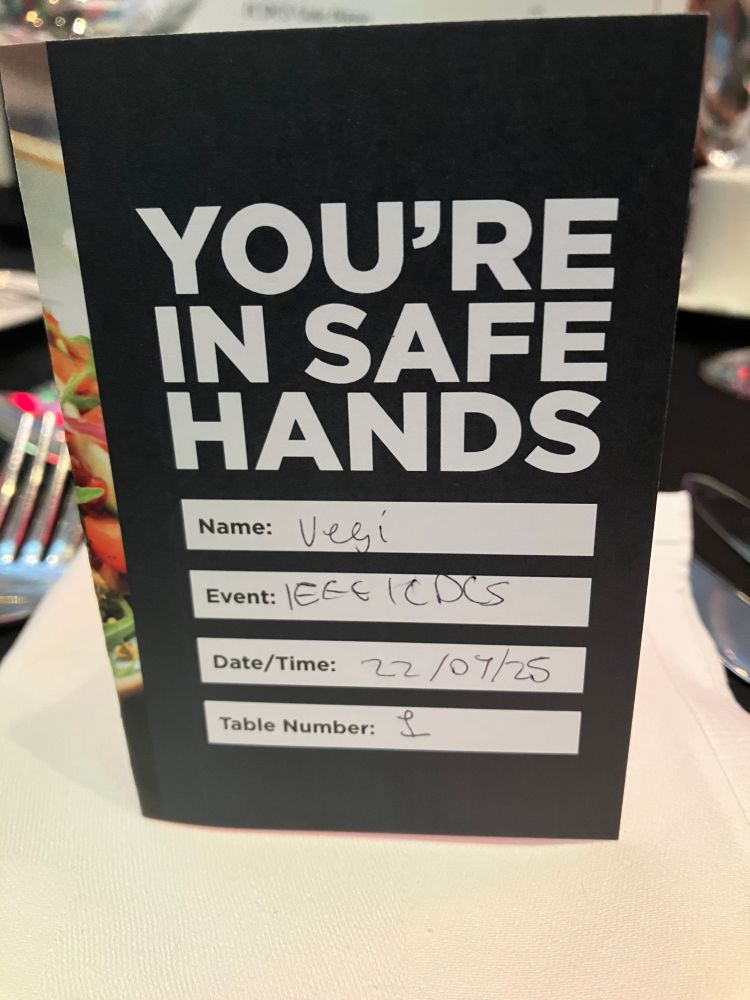
As a vegetarian i was "in safe hands" at ICDCS, as this card says, identifying me as "vegi" :)
I had a great time at IEEE #ICDCS 2025. First time that I attended a conference without a talk or helping to organize, so this was a new experience! Of course, also rather nice to attend a top conference after 10 minutes on public transport (and after dropping off the wee one at nursery too ☺️)
Due to the world being a little unpredictable right now, we've extended the submission deadline for PROPL by a few days, so it's now 8th July 2025 AoE! conf.researchr.org/home/icfp-sp...
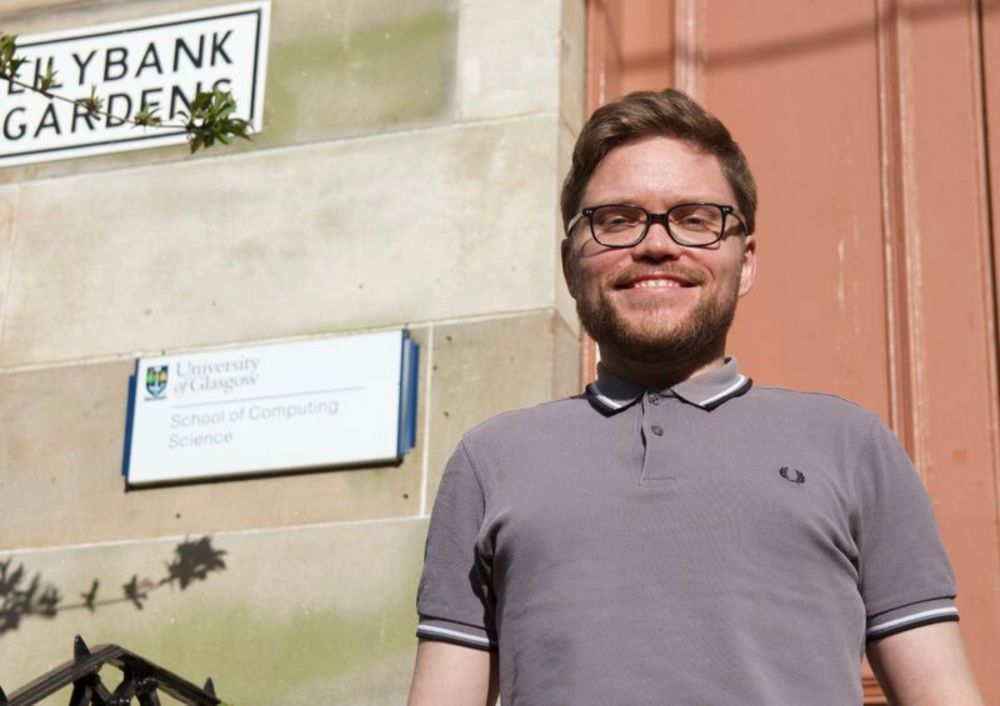
Very happy to share that I won the Early-Career #Teaching Excellence #Award of the College of Science and Engineering at the University of Glasgow! ☺️👨🏫🏰🎓✨
Longer post: www.linkedin.com/posts/laurit...
@uofgcompsci.bsky.social @uofglasgow.bsky.social

Not sure how many people realize that battery storage already supplies 30% of California’s electricity demand at peak.
Batteries aren’t the future — they’re here now.

4: Kathleen will be presenting a short paper on Carbon-Aware Workflow Execution, arxiv.org/abs/2503.13705. This will be Kathleen's first talk at a conference and we are actively working on extending our results in the EPSRC-funded project Casper, so you are most welcome to provide helpful feedback!
3: Fabian will be talking about WOW, arxiv.org/abs/2503.13072, which was accepted as a full paper too – and this one was in the works for a while, with Fabian driving the extensive experimental effort and managing the collaboration between five universities in context of the DFG-funded CRC FONDA!
2: Jonathan will summarize the full paper Flora, arxiv.org/abs/2502.21046. This is an outcome of our DFG-funded research project C5, demonstrating a low-overhead approach to cost-optimizing cloud cluster configurations for big data analytics, evaluated experimentally with 180 Spark application runs!
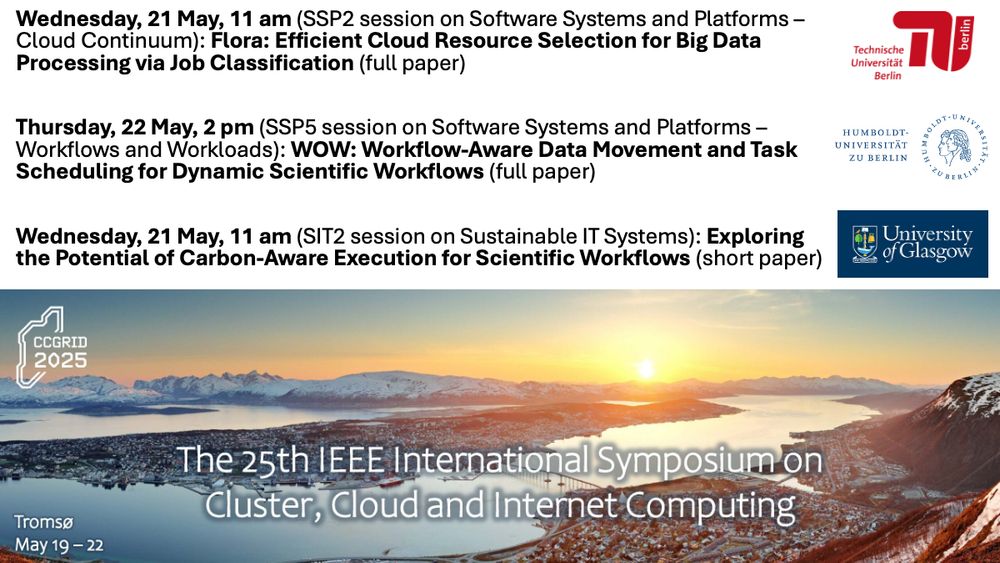
A slide listing our three contributions to the 25th IEEE International Symposium on Cluster, Cloud and Internet Computing (CCGrid 2025): - Wednesday, 21 May, 11 am (SSP2 session on Software Systems and Platforms – Cloud Continuum): Flora: Efficient Cloud Resource Selection for Big Data Processing via Job Classification (full paper) - Thursday, 22 May, 2 pm (SSP5 session on Software Systems and Platforms – Workflows and Workloads): WOW: Workflow-Aware Data Movement and Task Scheduling for Dynamic Scientific Workflows (full paper) - Wednesday, 21 May, 11 am (SIT2 session on Sustainable IT Systems): Exploring the Potential of Carbon-Aware Execution for Scientific Workflows (short paper)
1/4: If you are at #IEEE #CCGrid 2025 in #Tromsø next week, catch Jonathan, Fabian, and Kathleen (@westkath.bsky.social) presenting joint work! 📰🧵👇
#CCGrid #distributed #sustainable #cloud #computing #research #Spark #Nextflow

Graph showing clearly that CO2 levels in the atmosphere was flat for thousands of years before the industrial revolution and have now increased by 50% (to over 420 ppm). Over one third of the CO2 in the air is from human activity.
Apparently some folks are still confused about how much CO2 in the air has grown due to human activities. It's increased by more than 50%, which means over one third of all CO2 in the air is due to us.
2. The biggest problem is that AI is now good at the introductory problems, across every discipline. But introductory problems are necessary for learning.