What I understand of this:
- There was a PR from an open-source contributor
- He checked out the branch.
- In the branch, there might have been a new npm dependency that ran a post-install script, which exfiltrated his npm credentials.
17.09.2025 00:07
👍 2
🔁 0
💬 1
📌 0

See www.mediawiki.org/wiki/Page_Pr...
16.09.2025 23:03
👍 0
🔁 0
💬 1
📌 0
The 4 principles are respected.
16.09.2025 17:22
👍 0
🔁 0
💬 1
📌 0
Introduction to Understanding WCAG 2.1 | WAI | W3C
I don't understand.
Do you have reference material from WCAG that would support this? As far as I know, this component respects www.w3.org/WAI/WCAG21/U....
16.09.2025 17:21
👍 0
🔁 0
💬 1
📌 0
As I understand it, a screenreader user can't know if a link has a preview card or doesn't have one, it's invisible. The experience for them is the same.
So if they want to navigate to see the content of the link, they navigate, if they don't want to, they don't.
16.09.2025 11:57
👍 0
🔁 0
💬 1
📌 0
It's a preview of the link, so the content is accessible to user who rely on assistive technology.
16.09.2025 08:44
👍 1
🔁 0
💬 1
📌 0
I don't understand what's not accessible about this React component?
This is to show a preview of the link that will be clicked on. It's designed to be invisible for VoiceOver, JAWS, or NVDA users.
The WCAG 2.1 success criteria seem OK, e.g.
2.1.1 Keyboard: "Enter" shows the same content.
15.09.2025 21:34
👍 0
🔁 0
💬 1
📌 0
We are literally trying to find a solution to this on the Material UI button loading state right now. A proper fix would be amazing.
10.01.2025 15:08
👍 4
🔁 0
💬 0
📌 0
Switch.Root.Props
28.12.2024 00:40
👍 1
🔁 0
💬 0
📌 0
The APIs were design by starting from the Radix Primitives API, and then evolving them based on:
- Learnings from Radix Primitives
- Learnings from Material UI test suite
- React 19 new API, e.g. now the ref is a regular prop
27.12.2024 16:53
👍 0
🔁 0
💬 2
📌 0
Everyone is asking about the differences between Radix and Base UI, which is an upcoming headless UI library we’ve been working on.
03.12.2024 16:25
👍 22
🔁 6
💬 5
📌 2
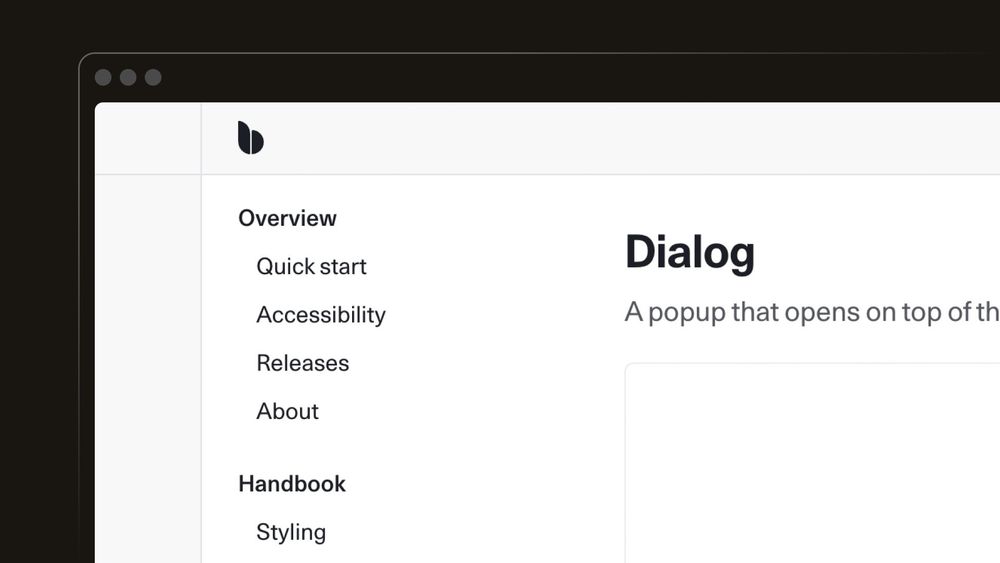
@base-ui.bsky.social is here
Watch out for news. I’ve been working on the Base UI docs for the past few months, and this is going to be the component library you didn’t know you needed.
03.12.2024 08:58
👍 17
🔁 4
💬 3
📌 1

Yay. @base-ui.com just went live 🎉
It looks super promising. I've been eagerly anticipating this because, on paper, it has the potential to combine the best of the Radix API with the ambitions of MUI components and their use cases.
17.12.2024 17:24
👍 11
🔁 2
💬 2
📌 0
It's too easy to forget that end-users have slow hardware too.
23.11.2024 21:52
👍 0
🔁 0
💬 0
📌 0
I have reality appreciated working with slow hardware in the past. Any performance regressions becomes so obvious.
23.11.2024 21:51
👍 0
🔁 0
💬 1
📌 0
Sometimes the best engineering happens when you’re just tinkering, free from expectations and deadlines.
10.11.2024 09:35
👍 361
🔁 51
💬 19
📌 12