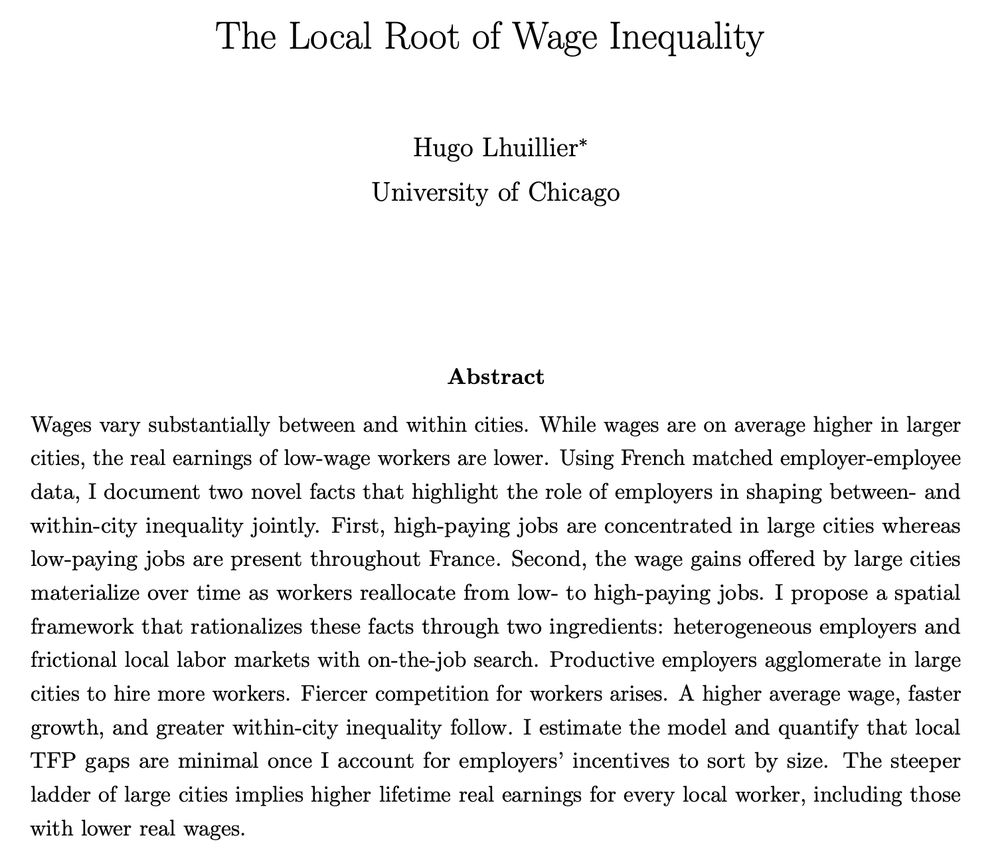
Long-story short:
Employers —and how workers reallocate across them— are crucial at explaining spatial wage disparities.
🔗 If you want to know more: www.hugolhuillier.com/files/papers...
06.06.2025 14:53
👍 4
🔁 2
💬 0
📌 0
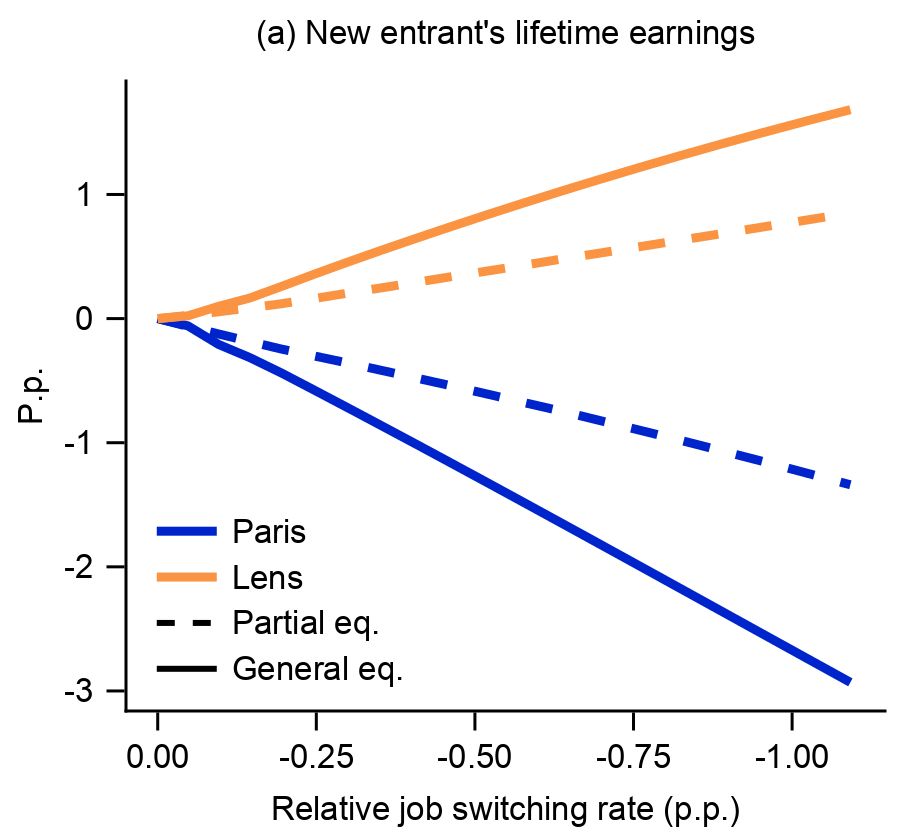
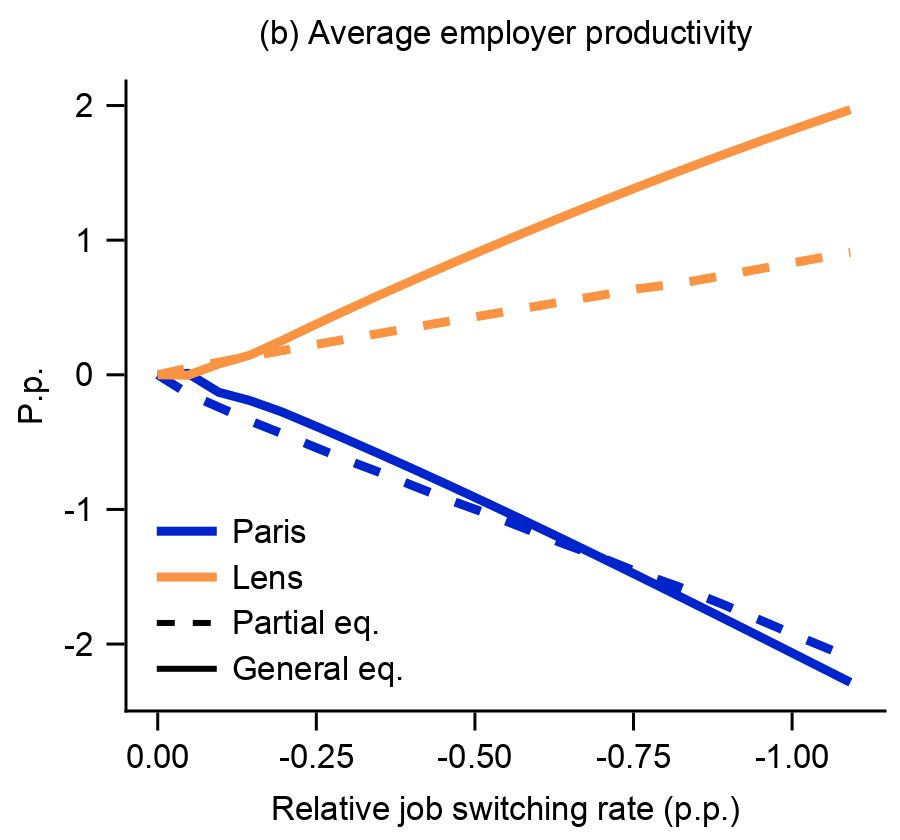
Understanding the mechanisms behind spatial inequality matters!
For instance: what happens when job mobility slows down?
Big places lose their comparative advantage...
⬇️ Productivity, wages, and the number of workers in large cities shrink
⬆️ Smaller cities expand
06.06.2025 14:53
👍 5
🔁 1
💬 1
📌 0
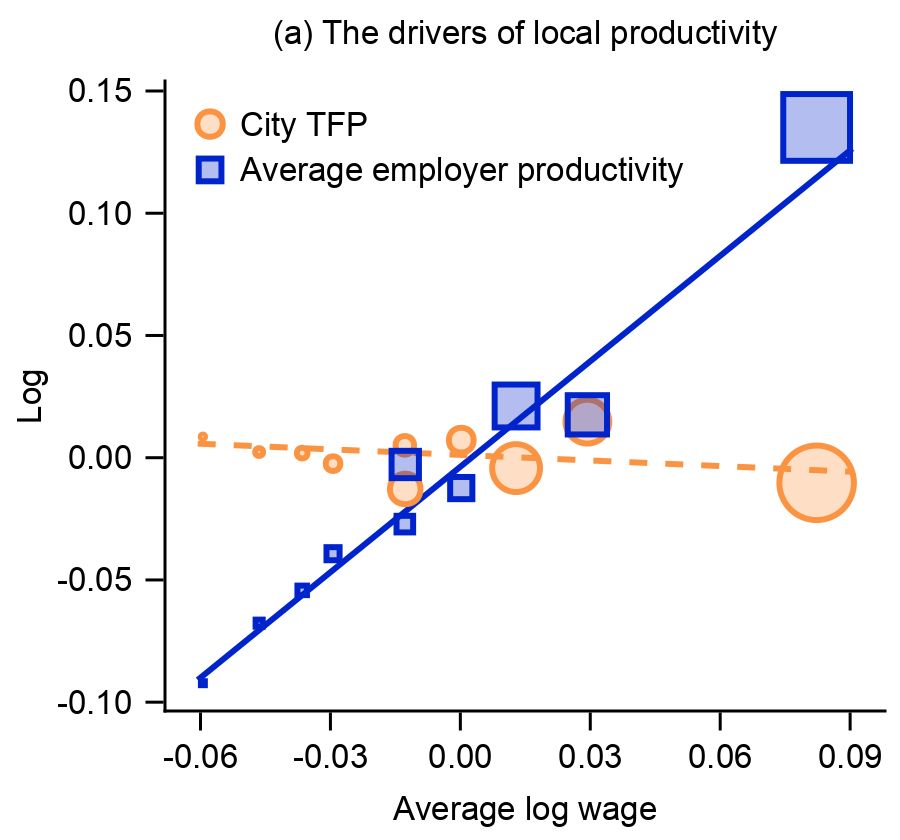
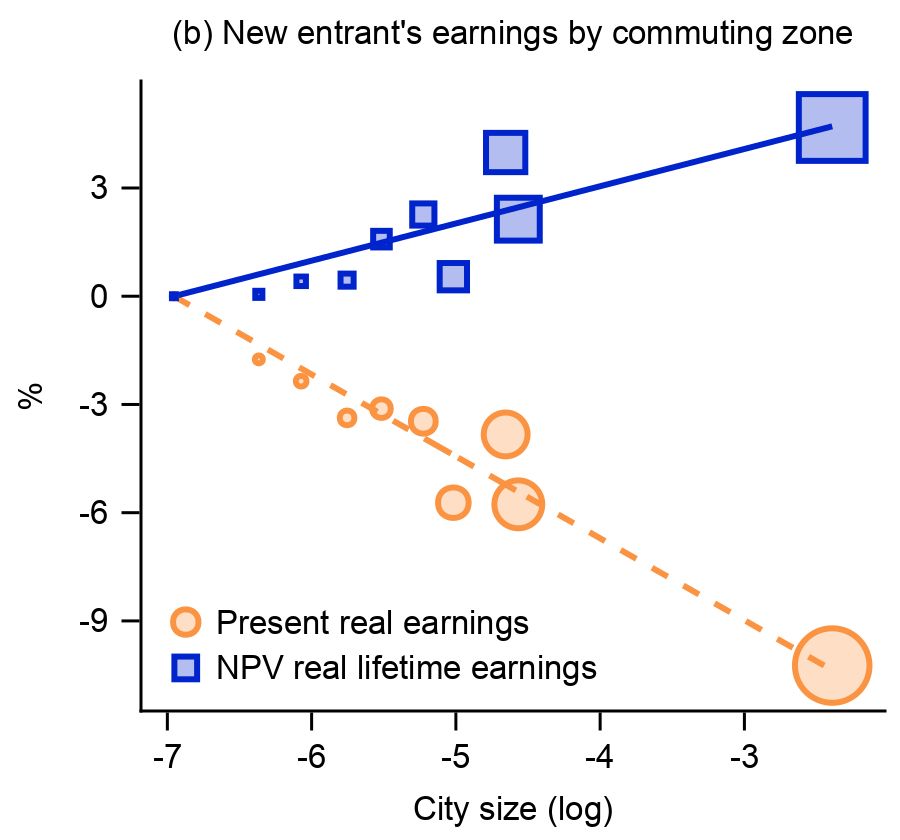
🎯 Key quantitative takeaways
— Spatial wage disparities arise without city-level productivity gaps
— Lifetime earnings are higher in bigger cities — even for workers with lower real earnings as they climb a steeper ladder
06.06.2025 14:53
👍 4
🔁 0
💬 1
📌 0
How does this work?
Productive employers agglomerate in big places to maximize their size
✅ The local competition for workers intensify ➡️ high-paying jobs are concentrated there
✅ Low-paying jobs persist — because workers out of unemployment have little bargaining power
06.06.2025 14:53
👍 2
🔁 0
💬 1
📌 0
To explain this, I build a spatial model with two features:
1️⃣ Employers vary in productivity, and they choose where to produce
2️⃣ Labor markets are frictional, and workers climb local job ladders
06.06.2025 14:53
👍 2
🔁 0
💬 1
📌 0
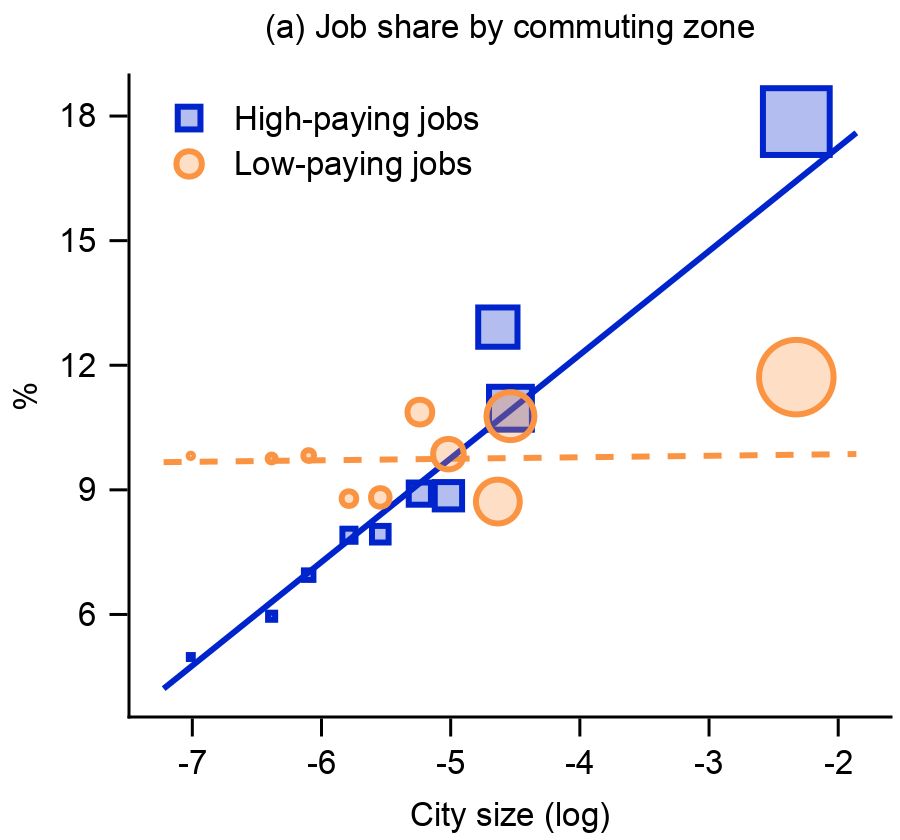
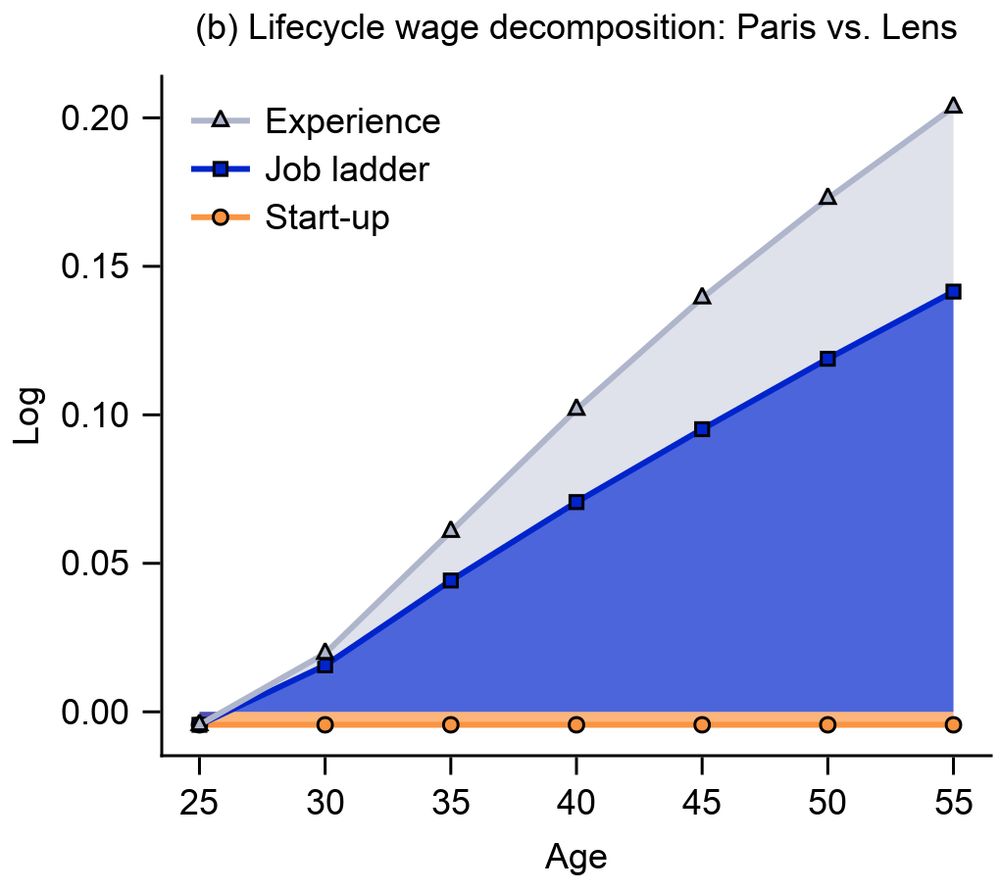
Using French matched employer-employee data, I find:
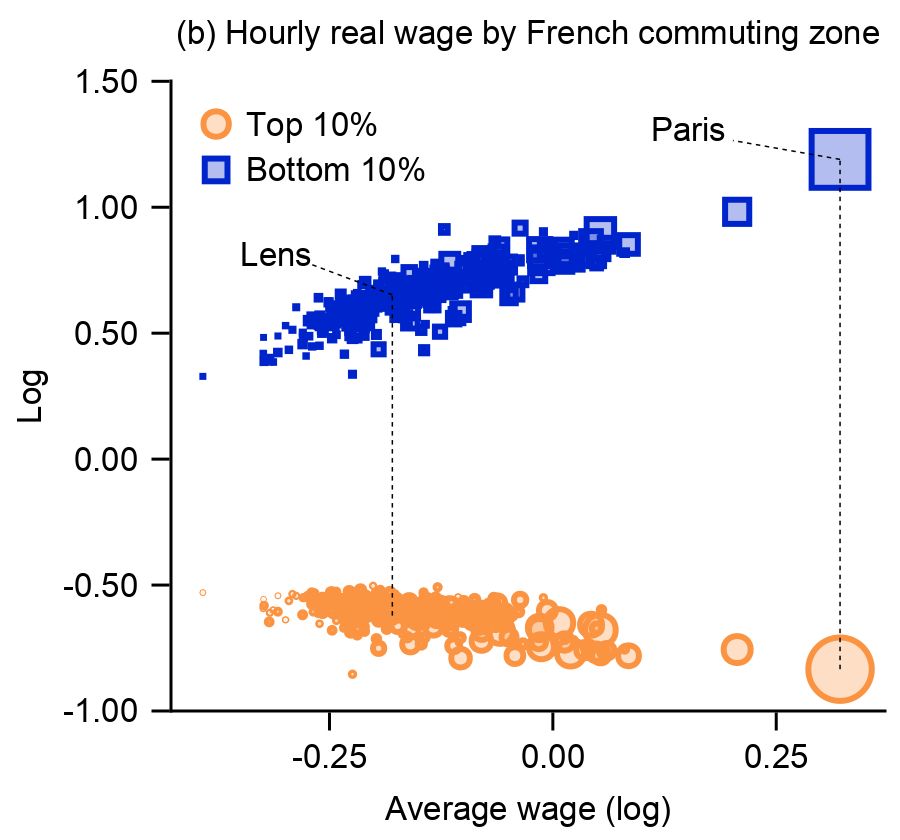
📌 High-paying jobs are concentrated in big cities
📌 Low-paying jobs are everywhere
📌 Workers access high wages in large cities as they switch from low- to high-paying jobs over time
06.06.2025 14:53
👍 8
🔁 1
💬 1
📌 0
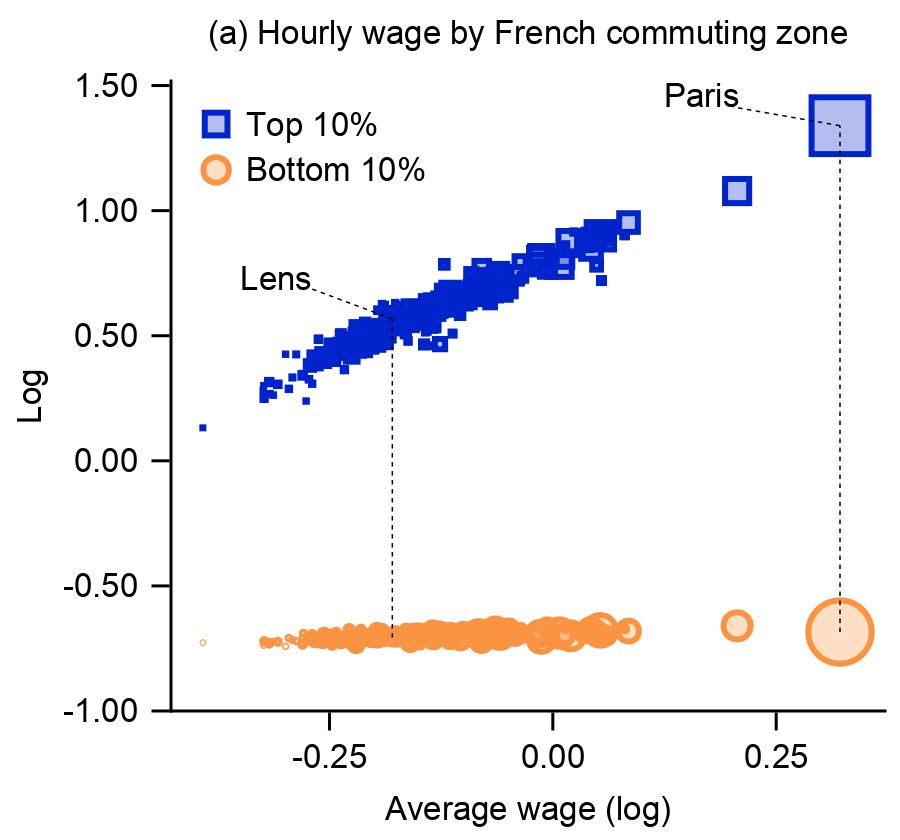
🚨 New working paper 🚨
In large cities, wages are higher. But so are inequalities. In fact, low-wage workers earn lower real earnings there.
Why? What drives spatial wage disparities? Why some workers work at lower real wages in large cities?
06.06.2025 14:53
👍 53
🔁 19
💬 2
📌 3
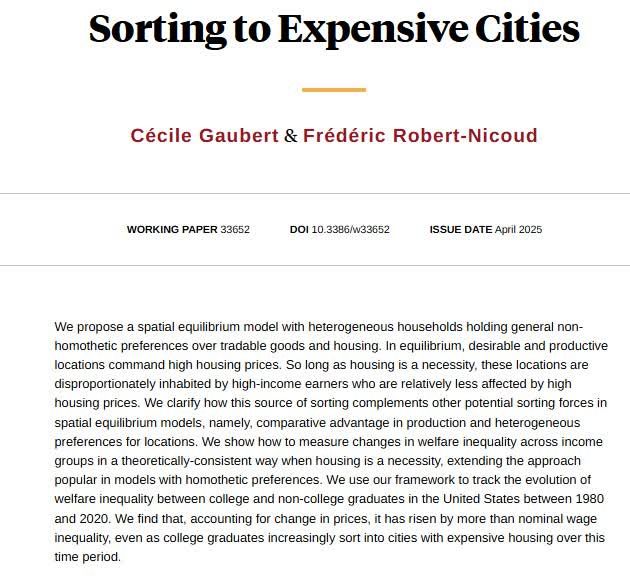
A spatial equilibrium model with heterogeneous households holding general non-homothetic preferences over tradable goods and housing, from Cécile Gaubert and Frédéric Robert-Nicoud https://www.nber.org/papers/w33652
10.04.2025 19:00
👍 14
🔁 2
💬 1
📌 2
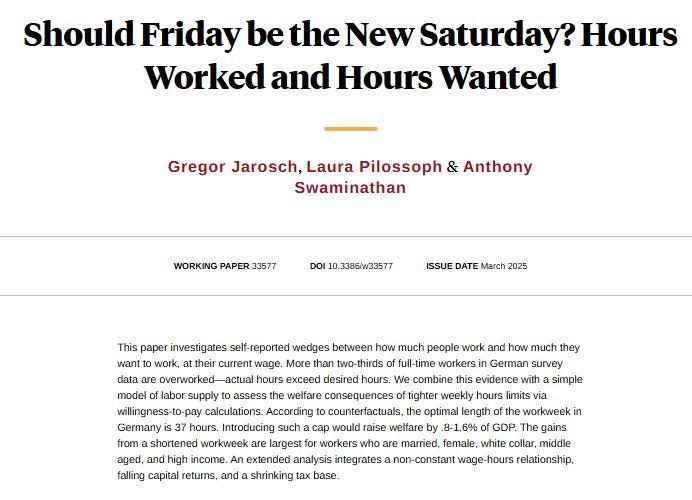
Using survey data from Germany combined with an 'what is the optimal length of the workweek' model suggests 37 hours, from Gregor Jarosch, Laura Pilossoph, and Anthony Swaminathan https://www.nber.org/papers/w33577
22.03.2025 15:00
👍 14
🔁 5
💬 0
📌 1

Research Professional – International Economics and Economic Geography Initiative (Full-Time, Benefits Eligible)
Chicago, IL
We've just opened a new @beckerfriedman.bsky.social pre-doc position through the International Economics and Economic Geography Initiative:
job-boards.greenhouse.io/universityof...
Come work with us! The trade and spatial group at UChicago is a top-notch place to start your academic career!
12.02.2025 17:12
👍 11
🔁 6
💬 0
📌 0

Modern supply chains don't look like trade theory 101!
They involve constant border crossings, each now hit by tariffs.
Tariffs raise prices, but the more important thing they do is disrupt supply relationships.
1/
02.02.2025 12:56
👍 1068
🔁 397
💬 35
📌 67

Recently accepted to #REStud, ``Wealth Inequality and Asset Prices'' from Matthieu Gomez:
www.restud.com/wealth-inequ...
29.01.2025 23:16
👍 24
🔁 7
💬 1
📌 0
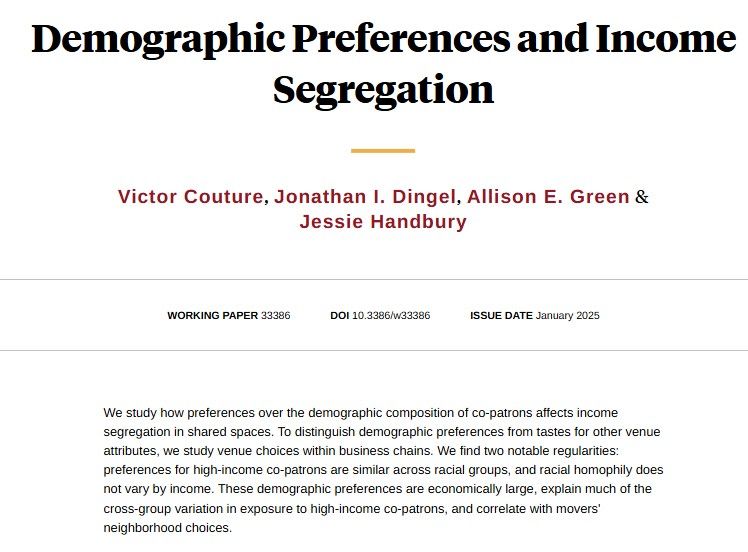
Studying preferences over the demographic composition of co-patrons. Racial homophily does not vary by income. These preferences can explain much of income segregation, from Victor Couture, Jonathan I. Dingel, Allison E. Green, and Jessie Handbury https://www.nber.org/papers/w33386
29.01.2025 18:00
👍 6
🔁 6
💬 0
📌 0

1/🚨New chapter in Handbook of Regional & Urban Economics: Spatial Environmental Economics
🌍 How do spatial forces affect the environment? How does enviro shape spatial outcomes?
Thread, chapter explore this nascent subfield via stylized acts, models, building blocks for rsrch. w Clare Balboni.
26.01.2025 18:12
👍 96
🔁 42
💬 3
📌 2

As climate change intensifies, extreme weather events like the fires in LA pose growing threats to economies.
A blog post by @nityanayar.bsky.social, Juanma Castro-Vincenzi, Gaurav Khanna and @nicomorales.bsky.social discusses how firms adapt supply chains to these risks:
tinyurl.com/abbw5mt3
15.01.2025 15:21
👍 5
🔁 5
💬 1
📌 0
A lot to chew on in this issue of AEJ: Applied: #econsky
13.01.2025 04:05
👍 16
🔁 3
💬 0
📌 1
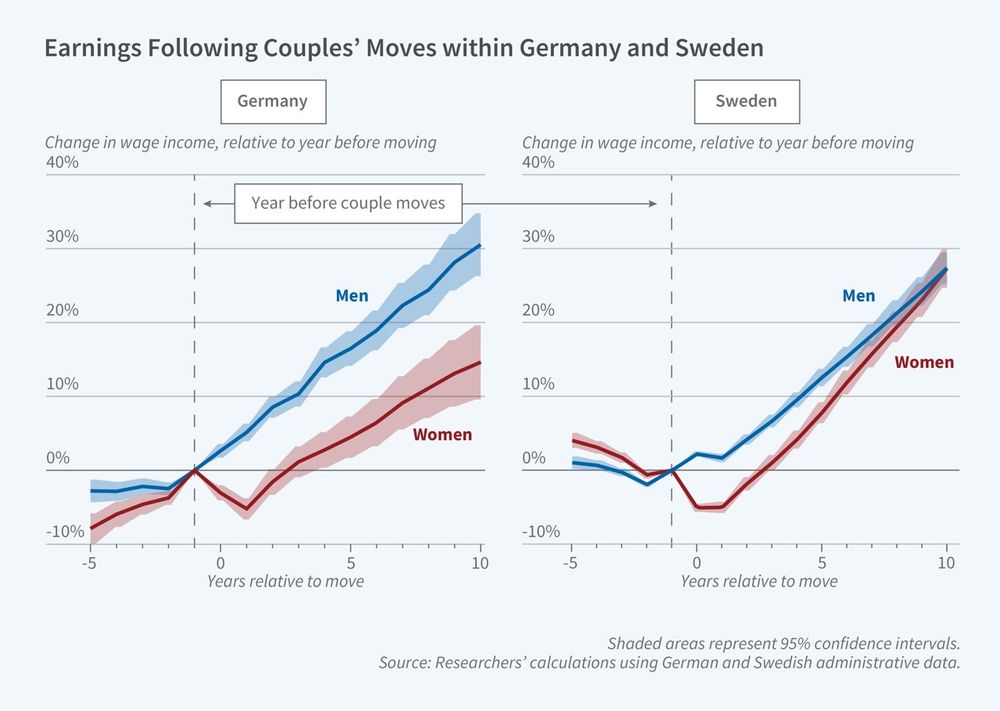
Featured in the latest Digest: "Gender, Career Opportunities, and the Relocation Decisions of Couples"
https://www.nber.org/digest/202412/gender-career-opportunities-and-relocation-decisions-couples
17.12.2024 13:00
👍 44
🔁 12
💬 1
📌 3

How China is setting up shop in Mexico
An increasingly close trade relationship is causing concern in Washington
NEW: Chinese companies have doubled their industrial footprint in Mexico in three years — a development that is emblematic of the closer ties that are poised to thrust Mexico into the centre of Trump’s trade war with Beijing.
ig.ft.com/china-mexico...
16.12.2024 10:57
👍 107
🔁 41
💬 4
📌 2
pendingpublications
Pending Publication
Recently accepted by #QJE, “Putting Quantitative Models to the Test: An Application to the US-China Trade War,” by Adão, Costinot, and Donaldson: doi.org/10.1093/qje/...
13.12.2024 14:18
👍 14
🔁 4
💬 1
📌 0
EJM - Econ Job Market
Job market update: McGill Econ is hiring!
Please encourage your students to apply as soon as possible if interested.
econjobmarket.org/positions/11...
11.12.2024 15:34
👍 4
🔁 4
💬 0
📌 0
I've now turned the BBVA-EEA Lecture I gave in San Antonio in January and in Madrid this week into a working paper: scholar.harvard.edu/sites/schola...
The paper will come out in the Journal of the European Econ. Assoc. some time next year, but it's not a final version yet. Comments most welcome!
11.12.2024 19:18
👍 36
🔁 12
💬 1
📌 1
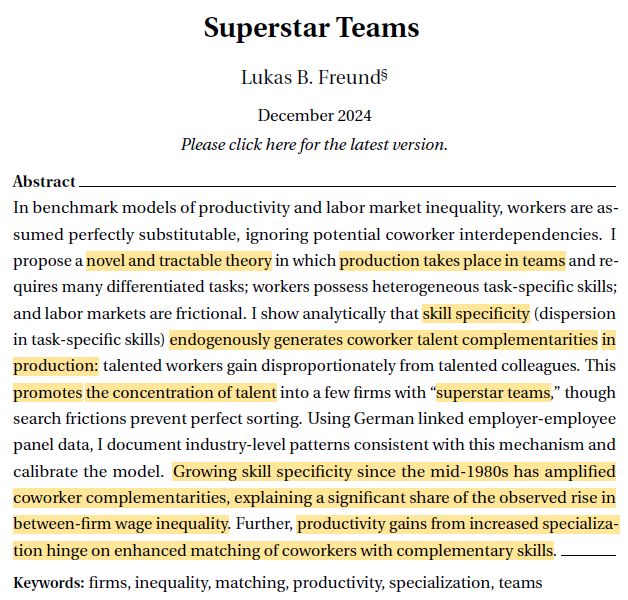
💥New version of "Superstar Teams"
lukasbfreund.github.io/files/freund...
09.12.2024 23:30
👍 8
🔁 5
💬 1
📌 0
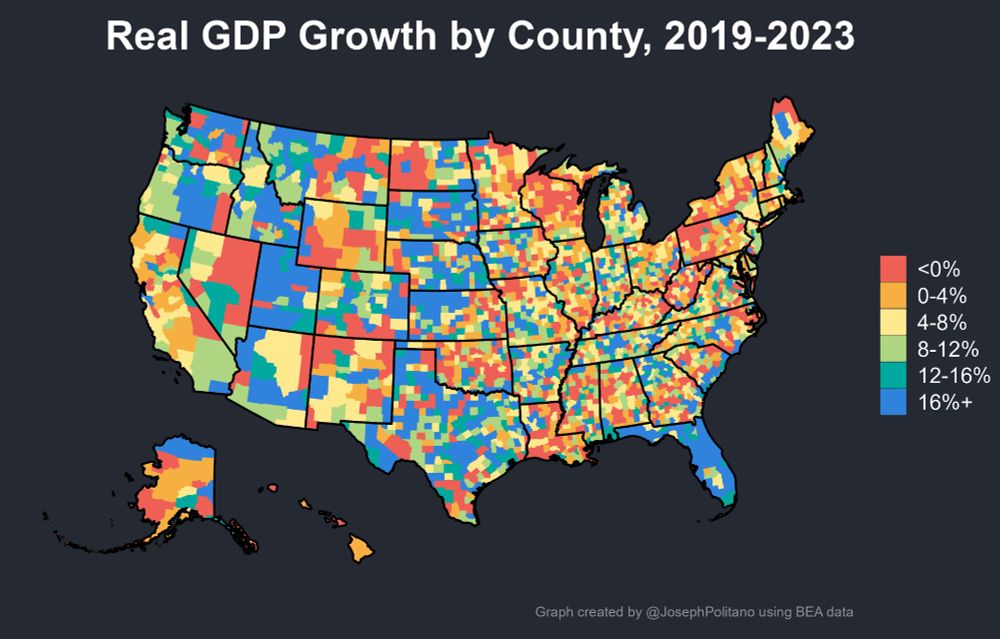
And here's the messy map of country growth over the last four years! I like how clear you can see the boom in certain states like Florida, Texas, and Utah.
I've got a lot more state and region level maps coming later today, so stay tuned
04.12.2024 14:00
👍 47
🔁 5
💬 2
📌 1

Recently accepted to #REStud, ``The Long-Run Labor Market Effects of the Canada-U.S. Free Trade Agreement,'' from Kovak and Morrow:
www.restud.com/the-long-run...
01.12.2024 22:12
👍 51
🔁 14
💬 0
📌 2
Re-upping this: if you are interested in GIS, computer vision, housing, and research please apply!
27.11.2024 17:01
👍 26
🔁 8
💬 0
📌 5
We've created a starter pack for all of the economics journals on Bluesky. Please nominate other journals to join the list.
go.bsky.app/4kR21vX
27.11.2024 14:44
👍 375
🔁 138
💬 14
📌 10