We appreciate the staff at Steward Observatory @stewardobservatory.bsky.social keeping the telescopes accessible! Clearing out snow from a recent storm so we can get back to finding hazardous asteroids!
27.01.2026 21:12
👍 8
🔁 1
💬 0
📌 0
Humanity’s Real Plan to Stop This Asteroid (Feat. Mark Rober)
YouTube video by Cleo Abram
"Huge if True" podcast visited Mt. Lemmon and the Catalina Sky Survey @catalinaskysurvey.bsky.social
youtu.be/LOn-mmezykQ?...
17.11.2025 23:28
👍 3
🔁 2
💬 1
📌 0
The resident bobcat at our Mount Lemmon facilities saying hi.
#wildlife #bobcat #mountlemmon
30.11.2025 18:41
👍 2
🔁 0
💬 0
📌 0
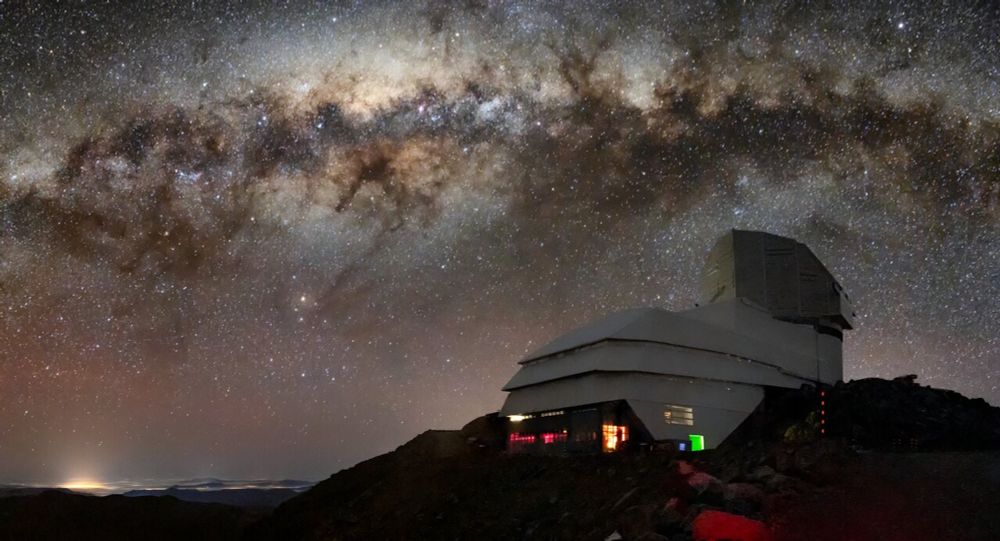
Spectacular First Images from the Rubin Observatory Usher in a New Era of Cosmic Surveying and NEO Detection | Catalina Sky Survey
For Asteroid Day, read about how even with the amazing Rubin Telescope asteroid discoveries, we still need dedicated near Earth asteroid searches, including by the Catalina Sky Survey @catalinaskysurvey.bsky.social
catalina.lpl.arizona.edu/news/spectac...
30.06.2025 21:37
👍 21
🔁 5
💬 0
📌 0
Monsoon Workshop 2025 | Catalina Sky Survey
The 2025 Catalina Sky Survey Monsoon Workshop will be held in Tucson, August 1-5, as a splinter session of the ADASSx Summer Software Workshop, immediately following the Rubin Community Workshop.
Registration (free) and abstract submission are now open.
#PlanetSci #AstroMethods #PlanetaryDefense
19.05.2025 03:45
👍 8
🔁 3
💬 0
📌 0
Welcome - Realize Your Potential: Cornerstone
We are recruiting a new C programmer. If you love astronomy and want to work on the front lines of planetary defense creating custom software solutions for extracting new NEOs from image data and much more, please take a look! 🔭
arizona.csod.com/ui/internal-...
01.05.2025 03:41
👍 23
🔁 14
💬 5
📌 1
This is a pretty confined definition for a specific class of rock. Often smaller rocks that pose a higher impact risk are also called PHAs. The recurrence interval for a 140m+ impact is thousands of years. The idea is to catalog them all so we can be sure when the next impact might happen.
08.03.2025 09:06
👍 0
🔁 0
💬 0
📌 0
Rocks that fall under the PHA umbrella from the link above mostly pose no direct threat in the next 100+ years. Their orbits tend to be more gravitationally dynamic though, they can evolve into new orbits which might pose a threat in the future so they get closer attention.
08.03.2025 09:03
👍 0
🔁 0
💬 1
📌 0

CSS Orbit View | Catalina Sky Survey
Interactive orbit:
07.03.2025 20:50
👍 1
🔁 0
💬 1
📌 0

2025 CE13 is a newly discovered potentially hazardous asteroid. It is between 141-316m in diameter and passes within 4.4LD of Earth's orbit. It was discovered on Feb 2nd, 2025 by CSS observer H. Groeller. 2025 CE13 poses no impact threat to Earth. 🔭
07.03.2025 20:49
👍 19
🔁 0
💬 2
📌 0
CSS Orbit View | Catalina Sky Survey
Interactive orbit:
25.02.2025 03:40
👍 1
🔁 0
💬 0
📌 0

Congratulations to CSS observer Hannes Groeller. Hannes recently discovered comet C/2025 D1 (Groeller) from the Bok telescope, which we operate under a partnership with Spacewatch. C/2025 D1 has the largest perihelion distance of any comet found to date. Interactive orbit in comments. 🔭
25.02.2025 03:40
👍 28
🔁 2
💬 1
📌 0
CSS Orbit View | Catalina Sky Survey
Interactive orbit:
13.02.2025 23:19
👍 2
🔁 0
💬 0
📌 0

2025 CW is a newly discovered potentially hazardous asteroid. It is between 200-450m in diameter and passes within 4.32LD of Earth's orbit. It was discovered on Feb 3rd, 2025 by CSS observer T. Beuden. 2025 CW poses no impact threat to Earth. 🔭
13.02.2025 23:19
👍 11
🔁 1
💬 1
📌 3

Happy to announce we have joined BlueSky and look forward to sharing information about the amazing discoveries we make at CSS. Stick around for some neat stuff! #astronomy #asteroids #planetarydefense
13.02.2025 22:56
👍 39
🔁 13
💬 1
📌 1
We are a leading near-Earth Object survey operating at the UofA. We'd like to share interesting discoveries with the feed.
13.02.2025 22:47
👍 0
🔁 0
💬 1
📌 0
yes
13.02.2025 22:46
👍 0
🔁 0
💬 1
📌 0

@bot.astronomy.blue signup
13.02.2025 22:46
👍 3
🔁 0
💬 1
📌 0


