Information Event on Funding Programs - Georg-August-University Göttingen
Website of the Georg-August-University Göttingen
Early career researcher: Are you thinking about writing an ERC , Emmy Noether Proposal, or Lower Saxony AI Group application, and are you interested to work with us at @uni-goettingen.de and @goettingen-campus.de
04.02.2026 16:33
👍 7
🔁 4
💬 1
📌 1
If you recently finished your PhD in ML for life science and are looking for a new job early next year, please apply! Göttingen is a lovely town and a great scientific environment.
19.12.2025 08:55
👍 3
🔁 3
💬 0
📌 0
SFN 2025 || Society for Neuroscience
SFN is home to host the much-awaited 23rd SFN Annual World Congress in Paris, IN PERSON.
Probably not. Last month the convention center hosted the annual Society for Neuroscience meeting, which regularly attracts more than 30,000 attendees
sfn2025.org
05.12.2025 17:33
👍 0
🔁 0
💬 0
📌 0
🛫 On my way to San Diego for #NeurIPS. Touch base if you want to meet up and chat about neuroAI, postdoc opportunities in Germany or just hang out!
02.12.2025 06:02
👍 2
🔁 0
💬 0
📌 0
📣 Paper alert: We present dense attentive probing (DeAP), a method to measure the representation quality of various vision backbones for dense prediction tasks. It uses small, parameter-efficient readouts with learnable masks to generate dense predictions from backbone features of any size.
28.11.2025 13:25
👍 5
🔁 2
💬 1
📌 0
I‘m at NeurIPS Mexico and happy to chat about comp neuro, video understanding, multimodal and foundational models
If you are in San Diego - check out our posters together with Nina, Finn, Chase and more members of @aecker.bsky.social and @sinzlab.bsky.social
More about the papers in the thread ⬇️
01.12.2025 14:10
👍 3
🔁 1
💬 1
📌 0
🔬 Exciting PostDoc Opportunity! 🐁🧠
We - the @sinzlab.bsky.social (sinzlab.org) and @trose-neuro.bsky.social (troselab.de) Labs - are seeking an experimental postdoc to work at @unibonn.bsky.social with cutting-edge miniature 2-photon microscopy and gaze tracking in freely behaving mice.
21.11.2025 17:04
👍 15
🔁 6
💬 2
📌 1
Deadline for applying with us at #ELLISPhD program is in 10 days (Oct 31). We're looking for highly motivated people working at the interface of machine learning and neuroscience.
21.10.2025 06:32
👍 8
🔁 2
💬 0
📌 0
If you're interested in doing your PhD with us, please apply via the ELLIS PhD program!
We're looking for talented people interested in the intersection of machine learning and neuroscience.
02.10.2025 16:12
👍 3
🔁 1
💬 0
📌 0
Touch base with me if you have any questions. I’m happy to chat!
15.08.2025 10:46
👍 1
🔁 0
💬 0
📌 0
🎯 Göttingen is a small university town (around 120k people) and very family friendly. Everything within the city can be reached by bike within 15 min.
15.08.2025 10:46
👍 0
🔁 0
💬 1
📌 0
🌍 Göttingen is located in the center of Germany and Europe, in a region known for its green hills, lovely small towns with half-timbered houses and the Harz Mountains. Well-connected through motorways and high-speed trains.
15.08.2025 10:46
👍 0
🔁 0
💬 1
📌 0
🎓The @goettingen-campus.de is highly collaborative, has a great variety of data-intensive research in natural and life sciences, social science and humanities, including top-notch places like @mpi-nat.bsky.social, @mpsgoettingen.bsky.social, MPI-DS, @primatenzentrum.bsky.social, @dlr-en.bsky.social
15.08.2025 10:46
👍 0
🔁 0
💬 1
📌 0
💡It's a deliberately broad call. Areas of interest include: RL; VR, AR & digital avatars; Embodied AI, NLP; HCI; Causal models; Time series models; Multimodal data integration; Image analysis and CV; Computational and simulation science; Visualization; HPC and Energy-efficient AI.
15.08.2025 10:46
👍 0
🔁 0
💬 1
📌 0
W1-TT-W2 Artificial Intelligence - Georg-August-University Göttingen
Website of the Georg-August-University Göttingen
📢 We have an opening for a tenure track assistant professor position (W1 t.t. W2) in AI in our CS dept @uni-goettingen.de, Germany.
⏰ Application deadline: Sept 19
🗣️ Please share!
uni-goettingen.de/en/697924.html
15.08.2025 10:46
👍 7
🔁 4
💬 1
📌 2

📢 Fully-funded PhD opportunity!
Explore the links between social & communication networks in ring-tailed lemurs!
Exciting fieldwork, interdisciplinary team, and innovative technologies! Apply now and join @primatenzentrum.bsky.social & @unigoettingen.bsky.social for this cutting-edge research!
29.04.2025 08:52
👍 38
🔁 39
💬 2
📌 4
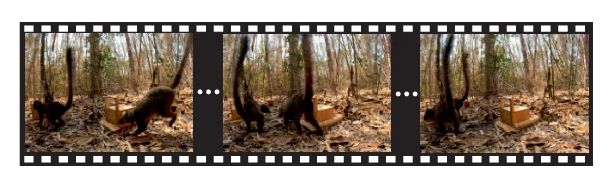
A Perspective from the Ecker lab discusses the progress and challenges of using computer vision approaches for behavior studies of primates in natural environments.
www.nature.com/articles/s41...
14.04.2025 15:44
👍 13
🔁 3
💬 0
📌 0
...and of course – shame on me for the oversight – the great @philipp.hertie.ai
11.04.2025 12:33
👍 1
🔁 0
💬 0
📌 0
Thanks to co-authors Marissa Weis, Stelios Papadopoulos, @lhansel.bsky.social, Timo Lüddecke, Brendan Celii, Paul Fahey, Nuno da Costa, Forrest Collman, @csdashm.com , @clayreid.bsky.social, @sebastianseung.bsky.social, @viajake.bsky.social & Andreas Tolias. Funding: @erc.europa.eu & IARPA (12/12)
11.04.2025 12:19
👍 4
🔁 0
💬 1
📌 0
It's been great fun to be part of the MICrONS consortium. (11/12)
bsky.app/profile/alle...
11.04.2025 12:19
👍 1
🔁 0
💬 1
📌 0

Using the power of the MICrONS dataset, we could show that our functional digital twin of the neurons could predict the basal bias of cells in lower layer 4 without this model having access to any morphological information. (10/12)
www.nature.com/articles/s41...
11.04.2025 12:19
👍 1
🔁 0
💬 1
📌 0

We found a novel morphological trait in layer 4: neurons that are primarily located in V1 in a narrow stripe around the L4-L5 boundary. These neurons are atufted and avoid reaching into L5 with their basal dendrites. (9/12)
11.04.2025 12:19
👍 1
🔁 0
💬 1
📌 0

There morphological differences between primary visual cortex (V1) and higher visual areas (HVA): In layer 4, atufted neurons are primarily located in V1, while tufted neurons are more abundant in areas AL and RL. (8/12)
11.04.2025 12:19
👍 2
🔁 0
💬 1
📌 0

Neurons in layer 2/3 show strong trends with increasing cortical depth: (1) decreasing width of their dendritic arbor and (2) smaller tufts. (7/12)
11.04.2025 12:19
👍 5
🔁 0
💬 1
📌 0

Dendritic morphologies vary with respect to three major axes: (1) the soma depth, (2) the total skeletal length of the apical dendrites and (3) the total skeletal length of the basal dendrites. (6/12)
11.04.2025 12:19
👍 2
🔁 0
💬 1
📌 0

Dendritic morphologies form mostly a continuum, with distinct clusters only in deeper layers (e.g. layer 5 ET neurons). A quantitative test using synthethic surrogate data suggested that from layer 2 throughout upper layer 5 no density gaps exist and dendritic morphologies change continuously (5/12)
11.04.2025 12:19
👍 2
🔁 0
💬 1
📌 0

Our learned embeddings capture the essence of the 3D morphology of neurons and reflect known excitatory cell types from mouse V1. (4/12)
11.04.2025 12:19
👍 1
🔁 0
💬 1
📌 0

We employed GraphDINO, a self-supervised method for learning representations of neuronal morphologies without relying on manual annotations. The model outputs a vector embedding for each neuron that captures the morphological features of its dendritic tree. (3/12)
11.04.2025 12:19
👍 1
🔁 0
💬 1
📌 0