Graphical abstract from the linked Cell Stem Cell paper, "Retinal ganglion cell survival and functional maturation in transiently vascularized human retinal organoids," by Sharma et al. (10.1016/j.stem.2025.12.013).
At University Hospital Bonn & @iobswiss.bsky.social, @ruizdealmodovar.bsky.social, @tamvir.bsky.social, & colleagues created transiently vascularized human retinal #organoids with enhanced retinal ganglion cell survival & function.
#Ophthosky 🧪
💰
@volkswagenstiftung.de
@dfg.de
@erc.europa.eu
05.03.2026 16:16
👍 1
🔁 0
💬 1
📌 0

Figure 2 from "Rotational migration in human pancreatic ductal organoids depends on actin and myosin activity" by Xie et al. in Communications Biology. The title and caption for the figure read: "Trajectory and velocity of pancreatic ductal organoid rotation. A Overlay of maximum projections of a rotating pancreatic ductal organoid (organoid #1) taken every 30 minutes, between hours 3 and 7 of the live imaging. To illustrate the rotational migration of the cells, the nuclei were color-coded based on the time point they were imaged. The transparent green arrow indicates the general direction of the rotation. The X and Y position coordinates start from the top left of the image. Bar = 50 µm. B Three-dimensional reconstruction of the nuclei trajectories within the rotating organoid #1. C Vector plot showing the direction and the velocity of nuclei displacement between each time point. The length of the arrows is scaled to the velocity of the nucleus. The vector plot is projected to the XY axis to illustrate the rotational migration of organoid #1. D The nuclei average velocity remains relatively stable at ~12–22 µm/hr over the imaging period (mean ± SEM, N = 3 organoids from three independent experiments, n = 21–48 nuclei per organoid from 7 hours of imaging period, i.e., 15 time points). E Histogram plot showing the distribution of the recorded velocity. The velocity ranges between 0 and 35 µm/hr, with peaks at ~15–20 µm/hr (N = 3 organoids from three independent experiments, n = 21–48 nuclei per organoid from 7 hours of imaging period, i.e., 15 time points). F Average velocity of three independent pancreatic ductal organoids, showing a range between ~15 and ~18 µm/hr (mean ± SD, N = 3 organoids from three independent experiments, n = 21–48 nuclei per organoid from 7 hours of imaging period, i.e., 15 time points)."
Using human pancreatic ductal #organoids, @utaustin.bsky.social scientists studied collective migration of epithelial cells, which plays a role in morphogenesis, wound repair, tissue homeostasis, & cancer metastasis. 🧪
Funded by @amdiabetesassn.bsky.social, @thewelchfoundation.bsky.social, et al.
04.03.2026 17:56
👍 1
🔁 0
💬 1
📌 0
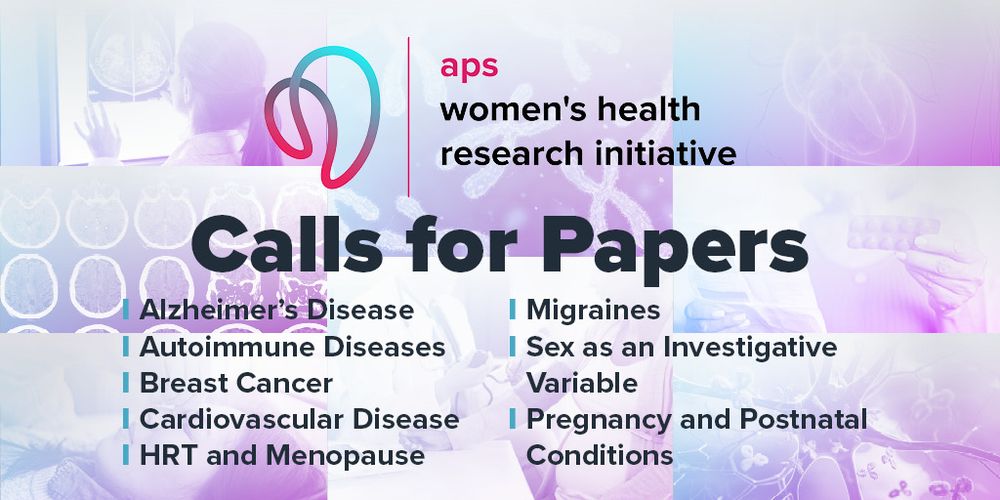
We're raising the visibility of #WomensHealth in @apspublications! Explore #CallsForPapers on key women’s health research topics & submit your study journals.physiology....
#Alzheimers #AutoimmuneDiseases #BreastCancer #CVDisease #Menopause #Migraines #Pregnancy #Endometriosis #Preeclampsia
20.06.2025 13:36
👍 7
🔁 6
💬 0
📌 0
This non-animal liver model also:
✅ Is compatible with the Fundamentals of Laparoscopic Surgery (FLS) trainer for minimally invasive repair practice ✅ Can be filled with a red fluid mixture and lacerated
✅ Supports team-based scenarios managing actively hemorrhaging liver injuries
03.03.2026 13:32
👍 0
🔁 0
💬 0
📌 0
On the other hand, this new model is:
🟢 Reusable and cost-effective
🟢 Constructed from standard simulation center materials 🟢 Free from the ethical concerns of animal use
🟢 Practical and scalable for training programs
03.03.2026 13:32
👍 1
🔁 0
💬 1
📌 0
The authors highlight these problems w using animal tissues for medical training:
🔸 Cost, due to time-demanding collection
🔸 Risk of disease transmission & environmental hazards during shipping/handling
🔸 Rapid spoilage, requiring new purchases for every cohort
🔸 Ethical & cultural concerns
03.03.2026 13:32
👍 0
🔁 0
💬 1
📌 0

Screenshot from the linked webpage, showing the following article title and author information: "Construction of an Animal-Alternative Liver Model for Surgical Simulation Training" October 29, 2025. Authors:
Brian F. Quach BS; Alexander Hayden MS, PA-C; Eric Nohelty BS, CHSOS; Andrew J. Eyre MD, MS; Frank H. Netter MD School of Medicine at Quinnipiac University, North Haven, CT; William W. Backus Hospital, Department of Surgery, Norwich, CT; STRATUS Center for Medical Simulation, Boston, MA; Brigham and Women’s Hospital, Department of Emergency Medicine, Boston, MA; Harvard Medical School, Boston, MA"
This sustainable, reusable liver model for surgical skills training was built entirely from materials already found in a simulation lab.
Read in @healthcaresim.bsky.social ⬇️
www.ssih.org/news/constru...
🏥 @stratusbwh.bsky.social @harvardmed.bsky.social
#MedSky #MedEd #SurgSky #SurgEd #Simulation
03.03.2026 13:32
👍 2
🔁 1
💬 1
📌 0

The age of animal experiments is waning. Where will science go next?
Advances in organ and computer models are raising the prospect that some animal experiments could be eliminated. But there are still huge hurdles to overcome.
“For years, it’s always been thought that animals should be the default,” Valerie Speirs told @dianakwon.bsky.social for @nature.com
🔗 www.nature.com/articles/d41...
Scientists are frustrated by slow progress & feel that papers & grant applications are still expected to include animal experiments.
02.03.2026 18:24
👍 2
🔁 2
💬 1
📌 0

Meme from the 2004 movie Mean Girls, picturing Rachel McAdams as Regina George wearing a Santa hat. The line from the movie, “Stop trying to make fetch happen” has been changed to “Stop trying to make mouse happen.”
Instead of meeting mouse experimenters halfway, human neuroscientists should bring them fully over, working together to modernize and humanize neuroscience in ways that have never possible before.
02.03.2026 15:36
👍 0
🔁 0
💬 0
📌 0
Direct recordings from awake humans are offering clinically relevant insights.
Advanced in vitro models of human brains are enabling unprecedented basic & applied neuroscience research.
Continuing to use mice distracts the field, produces misleading stories & consumes limited funding resources.
02.03.2026 15:36
👍 0
🔁 0
💬 1
📌 0
But neuroscience’s problem isn’t a lack of mouse–human integration; it’s reliance on mice at all.
Experiments on rodents keep generating theories that fail in or mislead humans (looking at you, amyloid hypothesis) because human brains evolved uniquely and mice & rats aren’t good stand-ins.
02.03.2026 15:36
👍 0
🔁 0
💬 1
📌 0
The problem is real.
While mice and humans share ~85% of protein-coding genes, the regulation of those genes is often remarkably different.
Imagine a piano: with the same keys you can play an infinite number of distinct songs.
02.03.2026 15:36
👍 0
🔁 0
💬 1
📌 0

Neuroscience has a species problem
If neuroscience is serious about building general principles of brain function, cross-species dialogue must become a core organizing principle.
For @thetransmitter.bsky.social, @suthanalab.bsky.social wrote about neuroscience's "species problem." www.thetransmitter.org/animal-model...
"[T]he field has largely compartmentalized the findings, enabling parallel literatures to proceed with little pressure to reconcile them."
#neuroskyence
02.03.2026 15:36
👍 10
🔁 1
💬 2
📌 1

Experiments on animals were a poor 'gold standard,' and we now have the tools to move beyond them.
So, let’s choose progress.
Add your name in support of Research Modernization NOW to help further the evolution to human-relevant science: www.scienceadvancement.org/open-letter-...
02.03.2026 13:36
👍 0
🔁 1
💬 0
📌 0

Screenshot from the article: "The increasing adoption of NAMs makes rigorous validation essential, says Kent Lloyd, a geneticist and director of the NAMs Testing Center at the University of California, Davis. “Unless we hold NAMs to the same level of rigour and transparency that we expect of animal models, there will be harm done,” he says."
But I'm struck by the article's focus on validation.
It's critical, of course, that any methods used to make decisions about human health are validated. However, the article assumes that experiments & tests on animals also underwent as strict a period of 'validation.'
They did not.
02.03.2026 13:34
👍 2
🔁 0
💬 1
📌 0

Screenshot from the article: "Take sepsis, for instance, a severe reaction to infection. Researchers have developed more than 100 therapies for sepsis that looked promising in rodent models but that were ineffective in clinical trials3. That’s partly because of differences in human and rodent immune systems and the difficulty of mimicking a complex condition that varies from one person to the next in inbred mice that are genetically similar and raised in uniform conditions."
Great to see #sepsis mentioned. Animal use has misled this field even more than most.
SAO report on sepsis: www.scienceadvancement.org/wp-content/u...
While you're here, please sign this open letter urging the U.K. to set clear goals for sepsis research: secure.peta.org.uk/page/179711/...
02.03.2026 13:34
👍 0
🔁 1
💬 1
📌 0

The age of animal experiments is waning. Where will science go next?
Advances in organ and computer models are raising the prospect that some animal experiments could be eliminated. But there are still huge hurdles to overcome.
"The age of animal experiments is waning," writes @dianakwon.bsky.social for @nature.com
www.nature.com/articles/d41...
Kwon covers the recent policy changes in the U.S. & U.K. that give major boosts to the use & development of non-animal methodologies.
#NAMs #SciPol 🧪
02.03.2026 13:34
👍 1
🔁 1
💬 1
📌 0
Dr. Katherine Roe on Rethinking Animal Testing and Redefining Scientific Research
Dr. Katherine Roe of PETA on rethinking animal testing, emerging science methods, and how women scientists are reshaping research and funding.
ICYMI💡 My badass colleague @katherineroe.bsky.social sat down with Dr. Mia Wood, host of the @labroots.bsky.social podcast "The Life of Her Mind," to discuss what drives women scientists like her to challenge the status quo.
Give it a listen: www.labroots.com/podcast-seri...
02.03.2026 03:58
👍 2
🔁 1
💬 0
📌 0
"You can say, ‘Oh, it’s just public relations.’ Public relations matter."
Why would they remove 'Primate' from their name?
Maybe it's because the social license for AND the scientific necessity of experimenting on monkeys is at an all time low.
They see the writing on the wall.
28.02.2026 04:30
👍 0
🔁 0
💬 0
📌 0

He Died in His Cage. The System Said It Did Nothing Wrong.
After a baboon died in a federally-funded Columbia University lab, NIH found “no cause for further action.” Here’s what this case reveals about animal research oversight in the U.S.
He was a young baboon. Two days after entering a Columbia University laboratory, he was dead.
His death illustrates how the animal research oversight system does not exist to eliminate harm to animals. Rather, it expects harm and exists to manage it.
riseforanimals.org/news/baboon-...
#animalrights
26.02.2026 21:51
👍 3
🔁 3
💬 0
📌 0

The 3Rs don’t hold up when you become the subject.
Thought experiments and virtual scenarios like these are impactful because they expose a simple truth:
If we wouldn’t accept these experiments on humans, we shouldn’t accept them for other animals, who may not look or speak like we do, but suffer just the same.
#animalrights #bioethics
26.02.2026 18:38
👍 0
🔁 0
💬 0
📌 0

Abduction | peta2
Imagine this: You’re on a road trip with friends. Suddenly, there’s a bright flash, an unfamiliar noise, and darkness. You wake ...
👽 What if you could step onto the spaceship yourself?
@peta2.bsky.social’s award‑winning VR Abduction drops students across the U.S. into a sci‑fi scenario where they become the test subjects—powerless, scared, and without consent, what animals in labs endure daily.
www.peta2.com/news/abducti...
26.02.2026 18:38
👍 0
🔁 0
💬 1
📌 0

"But at the same time you say why am I disturbing a species that was living its life, doing its thing, and I’m a superior being who chooses to say ‘Oh well, I want to do manipulations on you’." J Agric Environ Ethics 2026 | DOI: 10.1007/s10806-026-09973-9
Participants also questioned whether the 3Rs could ever justify experiments by a “Superior Scientist” who offers no communication, no transparency, and no chance for consent.
…which, of course, is exactly the situation animals face in labs every day.
26.02.2026 18:38
👍 1
🔁 0
💬 1
📌 0

"I don’t think directly the same 3Rs are applicable here somehow. But I cannot pinpoint it right now, other than being able to say we have a much more sophisticated life form." J Agric Environ Ethics 2026 | DOI: 10.1007/s10806-026-09973-9
!["I don’t think we would be happy. And we would rebel. So that’s it, I don’t think we would just let it happen. [...] but if we have no choice and we are anaesthetized by a remote laser device, then that’s it." J Agric Environ Ethics 2026 | DOI: 10.1007/s10806-026-09973-9](https://cdn.bsky.app/img/feed_thumbnail/plain/did:plc:in2pnzujy66a7qnesoxha6ar/bafkreihhh7pqjzuge6jzqnx65bdpkip5bch3jiu7qddxgn5zb2ijumi3eu@jpeg)
"I don’t think we would be happy. And we would rebel. So that’s it, I don’t think we would just let it happen. [...] but if we have no choice and we are anaesthetized by a remote laser device, then that’s it." J Agric Environ Ethics 2026 | DOI: 10.1007/s10806-026-09973-9
Others rejected the idea on #speciesist grounds (humans are special… somehow… "but I cannot pinpoint it right now").
Some pointed to problems baked into the system:
⚠️ Power asymmetry
⚠️ Lack of consent
⚠️ The emptiness of ‘harm reduction’
26.02.2026 18:38
👍 0
🔁 0
💬 1
📌 0

"As a human being, obviously, I wouldn’t really appreciate being the object of an experiment." J Agric Environ Ethics 2026 | DOI: 10.1007/s10806-026-09973-9
The researchers used a role‑reversal thought experiment:
💫 What if “refinement,” “reduction,” and “replacement” were applied to you?
👀 The responses were revealing (peep the graphics).
Participants ranged from uneasy acceptance to outright rejection of a “3Rs for humans.”
26.02.2026 18:38
👍 0
🔁 0
💬 1
📌 0

A graphic featuring a human being abducted by a spaceship over the background of a starry night sky. The text reads, "Don't worry... we use the 3Rs! A discussion of “We are the Earthworms! Aliens Using 3R on Humans: A Qualitative Experimental Ethics Study with Animal Research Professionals” by Rodriguez Perez, Persson, and Shaw"
Plot Twist 🔃 Scientists don’t want to be experimented on.
A new qualitative study by @c-rp.bsky.social et al. asked animal research professionals to imagine themselves as the test subjects, under the control of hyperintelligent extraterrestrials applying the #3Rs to experiments on humans.
26.02.2026 18:38
👍 7
🔁 3
💬 1
📌 0