E.P.A. to Stop Considering Lives Saved When Setting Rules on Air Pollution
The EPA is no longer going to consider how many potential lives a pollution regulation would save -- just the costs to industry. This is directly counter to EPA's mission. And it will kill Americans.
Great (depressing) scoop from @maxinejoselow.bsky.social.
www.nytimes.com/2026/01/12/c...
12.01.2026 22:46
👍 112
🔁 47
💬 3
📌 3
Why is advancing ambitious climate legislation hard even in “deep blue” states?
Here’s a systematic study of 6 years of lobbying data and 8 years of testimony in a state that sees itself as a climate leader, but is struggling with implementation of its bold targets.
Guess who are obstructing?
07.01.2026 19:20
👍 18
🔁 7
💬 0
📌 3
What! I've never seen the early seasons! Can I borrow it sometime?
07.01.2026 19:00
👍 1
🔁 0
💬 1
📌 0
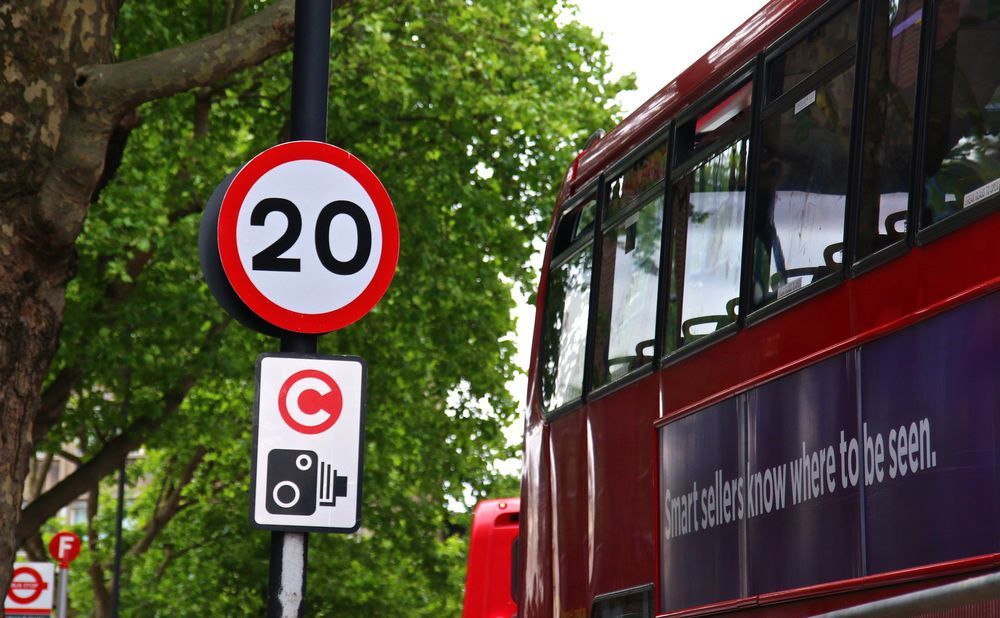
If you could snap your fingers and remove 10% of the vehicles causing traffic and clogging up the streets, would you do it? That power exists, and it's called congestion pricing.
05.01.2026 16:46
👍 92
🔁 21
💬 3
📌 0
It sounds like you're describing Murder She Wrote. Or my go-to for a cozy, humorous, doesn't turn into a busman's holiday, 3-in-1-episode mystery: the GBBO.
07.01.2026 18:45
👍 2
🔁 0
💬 1
📌 0

Reducing traffic with “carrots”: A review of the evidence
Reducing traffic volumes is one way to reduce carbon emissions from the transport sector. Since increasing driving costs is often met with public resi…
Yet another evidence review argues very strongly that simply providing alternatives to driving doesn't reduce driving
This isn't surprising, if only thanks to habit. If I unthinkingly jump in my car for every trip (as many do), new buses won't change that
www.sciencedirect.com/science/arti...
15.11.2025 09:13
👍 164
🔁 56
💬 21
📌 17

Hey governors: you can salvage sustainable transportation, but you need to do it quick!
Liya Rechtman lays out the playbook for governors to salvage clean transportation using existing federal funds before it's too late.
Today on Volts: sustainable transportation policy is under comprehensive attack by the federal government, but states can soften the blow. Specifically, governors have a little-understood authority to transfer existing federal funds to EV charging, bike lanes, & transit. But time is running out!
05.11.2025 17:57
👍 132
🔁 42
💬 2
📌 8
tired: leaders throw folks under the bus
wired: leaders invite folks on the bus in a dedicated lane
05.11.2025 03:44
👍 371
🔁 68
💬 2
📌 3
Seattle No Kings from the monorail
18.10.2025 22:20
👍 11955
🔁 3011
💬 221
📌 295
This book finally got published today - free for download here cssn.org/news-researc...
A monumental effort documenting climate obstruction across sectors, countries & governance levels, by 110 @cssn.org scholars
I was chuffed to contribute to one of the chapters (thread)
15.10.2025 11:54
👍 77
🔁 42
💬 2
📌 4
Happy centennial!
It’s worth noting that originally this body, the first national traffic engineering institute, was funded 100% by one automobile manufacturer: Studebaker. It was named the Erskine Bureau after the company’s president. In 1935 the Automobile Manufacturers Association took it over.
13.10.2025 21:57
👍 42
🔁 5
💬 3
📌 1

Evacuation modes by subgroups: This bar chart figure shows how various population groups traveled to safety during the wildfire evacuation. While getting rides from others was most frequent among evacuees, public transit or walking/biking were more commonly used by transportation-disadvantaged groups, including low-income, Black, and carless residents
The Jan 2025 LA fires showed how urban wildfires endanger transit riders and ppl w/o cars.
📊 Among transit riders surveyed:
- 28% relied on rides from others
- 21% used transit to evacuate
- Black respondents were most likely to evacuate via transit (42%)
www.its.ucla.edu/publication/...
26.09.2025 19:54
👍 5
🔁 1
💬 0
📌 1
30.06.2025 21:35
👍 8
🔁 3
💬 0
📌 0
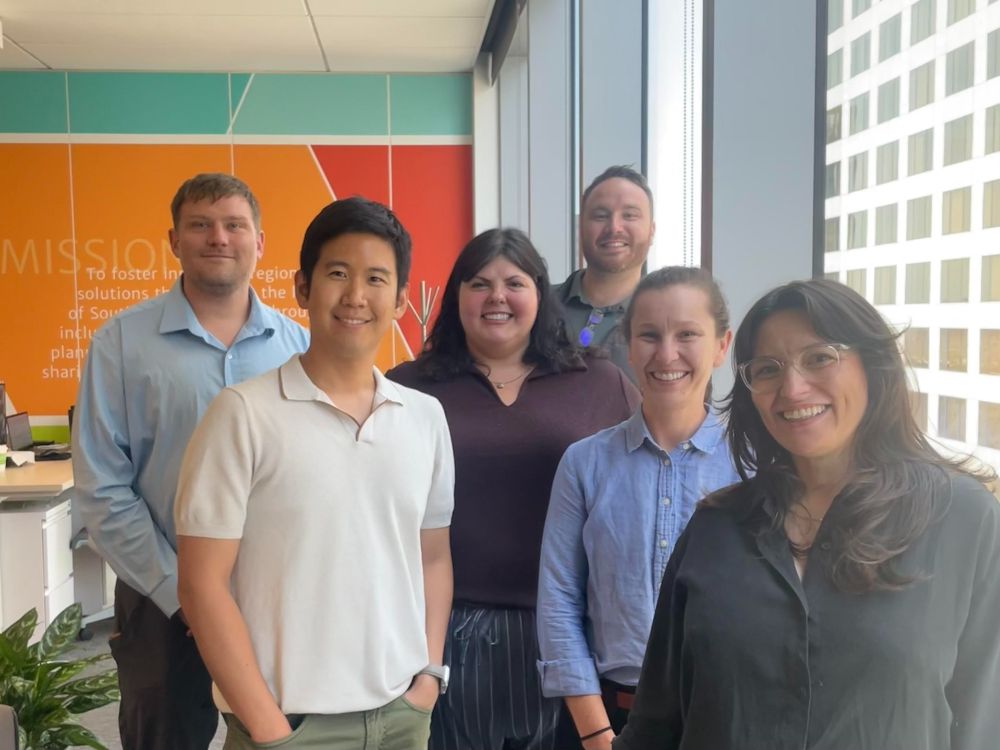
Our multi-campus research team shared preliminary results from our work about the evacuation experiences of transit riders with LA county transportation and emergency management professionals yesterday! Can’t wait to release these findings publicly later this summer
25.06.2025 17:56
👍 10
🔁 4
💬 1
📌 0

Same street, two years apart. Rue Charles Moureu.
20.06.2025 17:27
👍 10
🔁 1
💬 0
📌 1
There are no distractions. It's all bad. Systematically stripping trans people of their rights, guys in balaclavas shoving any brown person with a tattoo into a ummarked vans, ending healthcare for millions. It's all in service of fascism and technofeudalism. It's all one thing. That's the point.
18.06.2025 17:52
👍 17556
🔁 5425
💬 165
📌 125


A springtime trip to Buenos Aires was where I first encountered jacarandas, which is absolutely part of why I love LA’s so much
06.06.2025 00:19
👍 1
🔁 0
💬 0
📌 0

blooming jacaranda trees in the UCLA sculpture garden
Figure 2
04.06.2025 20:25
👍 4
🔁 0
💬 0
📌 0

a photo from an airplane with a corridor of jacaranda street trees blooming purple
So much is terrible these days but it's also jacaranda season in Los Angeles, which is beautiful from the ground and absolutely stunning from air.
04.06.2025 16:15
👍 78
🔁 3
💬 3
📌 0
"Women are PIs on 58% of the canceled grants, although they are PIs on only 34% of all active NSF grants.
Similarly, Blacks are PIs on 17% of the terminated grants, although they make only 4% of the total pool. Hispanic PIs and those with disabilities were twice as likely to lose a grant."
13.05.2025 22:09
👍 1292
🔁 945
💬 32
📌 63

An Engine, Not a Vessel: Place, Politics, and Health in the United States
Philip Roccohttps://orcid.org/0000-0001-5971-7039
Abstract
Social scientists often treat places as containers for social and economic phenomena that shape health outcomes. Yet this analytic practice conceals more than it reveals. Local governments in the United States should be understood as engines of both health promotion and stratification. As the contributions to this symposium suggest, governments not only occupy a formal place in the U.S. public health system, their decisions on everything from housing to transportation infrastructure can also have profound impacts on health outcomes. Local political economies likewise renegotiate the parameters of acceptable health interventions, public understandings of health disparities, and the status of population health as a public good. By illustrating these linkages, the authors here suggest important future lines of research on both the promise and limits of local health governance, as well as how the allocation of local political power shapes health disparities.
As federal data infrastructure is gutted, we'll lose a window into the vast local health disparities. But those disparities will remain because place is an engine of health provision and stratification, not just an analytic vessel. New essay from me in UAR:
journals.sagepub.com/doi/10.1177/...
08.05.2025 12:55
👍 53
🔁 14
💬 1
📌 1

New job opportunity: Parking Center Staff Director - UCLA Institute of Transportation Studies
Join the UCLA ITS team. We're looking for a founding staff director to lead a newly established parking center.
🚨 Job alert: UCLA ITS is hiring a founding Staff Director for a new parking policy center! Work with top scholars, shape reform, and carry on the legacy of Donald Shoup.
🅿️ Learn more & apply by May 17: www.its.ucla.edu/202...
28.04.2025 17:00
👍 43
🔁 14
💬 0
📌 9

What DEI threatens isn’t merit. It’s monopoly.
Political science professor Hakeem Jefferson argues for DEI's importance to de-monopolizing universities.
A colleague at Stanford’s business school used The Stanford Daily to argue—poorly—against DEI. The piece was riddled with historical errors and left one searching for fact, so I broke my public writing hiatus to respond.
I hope you’ll read and share the piece.
stanforddaily.com/2025/04/22/w...
23.04.2025 00:23
👍 8422
🔁 2905
💬 13
📌 271
Yes, the famously private freeway system and the famously private airport systems
16.04.2025 15:56
👍 460
🔁 67
💬 9
📌 0
Re-upping this, given news from the UK today, because it investigates what is and who decides the definition of "biological sex," which is anything but straightforward.
16.04.2025 16:34
👍 2
🔁 1
💬 0
📌 0
This seems like a good time to remind people that the Stanford Prison Experiment was based on fraudulent data. The "guards" were cruel to the prisoners because Zimbardo told them what he wanted to find with his research, and because they *wanted* to help him prove his point.
14.04.2025 22:24
👍 151
🔁 45
💬 5
📌 1
Phenomenal on every account. I learned to drive in my family's almost identical '91 240 wagon -- my dad still has it!
16.04.2025 06:35
👍 0
🔁 0
💬 0
📌 0
Ah bummer -- sorry, Dave
14.04.2025 23:45
👍 1
🔁 0
💬 0
📌 0