
Journalists Jailed by ICE Are Revealing the Horrors of Incarceration
The Trump administration’s attacks on journalists have a side effect: further exposing the violence of prisons.
ICE didn't know who it was messing with when it locked up gifted storytellers like Sami Hamdi and Rümeysa Öztürk. They're exposing abuses in ICE jails that are also prevalent throughout the rest of the carceral system.
Jeremy has more in @truthout.org and @theappeal.org
20.02.2026 19:39
👍 20
🔁 12
💬 0
📌 0

Prison-Style Free Speech Censorship Is Coming for the Rest of Us
The outcome of a court case could decide whether the Trump administration can criminalize simply possessing political literature.
"While this censorship might seem brazenly anti-constitutional to most Americans, it has been the reality faced by incarcerated individuals for decades. In the name of 'security,' prison officials have punished and even killed people for possessing literature they deemed suspect." @theintercept.com
16.02.2026 18:30
👍 252
🔁 138
💬 4
📌 10

Prison-Style Free Speech Censorship Is Coming for the Rest of Us
The outcome of a court case could decide whether the Trump administration can criminalize simply possessing political literature.
Incarcerated people have long faced discipline for reading literature that guards don't like. Now Daniel Sanchez Estrada is facing federal trial tomorrow for possessing anarchist zines.
Jeremy wrote for @theintercept.com about how the case could bring prison style censorship to the outside world.
16.02.2026 23:51
👍 9
🔁 6
💬 0
📌 2

The Latest FCC Censorship Push No One Is Talking About Targets Incarcerated People
Brendan Carr is advancing a plan to choke communications for people who use cellphones to expose abuses in prison.
The Alabama Solution got an Oscar nod this week for showcasing abuses exposed by incarcerated people recording guards with contraband cell phones.
But as the Academy deliberates, the FCC is muzzling the next exposé. Read Jeremy’s article in partnership with @freedom.press and @theintercept.com
23.01.2026 23:31
👍 24
🔁 14
💬 1
📌 0
social media shows us life behind bars. prisons want to block it.
YouTube video by Kaleidoscope Content
Jeremy joined the Kill Switch podcast to talk about how prisons block social media to stop incarcerated people from exposing abuses. Listen to the episode here.
16.12.2025 14:04
👍 1
🔁 0
💬 0
📌 0
ICE's targeting of pro-Palestinian journalists
YouTube video by Freedom of the Press Foundation
To learn more about Vijandre's case and ICE's targeting of pro-Palestinian journalists, check out the webinar below:
10.12.2025 15:54
👍 11
🔁 5
💬 0
📌 0
Journalists’ arrests chill their rights and abruptly end their reporting, removing them from newsworthy events.
The public is left less informed as a result.
15.12.2025 21:19
👍 74
🔁 40
💬 0
📌 0
Thanks to our friends @empowermentave.bsky.social for bringing attention to this article from @inquest.bsky.social about the retaliationJeremy and other incarcerated journalists face for speaking the truth.
06.12.2025 17:31
👍 0
🔁 1
💬 0
📌 0
Read Jeremy' article for the @chicagotribune.com
06.12.2025 16:00
👍 0
🔁 0
💬 0
📌 0

Finding Purpose Through Fatherhood in Prison | Prison Writers
Jeremy Busby shares how fatherhood in prison transformed his life and gave him renewed purpose despite devastating obstacles.
A lot of our work is about incarcerated journalists' rights and the retaliation they endure to get the truth out. That struggle is very real, but it's not the only story they have to tell.
Read about how fatherhood in prison gave Jeremy renewed purpose despite devastating obstacles.
06.12.2025 15:57
👍 2
🔁 1
💬 0
📌 0

Exposing Prison Conditions and Fight for Palestinian Rights
Jailed journalist Jeremy Busby on prison conditions and retaliation. Later, Hassan ben Imran discusses the ICJ’s recent advisory on Israel and Gaza.
To hear more about the retaliation Jeremy has endured from Jeremy himself, listen to this interview by @projectcensored.bsky.social, also featuring @seth-stern.bsky.social of @freedom.press
13.11.2025 23:41
👍 1
🔁 0
💬 0
📌 0
''Prison journalism should not be illegal. It should not be starved, stifled, or silenced ... laws need to change."
Read @inquest.bsky.social's article featuring Jeremy's account of how his own journalism, and that of outside reporters wanting to tell his story, is stifled by prison authorities.
13.11.2025 23:35
👍 53
🔁 25
💬 1
📌 0

To Avoid Deportation, People Want to Stay Longer at My Prison
The thought of ending up in El Salvador’s CECOT, like my brother, makes many people at San Quentin nervous.
" ... Since my brother was deported, I have been terrified. I find myself waking up in the middle of the night, tapping the side of my bunk to check if I’m still in my prison bed."
06.11.2025 17:14
👍 40
🔁 20
💬 0
📌 2

#DayoftheImprisonedWriter is nearly here! From 15 Nov–10 Dec, we’ll highlight four writers jailed for speaking out: Rory Branker, Yalqun Rozi, Mohamed Tadjadit and Mzia Amaglobeli. Join us to call for their release! #DayoftheImprisonedWriter #RoryBranker #YalqunRozi #MohamedTadjadit #MziaAmaglobeli
10.11.2025 12:08
👍 21
🔁 12
💬 1
📌 2
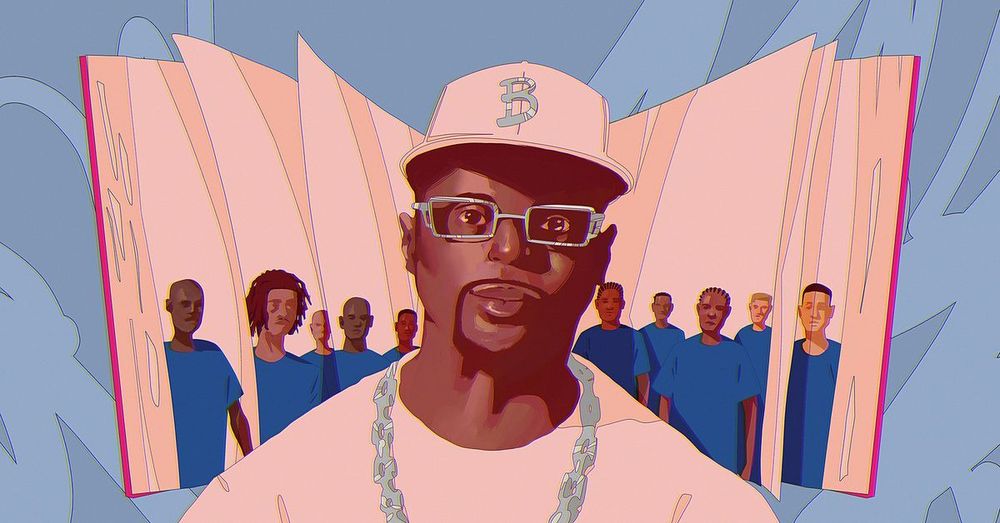
Here’s How I Use My Story to Teach Incarcerated Kids That Writing Matters
At 18, Bobby Bostic was sentenced to 241 years in prison. Now out on parole, he’s sharing the healing power of writing in juvenile detention centers.
In his Life Inside essay, Bobby Bostic discusses his writing workshops in juvenile detention centers.
“These kids are full of potential,” he writes. “Giving them guidance is my way of giving back.”
10.11.2025 22:01
👍 11
🔁 7
💬 1
📌 1
The Alabama Solution couldn’t have been made without incarcerated people having access to cell phones.
Think that has to do with why the Trump administration now wants to jam cell phones in prisons?
Read more from @joinjeremy.org in collaboration with @freedom.press and @theintercept.com
09.11.2025 18:37
👍 34
🔁 22
💬 0
📌 0

In Prison, Every Death Creates a Ripple Effect
It’s stressful when anyone dies on your wing, especially when no one ever tells you what happened.
Thomas Koskovich writes that it's stressful when anyone dies in your prison, especially when no one ever tells you what happened.
05.11.2025 14:27
👍 18
🔁 5
💬 1
📌 2
What to the incarcerated American is the freedom to vote?
For most of the nearly 1.5 million people locked up in prisons across the U.S., there is, in fact, no freedom to vote at all. Only two states, Maine and Vermont, permit the franchise to its incarcerated citizens.
05.11.2025 00:27
👍 22
🔁 8
💬 1
📌 1
PJP is such an important publishing platform and resource for incarcerated journalists. Their work makes the work that we do (of connecting and amplifying those journalists) more possible!
04.11.2025 22:28
👍 0
🔁 0
💬 0
📌 0

Phone Calls Are a Lifeline in Prison, But They Are Expensive
A recent decision from the FCC will keep jail and prison phone calls more costly for at least the next couple years.
Last week, the Federal Communications Commission voted to increase phone and video calling rate caps for incarcerated people.
In July we published dispatches about the necessity of phone calls, and how high costs — relative to extremely low prison wages — affect their connections to loved ones.
04.11.2025 16:40
👍 25
🔁 12
💬 0
📌 1

‘Solidarity is always the way forward’
In a Q&A with Prism, abolitionist organizer Kelly Hayes discusses her new anthology “Read This When Things Fall Apart,” featuring encouraging letters from movement leaders, writers, and activists
“We are each other’s best hope”: In a Q&A with Adryan Corcione, @mskellymhayes.bsky.social discusses her new anthology “Read This When Things Fall Apart,” (out now by @akpress.org) alongside movement work, navigating collective crises, & dealing with burnout.
04.11.2025 14:57
👍 13
🔁 7
💬 0
📌 0
Hear from the U.S. Journalists Abducted from Gaza Aid Flotillas
YouTube video by Freedom of the Press Foundation
Thanks to those who joined our Monday webinar with journalists abducted from Gaza aid flotillas, and special thanks to our panelists: @recolston.bsky.social, Emily Wilder, Noa Avishag Schnall, and @chipgibbons.bsky.social.
Did you miss it? Watch it here:
04.11.2025 15:54
👍 28
🔁 19
💬 0
📌 0
US police killed an average of nearly four people each day in 2024. “According to a report by Mapping Police Violence, police killed at least 1,365 people in 2024, making it the deadliest year since the group began recording such data in 2013,” Sharon Zhang wrote for Truthout.
04.11.2025 19:11
👍 2
🔁 1
💬 0
📌 0

Staff sex abuse in Idaho women’s prisons largely unchecked
InvestigateWest reporting exposes sexual abuse by guards, retaliation against victims and a system that fails to track the scope of the problem
"In Idaho prisons, more than two dozen women say guards prey on them with little fear of consequences — and those who speak up are often punished."
The U.S. is a leader in women's incarceration, and behind bars, women are anything but safe. 🧵
04.11.2025 20:20
👍 21
🔁 17
💬 1
📌 4
Here's Wilder's account for @jewishcurrents.bsky.social of what she went through and witnessed as a U.S. journalist in Israeli custody. RSVP for the discussion tomorrow to hear more from her and others.
jewishcurrents.org/forty-eight-...
02.11.2025 16:18
👍 31
🔁 17
💬 0
📌 0


